

A dog adoption interview is a conversation, usually by phone and often followed by a home visit, in which a shelter or rescue learns about your home, your schedule and your experience so it can match you with the right dog. It is not a test you pass or fail. The people who prepare best are the ones who know their own daily routine well, answer plainly, and can explain what happens to the dog during the hours they are away or if they fall ill. That last part is where we come in: our iPupPee device is designed to let a dog send a Wi-Fi alert to you or to emergency contacts, with live video and two-way audio, so your plan for alone time is something concrete rather than a hope.
TL;DR
- Most rescues run the same sequence: application, vet and personal references, a phone interview, a home visit or virtual home check, a meeting with the dog, then a contract and fee.
- Expect questions about who lives with you, how many hours the dog will be alone, your budget for vet care and what you would do if things do not work out.
- Honesty beats polish. Rescues are matching a dog to a household, so an exaggerated answer creates a mismatch.
- Bring home details to the call: lease pet clause if you rent, fence description, daily schedule and your vet’s contact information.
- Have a backup plan ready for the dog when you are sick, at work or traveling.
Table of Contents
- How the adoption process usually unfolds
- What the interview actually covers
- Sample questions and strong answers
- How to prepare, step by step
- The home visit and meet-and-greet
- Questions to ask about the dog
- Your plan for alone time
- After the interview: approval, conditions, or a no
- If you run a rescue
- Our perspective
- Get ready for your dog’s first day alone
- FAQ
- Sources
How the adoption process usually unfolds
Every organization sets its own steps, but the published processes look strikingly similar. Here is the typical order, with real examples.
- Application. You fill out a form or questionnaire online or on paper. Some groups start with pre-interview questions instead of a form.
- Reference checks. Many rescues call your current or past veterinarian. One rescue’s six-step process checks that your pets were spayed or neutered, vaccinated and seen for health checkups at least annually. Another national breed rescue’s ten-step process also lists personal and groomer references, and asks you to notify your vet that they may release information.
- Phone interview. The same rescue describes this call as covering you, your family and how you would act in certain scenarios with a dog, typically within two weeks of a completed application.
- Home visit. A volunteer or staff member comes to your home, or in some groups joins you on a video call. One shelter group sends two volunteers, who may bring a test dog, and offers virtual home checks.
- Meet the dog. Everyone in the household is generally expected to meet the dog. Another rescue requires every full- and part-time household member to visit the animal at least once, and requires resident dogs to meet the newcomer, sometimes more than once.
- Decision, contract and fee. Some groups choose the best-matched home rather than the first applicant. The breed rescue above says its decision is based on the ideal home, not first come, first served.
The timeline varies. One rescue typically does not do same-day adoptions, so plan for days or weeks rather than an afternoon.
What the interview actually covers
The questions fall into a handful of groups. Knowing the groups lets you prepare without memorizing a script.
Your household
Who lives with you, whether everyone wants a dog, and the ages of any children. Seattle’s municipal shelter uses an official dog adoption survey that asks about household calmness, the number and ages of children, and who the primary caretaker will be. Rescues want every adult on board because a dog that only one person wanted is the dog most likely to be returned. If you have children, our guide to introducing dogs to children safely gives you concrete things to say about your plan.
Your home
House or apartment, fenced yard or not, and whether your landlord allows pets. A rescue questionnaire from a Texas group asks renters for a copy of the pet section of their lease. San Francisco Canine Rescue’s application asks for landlord permission and a description of your fence. Have these ready before the call.
Time alone
This is the question that trips up the most applicants, because the true answer is often “longer than I would like.” Seattle’s survey asks you to choose between under 6 hours, 6 to 9 hours, or over 9 hours a day. The San Francisco application asks the same thing in hours. Rescues are not looking for a perfect zero. They are looking for a dog whose needs fit your routine, plus a believable plan for midday relief, exercise and company.
Experience and training approach
Prior dogs, how they lived and what became of them. The San Francisco application asks about your training philosophy. The Texas questionnaire asks about pets from the past ten years that died, were given away or were lost. Answer with specifics: what you taught, who trained, what you did about problems.
Money and health care
Budget for food, grooming and medical costs, and a vet you already use. Dogs and cats generally live 10 to 20 years, according to AdoptAPet’s guide, which is why rescues ask whether you can commit to the animal’s whole life.
What happens if it does not work out
Several applications ask why you might give a dog up, and many contracts require the dog to come back to the rescue instead of being rehomed privately. The Texas questionnaire offers a choice of reasons, including a statement that you would work to resolve issues and never give up a pet. Read that kind of clause before you sign.
Sample questions and strong answers
The table below pairs common questions with what a good answer contains. The wording of questions comes from the published applications cited above; the answer advice is how we would approach them.
| Question | What a good answer includes |
|---|---|
| Why do you want a dog? | A specific reason and what you hope to do together, not just “I love dogs.” |
| Who else lives with you, and do they agree? | Names, ages, and confirmation that everyone has met or will meet the dog. |
| How long will the dog be alone each day? | An honest number and the plan for breaks, exercise and company. |
| Where will the dog stay when no one is home? | A real room or crate setup you already have. |
| What is your budget for vet care and food? | A monthly or annual figure and your vet’s name. |
| What would make you give up a dog? | A description of the steps you would take first: training help, vet visit, a call to the rescue. |
| Who cares for the dog if you are ill or away? | A named person and a backup. |
The last question deserves extra thought. The Texas questionnaire specifically asks who will provide for the pet if the owner becomes ill. For anyone who lives alone, is a senior, or has a disability, this is a fair and reasonable question, and a strong answer shows that you have planned for it.
How to prepare, step by step
1. Write down your real week. List work hours, commute, errands and when you can walk the dog. BetterPet’s preparation guide recommends having home and schedule details ready, and suggests calling the rescue or checking its website beforehand. The mistake is rounding your schedule in your favor. If you work ten-hour days, say so and describe the midday plan.
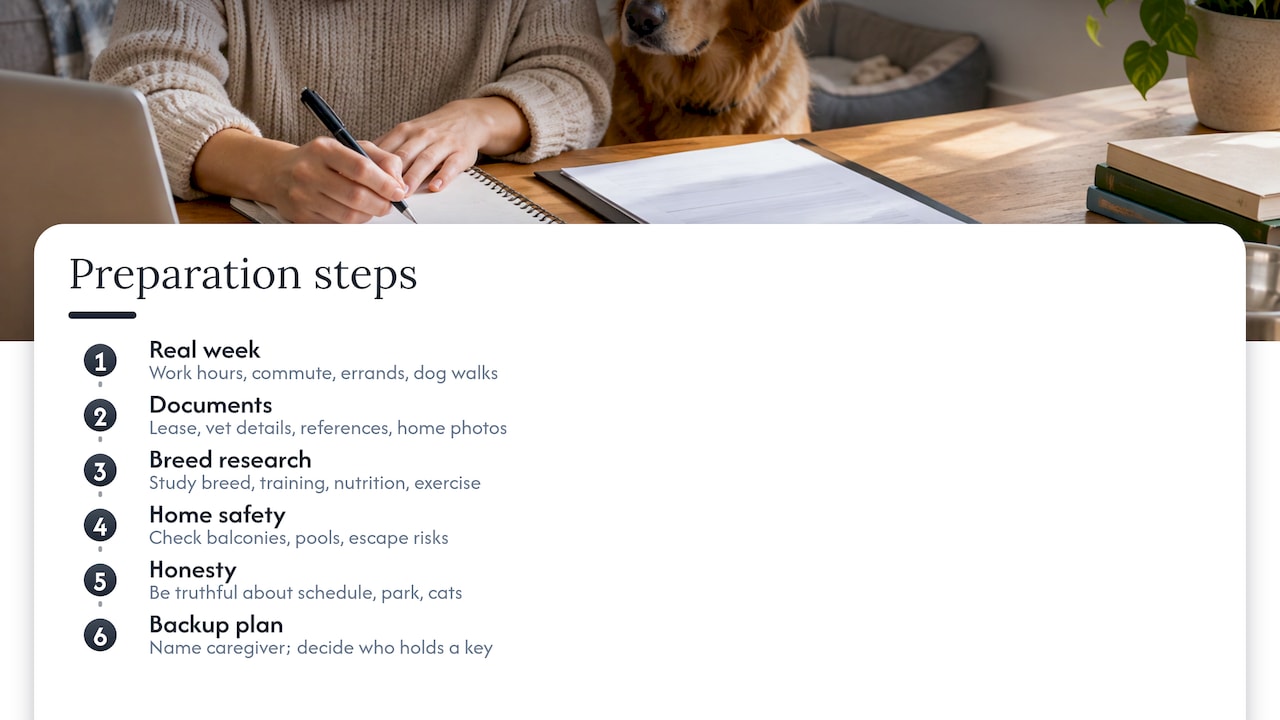
2. Gather documents. Lease with the pet clause, vet contact details and records for current pets, references and photos of your home. One rescue in Japan asks adopters to bring a rental contract clause and photos of the entrance, garden or balcony, fencing and indoor areas. Even if yours does not, the photos make a home visit smoother.
3. Research the breed or type. One breed rescue expects applicants to study the breed, its training philosophy and nutritional guidelines before the phone interview. Even for a mixed breed, learn the typical energy level and exercise needs.
4. Make the home safe first. Home checks look at hazards such as balconies, pools, escape risk, room size and nearby places to walk, according to BetterPet. Our room-by-room dog-safe home guide and pet-friendly home tips walk you through the fixes before anyone arrives.
5. Be honest. BetterPet’s advice is blunt: do not claim a huge park across the road if there is not one, and do not hide your cats. AdoptAPet frames the interview as a matching tool, not a trap, and says a mismatch in schedule or energy is unfair to both the pet and the adopter. A rescue that finds out later that you stretched the truth will likely decline you, and the dog loses too.
6. Prepare a plan for hard days. Reviewers want to know what happens when life interrupts. Decide who the backup caregiver is, who holds a key, and how you will know if your dog is in trouble when you are away.
The home visit and meet-and-greet
The home visit is usually friendlier than it sounds. A visitor walks through the spaces the dog will use, looks at the yard or nearest walking area, and meets everyone who lives there. One Maryland-area rescue’s guidelines are a good picture of what can come out of the review: Partnership for Animal Welfare evaluates responsibility, vet care of past and current pets, and home safety, and reviewers can require conditions such as building a fence, enrolling the dog in obedience training or buying months of heartworm and flea-tick medication before adoption proceeds.
At the meet-and-greet, resident dogs often come along. Keep it calm, let the dogs sniff on neutral ground, and follow the rescue’s lead. If you have a service dog or a trained companion, tell the rescue ahead so introductions can be planned.
Once you have a home date, our rescue dog handling guide and rescue care tips cover the first weeks.
Questions to ask about the dog
The interview runs both ways. AdoptAPet suggests asking whether the dog gets along with kids or other pets, what the dog’s personality is like, any health issues or special needs, how the dog handles being left alone, what training or socialization it has had, what food and routine it is used to, its energy level, and what type of person suits it best. Foster caregivers often know the answers best, and one rescue’s guidelines treat the foster’s opinion as an essential part of application review, so ask to speak with the foster if there is one.
If you have a specific need, such as a dog that can learn a task or tolerate quiet days at home with an older adult, say so. A rescue can then point you to a dog whose temperament fits. Our training basics for rescue dogs shows what to work on once the dog is home.
Your plan for alone time
For many readers, the hours alone question is the hardest to answer. If you live alone, are retired, have a disability or work outside the home, a rescue wants to know what happens when you cannot be there. A named backup caregiver is the first part of the answer. The second is how you will know if something goes wrong.
This is the problem the iPupPee was built around. It is a Wi-Fi enabled smart alert device: your dog presses a button and a notification goes to you or to your emergency contacts, with live video and two-way audio. It works for dogs of all sizes and does not require monthly subscription fees. Our How It Works page shows the setup. When you describe your plan to a rescue, being able to say how your dog can reach you, and who else gets the alert, turns “I’ll be home most of the time” into something specific.
After the interview: approval, conditions, or a no
Approval usually leads to a contract, a fee and a pickup window. One rescue asks approved adopters to collect the dog within 10 days. Some rescues attach conditions, as in the fence and training examples above. If you are declined, the most common reasons are a mismatch between the dog’s needs and your schedule, missing landlord permission, or unresolved reference checks. Ask which dog types might fit better. Applying again for a different dog is often possible.
Some rescues take first-time owners seriously. A Singapore rescue notes that street dogs may have been neglected or abused and need patient, understanding adopters, so it offers extra guidance to first-time owners and pairs dog and adopter carefully, rather than rejecting inexperience outright. Treat the process as a way to find the right match, not as a verdict on you.
If you run a rescue
Rescue organizations and trainers reading this can find a step-by-step outline in our guide to screening potential adopters in one to two weeks, plus a rehoming checklist and a rehoming evaluation checklist. Open questions such as asking adopters to describe how the pet will spend its day, which a major national animal welfare group recommends in its adoption program guidance, tell you more than yes-or-no boxes.
Our perspective
The best adoption interviews we hear about are conversations, not interrogations. The question underneath every form is the same: when this person is not in the room, is the dog going to be okay, and will the person be okay too?
That is why we built the iPupPee around communication. A dog that can press a button and reach you or your emergency contacts, with live video and two-way audio, changes what you can honestly say about alone time, illness and independence. It is especially meaningful for service dog handlers, seniors and people living alone.
Pair that with good training. Our on-demand psychology and training course gives new owners a structured way to build the habits that make a rescue dog settle in. Show a rescue a plan, and you show them you are ready.
Andrew
Get ready for your dog’s first day alone
The iPupPee is $129.99 and the Psychology & Training Course is $119, both one-time purchases. The device lets your dog send Wi-Fi alerts to you and multiple contacts, with live video and two-way audio, and there are no monthly subscription fees. The course is an on-demand program on dog psychology and training.
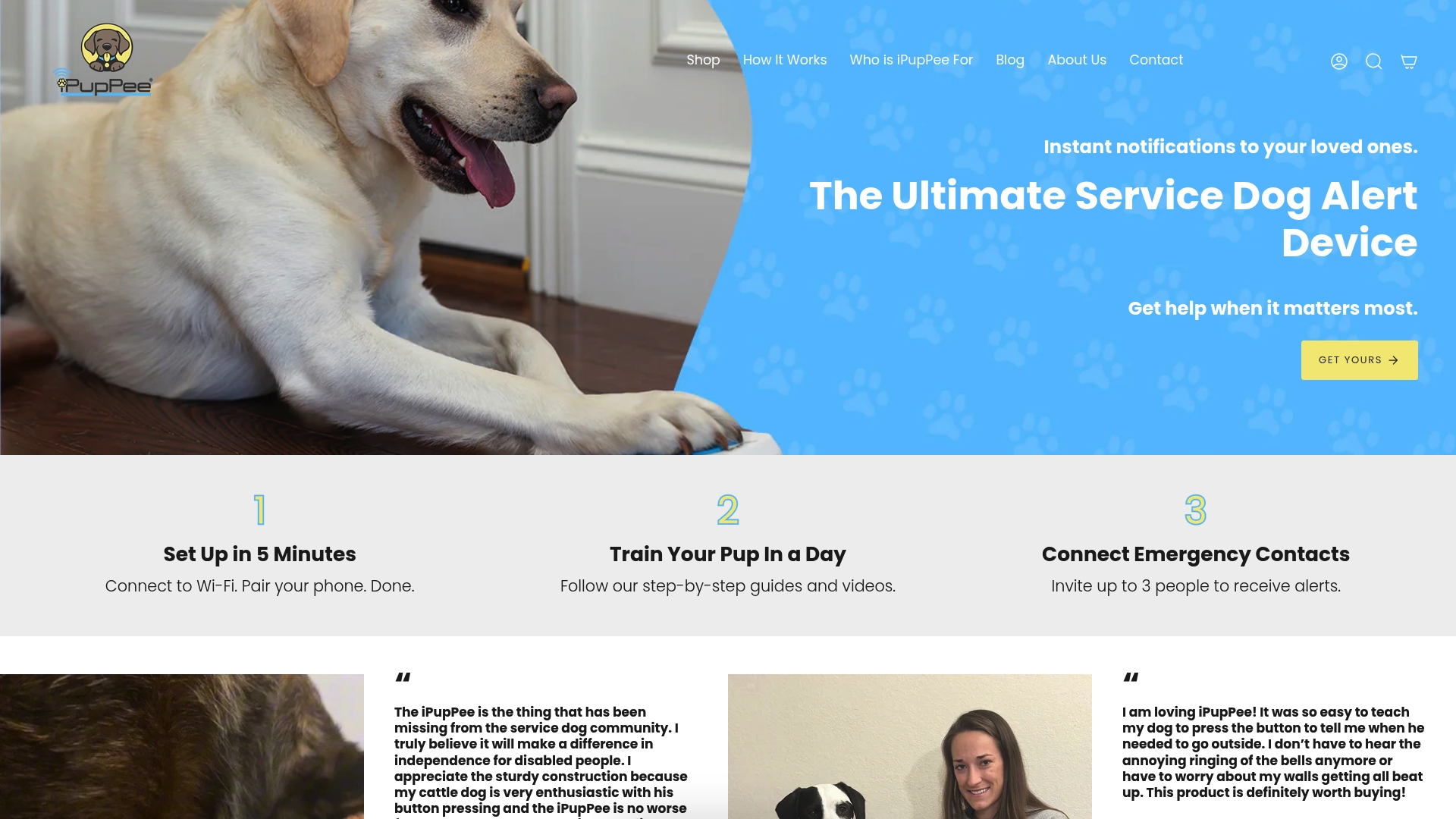
If you are about to start the adoption process, see the iPupPee device and set it up before your dog comes home. A $5.00 shipping protection option covers damage, loss or theft of your order at checkout.
FAQ
How long does a dog adoption interview take?
The phone call itself is usually short. One rescue describes it as a short phone interview about activity level and companion needs. The whole process, from application to pickup, can take days or weeks, since reference checks, home visits and meetings come after the call.
What should I say on a dog adoption application?
Say what is true and specific: who lives with you, your schedule, your housing situation and your plan for vet care. Rescues are matching dogs to homes, so accurate answers help you get a dog that suits you. Include a named backup caregiver and your vet’s contact details.
Can I be approved if I rent or live in an apartment?
Often yes. Many rescues simply ask for a copy of the pet section of your lease or your landlord’s permission. Bring that paperwork to the interview and describe where the dog will exercise.
Do all household members have to be involved?
Usually. Several rescues require everyone in the household to meet the dog, and some ask them to join the interview. If you have a resident dog, expect it to meet the new one as well.
What if my application is declined?
Ask what drove the decision, whether it was schedule, housing permission or references, and whether another dog would fit better. Fixing the gap, such as getting landlord approval or setting up a backup caregiver, can help in a later application.
Sources
- Save A Yorkie Rescue, Adoption Information
- Bellwether Harbor, The Process
- American Maltese Rescue, Adoption Process and Application
- Seattle Animal Shelter, Dog Adoption Survey
- San Francisco Canine Rescue, application form
- PAWS in the Park, Dog Adoption Questionnaire
- AdoptAPet, How to Pass a Pet Adoption Interview
- BetterPet, How to prepare for adopting a dog
- DC Shiba Inu Rescue, Adoption Process
- Partnership for Animal Welfare, Dog Adoption Guidelines
- Animal Refuge Kansai, The Adoption Process
- SOSD, Why and How Do Shelters Screen Adopters
- Best Friends Animal Society, Adoption Programs