

TL;DR:
- Proper preparation, structured introductions, and ongoing supervision are key to safe dog-child relationships.
- Reading dog body language and teaching children respectful interaction reduces bite risk and builds trust.
- Long-term success relies on routines, patience, and regular adjustments beyond initial introduction.
Bringing a new dog home is one of the most exciting things a family can do together. But for parents of young children, that excitement often comes with a quiet knot of worry: Will the dog be gentle? Will my kids know how to behave? What if the first meeting goes wrong? The stakes are real. A poorly managed introduction can set the tone for months of anxiety, behavioral problems, or worse, a bite incident. The good news is that with the right preparation, a structured first meeting, and consistent daily habits, you can build a household where your kids and your dog genuinely thrive together.
Table of Contents
- What to consider before bringing a dog home
- Setting up the first meeting: step-by-step instructions
- Teaching children safe interaction and dog body language
- Supervision and structured routines: building long-term trust
- Our take: What most guides miss about kids and dogs
- Get more expert guidance for a happy, safe household
- Frequently asked questions
Key Takeaways
| Point | Details |
|---|---|
| Preparation is key | Choosing the right dog and prepping your family sets the stage for a safe introduction. |
| Supervised, calm first meetings | Always supervise initial contact and keep interactions calm and structured. |
| Teach respectful interaction | Show children how to approach and handle dogs gently and respect a dog’s space. |
| Consistency builds trust | Daily routines, games, and ongoing supervision help solidify the bond and reduce risk. |
What to consider before bringing a dog home
Most parents focus on the dog itself, but the smartest preparation starts with your children. Think honestly about your child’s age and temperament. A curious toddler who grabs at everything is a very different challenge than a calm seven-year-old who follows instructions. Is your child ready for the responsibility of sharing space with an animal? That question matters more than which breed you pick.
One of the biggest decisions you’ll face is whether to get a puppy or an older dog. Here’s a quick comparison to help you think it through:
| Factor | Puppy | Older dog |
|---|---|---|
| Energy level | Very high | Usually calmer |
| Predictability | Low | Higher |
| Training needed | Extensive | Moderate |
| Best for young kids | Risky | Often better |
| Time commitment | Very high | Moderate |
For families with children under six, dog safety starts before introduction with a simple rule: prioritize older, calmer dogs and arrange trial interactions at the shelter before committing. Puppies are adorable, but their unpredictability and nipping behavior can overwhelm small children quickly.
Before the dog ever sets paw in your home, set up the physical space. You’ll want:
- Baby gates to create dog-free zones (bedrooms, play areas)
- A designated dog retreat with a crate or bed
- Food and water bowls placed out of children’s reach
- Leashes and collars ready for controlled introductions
- Toys and chews that belong only to the dog
Pro Tip: Before the dog arrives, spend a few days practicing “dog rules” with your kids. Role-play gentle petting, quiet voices, and what to do if the dog walks away. Children who rehearse the rules before the dog arrives are far more likely to follow them in the moment.
For a broader look at keeping everyone safe, our guide on dog safety for families covers environment setup in more detail.
Setting up the first meeting: step-by-step instructions
With your home and family prepared, it’s time to plan a safe, structured first meeting. The first interaction sets the emotional tone for your dog’s entire relationship with your children, so it’s worth slowing down and doing it right.
Introduce calmly on day one by keeping the home quiet and letting the dog explore the space before children enter the picture. Turn off the TV, ask relatives to wait outside, and give the dog ten to fifteen minutes to sniff around and decompress from the car ride.
Here’s a step-by-step approach for the actual introduction:
- Keep the dog on a leash held by a calm adult. This gives you instant control if either party gets overwhelmed.
- Have your child sit on the floor or a low chair. Being at the dog’s level feels less threatening and prevents the child from looming over the animal.
- Let the dog approach first. Do not push the dog toward your child or vice versa. Curiosity should drive the meeting.
- Guide petting to safe zones. Shoulders and chest are less sensitive than the face or tail. Show your child exactly where to place their hand.
- Watch for stress signals in the dog: yawning, turning away, or a stiff body. If you see them, calmly separate and try again later.
- Keep it short. Five to ten minutes is plenty for a first meeting. End on a positive note before anyone gets overstimulated.
“The goal of the first meeting isn’t love at first sight. It’s mutual respect and a lack of fear on both sides.”
Pro Tip: Bring a high-value treat your dog loves. Ask your child to hold it flat on their palm and let the dog take it gently. That one small moment of positive association can do more for the relationship than ten minutes of petting.
Building on that first connection takes patience. Our resource on bonding with dogs offers proven strategies for deepening trust over time. You can also review safe dog-child interactions for additional guidance from animal welfare experts.
Teaching children safe interaction and dog body language
After a successful first meeting, the next step is teaching your children how to interact safely and respectfully on a daily basis. This is where most families fall short, not because they don’t care, but because they assume kids will figure it out naturally. They won’t.
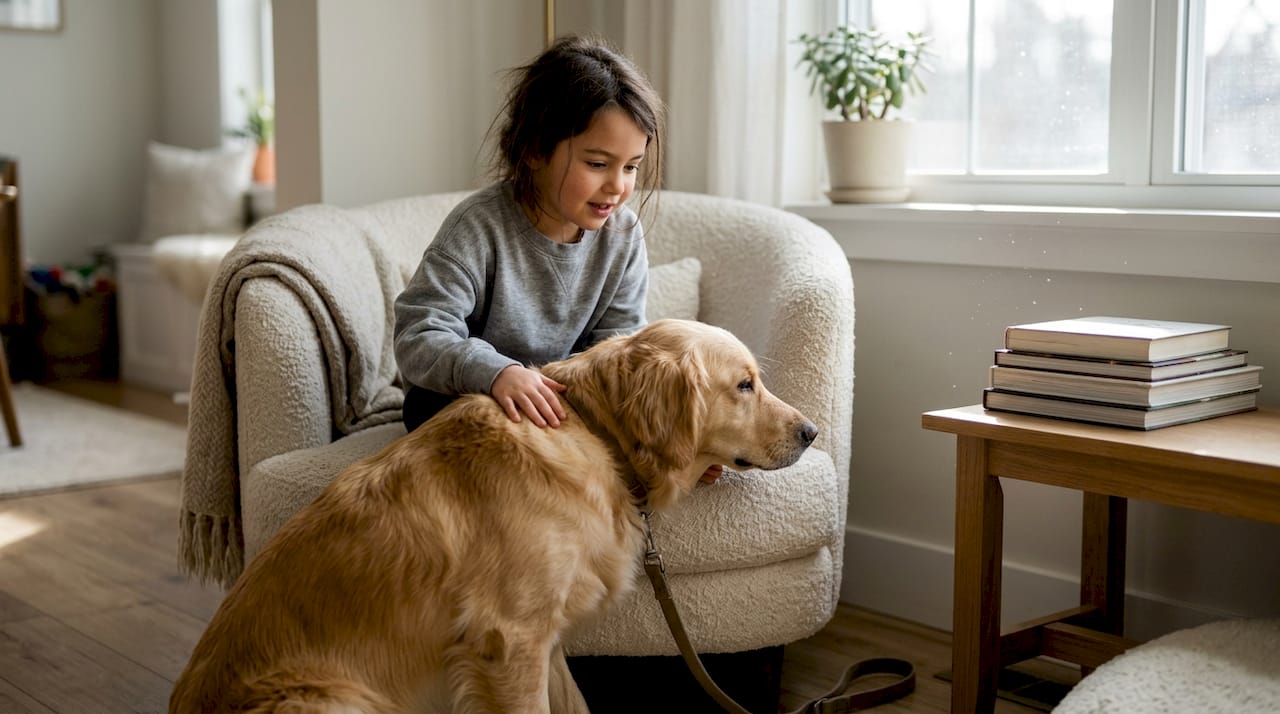
Teach children gentle petting, no rough play, and to respect the dog’s space, especially around food and toys. These aren’t just nice-to-have rules. They are the foundation of bite prevention.
Here’s a simple body language reference you can print and put on the fridge:
| Dog signal | What it means | What your child should do |
|---|---|---|
| Yawning or lip licking | Stress or discomfort | Back away, give space |
| Tail tucked under body | Fear | Do not approach |
| Stiff body, hard stare | Warning | Calmly leave the area |
| Loose wagging tail | Relaxed and happy | Gentle interaction is okay |
| Rolling onto back | Submission or trust | Gentle belly rub is fine |
Beyond reading signals, children need clear behavioral rules. Here are the non-negotiables:
- Never disturb a sleeping dog. Even the gentlest dog can startle and snap.
- Stay away from the food bowl. Resource guarding is a common trigger for bites.
- No chasing or roughhousing. It overstimulates dogs and can trigger prey drive.
- Don’t hug the dog around the neck. It feels threatening to most dogs, even friendly ones.
- Always ask an adult before approaching an unfamiliar dog.
For more on reading your dog’s signals, our articles on dog interaction tips and dog communication break it down in plain language. Petco also offers a helpful overview of kids and dogs that’s worth bookmarking.
Supervision and structured routines: building long-term trust
With everyone trained in safe interactions, long-term trust comes from daily routines and sustained adult supervision. This is the part that feels tedious but matters most.
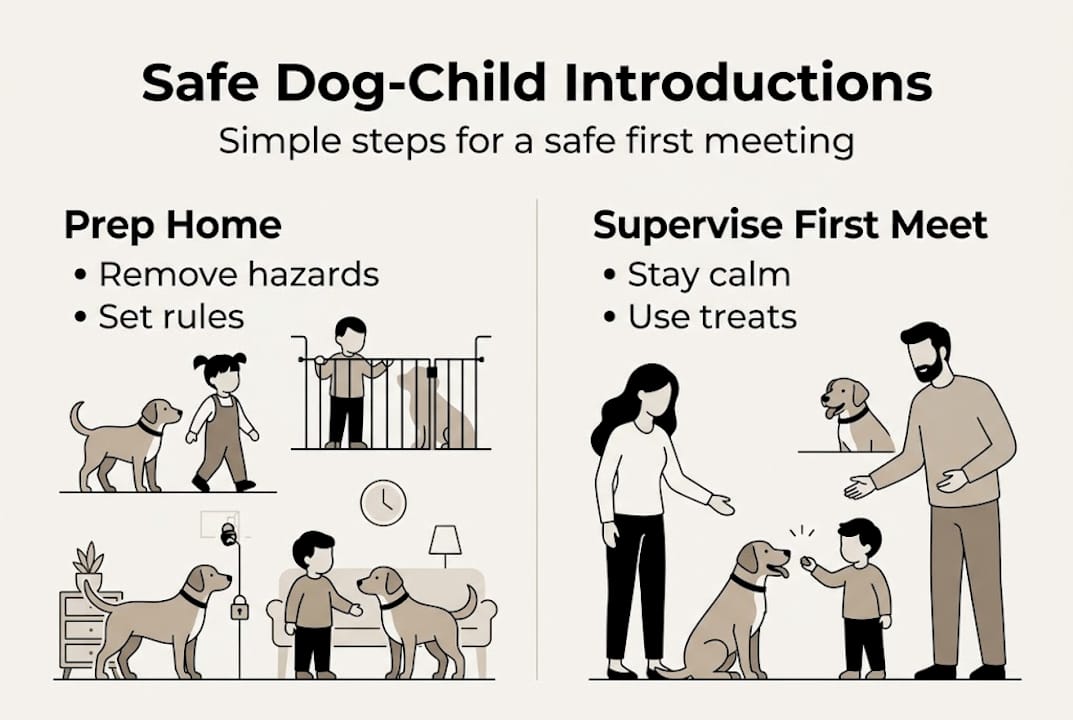
Supervise all interactions constantly, especially in the first weeks and months, using barriers and modeling calm behavior. The data backs this up: pediatric dog bite injuries are disproportionately high in children under ten, and the majority occur in familiar home settings, not with strange dogs. The family pet is statistically the most common source of bites. That’s not a reason to panic. It’s a reason to stay present.
Here’s a practical supervision framework for the first three months:
- Never leave kids and dogs alone in the same room, even for a minute. Use gates or crates when you step out.
- Model calm behavior yourself. Dogs read adult energy. If you’re tense, the dog will be too.
- Create a dog retreat where the dog can go and not be followed. Enforce this boundary firmly with children.
- Do a daily check-in on the dog’s behavior. Is the dog eating normally? Sleeping well? Showing any new tension around the kids?
- Adjust rules as kids grow. A rule that works for a four-year-old may not be needed for an eight-year-old.
Building positive associations through structured activities reduces risk and strengthens the dog-child bond in ways that passive coexistence never will. Assign age-appropriate chores: a three-year-old can refill the water bowl, a five-year-old can help measure kibble, and a seven-year-old can join a leashed walk with an adult.
“Routine is the secret ingredient. Dogs and kids both settle faster when they know what to expect from each other.”
For deeper strategies on building this kind of connection, explore our guides on dog training and bonding and how to meet dog social needs throughout the week.
Our take: What most guides miss about kids and dogs
Here’s something most introductions guides won’t tell you: the first meeting is the easy part. Parents read up, follow the steps, and the dog sniffs the kids without incident. Everyone exhales. Then life happens. The kids get loud, the dog gets territorial over a toy, and suddenly the family is back at square one wondering what went wrong.
In our experience, the real challenge isn’t day one. It’s week six. That’s when the novelty wears off, supervision gets relaxed, and both the dog and the kids start testing limits. Setbacks in the first few months are completely normal, and they don’t mean you chose the wrong dog.
What actually works is treating the dog-child relationship like any other relationship in the household: something that needs ongoing attention, honest assessment, and occasional recalibration. Rules that made sense when your child was four may need updating by age seven. A dog that was anxious in the first month may become the calmest member of the household by month three.
The families who get this right aren’t the ones who had a perfect first meeting. They’re the ones who stayed curious, stayed consistent, and adjusted when something wasn’t working. Our guide on dog socialization importance explores why this ongoing investment pays off for the whole family.
Get more expert guidance for a happy, safe household
If you’re ready to take your family’s next steps toward safer, happier dog-child interactions, there’s more help at your fingertips. At iPupPee, we’ve built a library of practical, experience-based resources designed specifically for families navigating the rewarding but sometimes tricky world of life with dogs.

From training fundamentals to socialization strategies and bonding activities, our content is written for real parents raising real kids alongside real dogs. Whether you’re still deciding on a breed or already in week two of a rocky adjustment, you’ll find actionable guidance at iPupPee. Browse our blog, explore our product solutions, and reach out with your questions. We’re here to help your household find its rhythm.
Frequently asked questions
What is the safest way to introduce a dog to young children?
Supervise the introduction closely, let the dog approach your child at its own pace, and guide gentle petting to safe areas like the shoulders or chest. Following day one introduction tips from animal behavior experts makes a measurable difference in how smoothly the first meeting goes.
At what age can kids help care for a dog?
Children as young as three or four can help with simple tasks like filling the water bowl, while feeding and leashed walks are better suited for ages five and up with direct adult supervision. Age-appropriate dog chores give kids ownership without overwhelming them.
Why is supervision necessary when kids and dogs interact?
Most dog bites to children happen during unsupervised moments, even with familiar family pets. Consistent adult presence is the single most effective way to reduce that risk, as confirmed by pediatric bite injury data.
What warning signs should parents watch for during introductions?
Common dog stress signals include yawning, lip licking, turning away, or a stiff posture. Recognizing these early and calmly separating the dog and child prevents escalation, as outlined in guidance on child readiness for dogs.
How long does it take for dogs and kids to adjust?
Most families need several weeks to a few months before everyone feels genuinely comfortable and settled into a routine. Adjustment timelines vary by dog temperament and child age, but patience and consistency are the two constants that always help.