

Use a staged screening process, application or email inquiry, phone or video interview, reference checks, a neutral meet-and-greet, a home visit, then a signed contract, to place a pet safely and permanently. This typically runs about one to two weeks from first contact to handover. Anchor each step with real verification: a vet reference, a written contract, and, if you want extra peace of mind during the adjustment period, a tech-enabled check-in tool for monitoring.
TL;DR:
- A thorough screening process includes application review, phone and video interviews, reference checks, and a home visit, each step ensuring candidate suitability.
- Asking specific, detailed questions during interviews helps identify genuine, responsible adopters and weed out those providing vague or evasive answers.
- A neutral meet-and-greet in a public place and a documented home assessment verify that the adopter’s environment matches their description and is safe for the pet.
- Red flags include a history of pet surrender without explanation, refusal to provide references, rushing placements, and scam signals like insisting on shipping the pet or skipping verification.
- A comprehensive adoption contract with clauses for return, spay/neuter, resale restrictions, microchip transfer, and scheduled follow-ups solidifies placement security.
Table of Contents
- How Do You Screen Potential Adopters Step by Step?
- What Should You Ask on the Phone or During a Video Interview?
- How Should a Meet-and-Greet Work?
- What Does a Home Visit Need to Confirm?
- What Are the Biggest Red Flags in Potential Adopters?
- What Paperwork Finalizes a Safe Handover?
- Running Screening Without Burning Out
- Tools That Support a Smoother First Few Weeks
- Where to Find the Full Checklists and Templates
- Sources
- FAQ
How Do You Screen Potential Adopters Step by Step?
A rescue-practical adopter vetting process moves in order, and skipping a step is where most bad placements start. Each stage exists to catch something the previous one can’t.
- Application or email inquiry. Get basic facts in writing: household size, housing type, work schedule, past pet history.
- Phone or email screen. Confirm the written answers and ask one or two open-ended follow-ups.
- Video call. A 20 minute call lets you see how someone talks about routines and confirms they’re a real, engaged person rather than a scammer.
- Reference checks. Call the vet first, then a personal reference.
- Neutral meet-and-greet. Watch how the adopter and pet interact somewhere low-stress, like a park.
- Home visit. Verify the physical environment matches what they described.
- Contract and handover. Sign paperwork, transfer the microchip, schedule a follow-up.
A candidate clears the video step when they name their vet without hesitation and answer questions with specifics, not generic reassurance. Vague answers or refusal to get on camera are your cue to slow down, not speed up, per guidance on screening adopters.
What Should You Ask on the Phone or During a Video Interview?
The initial application does most of the sorting. A short standard form lets you triage quickly, so you spend real time only on serious candidates. Ask these five to eight questions up front:
- What happened to your last pet, and why don’t you have them anymore?
- What’s your daily routine, and who’s home during the day?
- Do you rent or own, and if you rent, does your lease allow pets?
- What’s your plan if this pet gets sick or needs emergency surgery?
- Have you owned this breed or type of animal before?
Green answers are specific: a mentioned monthly pet budget, a named vet clinic, a clear answer about who walks the dog at 7 a.m. Red answers are vague or defensive, especially around the “what happened to your last pet” question, according to shelter screening guidance.
Save the harder questions for the video call, where body language and hesitation are easier to read: ask about emergency vet budgeting directly, and ask them to walk you through what a normal Tuesday looks like with the pet in it. People who’ve genuinely thought this through describe it in detail. People who haven’t given you a sentence and stop.
Pro Tip: Ask one question you already know the answer to, like the pet’s current age from your listing. If their response doesn’t match, that’s a sign they weren’t reading closely, which often predicts they won’t read your care instructions closely either.
How Should a Meet-and-Greet Work?
Start on neutral ground: a quiet park, a friend’s yard, anywhere that isn’t the adopter’s home or yours. A pet meeting a stranger in unfamiliar territory shows you more honest behavior than one defending its own turf, and it protects you if the meeting doesn’t go well.
Plan for 30 to 45 minutes with the adult decision-makers present, not just one partner or a teenager sent to “check it out.”
- Watch whether the adopter lets the pet approach at its own pace instead of crowding it.
- Notice if they ask questions about behavior, triggers, or training history unprompted.
- If they’re bringing an existing pet, introduce the animals on leash in open space, side by side, before any face-to-face greeting.
- Treat a calm, curious reaction from both animals as a green light; repeated growling or stiff body language means pump the brakes.
If the meet-and-greet goes well and references check out, move to a home visit within a few days. Don’t let too much time pass between steps. Momentum matters, and a serious adopter will make time for it.
What Does a Home Visit Need to Confirm?
A home visit exists to verify that what the applicant described on paper matches reality. If an in-person visit isn’t practical, a short video walkthrough of the yard, fencing, and main living space is a reasonable substitute, and it’s still far better than skipping verification entirely.
- Check fencing height and gaps, and look for obvious escape routes like gaps under gates or unlatched pool areas.
- Confirm a defined sleeping space exists and that household chemicals, medications, and toxic plants are out of reach.
- Watch how children and any resident pets react to a new animal being discussed or briefly present.
- Photograph or note anything that needs fixing before handover, like an unsecured trash area or a broken fence panel.
Document what you find in writing, even briefly. If a fix is required, an adoption can proceed once you’ve confirmed the fix, ideally with a follow-up photo, rather than taking someone’s word for it.
What Are the Biggest Red Flags in Potential Adopters?
Some issues disqualify an applicant outright. Others just need a condition attached before you say yes.
- Hard disqualifiers: a pattern of repeated pet surrenders with no clear explanation, refusal to provide a vet or personal reference, pressure to skip steps and take the pet home “today,” and no plan at all for emergency costs.
- Conditional approvals: a trial foster period, a requirement to consult a trainer within the first month, or a signed return clause that brings the pet back to you rather than to a shelter if things don’t work out.
- Scam signals: refusing video calls, insisting on shipping the pet, or rushing payment before any real conversation happens. Genuine adopters welcome verification; people running phishing or advance-fee scams avoid it, a pattern documented in adopter red flag research.
Pro Tip: Always ask directly what happened to their last pet, and if the story doesn’t add up or they get defensive, treat that as your strongest single signal, stronger than a slightly messy house or a nervous first phone call.
Write down your reason for any refusal, even a short note. It protects you if the decision is ever questioned later.
What Paperwork Finalizes a Safe Handover?
The contract is what turns a good screening process into a legally documented, defensible placement.
- Include a return clause requiring the pet come back to you, not to a shelter, if it doesn’t work out.
- Add a spay/neuter requirement if the pet isn’t already fixed, with a completion deadline.
- State a no-resale clause prohibiting the adopter from selling or giving away the pet without notifying you first.
- Complete the microchip transfer at handover and confirm the registry update within a week, not “eventually.”
- Get written permission for follow-up contact, then schedule check-ins at one week, one month, and three months to confirm the placement is holding.
These clauses come straight from standard shelter contract practice, and they’re what separate a casual handoff from a placement you can actually stand behind months later.
Running Screening Without Burning Out
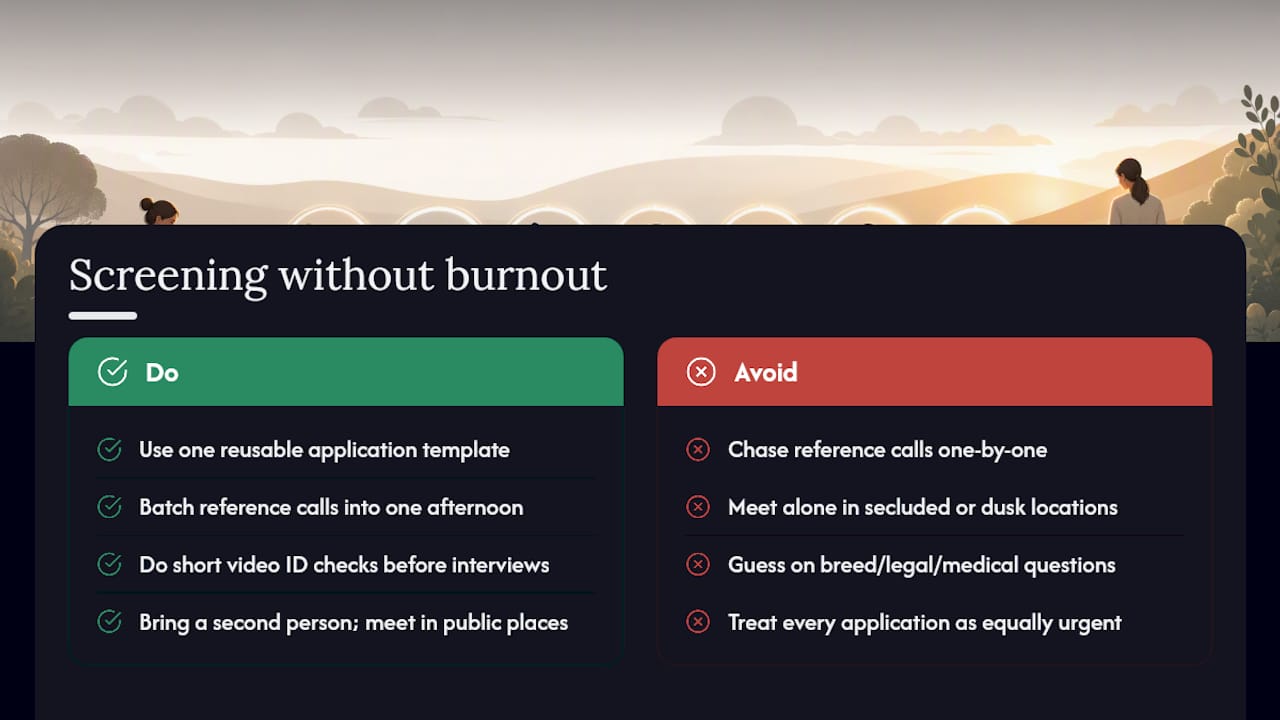
Templates save you. Write one standard application email once, and reuse it for every inquiry, so you’re triaging instead of composing from scratch each time. Batch your reference calls on a single afternoon rather than chasing them one at a time across a week, and use short video calls specifically to confirm identity before you invest an hour in a full interview.
For meetups, always bring a second person and pick a public spot with other people around, not an empty lot at dusk. And if an applicant’s situation raises a question you can’t answer confidently, breed-specific behavior, a legal question about liability, a medical need, call a local trainer or rescue partner rather than guessing. Most small rescue burnout comes from treating every single application as equally urgent. It isn’t. A five-minute triage read on the initial form tells you which ones deserve the full process.
— Andrew
Tools That Support a Smoother First Few Weeks
Screening gets a pet into the right home. What happens in the first month there is a different problem, and it’s one a lot of guides skip entirely. New adopters often struggle with monitoring, especially if the pet is anxious, elderly, or has any special needs, and that uncertainty is a real driver of early returns.
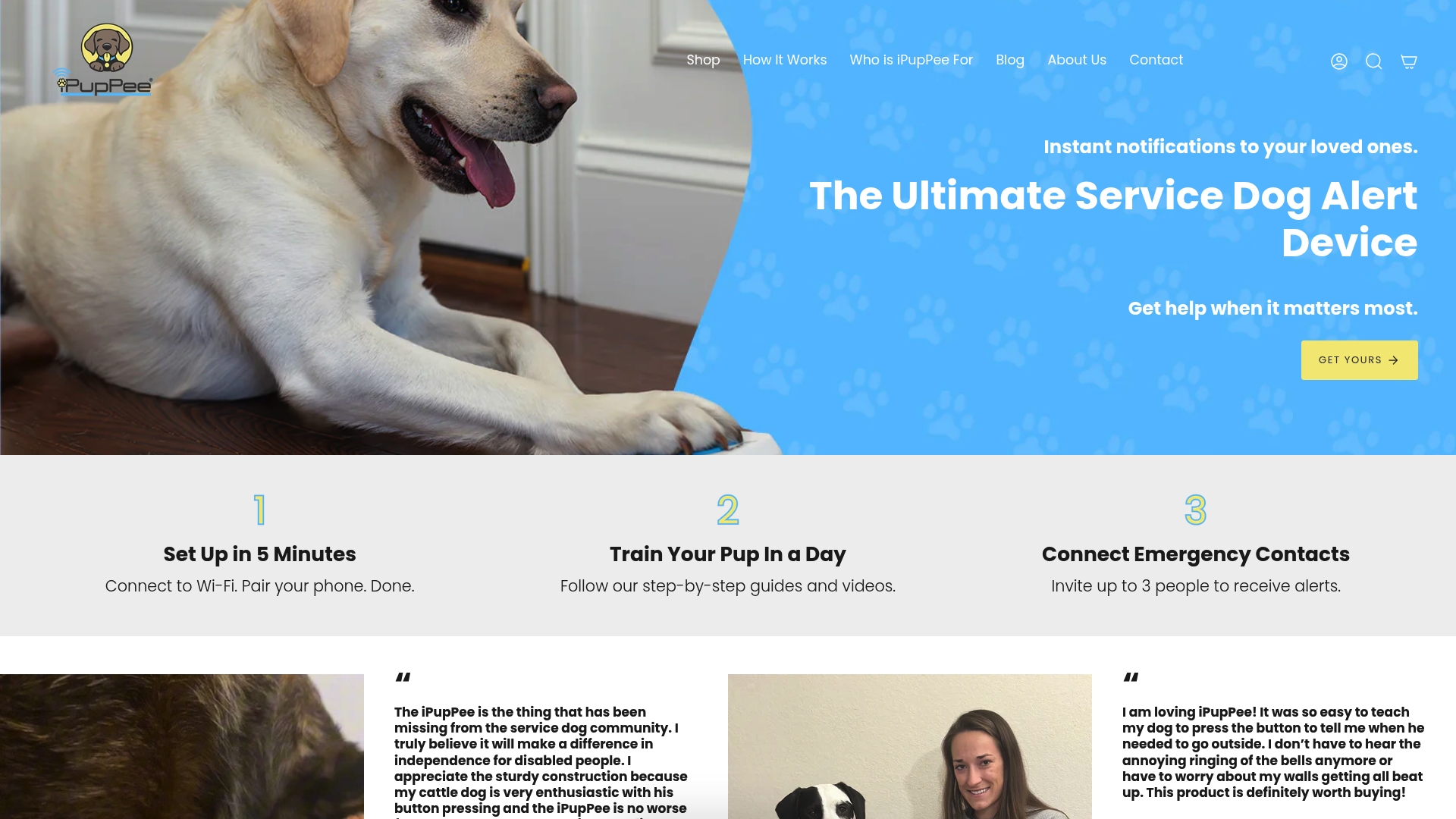
This is where a communication device like iPupPee earns its keep as an optional add-on, not a replacement for the screening process you just ran. It lets a dog send a direct Wi-Fi alert with live video and two-way audio to the adopter’s phone, which gives new owners a way to check in during the adjustment period without hovering. There’s no monthly subscription fee, and it’s built to work for dogs of different sizes. Pair it with the Psychology & Training Course, a one-off resource that walks new adopters through the early behavioral hurdles that trip up first-time owners. If you’re finalizing a placement this week, product pages list current details and pricing, and they’re worth sending to an adopter as part of your welcome packet.
Where to Find the Full Checklists and Templates
For a downloadable home-inspection checklist, see Ipuppee’s rehoming evaluation checklist. For a longer walkthrough of the full process, read how to build a rehoming checklist.
Sources
The veterinary reference is the single highest-value check you’ll make. A vet’s office can usually answer in about five minutes whether the applicant brings pets in for annual care and follows through on treatment plans, which tells you more about long-term commitment than almost anything else, according to LocalPetFinder’s screening research. Two references, one vet and one personal, are usually enough for an independent rehoming.
- How to Screen Adopters for a Dog You Are Rehoming | LocalPetFinder
- Screening potential adopters | Tabby’s Place
FAQ
What Is the 3-3-3 Rule for Adopting a Dog or Cat?
It’s a general guideline suggesting a newly adopted pet needs about 3 days to decompress, 3 weeks to learn your routine, and 3 months to feel fully settled. It’s not a strict formula, but it sets realistic expectations for adopters during the follow-up check-ins you schedule after handover.
What Age Is Hardest to Get Adopted?
Adult and senior pets, generally past the puppy or kitten stage, tend to wait longer for adoption than younger animals. Screening for these pets often benefits from extra attention to an adopter’s long-term stability and willingness to manage age-related health needs.
What Disqualifies Someone From Adopting a Dog?
A documented pattern of repeated pet surrenders, refusal to provide vet or personal references, no plan for emergency veterinary costs, and pressure to skip screening steps are the clearest disqualifiers. Renters without written landlord permission should also be paused until that’s resolved.
How Long Should the Screening Process Take?
A thorough process, from application to signed handover, typically runs 7 to 14 days across application, video interview, reference checks, meet-and-greet, and home visit. Rushing past any of these steps is where most failed placements originate.
Do I Need a Written Contract for a Pet Adoption?
Yes. A signed contract with a return clause, spay/neuter requirement, no-resale clause, and microchip transfer protects both the animal and you if the placement doesn’t work out, and it gives you standing to take the pet back rather than losing track of it entirely.