

Finding the right approach to dog training can feel overwhelming for American puppy owners and service dog handlers. Modern methods now focus on building trust and clear communication, moving away from outdated punishment-based techniques. Training grounded in positive reinforcement and evidence-based techniques transforms learning into a rewarding experience. This guide explores the key principles and techniques that help develop confident, well-behaved dogs while fostering safer interactions for both handlers and their canine companions.
Table of Contents
- Core Principles Of Canine Training Today
- Popular Canine Training Methods Explained
- Types Of Canine Training For Different Needs
- Common Misconceptions About Dog Training
- Risks, Pitfalls, And What To Avoid
Key Takeaways
| Point | Details |
|---|---|
| Positive Reinforcement is Key | Focus on rewarding desirable behaviors to encourage learning and build a trusting relationship with your dog. |
| Understanding Dog Psychology | Recognize each dog’s individual personality and learning style to achieve effective training outcomes. |
| Avoid Punishment-Based Methods | Steer clear of aggressive tactics, as they can cause fear and negatively impact the dog’s behavior and mindset. |
| Emphasize Clear Communication | Use consistent verbal and physical cues to facilitate understanding and cooperation during training sessions. |
Core Principles of Canine Training Today
Modern canine training has evolved dramatically, moving far beyond traditional punishment-based approaches toward more sophisticated, scientifically-informed methodologies. Today’s training emphasizes understanding dog psychology, building trust, and creating clear communication channels between handlers and their canine companions. Evidence-based training methods now prioritize the cognitive and emotional welfare of dogs.
The core principles of contemporary canine training center on several key strategies:
- Positive Reinforcement: Rewarding desired behaviors to encourage their repetition
- Incremental Learning: Breaking complex tasks into small, achievable steps
- Clear Communication: Using consistent verbal and physical cues
- Emotional Intelligence: Recognizing and responding to the dog’s psychological state
Modern trainers understand that dogs learn most effectively through targeted, reward-based techniques. This approach transforms training from a disciplinary process into a collaborative partnership. By focusing on building positive associations and understanding canine cognitive processes, handlers can develop deeper, more trusting relationships with their dogs.
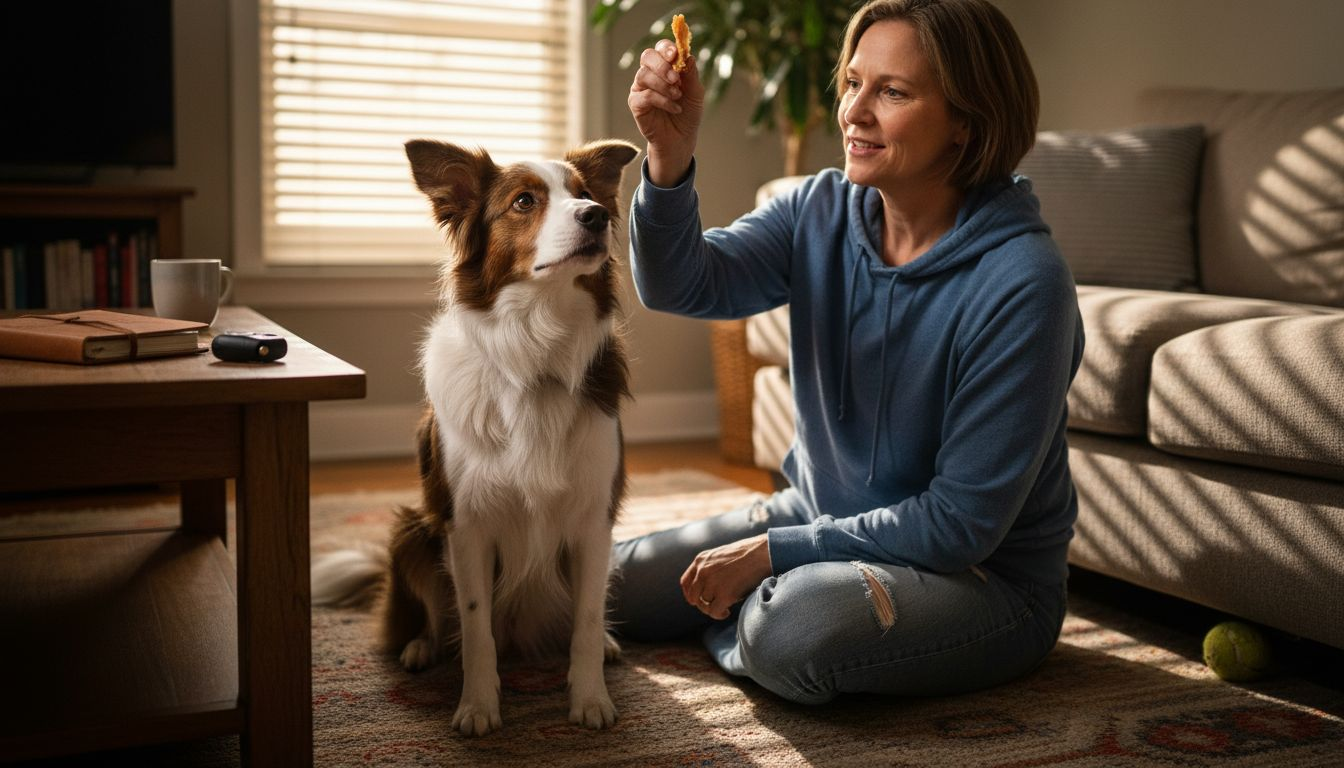
Training today is not about dominance or control, but about mutual understanding and respect. Dogs are viewed as intelligent beings capable of complex learning and emotional experiences. This paradigm shift means trainers now invest significant time in understanding breed-specific behaviors, individual dog personalities, and creating customized training approaches that honor each dog’s unique characteristics.
Pro tip: Start training sessions when your dog is calm and receptive, using high-value treats and keeping initial lessons short and engaging.
Popular Canine Training Methods Explained
Dog training has evolved significantly, with modern approaches emphasizing psychological understanding and humane techniques. Dog training methods today reflect a major shift from punitive practices toward more compassionate, science-based strategies that prioritize the dog’s emotional well-being.
The most popular canine training methods can be categorized into several key approaches:
- Positive Reinforcement: Rewarding desired behaviors with treats, praise, or play
- Clicker Training: Using a distinct sound to mark precise moments of correct behavior
- Mirror Training: Encouraging dogs to imitate desired actions
- Relationship-Based Training: Building trust and communication through consistent interactions
Professional trainers now recognize that effective training combines psychological insight with structured learning techniques. This approach transforms training from a rigid discipline into a collaborative process where dogs actively engage and enjoy learning. By understanding canine psychology, handlers can create more meaningful and lasting behavioral changes.
Each training method offers unique benefits, but the most successful approaches share common principles. They focus on clear communication, consistent expectations, and creating positive associations with learning. Modern trainers view dogs as intelligent partners capable of complex understanding, moving far beyond traditional dominance-based models that rely on punishment and fear.
Pro tip: Choose a training method that matches your dog’s individual personality and learning style, and always remain patient and consistent throughout the process.
Here’s a quick overview of popular canine training methods and their best use cases:
| Method | Best For | Key Benefit |
|---|---|---|
| Positive Reinforcement | Everyday household training | Builds trust and eagerness to learn |
| Clicker Training | Precision tasks and tricks | Marks desired behavior clearly |
| Mirror Training | Social and cooperative learning | Encourages imitation and bonding |
| Relationship-Based Training | Building long-term human-canine bonds | Enhances mutual understanding |
Types of Canine Training for Different Needs
Specialized canine training programs have emerged to address diverse needs across multiple sectors, reflecting the remarkable versatility of dogs and their ability to perform complex tasks. Modern training approaches recognize that different environments and objectives require tailored strategies that go beyond traditional obedience training.
Canine training can be categorized into several specialized domains:
- Service Dog Training: Assisting individuals with disabilities
- Therapy Dog Training: Providing emotional support in hospitals, schools, and care facilities
- Detection Dog Training: Searching for drugs, explosives, or missing persons
- Protection Dog Training: Providing security and personal defense
- Sports and Agility Training: Competitive performance and physical conditioning
- Search and Rescue Training: Locating and helping people in emergency situations
Professional canine training programs now integrate advanced behavioral science, psychology, and specialized skill development. This comprehensive approach ensures that dogs are not just trained, but truly prepared for their specific roles, whether as working companions or supportive partners in complex environments.
Each training type requires unique skills, psychological understanding, and targeted techniques. Trainers must consider the dog’s individual temperament, breed characteristics, and the specific demands of their intended role. The most successful programs create a holistic approach that respects the dog’s natural abilities while systematically developing the precise skills needed for their specialized function.
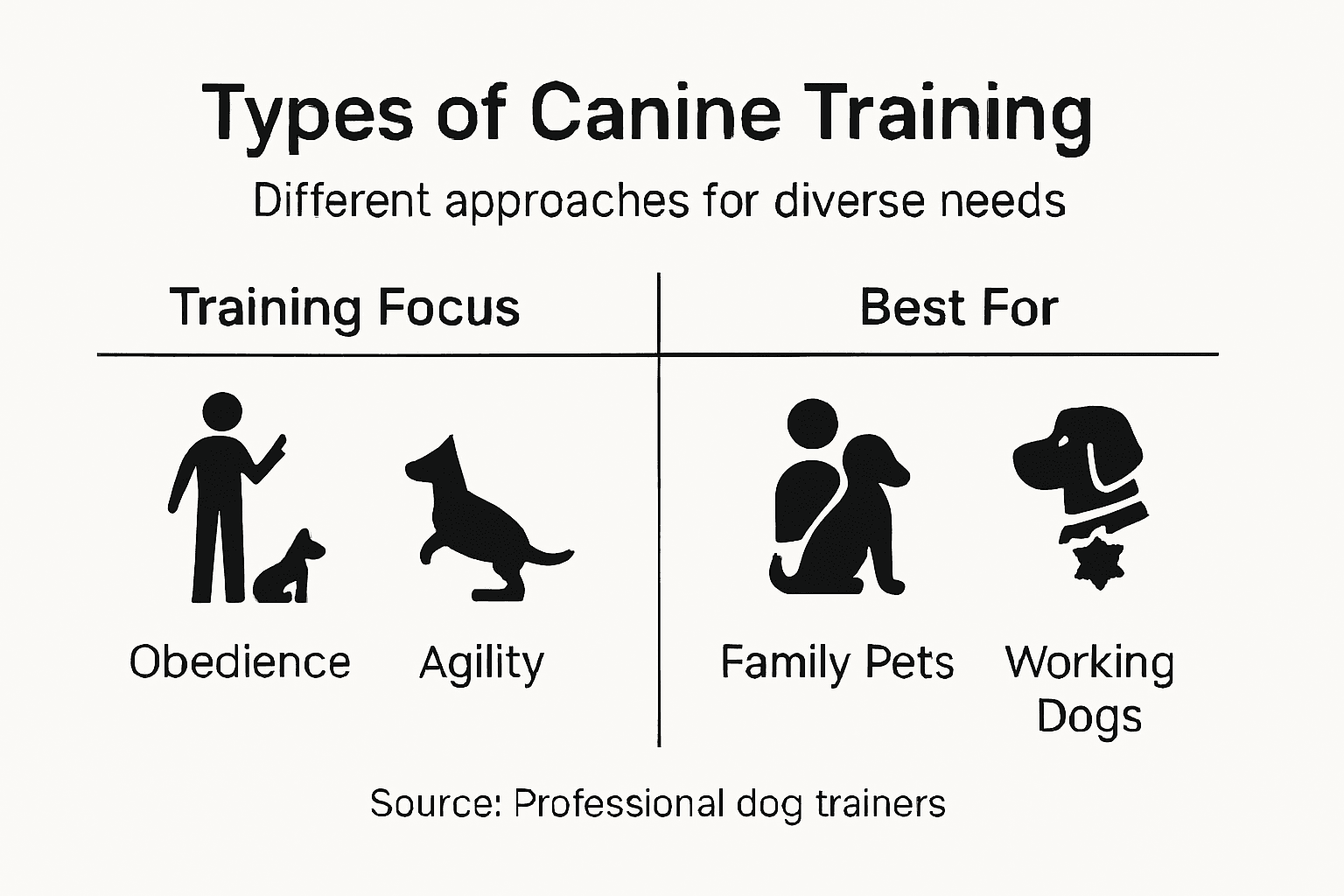
Pro tip: Always match the training approach to your dog’s individual personality, learning style, and intended purpose to maximize effectiveness and mutual understanding.
The table below summarizes the unique focus and outcome of each type of specialized canine training:
| Training Type | Main Objective | Typical Environment |
|---|---|---|
| Service Dog | Aid for disabilities | Homes, public places |
| Therapy Dog | Emotional comfort | Hospitals, schools |
| Detection Dog | Find substances or people | Airports, police operations |
| Sports & Agility Dog | Physical performance | Training arenas, competitions |
Common Misconceptions About Dog Training
Dog training misconceptions persist despite significant advances in animal behavior science, creating unnecessary challenges for both dogs and their owners. Understanding the truth behind these myths is crucial for developing effective, compassionate training strategies that respect canine psychology and individual learning capabilities.
Some of the most prevalent misconceptions about dog training include:
- Alpha Dominance Myth: Believing dogs must be forcibly controlled through aggressive tactics
- Age Limitation: Thinking older dogs cannot learn new behaviors
- Punishment-Based Learning: Assuming negative reinforcement is more effective than positive methods
- Breed Determinism: Believing certain breeds are untrainable or inherently problematic
- Emotional Attribution: Thinking dogs act out of spite or malice
Professional training research consistently debunks these outdated beliefs. Modern understanding emphasizes that dogs are intelligent, responsive creatures who learn best through clear communication, consistent positive reinforcement, and respect for their individual temperament. Punishment-based approaches often create fear and confusion, while reward-based methods build trust and genuine cooperation.
Each misconception represents a fundamental misunderstanding of canine psychology. Dogs do not think like humans and cannot be trained using human emotional frameworks. They respond to clear, consistent signals, predictable consequences, and positive reinforcement that makes desired behaviors rewarding and enjoyable.
Pro tip: Always approach training with patience, understanding, and a focus on positive reinforcement, recognizing that every dog is unique and learns differently.
Risks, Pitfalls, and What to Avoid
Aversive dog training methods can cause significant long-term damage to a dog’s psychological well-being and the human-animal relationship. Understanding the potential risks is crucial for responsible dog handlers who want to develop a strong, trust-based connection with their canine companions.
Key risks and pitfalls in dog training include:
- Physical Punishment: Causing fear, anxiety, and potential aggression
- Inconsistent Training: Sending mixed signals that confuse the dog
- Emotional Manipulation: Using shame or guilt as a training technique
- Overtraining: Pushing a dog beyond its mental and physical capabilities
- Ignoring Individual Personality: Applying one-size-fits-all training approaches
Professional behavior experts consistently warn against using punishment-based techniques. These methods can trigger stress responses, compromise learning ability, and potentially create more behavioral problems than they solve. Dogs trained with negative reinforcement often develop anxiety, reduced cognitive function, and decreased trust in their handlers.
Successful training requires understanding that dogs are sensitive, intelligent creatures who learn best through positive, consistent, and patient approaches. The most significant pitfall is viewing training as a power struggle rather than a collaborative learning process. Each interaction should build trust, communicate expectations clearly, and make the learning experience enjoyable for the dog.
Pro tip: Always approach training as a partnership, focusing on clear communication, patience, and creating positive experiences that make learning feel like a rewarding game for your dog.
Enhance Your Canine Training with Intelligent Communication Tools
The article highlights the core challenge of building clear communication and trust between you and your dog through positive reinforcement and tailored training methods. Understanding your dog’s unique signals is key to effective training, especially for service dogs or dogs with special needs. Imagine how much easier it could be to support your dog’s learning and well-being with a device designed to bridge your communication gap and enhance safety.

Discover how the iPupPee device empowers you to connect with your dog using a simple button press. It is a cutting-edge solution for service dog handlers and pet owners seeking reliable communication to strengthen their bond. Whether you are beginning training or advancing specialized skills, iPupPee supports your goals with straightforward instructions and safety features. Take the next step in canine training by visiting our website today and explore how intelligent communication can transform your partnership.
Frequently Asked Questions
What are the core principles of modern canine training?
Modern canine training emphasizes positive reinforcement, incremental learning, clear communication, and emotional intelligence to foster a strong bond between dogs and their handlers.
Why is positive reinforcement important in dog training?
Positive reinforcement encourages desired behaviors by rewarding them with treats, praise, or play, leading to a more enjoyable learning experience for the dog and strengthening the human-canine relationship.
How can I determine the best training method for my dog?
Choosing the best training method involves considering your dog’s individual personality, learning style, and specific needs. It is also beneficial to research various methods to find an approach that fits your dog’s characteristics.
What are the risks of using punishment-based training methods?
Punishment-based methods can lead to fear, anxiety, and aggression in dogs, as well as confusion due to inconsistent signals. These techniques often hinder effective learning and damage the trust relationship between the dog and handler.