

What is supportive pet technology?
Supportive pet technology is the category of smart devices and AI-driven tools that help pet owners monitor, care for, and improve their pets’ health and quality of life, before problems become emergencies. Think wearable health collars, automatic feeders, alert systems, and AI-powered cameras, all connected to apps that surface real-time data about your pet’s condition. The goal is a shift from reactive care (rushing to the vet when something looks wrong) to proactive care, where issues get flagged early through continuous health monitoring.
Key functions these devices typically cover:
- Health metric tracking: heart rate, respiratory rate, temperature, and activity levels
- Behavior monitoring: sleep quality, movement patterns, mood indicators, and stress signals
- Feeding and hydration automation: scheduled meals, portion control, and water intake alerts
- Safety and location: GPS tracking, virtual fences, and emergency alert systems
- Communication support: devices like the iPupPee alert system, which lets dogs signal their needs to owners through a simple button press, a genuine lifeline for seniors, disabled owners, and service dog handlers
Notable devices in this space include the PetPace smart health collar for continuous biometric tracking, the PETKIT Purobot Ultra for AI-powered waste and health analysis, and the iPupPee alert system for pet-to-human communication. Each targets a different gap in daily pet care.
Common types of supportive pet devices and how they work
Pet health technology spans several distinct categories, and knowing what each one actually does helps you pick the right tool for your situation.
- Smart collars: These go far beyond step counting. A collar like PetPace tracks heart rate, temperature, activity, and sleep, then flags deviations from your individual pet’s baseline. AI-powered behavior analysis tools built into these collars can also monitor mood and stress indicators, adapting training cues to each pet’s needs.
- Pet cameras: Modern cameras offer two-way audio, treat dispensing, and computer vision that reads body language for signs of stress or discomfort. They let you check in remotely and interact in real time.
- Automatic feeders and hydration monitors: Smart feeders connect to apps for remote feeding control and dietary tracking, which is especially useful in multi-pet households where one animal tends to eat another’s portion.
- Wearable health trackers: Clip-on or collar-integrated sensors collect biometric data continuously, giving vets a data-rich picture that a once-a-year checkup simply cannot match.
- Alert and communication devices: The iPupPee system sits in its own category. A dog presses a button; the owner gets an alert. For pet owners with mobility limitations or seniors living alone, that simple loop can mean the difference between a minor incident and a serious one. Learn more about how pet alert systems support safety and independence.
- GPS trackers: Attach to a collar and pinpoint your pet’s location via smartphone. Useful for dogs that bolt, and increasingly common for outdoor cats.
- AI-powered litter and waste monitors: Devices like the PETKIT Purobot Ultra automatically assess waste consistency, size, and color to alert owners of health concerns like constipation or diarrhea, a surprisingly reliable early warning signal.
Pro Tip: If your pet is anxious about new devices, introduce them during calm, positive moments rather than at feeding time or after exercise. Short exposure sessions over several days reduce stress and improve long-term acceptance.
How pet tech benefits your pet’s health and wellbeing
The clearest benefit is early detection. Animals are biologically wired to hide pain and discomfort, which means owners often miss warning signs until a condition is advanced. AI changes that equation by converting subtle behavioral shifts into objective data. A slight delay in a dog’s ability to stand up over a three-week period would likely go unnoticed by even an attentive owner, but an AI system can flag it as a potential early indicator of joint inflammation, prompting a vet visit before the condition worsens.
“AI is making this communication barrier a thing of the past, since ‘invisible’ health concerns can be immediately identified and flagged in real-time. By converting these subtle habits into objective data points, AI is helping bridge the communication gap between people and their pets.” — IoT For All, Why the Future of Pet Health Is AI-Powered
Beyond early detection, the benefits stack up across several areas:
- Reduced emergency visits: Real-time biometric data shifts care from reactive to proactive, catching health trends before they escalate into expensive emergencies.
- Personalized care: Because pet biometric data is objective (unlike human self-reporting), AI can build genuinely individualized health profiles rather than generic breed-level advice.
- Behavioral insights: Continuous monitoring identifies triggers for anxiety, aggression, or destructive behavior, giving owners and trainers concrete data to work with.
- Safety for vulnerable owners: For seniors or people with disabilities, communication devices like iPupPee provide independence and peace of mind that a standard pet setup cannot.
- Better vet collaboration: Owners who arrive at appointments with weeks of biometric data give their vets a far richer picture than a verbal description of symptoms.
The AI communication bridge between pets and humans is especially valuable because pets mask pain instinctively. AI provides an impartial voice by analyzing biometric changes that no human eye would catch consistently.
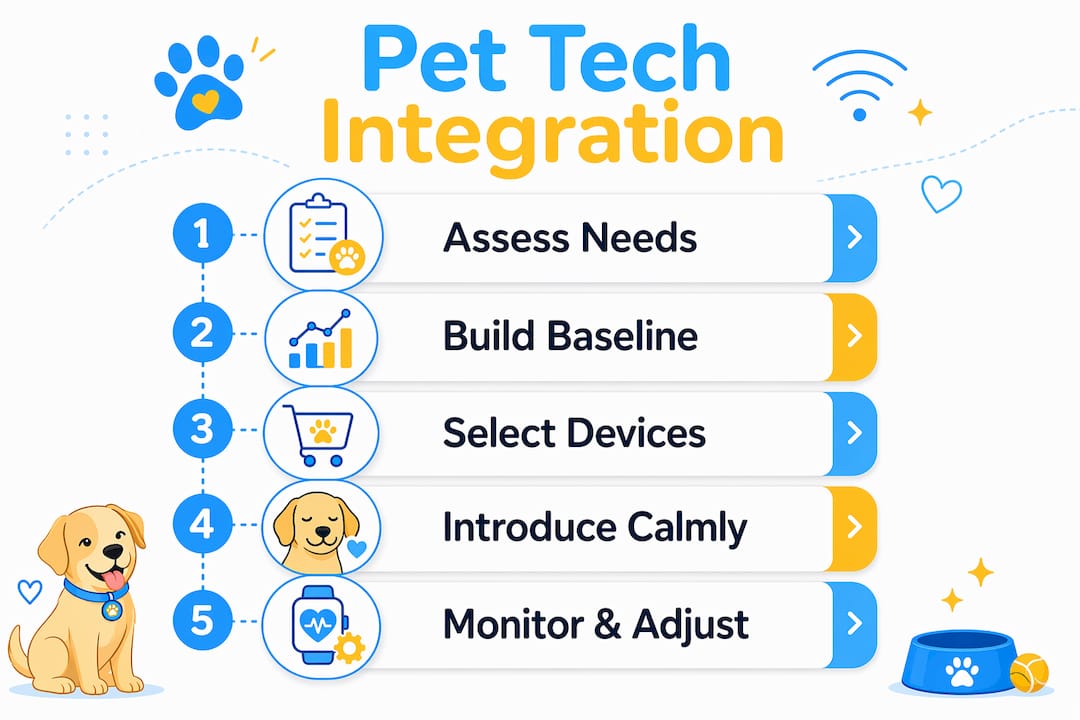
How to choose and integrate pet tech wisely
Not every device suits every pet. A senior dog with arthritis needs different tools than a high-energy puppy or a multi-cat household.
- Match the device to your pet’s specific needs: Age, breed, size, and existing health conditions all affect which metrics matter most. A cardiac-risk breed benefits more from a heart-rate-tracking collar than a GPS unit.
- Prioritize clinically validated devices: Experts recommend devices with rigorous validation for health and behavior monitoring. A device that looks impressive in marketing but lacks peer-reviewed backing adds noise, not insight.
- Check app compatibility and data sharing: The best devices let you export health reports directly to your vet. If the app is a closed ecosystem, you lose half the value.
- Respect your pet’s comfort: Devices that cause stress or restrict natural movement defeat their own purpose. Fit, weight, and material matter, especially for small breeds and cats.
- Introduce gradually: Start with short wear periods and reward calm behavior around the device. Rushing this step leads to avoidance behaviors that make the data unreliable.
- Use individual baselines, not breed averages: Comparing your dog’s activity to a breed norm can mask early illness. The real signal is a deviation from your pet’s own established pattern.
Pro Tip: Build a personalized behavior baseline during your pet’s healthiest period. That baseline becomes your reference point. A significant drop in activity that might look normal for the breed could be a red flag for your specific animal.
For a broader look at how pet AI tools fit into daily care routines, Ipuppee’s resource library covers practical starting points.
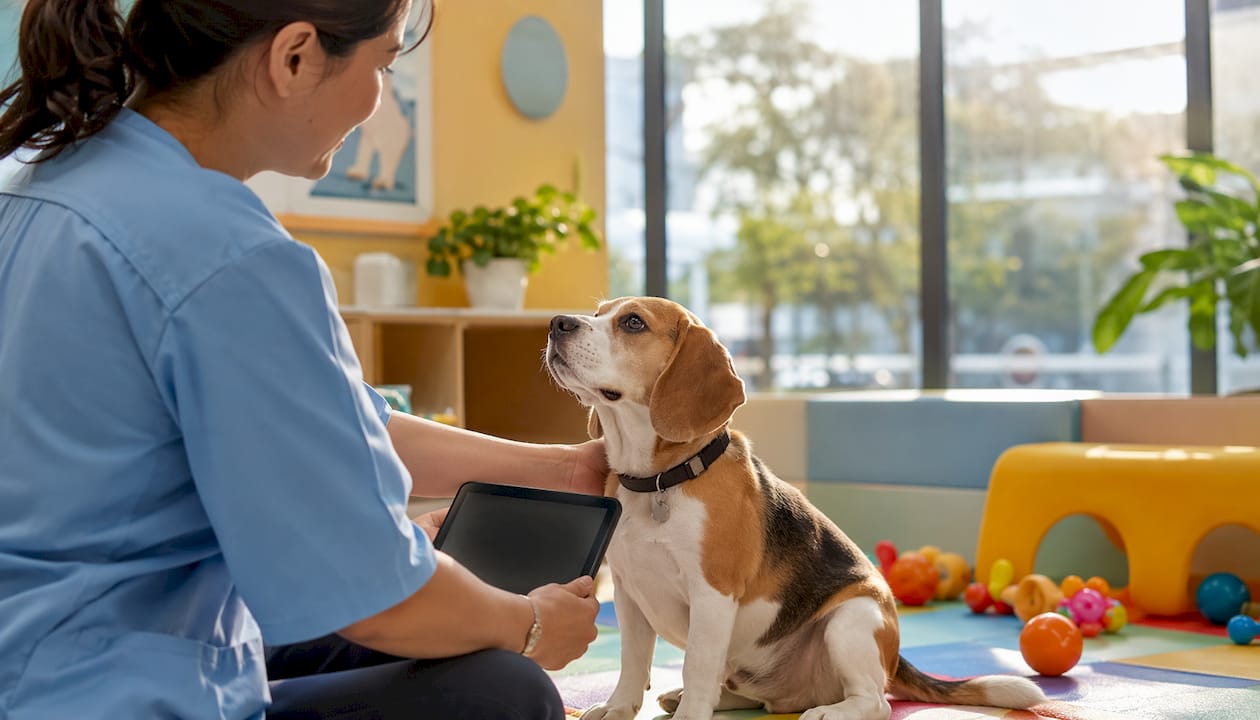
Emerging AI innovations reshaping pet health technology
The most consequential shift in pet health technology right now is AI moving from fitness tracking into genuine medical territory. Wearable sensors and computer vision tools are enabling continuous welfare monitoring in home environments, something that was simply not possible a decade ago.
The PETKIT Purobot Ultra’s waste analysis is a good example of how granular this gets. Waste consistency, size, and color are automatically assessed to surface potential health concerns, turning a routine litter box interaction into a daily health screen. That kind of passive, continuous data collection is where AI adds the most value.
“Emerging technologies such as wearable sensors, computer vision, and multimodal data integration demonstrate substantial potential for continuous behavioural monitoring and early detection of welfare-related issues in real household environments.” — MDPI, The Expanding Role of Artificial Intelligence in Companion Animal Care
Other areas developing quickly:
- Bioacoustic analysis: AI systems that analyze vocalizations to classify emotional states and detect distress, drawing on research in animal sound monitoring across species.
- Personality and behavior profiling: Machine learning models that track mood, activity, and stress over time to build a behavioral fingerprint for each pet, enabling earlier intervention when patterns shift.
- AI-driven telehealth: Platforms that triage symptoms, prioritize urgent cases, and connect owners with veterinary professionals remotely, reducing barriers for owners in rural areas.
- Multimodal data integration: Combining movement data, biometrics, and video analysis into a single health picture, giving vets decision support that goes well beyond what any single sensor can provide.
Challenges and limitations you should know about
Pet health technology is genuinely useful, but it is not without real constraints. Limited datasets and species-specific validation gaps are the most significant barriers to broader clinical adoption, particularly for cats and exotic pets, which are underrepresented in AI training data compared to dogs.
Device accuracy varies widely across brands. A collar that performs well on a Labrador may produce unreliable readings on a small-breed dog or a cat, because the underlying algorithms were trained on different body types and movement patterns. Ethical AI development and standardized data collection remain unresolved challenges across the industry.
Cost is a practical barrier for many owners. Clinically validated devices tend to carry premium price tags, and subscription fees for app-based monitoring add up over time. Battery life and connectivity issues in rural areas also limit real-world usefulness for some owners.
Finally, over-reliance on technology without veterinary oversight can lead to misinterpretation of health data. A device flags an anomaly; the owner assumes the worst or, conversely, dismisses a genuine warning because the alert seems minor. Technology supports veterinary judgment. It does not replace it.
Real-world examples of pet tech making a difference
The iPupPee alert system illustrates what supportive technology looks like in practice for a specific, underserved group. A service dog handler with limited mobility can train their dog to press the iPupPee button when the handler needs help, creating a communication loop that works even when the owner cannot call out or reach a phone. For rescue dogs still learning to signal their needs, the device provides a structured, low-stress way to build that communication habit. Ipuppee’s innovative solutions for pets page documents how this plays out across different owner situations.
Smart collars have shown similar real-world value in chronic condition management. A dog with early-stage heart disease wearing a continuous biometric tracker gives its cardiologist weekly trend data instead of a single snapshot from a clinic visit. That data density changes treatment decisions, sometimes catching a medication adjustment need weeks before symptoms would have appeared.
For pet owners exploring advanced safety measures alongside technology, combining trained protection dogs with monitoring devices creates a layered approach to both pet and owner safety that neither solution achieves alone.
Key Takeaways
Supportive pet technology shifts care from reactive to proactive by using AI and connected devices to surface health issues before they become emergencies.
| Point | Details |
|---|---|
| Early detection is the core value | AI flags subtle behavioral and biometric changes that human observation consistently misses. |
| Match the device to your pet | Age, species, breed size, and health conditions determine which metrics and devices actually matter. |
| Validate before you buy | Prioritize devices with clinical backing; unvalidated tools add noise rather than useful health insight. |
| Build individual baselines | Comparing your pet to breed averages can mask early illness; your pet’s own trend data is the real signal. |
| Technology supports vets, not replaces them | Device data is most valuable when shared with a veterinarian who can interpret it in clinical context. |