

Finding new ways to connect with your puppy can feel overwhelming, especially if you are balancing mobility challenges or living in a senior community. Building a calm, structured environment and using early socialization protocols is the foundation to help your puppy thrive, build confidence, and adapt to everyday life. This guide highlights step-by-step preparation, innovative communication tools, and positive reinforcement strategies designed to simplify training and promote safety for both you and your companion.
Table of Contents
- Step 1: Prepare Your Puppy for Successful Training
- Step 2: Introduce Essential Communication Tools and Devices
- Step 3: Teach Basic Commands and Reinforce Positive Behaviors
- Step 4: Integrate Safety Training with Responsive Feedback
- Step 5: Verify Progress and Adjust Your Approach for Best Results
Quick Summary
| Key Point | Explanation |
|---|---|
| 1. Create a Structured Environment | Establish a calm home with consistent routines to support your puppy’s training and behavior development. |
| 2. Use Positive Reinforcement Tools | Select training tools like clickers and treat pouches that encourage desired behaviors through positive reinforcement methods. |
| 3. Teach Basic Commands Consistently | Focus on fundamental commands with brief sessions, using consistent cues and immediate rewards to enhance learning. |
| 4. Prioritize Safety Training | Puppy-proof your space and supervise interactions to teach your puppy smart choices, reinforcing good behavior without punishment. |
| 5. Track Progress for Adjustments | Regularly monitor milestones in training, adapting techniques based on your puppy’s individual learning style and pace. |
Step 1: Prepare your puppy for successful training
Training a puppy requires strategic preparation to set the stage for effective communication and learning. Your goal is to create an environment that supports positive interactions, builds trust, and establishes foundational skills that will serve your puppy throughout their life.
Successful puppy training starts with understanding their developmental needs. Proper veterinary care is critical, which includes ensuring your puppy has received essential vaccinations and health checks. This foundational step protects both their physical health and sets the groundwork for future training.
Key preparation steps include:
- Creating a calm, structured home environment
- Establishing consistent daily routines
- Preventing destructive behaviors through structured play and exercise
- Introducing gentle socialization experiences
To build communication skills, focus on gentle handling and gradual exposure to various sounds, people, and experiences. This helps your puppy develop confidence and adaptability. Early socialization protocols are essential for developing a well-adjusted companion who can learn effectively.
Pro tip: Start socialization early but cautiously, ensuring all interactions are positive and controlled to build your puppy’s confidence without overwhelming them.
Step 2: Introduce essential communication tools and devices
Successful puppy communication begins with selecting the right training tools that facilitate understanding and positive reinforcement. Your goal is to establish clear, consistent methods for teaching your puppy how to communicate effectively with you.
Professional trainers recommend positive reinforcement tools that help signal desired behaviors. Key communication devices include:
- Clickers for precise behavior marking
- Treat pouches for immediate rewards
- Interactive training toys
- Harnesses with attached communication buttons
The most effective communication strategies focus on consistency and gentle guidance. Calm assertive training techniques emphasize short, engaging sessions that encourage cooperation rather than punishment. Verbal cues and body language play crucial roles in helping your puppy understand expectations.
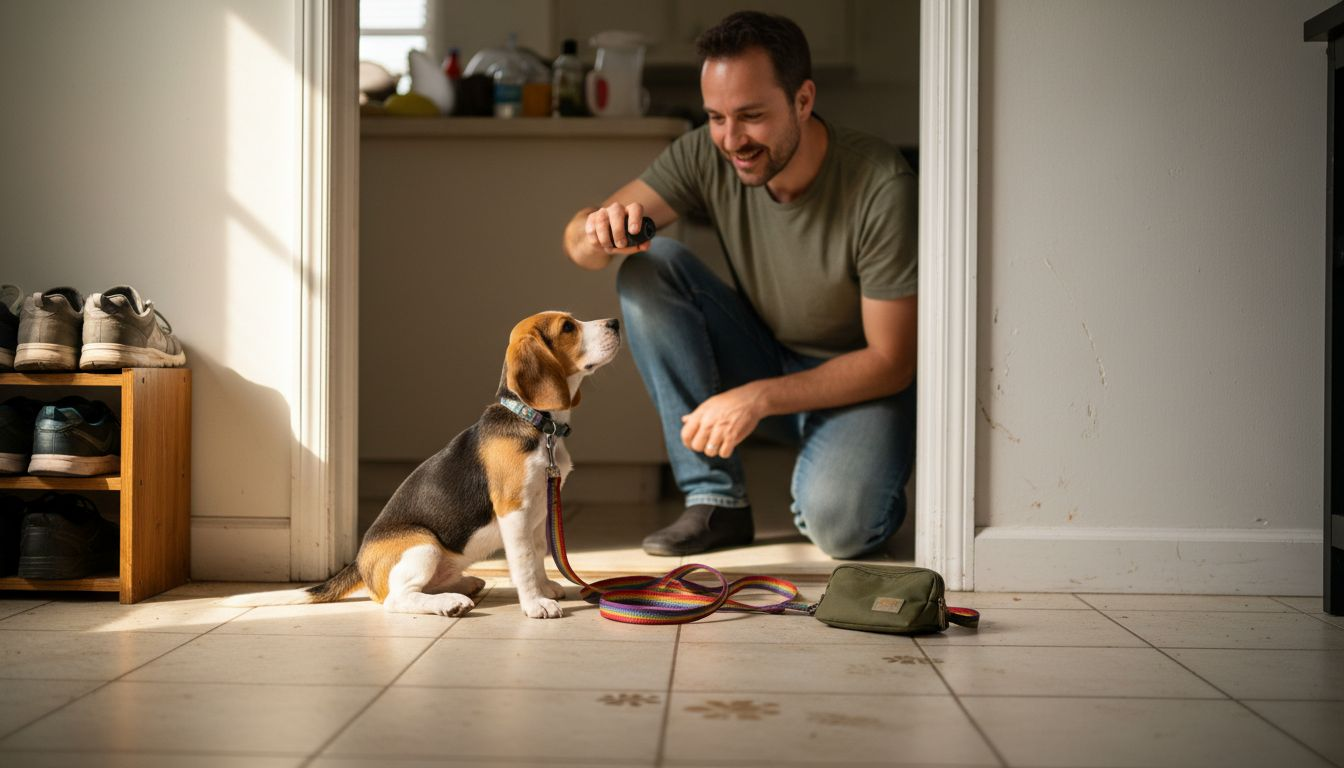
Choosing the right communication tools requires understanding your puppy’s unique learning style. Some puppies respond better to auditory signals like clickers, while others might prefer visual or tactile reinforcement methods. Experiment with different approaches to discover what works best for your specific puppy.
Here is a quick reference comparing common puppy training tools and their best use cases:
| Tool Type | Best For | Typical Benefit |
|---|---|---|
| Clicker | Marking precise behaviors | Improves timing and clarity |
| Treat Pouch | Quick rewards | Keeps puppy motivated |
| Interactive Toy | Engaging training sessions | Reduces boredom, high focus |
| Communication Button | Teaching requests or needs | Enables basic ‘talking’ skills |
Pro tip: Start with one communication tool at a time and practice consistently to avoid overwhelming your puppy during the learning process.
Step 3: Teach basic commands and reinforce positive behaviors
Teaching your puppy basic commands is crucial for establishing clear communication and building a strong, trusting relationship. Your primary goal is to create a positive learning environment that makes training enjoyable and effective for both you and your puppy.
Basic command training should focus on fundamental skills like ‘sit,’ ‘stay,’ ‘come,’ ‘down,’ and ‘loose-leash walking’. Essential strategies include:
- Conducting brief, frequent training sessions
- Using consistent verbal cues
- Maintaining a calm and patient demeanor
- Rewarding desired behaviors immediately
Reinforcement is all about understanding your puppy’s unique motivation. Positive reward techniques emphasize recognizing and celebrating what your puppy does right. Timing is critical when offering rewards, which can include:
- High-value food treats
- Favorite toys
- Enthusiastic praise
- Physical affection
Consistent practice and patience will help your puppy learn more quickly. Each successful interaction builds confidence and strengthens your communication bond. Remember that every puppy learns differently, so be prepared to adapt your approach based on their individual response.
Pro tip: Always end training sessions on a positive note, even if progress seems minimal, to maintain your puppy’s enthusiasm and trust.
Step 4: Integrate safety training with responsive feedback
Safety training is about creating a secure environment and teaching your puppy to make smart choices. Your primary objective is to develop a communication system that keeps your puppy protected while building mutual trust and understanding.
Puppy safety training begins with comprehensive home preparation and careful supervision. Critical safety strategies include:
- Puppy-proofing your living spaces
- Removing potential hazards
- Establishing clear boundaries
- Supervising outdoor interactions
Responsive feedback means guiding your puppy’s behavior through positive reinforcement rather than punishment. Safe interaction techniques emphasize redirecting inappropriate actions and immediately rewarding good behavior. Calm communication is key to helping your puppy understand expectations and feel secure.
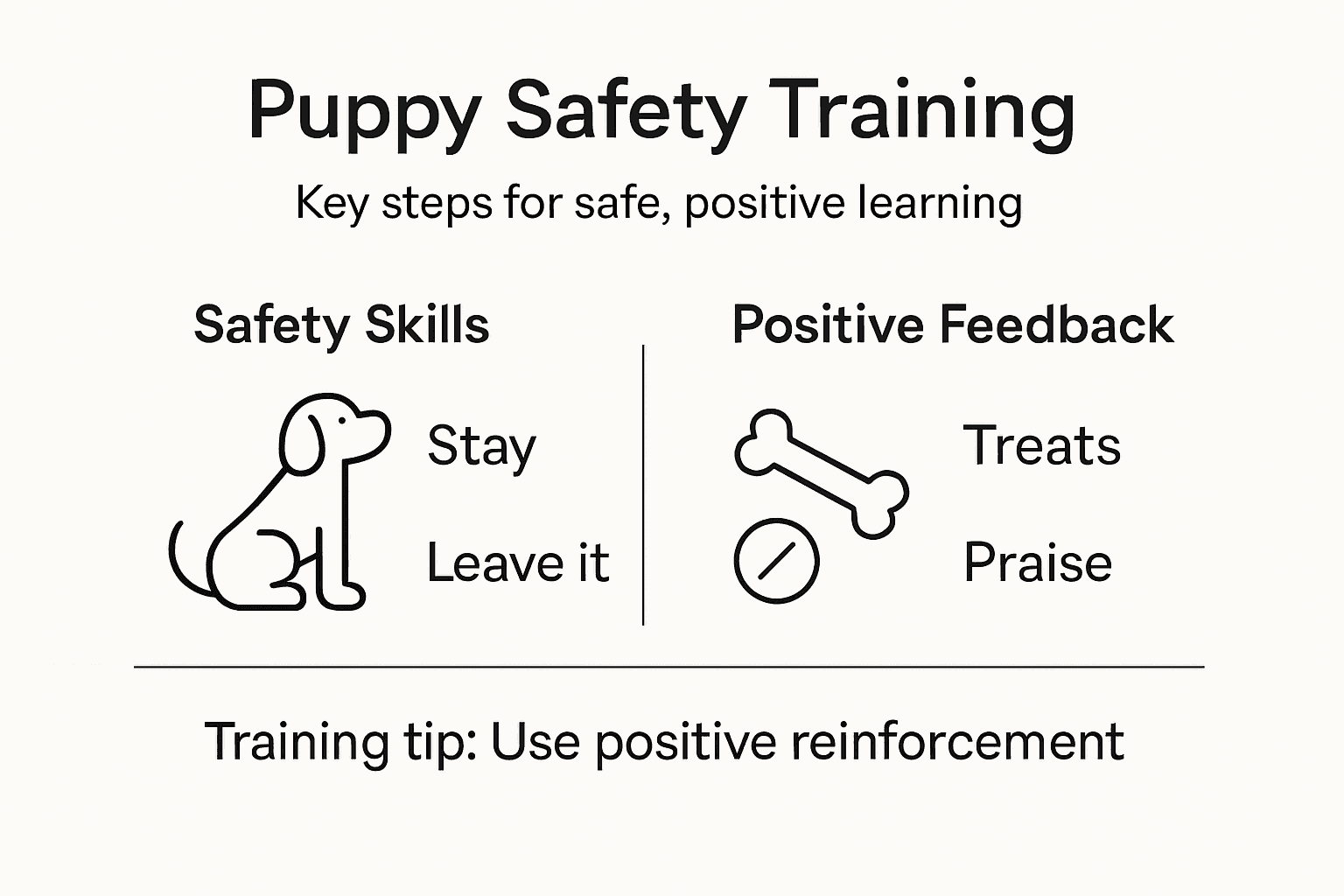
Consistent training helps your puppy develop confidence and learn to navigate different environments safely. Pay attention to your puppy’s individual learning style and adjust your approach to match their unique personality and needs.
Pro tip: Practice safety training in short, engaging sessions and always end with a positive interaction to maintain your puppy’s enthusiasm and trust.
Step 5: Verify progress and adjust your approach for best results
Tracking your puppy’s training progress is essential for developing an effective communication strategy. Your goal is to create a flexible approach that evolves with your puppy’s unique learning style and developmental stages.
Puppy training timeline requires careful monitoring of key developmental milestones. Important progress tracking methods include:
The table below outlines key puppy training milestones and recommended progress checks:
| Training Stage | Key Milestone | Progress Check Example |
|---|---|---|
| Early Socialization | Calm response to sounds | Puppy remains relaxed in new place |
| Command Introduction | Sits on cue reliably | Follows ‘sit’ with one command |
| Behavior Reinforcement | Consistent loose leash | Walks calmly without pulling |
| Safety Training | Avoids household hazards | Does not chew cables or shoes |
- Documenting specific behavior improvements
- Noting response times to commands
- Tracking socialization experiences
- Identifying areas needing additional focus
Consistent evaluation helps you understand your puppy’s learning patterns. Professional training guidance recommends maintaining open communication with trainers or advisors who can provide insights into your puppy’s unique developmental needs.
Remember that progress isn’t linear. Some days will show significant improvement, while others might feel like a step backward. Stay patient and recognize that each puppy learns differently. Adjust your training techniques to match your puppy’s individual comfort level and learning speed.
Pro tip: Keep a training journal to track subtle improvements and identify patterns in your puppy’s learning progression.
Enhance Your Puppy Training with Innovative Communication Solutions
Training your puppy to communicate effectively is essential for building trust, safety, and lasting companionship. This article highlights the challenges of teaching basic commands, reinforcing positive behavior, and integrating safety training through consistent and patient communication. If you are looking to take your puppy’s communication skills to the next level, especially when teaching requests or needs, reliable tools can make all the difference.
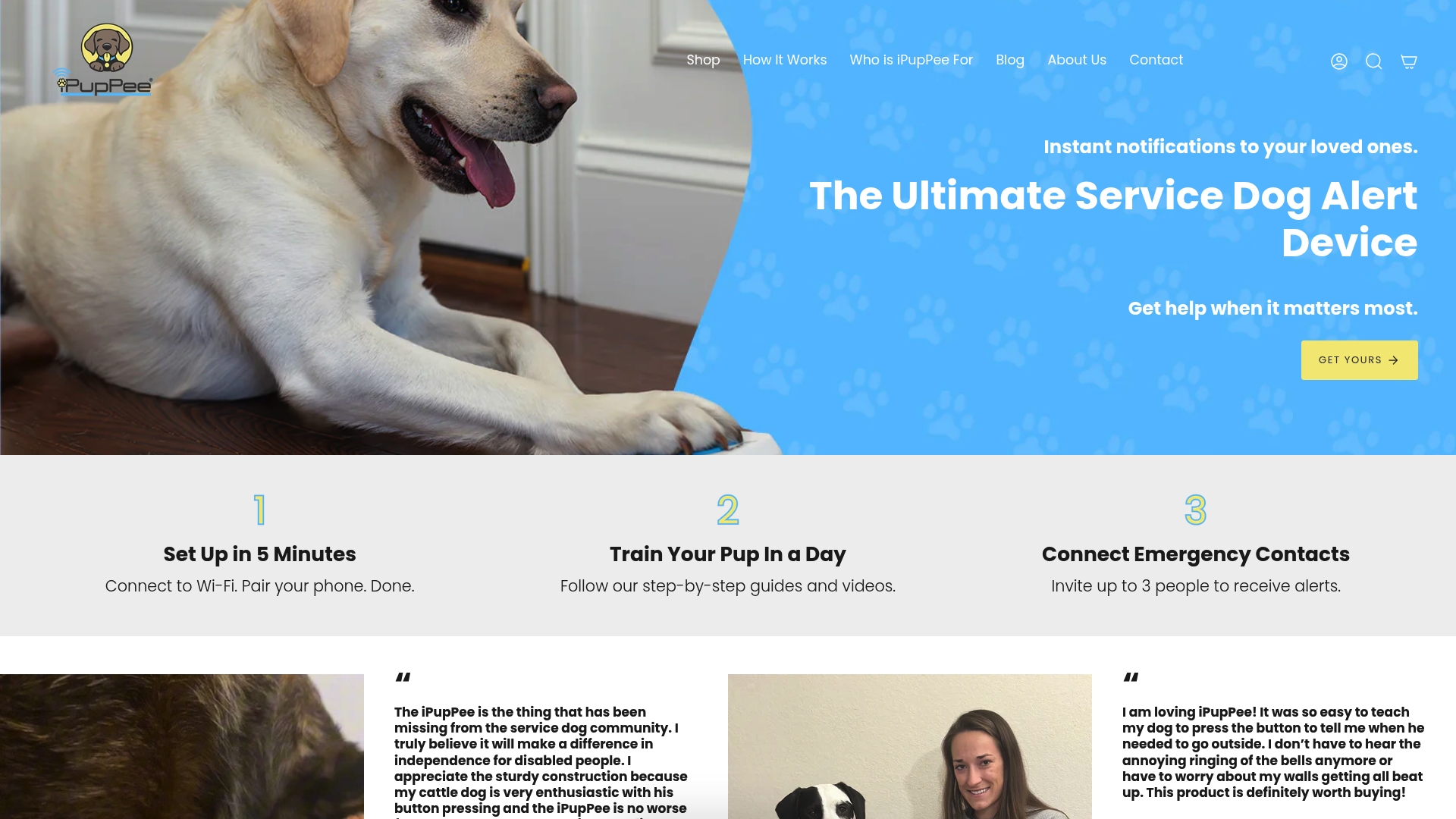
Discover the power of the iPupPee device, designed to boost your puppy’s ability to express essential signals safely and clearly. Perfect for new puppy owners focused on safety and independence, this innovative device simplifies training by adding a practical communication button that complements your positive reinforcement methods. Start building stronger connections and increase your pet’s confidence today by exploring easy-to-follow training instructions and customer testimonials available at ipuppee.com. Elevate your puppy’s training journey now with a tool that truly listens and responds to your dog’s unique needs.
Frequently Asked Questions
How can I prepare my puppy for effective communication training?
To prepare your puppy for effective communication training, create a calm and structured home environment. Establish consistent daily routines and introduce gentle socialization experiences to build their confidence.
What are the essential communication tools for puppy training?
Essential communication tools for puppy training include clickers, treat pouches, and interactive toys. Use these tools consistently to signal desired behaviors and reinforce learning during training sessions.
What basic commands should I teach my puppy first?
Start with basic commands such as ‘sit,’ ‘stay,’ ‘come,’ and ‘down.’ Conduct brief training sessions using consistent verbal cues and rewards to help your puppy quickly learn these essential commands.
How can I incorporate safety training into my puppy’s communication training?
Incorporate safety training by puppy-proofing your home and removing potential hazards. Use positive reinforcement to guide your puppy’s behavior and teach them to avoid dangerous situations.
How can I track my puppy’s training progress effectively?
Track your puppy’s training progress by documenting specific behavior improvements and response times to commands. Regularly assess their socialization experiences and note any areas that need additional focus to ensure steady advancement.