
Over 70 percent of puppy owners admit they feel unsure about the best way to start training a new dog. A puppy’s early lessons shape their future behavior and confidence for years to come. By focusing on proven principles like positive reinforcement, consistency, and patience, you can build a trusting bond and help your puppy thrive alongside your family.
Table of Contents
- What Is New Puppy Training? Core Principles
- Essential Training Methods and Techniques
- Integrating Communication Devices For Puppies
- Safety Considerations For Puppy Training
- Common Mistakes And Troubleshooting Tips
Key Takeaways
| Point | Details |
|---|---|
| Positive Reinforcement | Focus on rewarding desired behaviors to build trust and motivation in your puppy. |
| Consistency is Key | Use consistent commands and rewards to reinforce learning and avoid confusion. |
| Early Socialization | Introduce your puppy to various environments, people, and animals early on to prevent behavioral issues later. |
| Avoid Negative Techniques | Stay clear of harsh training methods; prioritize gentle communication and positive reinforcement to foster a secure learning environment. |
What Is New Puppy Training? Core Principles
New puppy training represents a comprehensive approach to developing a well-behaved, confident, and socially integrated canine companion. According to acdra.org, effective training is fundamentally grounded in positive reinforcement - a method of rewarding desired behaviors to build trust and motivation.
The core principles of puppy training go far beyond simple obedience commands. As globalpetfoods.com highlights, successful training involves several critical components:
- Consistency in commands and rewards
- Positive reinforcement using praise and treats
- Short, engaging training sessions
- Patience throughout the learning process
- Distraction-free initial training environments
- Early socialization with people and other animals
Clicker training emerges as an additional technique to enhance learning, providing a clear, consistent signal that helps puppies understand exactly which behaviors are being rewarded. By maintaining a structured yet gentle approach, owners can transform the training process from a potential challenge into an opportunity for building a deep, communicative bond with their new furry friend. Learn more about our comprehensive puppy training guide to set your puppy up for success.
Essential Training Methods and Techniques
Puppy training encompasses a diverse range of techniques designed to develop well-behaved, responsive companions. According to Wikipedia, clicker training emerges as a powerful positive reinforcement method that precisely marks desired behaviors through a distinct clicking sound, followed immediately by rewards.
The most effective training approaches break down learning into manageable components. As Wikipedia explains, discrete trial training (DTT) represents a sophisticated technique that deconstructs complex skills into smaller, more digestible tasks. This method involves:
- Breaking skills into individual components
- Using repeated trials with specific prompts
- Applying consistent positive reinforcement
- Gradually building complexity of learned behaviors
Training techniques vary widely, but share core principles of patience, consistency, and positive motivation. Some key methods include:
- Lure and Reward Training: Guiding puppies using treats to demonstrate desired actions
- Capturing: Rewarding spontaneous good behaviors
- Shaping: Gradually refining behaviors through incremental improvements
- Marker Training: Using sounds or words to precisely indicate correct actions
While each puppy learns differently, understanding and applying these techniques can transform training from a challenging task into an enjoyable bonding experience. Explore our comprehensive dog training fundamentals guide to dive deeper into effective training strategies.
Integrating Communication Devices for Puppies
Modern puppy training has evolved beyond traditional methods, incorporating innovative communication technologies that enhance learning and interaction. According to Wikipedia, clicker training represents an early example of a communication device, using a precise auditory signal to mark desired behaviors with remarkable accuracy.
Cutting-edge research is pushing the boundaries of training technology. arXiv highlights breakthrough developments in automatic training devices that combine machine learning and embedded hardware to identify and reward dog behaviors in real-time, transforming how we approach puppy education.
Key communication devices for puppy training include:
- Clickers: Providing instant behavioral markers
- Alert Buttons: Enabling dogs to communicate needs
- Treat Dispensers: Offering immediate positive reinforcement
- Sound Markers: Creating clear training signals
These technologies serve multiple purposes, from enhancing communication to supporting specialized training needs.
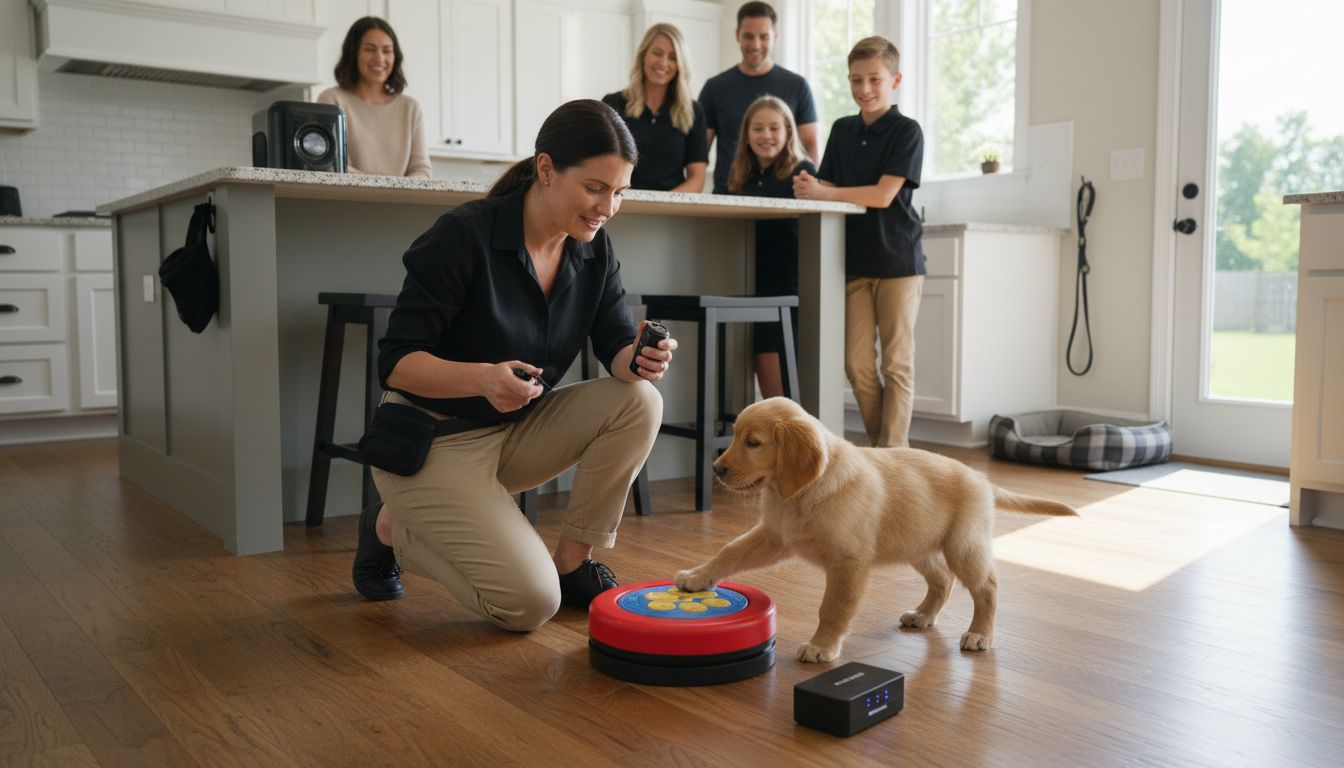 For puppies with unique requirements or owners seeking advanced training techniques, communication devices offer unprecedented opportunities for connection and learning. Learn more about dog button communication strategies to unlock your puppy’s communication potential.
Safety Considerations for Puppy Training
Ensuring a safe and positive training environment is crucial for developing a confident and well-adjusted puppy. According to Academic Oxford, positive reinforcement methods are strongly preferred, as they promote confidence and relaxation while decreasing training-related anxiety.
Dangerous training techniques must be absolutely avoided. Wikipedia clearly warns against outdated dominance-based methods like the alpha roll, which can significantly increase fear and aggression in dogs. Modern training emphasizes building trust and communication rather than establishing hierarchical control.
Key safety considerations for puppy training include:
- Creating a calm, familiar training environment
- Using gentle, consistent communication
- Avoiding physical punishment or intimidation
- Monitoring puppy’s stress levels during training
- Providing frequent positive reinforcement
- Ensuring short, engaging training sessions
- Using appropriate rewards and motivation
Training should be a nurturing process that builds mutual understanding and respect. Puppies learn best when they feel secure, supported, and motivated. Explore our comprehensive safety training guide to develop a safe, effective training approach that strengthens your bond with your new companion.
Common Mistakes and Troubleshooting Tips
Successful puppy training requires understanding and avoiding common pitfalls that can derail your progress. According to Western States K9 College, inconsistent training represents one of the most significant challenges, with key mistakes including lack of patience and relying on negative reinforcement techniques.
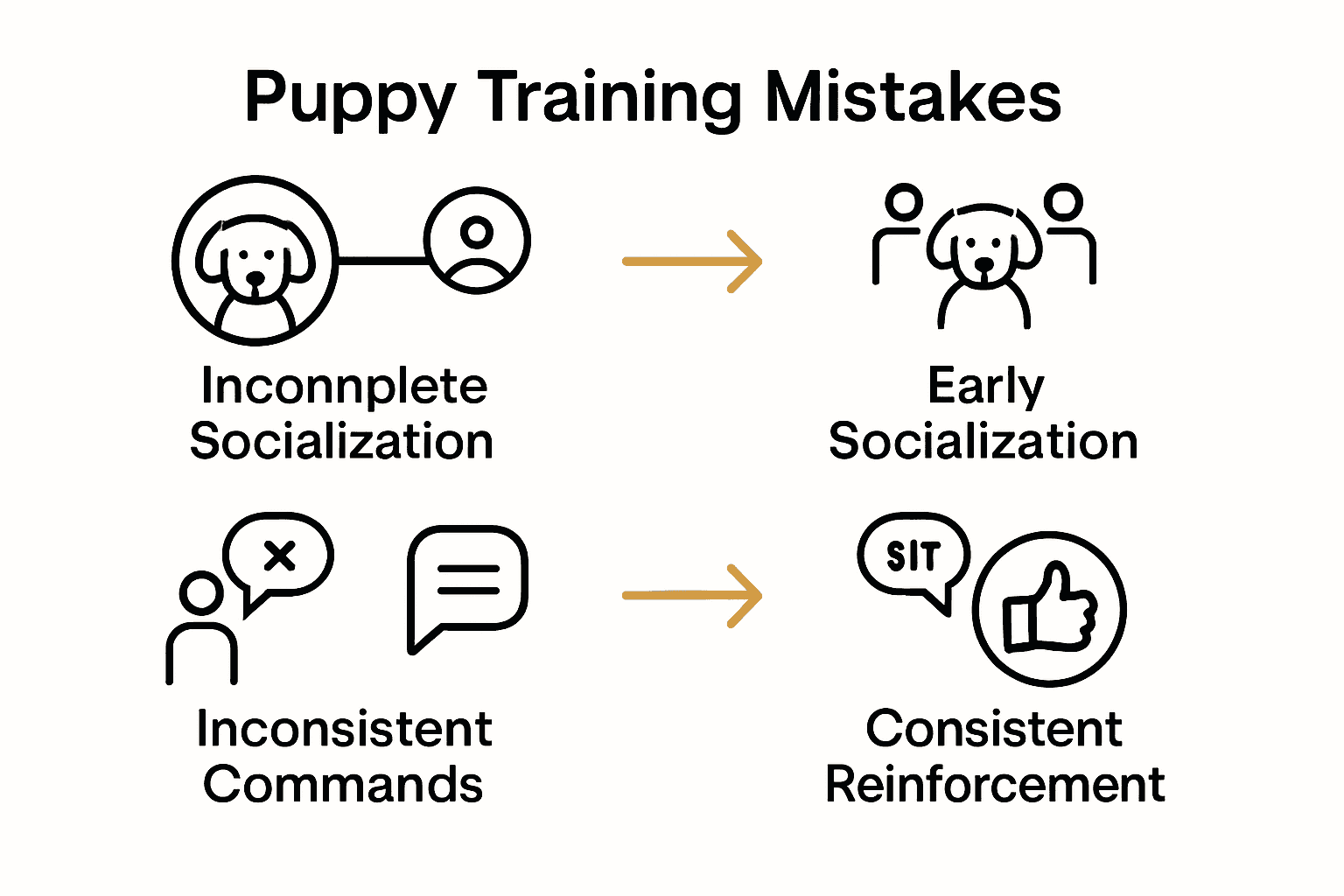
Dog Dynamics emphasizes that early socialization is critical, warning that inadequate exposure during the crucial 3 to 14-week period can lead to long-lasting behavioral challenges. Missing this window can result in fear, anxiety, and potential aggression issues that become increasingly difficult to address.
Common training mistakes to avoid include:
- Inconsistent command language
- Punishing instead of redirecting negative behaviors
- Expecting too much too quickly
- Ignoring early warning signs of stress
- Failing to maintain short, engaging training sessions
- Overlooking individual puppy personality differences
- Neglecting positive reinforcement strategies
Troubleshooting requires patience, adaptability, and a deep understanding of your puppy’s unique learning style.
Every setback is an opportunity to refine your approach and strengthen your bond. Discover strategies to overcome common dog training challenges and set your puppy up for success.
Enhance Your New Puppy Training Journey with Innovative Communication
Training a new puppy requires consistency, patience, and clear communication. This article highlights challenges like keeping training sessions positive, rewarding good behavior, and avoiding common mistakes that cause frustration or stress for both you and your puppy. That is why integrating advanced tools like communication devices can transform these hurdles into smooth, trusting interactions. Using techniques like clicker training and positive reinforcement works best when paired with effective technology that supports clear signals and immediate feedback.

Discover how the iPupPee communication device can innovate your puppy training by giving your dog a simple way to express their needs. This unique alert button helps bridge understanding between you and your puppy early on, reinforcing training principles and improving safety. Visit iPupPee now to explore user-friendly training guides and access cutting-edge products designed specifically for new puppy owners. Start building a stronger, confident, and happier bond today with tools that complement every step of your training journey.
Frequently Asked Questions
What are the core principles of new puppy training?
The core principles of new puppy training include positive reinforcement, consistency in commands and rewards, short training sessions, patience, distraction-free environments, and early socialization with people and other animals.
What training techniques are effective for puppies?
Effective training techniques for puppies include clicker training, lure and reward training, capturing desirable behaviors, shaping through incremental improvements, and using marker training with sounds or words to indicate correct actions.
How can communication devices enhance puppy training?
Communication devices like clickers, alert buttons, treat dispensers, and sound markers enhance puppy training by providing instant signals for desired behaviors, enabling dogs to communicate their needs, and offering immediate positive reinforcement.
What are some common mistakes to avoid during puppy training?
Common mistakes to avoid include inconsistent command language, punishing negative behaviors instead of redirecting them, expecting too much too quickly, and neglecting the importance of positive reinforcement and early socialization.