

New puppy owners often find the first weeks filled with both excitement and confusion, especially when navigating the unique needs of a service dog. Understanding how your dog learns is the foundation for building strong communication and maintaining safety, particularly when facing behavioral challenges in daily life. By focusing on positive reinforcement and clear, consistent training, you can set your dog up for success and develop a relationship built on trust, responsiveness, and mutual understanding.
Table of Contents
- Essential Principles Of Dog Training
- Types Of Training: Basic, Safety, And Communication
- Positive Reinforcement For Behavior Shaping
- Housebreaking, Crate Training, And Socialization
- Effective Use Of Training Devices And Tools
- Avoiding Common Mistakes And Improving Safety
Key Takeaways
| Point | Details |
|---|---|
| Effective Communication is Key | Establish clear communication through positive reinforcement and understanding your dog’s learning style. |
| Tailored Training Approaches | Adapt training methods to your dog’s individual motivations and personality for optimal results. |
| Holistic Training Types | Incorporate basic, safety, and communication training to develop a well-rounded canine companion. |
| Avoid Common Pitfalls | Steer clear of repeated commands and punitive methods to maintain trust and encourage a supportive learning environment. |
Essential Principles of Dog Training
Dog training is fundamentally about creating effective communication between you and your canine companion through understanding how dogs learn and process information. Learning mechanisms in dog behavior reveal that dogs primarily learn through associative experiences, which means their behavior is shaped by consequences and rewards.
The core principles of successful dog training revolve around positive reinforcement, consistency, and understanding canine psychology. By recognizing that dogs respond best to clear, predictable interactions, owners can establish a strong training foundation. Basic obedience commands like sit, stay, and recall are not just tricks but essential communication tools that help dogs understand expectations and navigate human environments safely.
Successful training requires patience and an understanding of how dogs perceive rewards. Different dogs will have varying motivations - some might work best for treats, while others respond more enthusiastically to praise or play. This means tailoring your approach to your individual dog’s personality and learning style. Consistent basic obedience training creates a framework for communication that extends beyond simple commands, helping build a deeper bond between dog and owner.
Pro tip: Start training sessions when your dog is calm and focused, keeping initial lessons short and gradually increasing complexity as your dog demonstrates understanding.
Types of Training: Basic, Safety, and Communication
Dog training encompasses three critical areas that work together to create a well-rounded, responsive, and safe canine companion. Dog training methods utilize different approaches to teach specific skills and behaviors, each serving a unique purpose in developing a dog’s capabilities and strengthening the human-animal bond.
Basic Training forms the foundation of all dog education, focusing on essential commands that ensure fundamental control and obedience. These typically include sit, stay, come, heel, and down commands that establish clear communication between dog and owner. By mastering these basic skills, dogs learn to understand and respond to human directions, creating a framework for more advanced training and safer interactions.
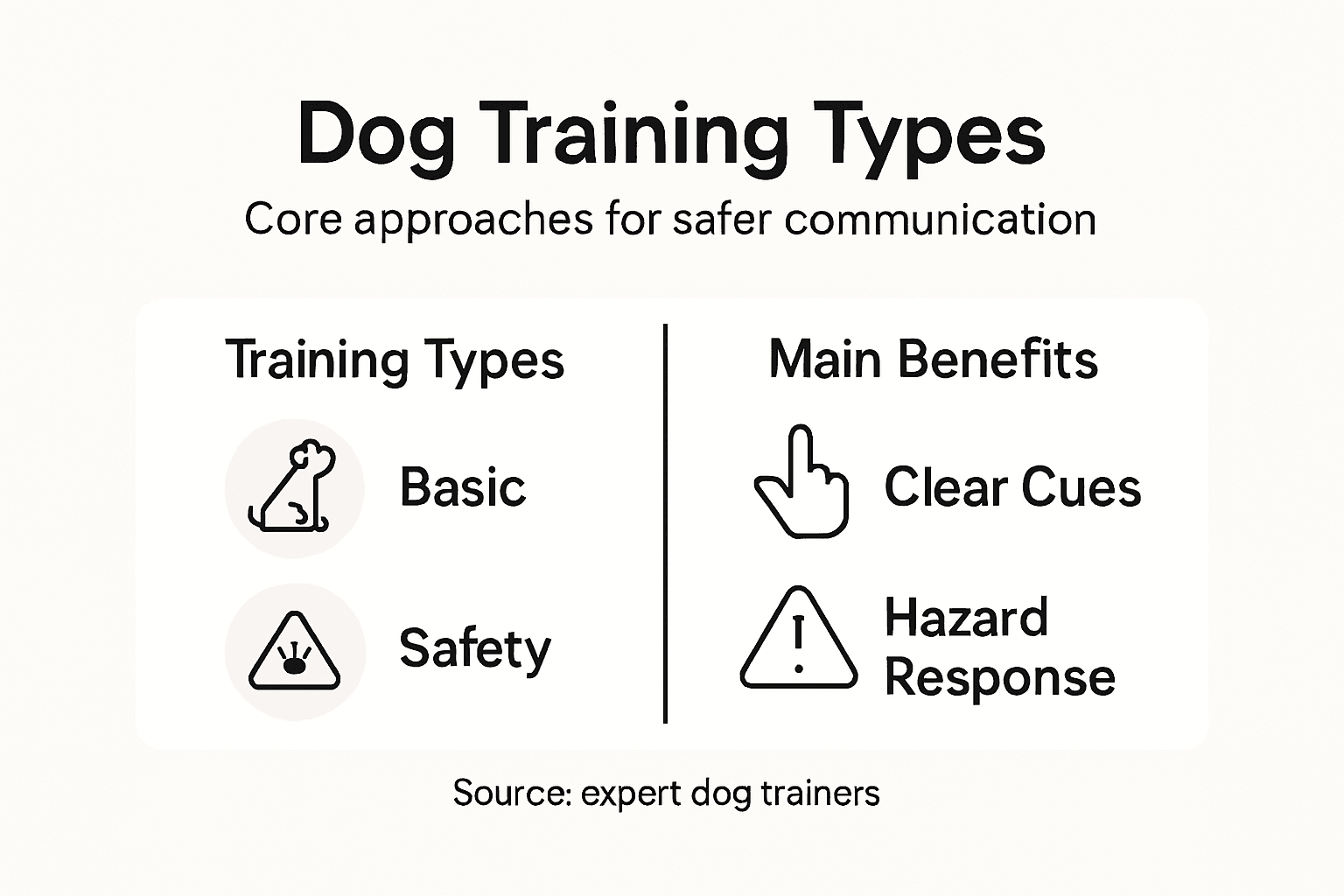
Safety Training takes fundamental skills to a more critical level, teaching dogs how to respond in potentially dangerous situations. This type of training includes emergency recall, avoiding hazardous objects, understanding boundaries, and learning to stay calm under stress. Training approaches for safety skills emphasize creating predictable responses that can prevent accidents and protect both the dog and surrounding environment.
Communication Training goes beyond simple commands, focusing on developing nuanced understanding between dogs and their owners. This approach involves reading body language, understanding vocal cues, and creating a responsive relationship where both dog and human can effectively interpret each other’s signals. By enhancing communication, owners can create deeper connections and more intuitive interactions with their canine companions.
Pro tip: Integrate different training types gradually, ensuring your dog masters each skill before moving to more complex communication techniques.
Here’s a summary of the three main types of dog training and their core benefits:
| Training Type | Primary Goal | Key Benefits | Ideal For |
|---|---|---|---|
| Basic Training | Teach essential commands | Builds communication and control | All dogs and puppies |
| Safety Training | Prepare for hazards | Enhances emergency responses | Active or outdoor dogs |
| Communication Training | Strengthen owner-dog bond | Improves mutual understanding | Experienced owners |
Positive Reinforcement for Behavior Shaping
Positive reinforcement is a scientifically proven training method that transforms dog behavior by creating a supportive, encouraging learning environment. Operant conditioning principles reveal that dogs learn most effectively when their desired actions are immediately rewarded, making them more likely to repeat those behaviors in the future.
The core of positive reinforcement involves identifying and rewarding specific behaviors you want to encourage. This might include treats, praise, toys, or affection that your dog finds genuinely motivating. Unlike punishment-based approaches, this method focuses on building confidence and creating a strong, trusting relationship between dog and owner. By consistently linking good behaviors with positive outcomes, dogs become more eager to please and more responsive to training.
Successful positive reinforcement requires careful observation and timing. Dogs learn best when rewards are immediate and directly connected to the specific action you want to reinforce. Humane training methods emphasize understanding your dog’s unique motivations and creating a training environment that makes learning feel like a fun, rewarding experience. This approach not only teaches specific skills but also helps build a dog’s overall confidence and willingness to engage with their owner.
Pro tip: Choose rewards that truly excite your dog and vary them to maintain interest, ensuring each training session feels like an enjoyable game rather than a chore.
Housebreaking, Crate Training, and Socialization
Housebreaking is a critical early training process that establishes fundamental bathroom habits and helps puppies understand appropriate elimination spaces. House training techniques require consistent routines, patient supervision, and positive reinforcement to successfully teach dogs where and when to relieve themselves.
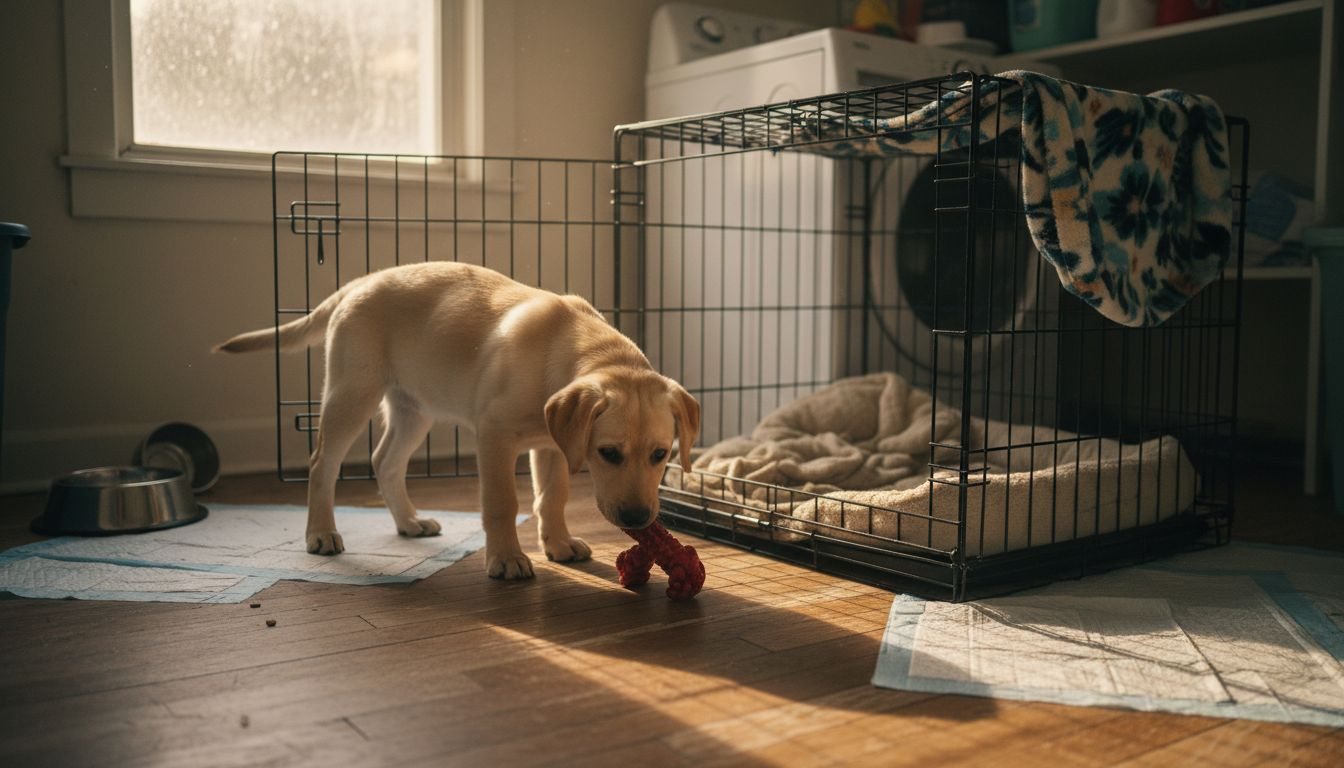
Crate training provides a structured approach to housebreaking by leveraging dogs’ natural instinct to keep their den clean. Crate training strategies help create a safe, comfortable space that supports bladder control and prevents indoor accidents. When implemented correctly, a crate becomes a secure sanctuary for dogs, reducing anxiety and providing a predictable environment for learning.
Socialization is equally important in developing a well-adjusted dog. This process involves exposing puppies to diverse people, animals, environments, and experiences during their critical developmental windows. By systematically introducing controlled, positive interactions, owners can help dogs develop confidence, reduce fear responses, and learn appropriate social behaviors. Proper socialization prevents potential behavioral issues and helps dogs become adaptable, calm companions in various situations.
Pro tip: Begin socialization and crate training early, using short, positive sessions that make learning feel like a fun, rewarding experience for your puppy.
Effective Use of Training Devices and Tools
Training devices are strategic tools designed to enhance communication and learning between dogs and their owners. Training tools support learning by providing clear, consistent signals that help dogs understand expected behaviors through positive reinforcement techniques.
Clickers, treat dispensers, and specialized collars represent some of the most effective training tools available to dog owners. These devices work by creating immediate, predictable associations between specific actions and rewards. Clickers, for instance, produce a distinct sound that marks the exact moment a dog performs a desired behavior, allowing for precise timing in training. Treat dispensers can help maintain motivation and provide instant gratification, making the learning process more engaging and enjoyable for dogs.
Effective training device selection requires understanding each tool’s specific purpose and using it in conjunction with positive reinforcement methods. The key is to view these tools as communication aids rather than punishment instruments. Some advanced devices, like alert buttons or specialized training collars, can help dogs with specific needs communicate more effectively, particularly for service dogs or pets with unique behavioral challenges.
Pro tip: Choose training devices that complement your dog’s individual learning style, and always introduce new tools gradually with plenty of positive reinforcement.
This table compares popular training devices and their best uses:
| Device | Purpose | Best For | Typical Outcome |
|---|---|---|---|
| Clicker | Mark desired actions | Precision learning | Fast behavior shaping |
| Treat Dispenser | Provide instant rewards | Food-motivated dogs | Increased engagement |
| Specialized Collar | Enhance control or communication | Service and large dogs | Safe, tailored responses |
Avoiding Common Mistakes and Improving Safety
Dog training requires a strategic approach that minimizes potential errors and maximizes safety for both dogs and their owners. Common training mistakes can significantly undermine the effectiveness of your training efforts and potentially create long-term behavioral challenges.
One of the most critical mistakes owners make is cue nagging, which involves repeatedly giving the same command without allowing the dog time to respond. This approach confuses dogs and reduces their ability to understand and follow instructions. Similarly, poisoning cues occurs when commands become associated with negative experiences, causing dogs to become anxious or resistant to training. Consistent, positive reinforcement and clear communication are essential to preventing these counterproductive patterns.
Training safety principles emphasize understanding canine learning psychology and avoiding punitive methods that can damage trust. Effective training requires patience, predictability, and a deep understanding of your dog’s individual temperament. This means adapting your approach based on your dog’s reactions, recognizing stress signals, and creating a supportive learning environment that encourages confidence and willingness to learn.
Pro tip: Record your training sessions on video to objectively analyze your techniques and identify potential areas for improvement in communication and approach.
Enhance Communication and Safety with Innovative Dog Training Tools
The article highlights challenges like establishing clear communication and ensuring safety through positive reinforcement and tailored training techniques. If you are looking to deepen the bond with your dog by improving communication beyond basic commands and safety training, the solution lies in combining these training principles with practical tools designed for reliable interaction. The iPupPee device from ipuppee.com supports this goal by enabling your dog to communicate important needs through a simple button press, strengthening the safety and independence discussed in the article.
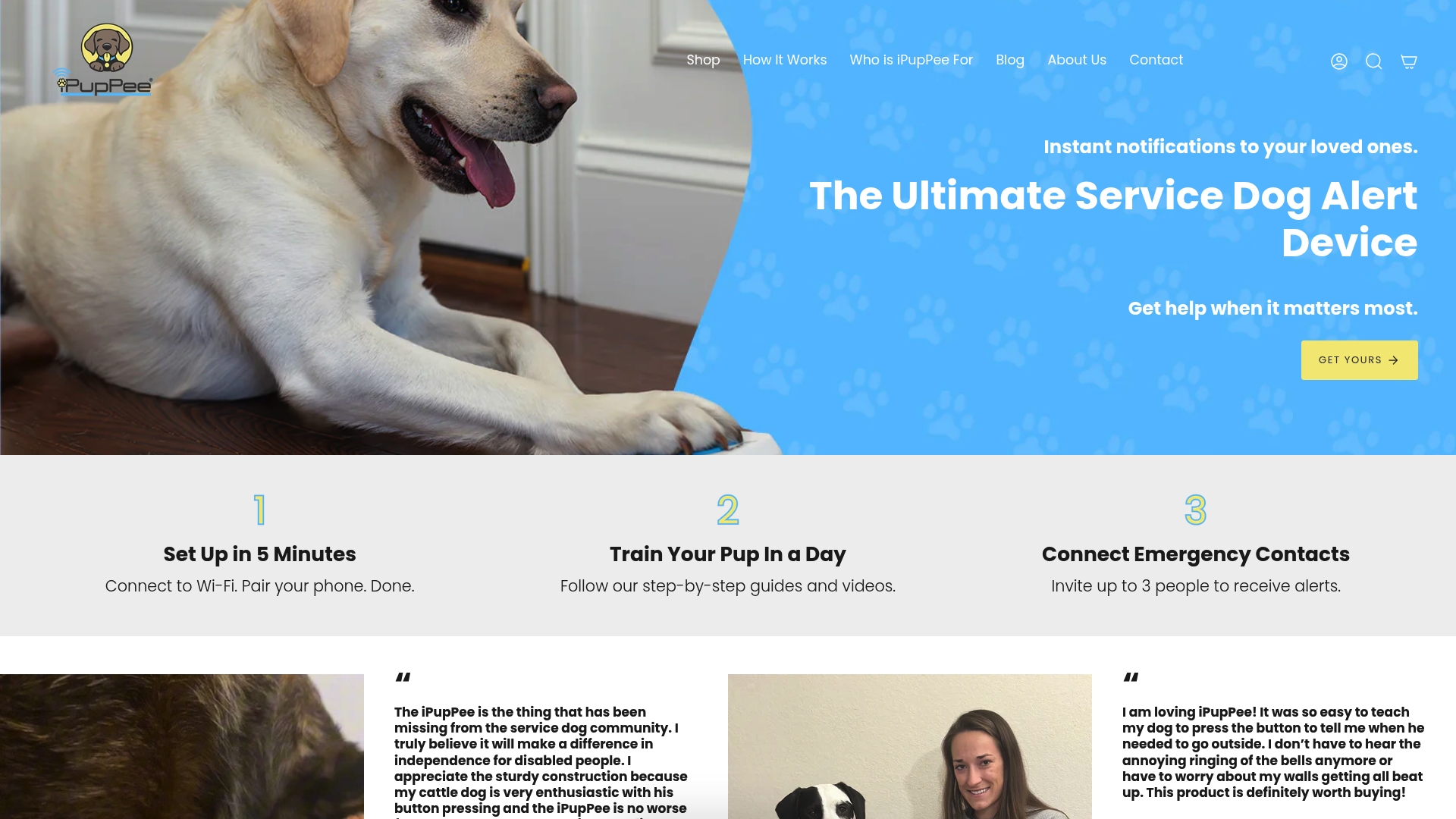
Discover how this innovative alert device complements your dog training efforts by providing a clear channel for urgent communication, enhancing emergency responses, and fostering trust between you and your dog. Act now to bring smarter, safer communication into your daily routine by exploring product details, training instructions, and real user testimonials at ipuppee.com. Start transforming your dog’s communication skills today with support from technology designed for every dog owner committed to a safer, more connected partnership.
Frequently Asked Questions
What are the key principles of dog training?
The key principles of dog training include positive reinforcement, consistency, and understanding canine psychology. These elements help create effective communication between you and your dog, ensuring they understand your expectations clearly.
How can I effectively use positive reinforcement when training my dog?
To effectively use positive reinforcement, identify behaviors you want to encourage and reward them with treats, praise, or play. Immediate rewards help create a strong connection between the desired behavior and positive outcomes, motivating your dog to repeat those actions.
What are the different types of dog training and their benefits?
The main types of dog training include Basic Training for essential commands, Safety Training for responding to hazards, and Communication Training for enhancing the bond and understanding between you and your dog. Each type serves a specific purpose in developing a well-rounded canine companion.
How can I avoid common mistakes during dog training?
To avoid common mistakes like cue nagging or poisoning cues, focus on giving clear commands, allowing your dog time to respond, and using positive reinforcement consistently. Understanding your dog’s individual temperament and adapting your techniques can also prevent long-term behavioral issues.