

Bringing a new puppy into your home can spark joy and a few nerves, especially for seniors or individuals with disabilities who depend on clear communication with their canine partners. Learning the fundamentals of obedience training lays the groundwork for a safe, trusting relationship. You will discover how positive reinforcement and consistent routines build confidence for both handler and puppy, making daily life easier and more connected.
Table of Contents
- Understanding Puppy Obedience Fundamentals
- Essential Commands For New Puppies
- Positive Reinforcement Training Methods
- Adapting Training For Seniors And Disabled Owners
- Enhancing Safety And Communication With Devices
Key Takeaways
| Point | Details |
|---|---|
| Start Early | Begin obedience training between 8-16 weeks to establish a strong foundation. |
| Positive Reinforcement | Utilize reward-based techniques for effective learning and to build trust. |
| Short Sessions | Keep training sessions brief (5-10 minutes) to maintain engagement and focus. |
| Adapt Techniques | Modify training approaches for seniors or disabled owners to enhance accessibility and communication. |
Understanding Puppy Obedience Fundamentals
Puppy obedience training is more than teaching commands - it’s about establishing communication, building trust, and creating a safe partnership between you and your canine companion. Effective training requires understanding core principles that guide your puppy’s learning process and behavior development.
The foundation of successful puppy training centers on positive reinforcement techniques. Researchers emphasize that consistent reward-based training helps puppies learn faster and builds stronger emotional connections. Key strategies include:
- Using high-value treats as immediate rewards
- Maintaining short, engaging training sessions
- Practicing commands in distraction-free environments
- Providing clear, consistent verbal and hand signals
- Celebrating small victories with enthusiastic praise
Successful obedience training requires understanding puppy psychology. Puppies learn through association and repetition, so creating positive experiences during training is crucial. Clear communication and positive reinforcement help establish boundaries while maintaining your puppy’s confidence and enthusiasm.
Fundamental Training Principles:
- Start training early, ideally between 8-16 weeks
- Keep sessions brief (5-10 minutes)
- Use consistent commands and hand signals
- Practice in multiple environments
- Never punish - redirect and reward
Pro tip: Break complex commands into smaller, manageable steps and practice each component separately to help your puppy learn more effectively.
Essential Commands for New Puppies
Training your new puppy requires patience, consistency, and a strategic approach to teaching fundamental commands that ensure safety and build a strong communication foundation. Basic obedience commands are critical skills that help puppies understand boundaries and develop good behavioral habits.
The five most important commands every puppy should learn include:
- Sit: Teaches impulse control and provides a foundational skill
- Stay: Helps manage potential safety risks and prevents wandering
- Come: Critical for recall and preventing dangerous situations
- Down: Encourages calm behavior and reduces overexcitement
- Loose-leash walking: Ensures safe and enjoyable walks together
Training Recommendations:
- Start training between 8-16 weeks of age
- Use high-value treats as rewards
- Keep training sessions short (5-10 minutes)
- Practice in low-distraction environments
- Be consistently positive and patient
Young puppies learn best through positive reinforcement and clear, consistent communication.
Puppies develop skills through repetition and positive experiences. Gradual training approaches help integrate commands into daily routines, making learning feel natural and enjoyable for your furry companion.
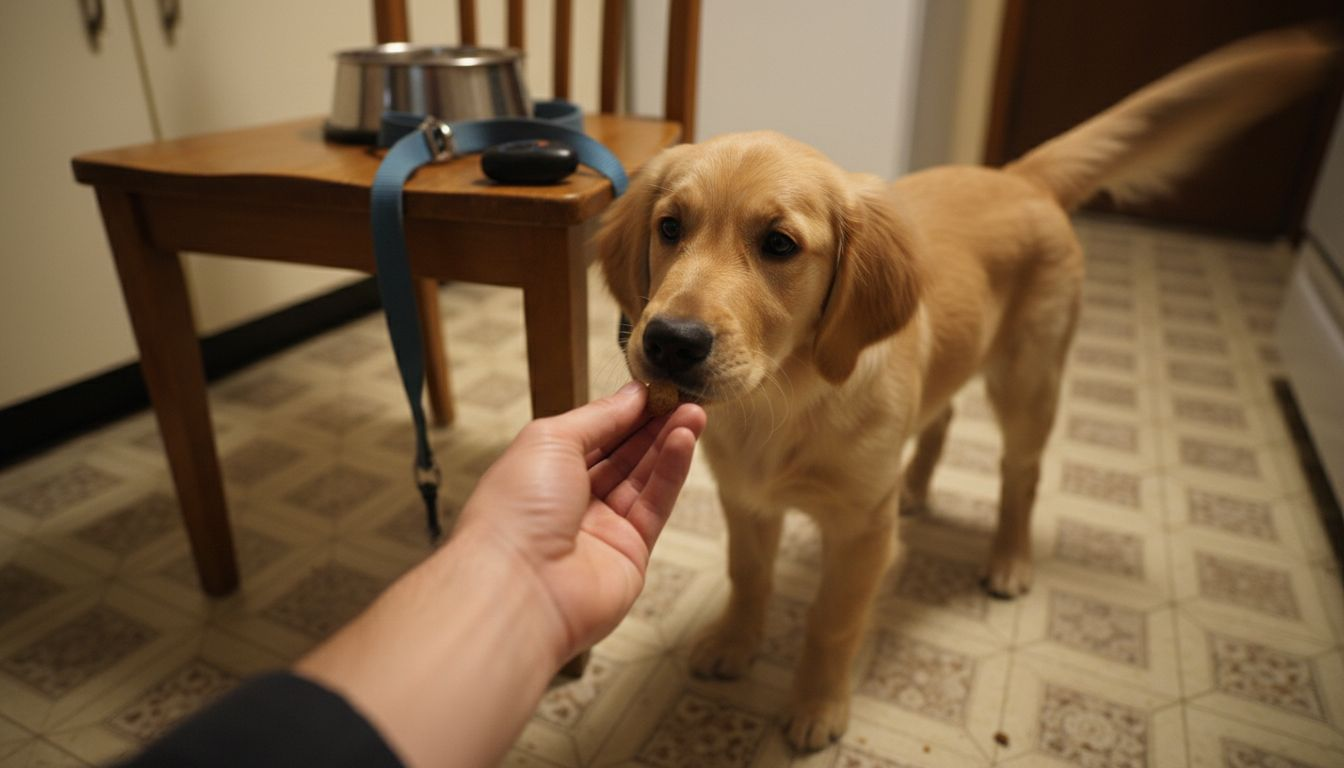
Pro tip: Practice each command in multiple environments to help your puppy generalize the learned behavior and respond consistently.
Positive Reinforcement Training Methods
Positive reinforcement represents a powerful and compassionate approach to puppy training that builds trust, strengthens communication, and creates lasting behavioral change. Research-based reinforcement strategies demonstrate that rewarding desired behaviors is far more effective than punishing unwanted actions.
Key components of effective positive reinforcement include:
- Immediate reward delivery
- Consistent praise
- Varied reward types
- Clear communication
- Gradual skill progression
Reward Hierarchy:
Here’s a quick comparison of core positive reinforcement rewards and how they influence puppy training outcomes:
| Reward Type | Motivation Level | Ideal Use Case |
|---|---|---|
| Verbal praise | Moderate | Basic commands and encouragement |
| Physical affection | Moderate to high | Reinforcing calm or relaxed states |
| Favorite treats | Very high | Teaching new or challenging skills |
| Playtime | High | Building engagement for energetic puppies |
| Interactive toys | Moderate to high | Providing mental stimulation and variety |
- Verbal praise
- Physical affection
- Favorite treats
- Playtime
- Interactive toys
Positive reinforcement transforms training from a chore into an enjoyable bonding experience for both puppy and handler.
The most successful trainers understand that reinforcement interventions require nuanced application. This means selecting appropriate rewards, timing them precisely, and maintaining enthusiasm throughout the learning process. Puppies respond best when rewards feel genuine and consistently match their specific motivational triggers.
Pro tip: Rotate reward types to maintain your puppy’s excitement and prevent treat fatigue during training sessions.
Adapting Training for Seniors and Disabled Owners
Training a puppy requires specialized approaches when working with seniors or individuals with disabilities, focusing on creating accessible, supportive learning environments that accommodate unique physical and cognitive needs. Home adaptations for training can significantly improve communication and training success.
Adaptive Training Strategies:
- Use assistive devices for communication
- Modify training positions for comfort
- Incorporate voice commands and hand signals
- Create shorter, more frequent training sessions
- Utilize technology for remote training support
Key Considerations for Different Abilities:
- Wheelchair-accessible training spaces
- Low-impact physical interactions
- Alternative reward delivery methods
- Noise and sensory-friendly environments
- Flexible training schedules
Successful puppy training is about understanding individual needs and creating personalized learning experiences.
Technology and adaptive tools can bridge communication gaps, allowing seniors and disabled owners to effectively train their puppies. The key is patience, creativity, and finding methods that work specifically for each individual’s unique circumstances.
Pro tip: Design a training plan that accommodates your specific mobility and communication requirements, focusing on your strengths and using adaptive tools to overcome potential challenges.
Enhancing Safety and Communication with Devices
Modern technology offers innovative solutions for improving communication and safety between puppies and their owners, particularly for individuals with disabilities or seniors seeking enhanced interaction. Emerging monitoring technologies are revolutionizing how we understand and support canine-human relationships.
Communication Device Categories:
- Noise reduction systems
- Remote activity tracking devices
- Sensory alert mechanisms
- Voice-activated training tools
- Adaptive communication interfaces
Key Technology Benefits:
The table below summarizes how modern communication devices address key training challenges for seniors and disabled puppy owners:
| Device Feature | Training Challenge Addressed | Benefit Provided |
|---|---|---|
| Noise reduction system | Sensory overload and distractions | Lowers stress for sensitive puppies |
| Remote activity tracking | Limited mobility of owner | Enables monitoring from a distance |
| Sensory alert mechanism | Missed cues due to impairments | Provides instant alerts or signals |
| Voice-activated trainer | Limited hand movement | Allows for hands-free training |
| Adaptive communication app | Difficulty giving signals | Offers accessible command options |
- Reduce communication barriers
- Enhance owner safety
- Provide real-time behavioral insights
- Support independent pet ownership
- Minimize training challenges
Advanced technology transforms pet interactions from challenging to seamless, creating new possibilities for connection.
Noise-dampening technologies can significantly reduce anxiety and improve training environments, especially for puppies with sensory sensitivities. These devices help create calm, predictable interactions that support effective learning and emotional well-being.
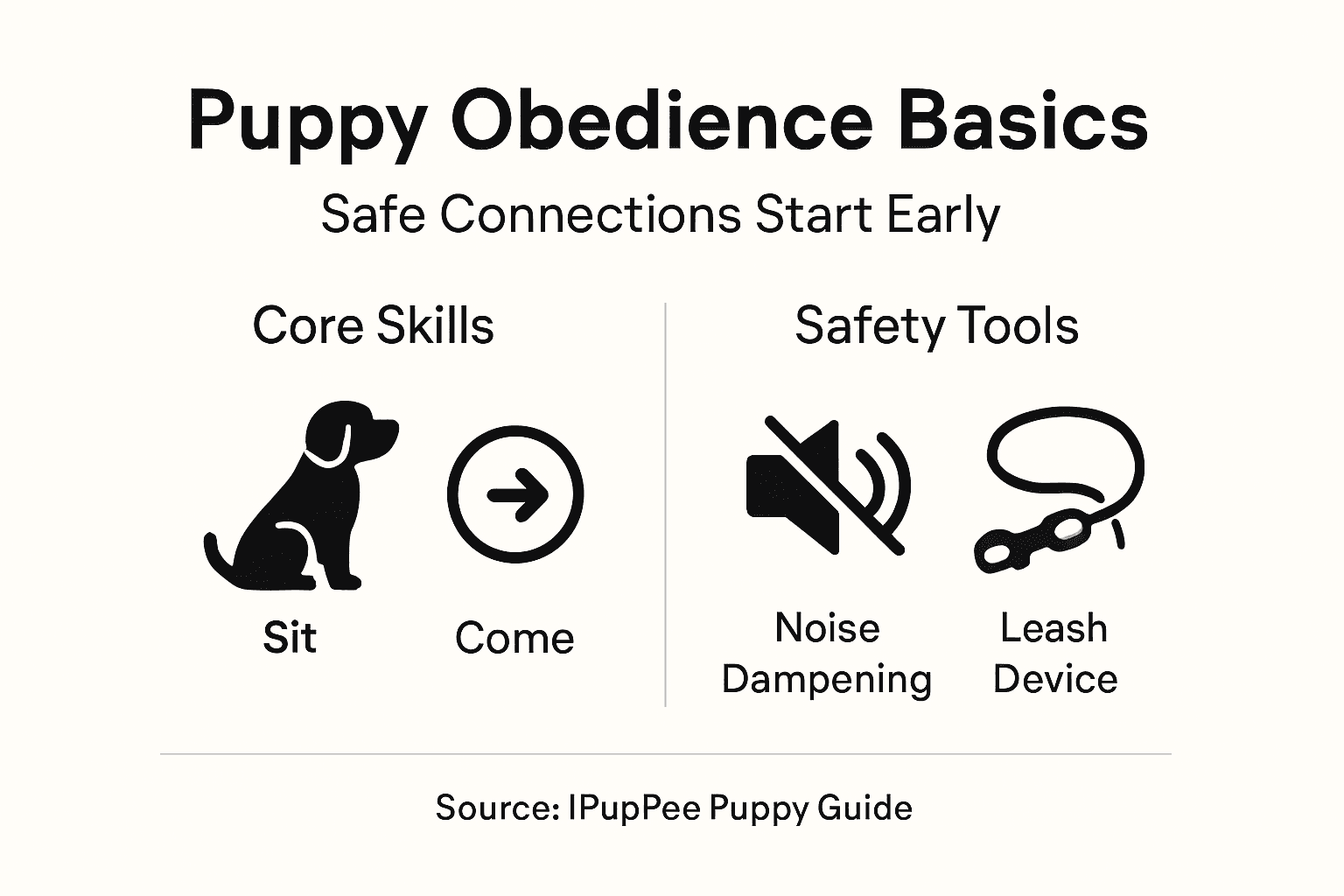
Pro tip: Research and test multiple communication devices to find the best match for your specific mobility and sensory needs.
Strengthen Your Puppy Training with iPupPee’s Communication Solutions
Building a strong and safe connection with your puppy requires thoughtful training and clear communication. This article highlights key challenges like teaching essential obedience commands, adapting methods for seniors or disabled owners, and using positive reinforcement effectively. For pet owners seeking to overcome communication barriers and enhance safety, especially those who value independence and trust, the innovative iPupPee device offers a practical solution. Designed to support you in training and daily interaction, iPupPee empowers your puppy to signal their needs through simple button presses, reducing frustration and creating secure connections.

Experience firsthand how the iPupPee aids new puppy owners, seniors, and individuals with disabilities in fostering confident obedience and seamless communication. Take control of your puppy’s training journey today by visiting our website to explore the unique features of the iPupPee device, read detailed training instructions, and see real-life customer testimonials. Don’t wait to build a safer and more trusting relationship with your puppy through smarter communication tools.
Frequently Asked Questions
What is positive reinforcement in puppy training?
Positive reinforcement is a training method that involves rewarding desirable behaviors to encourage their recurrence. This can include treats, praise, or playtime, helping to build trust and a strong bond between you and your puppy.
How long should training sessions be for puppies?
Training sessions for puppies should be kept brief, ideally lasting about 5-10 minutes. This helps maintain your puppy’s attention and keeps the learning process enjoyable.
What basic commands should I teach my puppy first?
The five essential commands for new puppies include ‘Sit,’ ‘Stay,’ ‘Come,’ ‘Down,’ and ‘Loose-leash walking.’ These commands establish a strong foundation for obedience and safety.
How can I adapt training techniques for seniors or individuals with disabilities?
Training can be adapted by using assistive devices, modifying positions for comfort, incorporating voice commands, and creating shorter, frequent sessions. Technology can also help improve communication and support training efforts.
Recommended
- Safety Training for Puppies: Essential Guide for All Owners 2025 – iPupPee
- How to Bond With Dogs: Proven Ways for Lasting Connection – iPupPee
- How to Care for Puppies: Expert Tips for Safe, Happy Dogs in 2025 – iPupPee
- Puppy Training Basics for Safety and Communication – iPupPee
- Making Learning Fun: Engaging Activities for Your Kids – The Zoofamily