

Crate rest is a medically prescribed confinement that limits a dog’s movement so healing tissue, bone, or nerves can stabilize without added stress. The moment you get the diagnosis, three things need to happen: get your veterinarian’s activity rules in writing, set up a properly sized, non-slip crate in a room where your family actually spends time, and map out a controlled toileting routine before you bring your dog home from the clinic.
TL;DR:
- Proper crate setup includes a size that allows full movement and non-slip flooring to prevent slips and pressure sores.
- Clear, written activity guidelines from the vet are essential to avoid setbacks caused by vague instructions and should include leash, stairs, and therapy restrictions.
- Enrichment should focus on mental stimulation like frozen Kongs and nose work, with sessions limited to 20-30 minutes daily in short bursts.
- Use a harness and clip the leash before opening the crate door to prevent injuries caused by sudden escapes or excited rushing.
- Follow the veterinarian’s timeline strictly before gradually reintroducing activity, stairs, and longer walks to prevent regression or re-injury.
Table of Contents
- How Do I Get Clear Activity Guidelines From My Vet?
- Should You Use a Pen or a Crate for Recovery?
- How Do You Set Up a Crate for Safe, Comfortable Rest?
- What Does a Daily Crate Rest Routine Actually Look Like?
- What Enrichment Actually Helps Without Adding Physical Risk?
- How Do You Handle the Crate Door Without a Bolt?
- When Should You Call the Vet During Crate Rest?
- How Do You Safely End Crate Rest and Return to Activity?
- Practitioner Notes for Owners With Mobility or Monitoring Needs
- A Note on Doing This Right, Not Just Doing This Fast
- Can a Monitoring Device Support Crate Rest at Home?
- Sources
- FAQ
How Do I Get Clear Activity Guidelines From My Vet?
Vague instructions cause more setbacks than anything else in this process. “Take it easy” means something different to every dog owner, and that gap is exactly where re-injury happens. Before you leave the clinic, or on your next call, get the answers to these questions in writing, not just spoken out loud in a rushed exam room.
- How many minutes per leash walk, and how many times a day?
- Are stairs allowed at all, and if so, how many steps and how often?
- Should you lift your dog for any transitions, and what’s the correct technique?
- Are there permitted therapies right now, such as cold compresses, passive range-of-motion exercises, or short massage sessions?
- When is the recheck scheduled, and what would trigger an earlier visit?
A written plan protects your dog and protects you. If two family members are managing care on alternating days, a vague verbal instruction turns into two different interpretations, and one of them is usually too generous. Clinical guidance on crate rest for dogs stresses that activity rules need to be specific enough that any household member can follow them without guessing.
Keep a simple document, even a notes app entry, with the date of surgery or injury, the vet’s phone number, the current activity allowance, and the date of the next recheck. Update it every time the vet adjusts the plan. This single habit prevents the single most common mistake owners make: extending privileges early because the dog “seems fine.”
Should You Use a Pen or a Crate for Recovery?
The two are not interchangeable, and picking the wrong one can undo weeks of careful management. A pen, sometimes called room restriction, gives a dog several square feet to shift position, stand, and turn around without pressure on a healing site. A crate restricts movement almost entirely, which is what many spinal and post-surgical orthopedic cases actually require.
Room restriction tends to work for:
- Soft-tissue injuries where some movement supports circulation without risking the repair
- Larger dogs who become panicked or destructive in a fully enclosed space
- Later-stage recovery, once a vet has cleared limited freedom
Full crate confinement tends to work for:
- Spinal conditions like intervertebral disc disease, where even a wrong twist can worsen nerve compression
- Fresh orthopedic surgery, such as a torn ligament repair, in the first one to two weeks
- Dogs who self-injure or overexert without hard physical limits
Clinical guidance on tailoring crate rest to the individual patient is explicit that the choice depends on the diagnosis, not owner preference. A nervous rescue dog and a calm senior Labrador recovering from the same surgery may need different setups entirely, because psychological stress can itself slow healing. If your dog has never been crated before, don’t assume the crate itself is the problem. Sometimes the fix is a slower introduction rather than switching to a pen that doesn’t meet the clinical need.
How Do You Set Up a Crate for Safe, Comfortable Rest?
Size matters more than most owners expect. The crate should let your dog stand fully upright, turn around, and lie flat without crouching, but it shouldn’t offer so much extra room that the dog can build momentum or take more than a step or two. For lidded or covered crates, check head clearance carefully. A dog jumping up too fast and hitting a low top can reinjure a healing area.
Flooring is the detail everyone underestimates. Factory plastic crate trays and bare metal grates are slippery, and a dog with reduced coordination from surgery, pain medication, or nerve involvement can lose their footing every time they shift weight. Cover the tray with a Vetbed or non-slip matting, or layer a yoga mat with a rubber-backed runner on top. Some practitioners recommend cutting memory foam to fit the crate floor, then covering it with a breathable, washable liner, since this combination cushions pressure points on hips and elbows while still preventing lateral slips.
- Choose a crate size that allows full standing and turning, not sprawling
- Cover slick trays with non-slip layers before adding bedding
- Use memory foam or orthopedic bedding with a washable cover
- Position the crate in a main living space, not an isolated room
- Attach a hanging water bowl or spill-resistant bowl to prevent puddles inside
Keep the crate where your family naturally gathers. Isolation adds stress on top of an already stressful recovery, and dogs left alone for long stretches are more prone to distress behaviors, a point echoed in RSPCA guidance on crate welfare. A light cover over part of the crate can help an anxious dog settle, but leave one side open so you have visual contact.
Pro Tip: Test the flooring setup yourself before your dog uses it. Press down firmly on the bedding with your palm. If you feel the hard tray underneath in less than a second, add another layer. A dog’s hip or elbow will find that gap immediately.
What Does a Daily Crate Rest Routine Actually Look Like?
Recovery lives or dies on routine. A dog who knows what’s coming next settles faster than one facing an unpredictable day, and a predictable schedule also makes it much easier to spot when something’s off.
- Morning toilet break. Leash on before the door opens, straight outside, no stair detours if stairs aren’t cleared. Carry small dogs downstairs entirely if that’s what your vet specified.
- Medication and wound check. Give medication on schedule and inspect any incision or bandage for redness, swelling, discharge, or heat. Note anything unusual immediately, even if it seems minor.
- Supervised calm time. With a harness on for control, allow short, quiet out-of-crate time. This is not play time. It’s a change of scenery under close watch.
- Feeding. Split meals into two or three smaller portions rather than one large bowl, which also gives you more enrichment opportunities across the day.
- Afternoon and evening toilet breaks. Same leash-first, no-stairs protocol as the morning.
- Overnight settle. Crate covered partially if it helps, water accessible, lights dimmed early to encourage sleep.
Watch your dog’s calorie intake closely once enrichment enters the picture. Frozen Kongs and lick mats add up fast, and a dog burning almost no energy through movement can gain weight quickly if portions aren’t adjusted. Practical advice on surviving crate rest recommends folding enrichment food into the daily ration rather than treating it as extra.
A simple daily log helps more than most owners expect:
- Time and duration of each toilet break
- Medication given and time
- Wound or incision observations
- Appetite and water intake
- Mood notes: calm, restless, whining, unusually quiet
That log becomes valuable the moment something changes, because you can show your vet exactly when a symptom started rather than guessing.
What Enrichment Actually Helps Without Adding Physical Risk?
Boredom is the enemy of compliance. A dog with nothing to do starts pacing, whining, or trying to escape, all of which work against the very confinement you’re trying to maintain. The fix isn’t more space. It’s more mental work packed into a small footprint.
Food puzzles and frozen Kongs top the list for good reason. Stuff one with a mix of kibble, plain yogurt, and a little wet food, then freeze it overnight. A frozen Kong can occupy a dog for twenty minutes or more, and the licking and problem-solving involved genuinely tires the brain. Portion the filling out of the day’s regular food allowance so you’re not adding extra calories on top of meals.
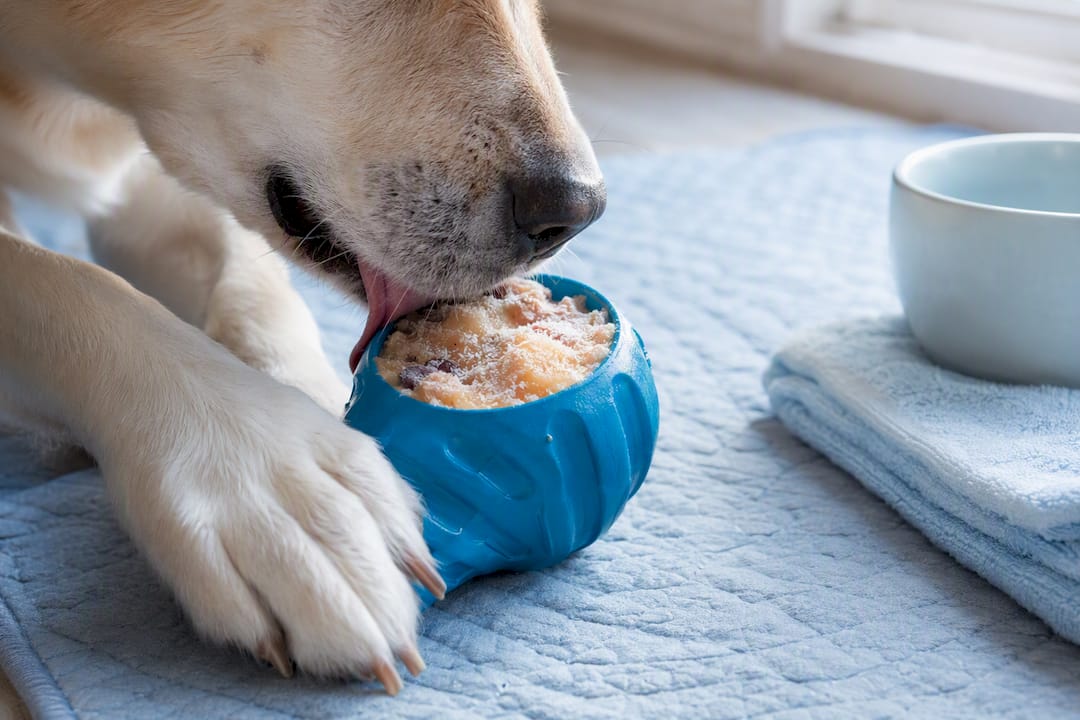
Lick mats work well for a similar reason but at a slower pace. Spread a vet-safe option, like plain pumpkin puree or a small amount of unsweetened peanut butter, across the ridged surface and either place it flat on the crate floor or press it against the side wall if the mat has suction cups. Always check the ingredient label for xylitol before using any peanut butter, since it’s toxic to dogs even in small amounts.
Beyond food-based enrichment:
- Stationary nose work: hide a few treats inside a folded towel and let your dog sniff them out without standing up
- Basic obedience cues that don’t require standing, like “touch” with a nose target, or a settled “down, stay”
- Supervised chew items appropriate to your dog’s size, checked regularly for splintering or complete consumption
- Rotating three or four activities across the day so nothing gets stale
A recommended enrichment budget is 20 to 30 minutes of cognitive work daily, broken into five or ten minute sessions rather than one long block. That pacing matters. A single half-hour puzzle session can overstimulate a dog who’s already anxious about confinement, while short bursts spread across the day keep arousal low and attention engaged.
Pro Tip: Rotate which enrichment tool comes out first each day. A Kong on Monday, a lick mat on Tuesday, nose work on Wednesday. Novelty does more to hold a dog’s interest than variety within a single session ever will.
How Do You Handle the Crate Door Without a Bolt?
The moment right after the crate door opens is when most preventable injuries happen. A dog who’s been still for hours has pent-up energy, and if that energy releases all at once toward a doorway or set of stairs, weeks of careful management can undo itself in seconds.
Keep a well-fitting harness on your dog even while inside the crate. Check it daily for rubbing or tightness, especially if your dog’s weight shifts during recovery. Clinical guidance on handling dogs during crate rest treats the harness as a grab point, not just a walking accessory. Before you open the door, clip the leash to the harness first, through the crate opening if needed, so you have control before your dog has room to move.
- Attach the leash before fully opening the door, not after
- Open the door slowly and speak in a low, calm voice to keep arousal down
- For small or heavy dogs, use both hands and lift from underneath the chest and hindquarters, not by the harness alone
- Guide your dog directly toward the exit or toilet area, avoiding stairs unless cleared
Returning to the crate needs the same calm approach in reverse. If your dog associates the crate with excitement or reward, like getting a treat every single time, that anticipation can turn into a rushed, uncontrolled entry. Keep rewards occasional and low-key so the crate stays a place of calm rather than a trigger for a sprint.
When Should You Call the Vet During Crate Rest?
Most recoveries go smoothly when the plan is followed, but knowing which signs demand an immediate call, versus which ones are just part of the process, saves time and sometimes saves the recovery itself.
Call promptly if you notice:
- Discharge, odor, redness, or swelling around a surgical site or wound
- Sudden loss of function in a limb, dragging a paw, or new incoordination
- Panting, whining, or guarding behavior that suggests pain beyond what’s expected
- A noticeable drop in appetite lasting more than a day
- Straining without producing urine or stool, which can signal a separate complication
Distinguishing pain from boredom takes some practice. A bored dog is often restless in short bursts, then settles once given something to do. A dog in pain tends to hold a stiff posture, avoid a specific position, or startle when touched near the injury site. When in doubt, treat it as pain until your vet says otherwise.
Roughly 65 to 90 percent of dogs managed with strict activity restriction for conditions like intervertebral disc disease show meaningful improvement without surgery, according to veterinary literature reviewing conservative management outcomes. That range underscores why sticking to the restriction, even when your dog seems recovered early, matters more than it might feel like day to day.
If your dog seems to be regressing, medication timing might need adjustment, or a sedative might be worth discussing for particularly anxious dogs. Bring your daily log to any recheck, along with photos or short video clips of movement or behavior that concerned you. That documentation often helps a vet triage a problem faster than a verbal description alone.
How Do You Safely End Crate Rest and Return to Activity?
Timelines vary enormously depending on the diagnosis. Some soft-tissue injuries clear in two to three weeks. Spinal cases or major orthopedic repairs can run six to twelve weeks or longer. These ranges are examples only. Your vet’s specific timeline always overrides a general estimate.
- Confirm clearance at a recheck. Don’t extend privileges based on how your dog looks or acts at home. Wait for the vet’s exam and, if applicable, imaging results.
- Add short leash walks first. Typically five minutes, flat ground only, before anything else changes.
- Increase duration gradually, often by a few minutes every few days, watching closely for limping, stiffness, or reluctance afterward.
- Reintroduce stairs and mild elevation last, since these place the most stress on healing joints and the spine.
- Watch for regression. Any limping, guarding, or behavior change after increased activity is a signal to step back to the previous stage and call your vet.
If progress stalls or your dog struggles with basic strength and coordination once cleared for light activity, ask about a referral to a canine rehabilitation professional. Structured physiotherapy, including underwater treadmill work or targeted strengthening exercises, can close gaps that home management alone doesn’t fully address.
Practitioner Notes for Owners With Mobility or Monitoring Needs
Non-slip flooring isn’t optional for any dog, but it becomes even more critical when the owner can’t lift or reposition their dog quickly. A single layer of rubber-backed matting under a Vetbed cover prevents the coordination problems that lead to falls, and it reduces pressure sores that develop when a dog can’t shift position easily on its own.
The harness-as-grab-handle technique deserves special attention for handlers managing their own mobility limitations. Clipping the leash before opening the door, rather than reaching in first, means you’re never bent over trying to catch a moving dog.
- Choose a harness with a sturdy top handle, not just a back clip, for easier lifting assistance
- Position the crate at a height that doesn’t require deep bending or kneeling to open
- Use long-handled tools, like a grabber for dropped items, to avoid repeated bending near the crate
- Consider a remote camera or communication device so you can check on your dog without physically getting up every few minutes
Adapting enrichment for physical limitations often means favoring stationary activities, like a lick mat pressed to the crate wall, over anything that requires you to actively engage on the floor for long stretches.
A Note on Doing This Right, Not Just Doing This Fast
Crate rest asks a lot of both dog and owner. It’s emotionally difficult to watch an animal who wants to run and play stay confined for weeks, and that discomfort is exactly why so many owners bend the rules early. Strictness in the first two weeks isn’t about being harsh. It’s about respecting how fragile healing tissue actually is before it has time to stabilize.
The owners who get through this well aren’t the ones with the most elaborate setups. They’re the ones who build a boring, predictable routine and stick to it, even on the days their dog seems fine. If your household needs help building that kind of calming daily rhythm, start there before recovery day one, not after week three when frustration sets in.
— Andrew
Can a Monitoring Device Support Crate Rest at Home?
Crate rest often means long stretches where you can’t be in the same room, whether you’re at work, handling other responsibilities, or simply resting yourself. That’s where a remote check-in tool earns its place alongside the harness, the bedding, and the daily log. This device is not a substitute for veterinary care or a replacement for supervised crate setup. It serves as a communication and calming-workflow aid that fits into the routine you’ve already built.
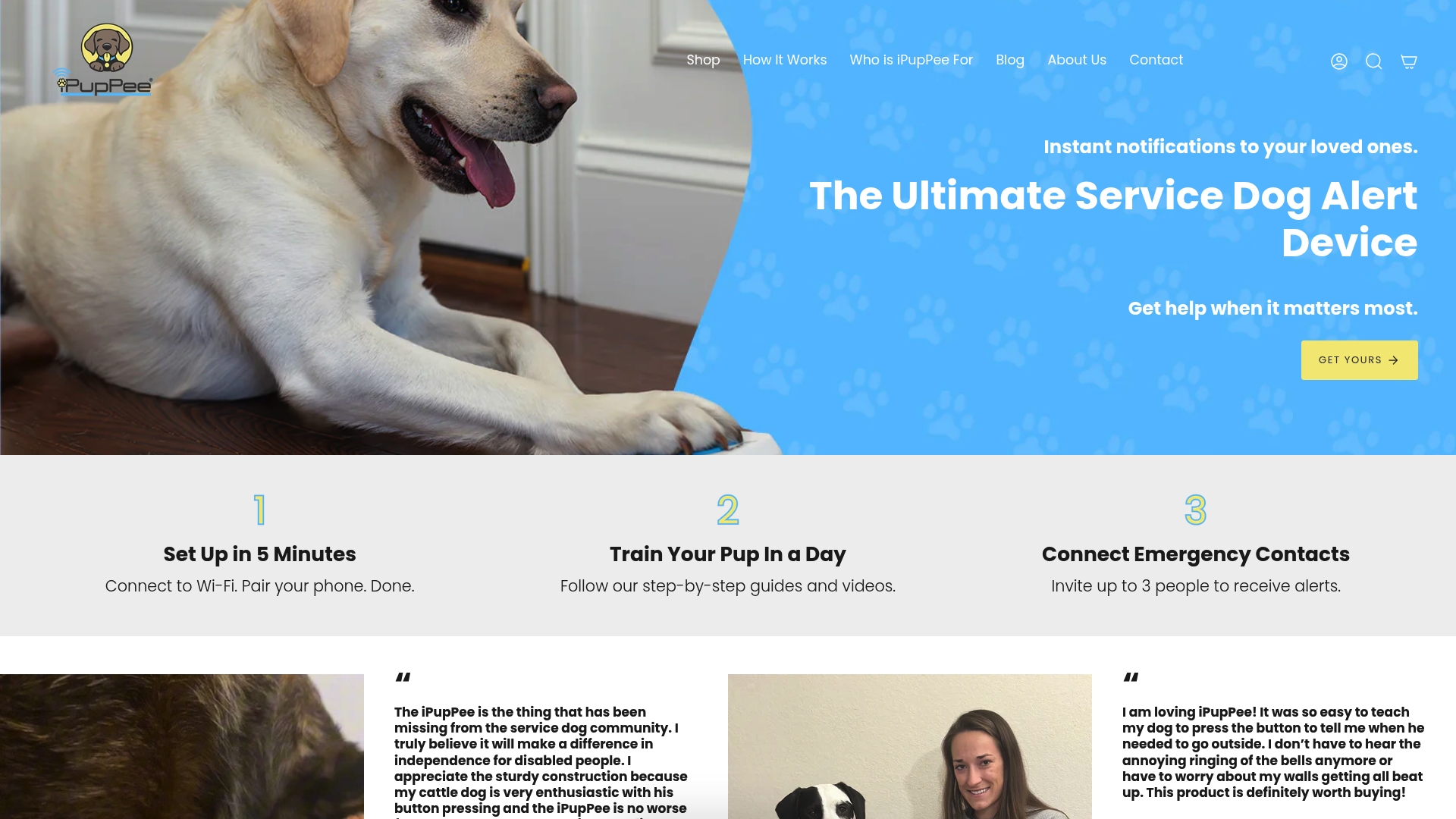
The device lets your dog send a direct alert to you, whether you’re in the next room or across town, which matters most during the quiet stretches of a recovery day when you’d otherwise have no way to know your dog is distressed, needs a toilet break, or is simply awake and unsettled. It pairs with live video and two-way audio, so you can talk your dog through a restless moment without walking over and risking an excited rush toward the crate door. For households juggling caregiving duties, service dog handlers, or owners managing their own mobility limits, that remote layer of awareness can ease some of the constant hovering that crate rest otherwise demands. If you want to see how it fits your specific setup, visit the iPupPee page and check the training resources included with the device.
Sources
For clinical procedure steps and flooring specifics, The Rehab Vet’s crate rest guidance covers vet-directed activity rules in detail. For day-to-day owner strategies, PreventiveVet’s crate rest survival guide offers practical enrichment and calming tips. For the evidence behind activity restriction itself, the open-access veterinary review on PMC covers conservative management outcomes.
- “Crate rest” for dogs: advice for vets – The Rehab Vet
- How to survive crate rest with your dog — PreventiveVet
- Crate rest for six weeks: A daily enrichment budget — The Pet Times
- NCBI / veterinary review (PMC7750232)
FAQ
How do you properly crate rest a dog?
Follow your vet’s written activity plan exactly, use a properly sized crate with non-slip flooring, limit toilet breaks to leash-only trips with no stairs unless cleared, and add low-movement enrichment like frozen Kongs or lick mats to manage boredom.
What does the 2:1 rule for crate training mean?
The 2:1 rule relates to puppy bladder capacity during house training, not medical crate rest, so it doesn’t apply once a vet has prescribed activity restriction for injury or surgery recovery.
What is the 10-10-10 rule for puppies?
Like the 2:1 rule, the 10-10-10 rule is a general puppy socialization and crate-training guideline, not a framework for medically directed crate rest, where your vet’s specific timeline always takes priority.
When can you stop crating a dog at night overnight during recovery?
Only after your veterinarian confirms at a recheck that your dog’s condition has stabilized enough for reduced confinement, since timelines vary widely by diagnosis and stopping early risks re-injury.