

Two changes matter more than any others: rework your pet’s feeding, medication, and walk schedule into a lower-effort version of itself, and add one simple alert button your pet can press to call for help. Prioritize feeding and medication timing, walk safety, and night lighting first. In the next 24 hours, pick one habit to change and one alert tool to set up. Start small.
TL;DR:
- Night lights should be tested and upgraded to motion-activated models if the path from bed to bathroom is poorly lit, ensuring safety during nighttime.
- Keep pet water and food bowls within easy reach on a clear, accessible path, and raise food bowls to waist height to reduce bending effort.
- Training a dog to press an alert button requires five minutes daily and can establish reliable use within two to six weeks through consistent reinforcement.
- Focus on low-maintenance safety upgrades like motion night lights, non-slip rugs, and elevated feeders that require minimal ongoing upkeep and reduce fall risks.
- Build a backup plan with a Pet Emergency File, a trusted caregiver, and through regular device and chain tests to ensure readiness during emergencies.
Table of Contents
- Your Pet Routine Adjustment Checklist for Today
- How Do You Restructure Daily Routines for Safety?
- How Do You Train a Dog to Use an Alert Button?
- What Home Fixes Actually Reduce Fall Risk?
- Building a Backup Plan for the Unexpected
- Adjusting Your Pet’s Diet as Both of You Age
- Keeping Your Pet Social Without Wearing Yourself Out
- Spotting Stress When You Change Your Pet’s Routine
- Andrew’s Take: Pace Yourself, Not Just Your Pet
- A Simple Alert Button Worth Setting Up This Week
- Sources
- FAQ
Your Pet Routine Adjustment Checklist for Today
You don’t need a contractor or a caregiver visit to make your home safer this week. Most of these take under 20 minutes each, and a few genuinely need a second pair of hands.
- Test your night lights. Walk the path from bed to bathroom in the dark. If you can’t see the floor, add a motion-activated night light. This single fix delivers outsized safety for the cost, an affordable starter package.
- Pick one charger spot. Keep your phone charger and the phone itself in the same place every night, near your bed.
- Move water and food bowls within easy reach, ideally on a path that doesn’t require bending near stairs or clutter.
- Switch to a no-pull harness and raise food bowls to waist height if bending has become difficult, following the gear guidance for senior pet owners.
- Set one daily medication reminder for your pet and test that it actually goes off before relying on it.
- Label your Pet Emergency File and store it somewhere a neighbor or paramedic would find it fast, like the refrigerator door.
Anything involving new tech setup (harness fitting, reminder apps) goes faster with a family member’s help the first time. After that, it runs on its own.
How Do You Restructure Daily Routines for Safety?
Big schedule overhauls fail. Small, repeatable habits stick. The goal is fewer decisions per day, not more gadgets.
Morning: fewer steps, same result
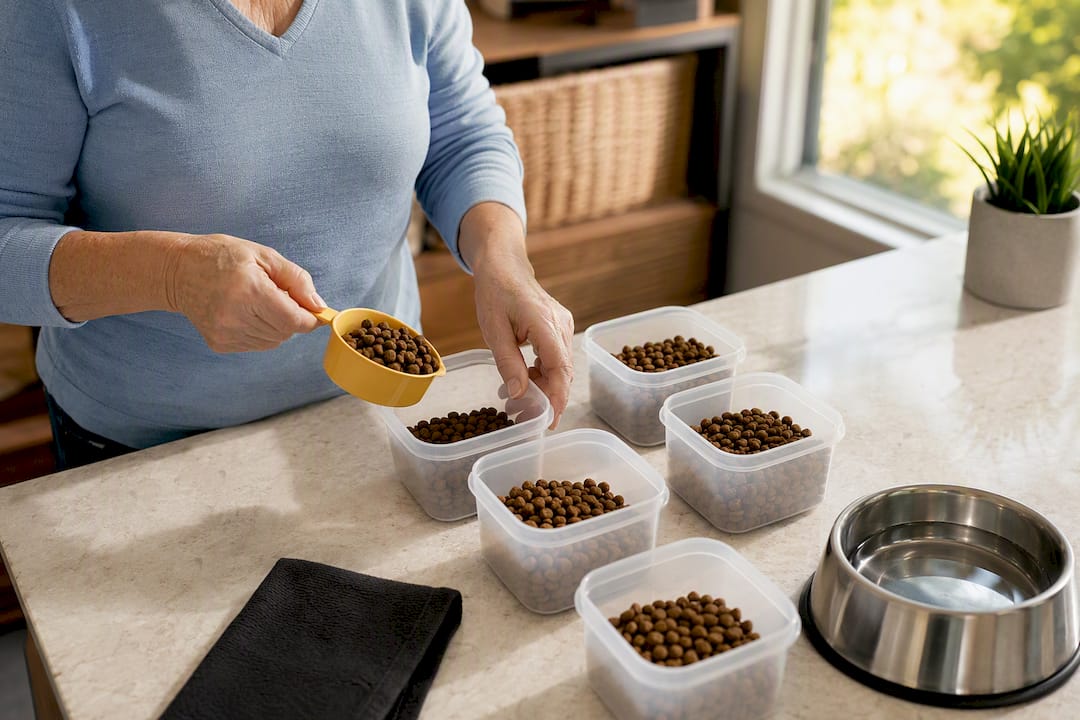
Set one alarm, not three. Use it to trigger both your wake-up and your pet’s first feeding, so you’re not tracking two schedules in your head. Prep meals the night before in labeled containers. Add a sticky note or a checkmark chart by the food bowl so you always know whether today’s dose has already gone out. That one habit prevents the most common medication mix-up: giving a dose twice because you forgot you already did it.
Daytime: shorter bursts, more rest
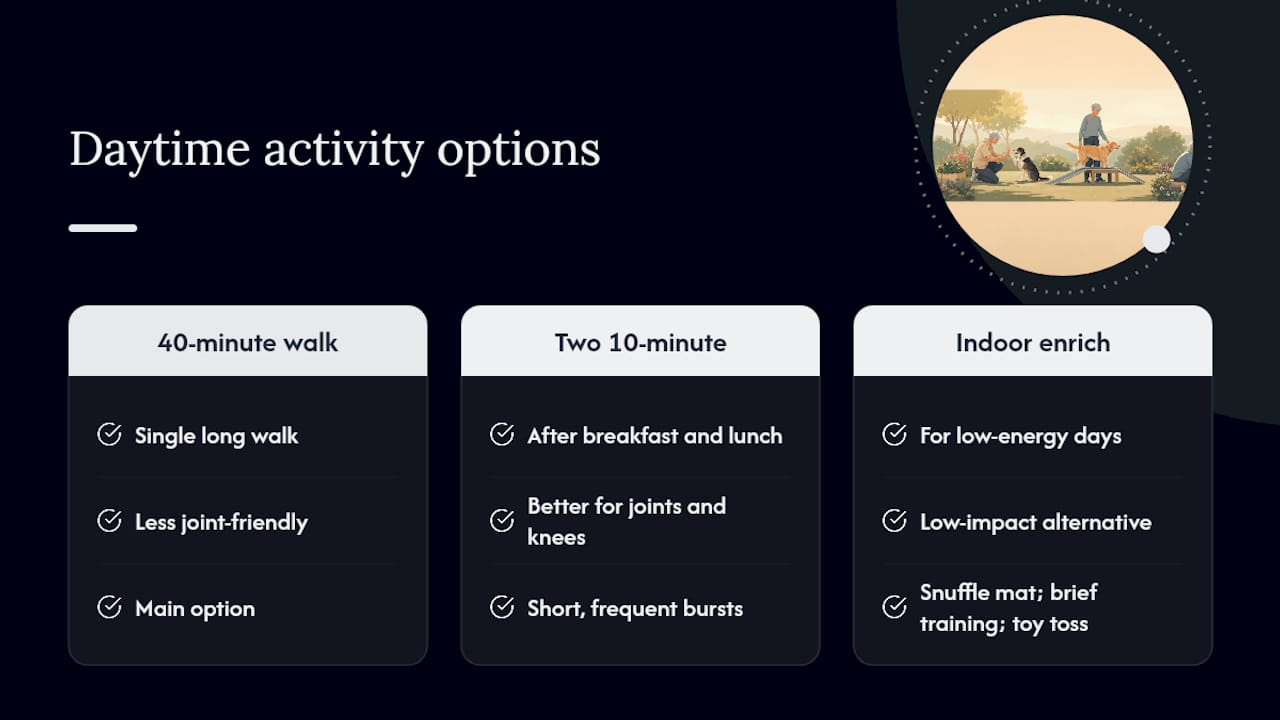
Trade one long walk for two or three short ones. A 10-minute walk after breakfast and another after lunch does more for a dog’s joints and your knees than a single 40-minute slog. On low-energy days, swap the walk for indoor enrichment: a snuffle mat, a short training session with the alert device, or simply tossing a toy down a hallway.
Evening: wind down on purpose
Dim the lights an hour before bed. Dogs and cats read household lighting as a cue, and softer light signals it’s time to settle. Run through a short mental checklist: food given, water topped off, meds confirmed, doors locked. Keep it the same three or four items every night so it becomes automatic.
Walks that don’t risk a fall
- Choose flat, familiar routes over new terrain, especially in winter.
- Use a no-pull harness rather than a collar. It gives you more control with less arm strain, a point echoed in pet ownership guidance for aging in place.
- If the weather’s bad or your energy is low, ask a neighbor, grandchild, or paid dog walker to cover that day. There’s no prize for pushing through.
Pro Tip: Write your walk route and the approximate time you leave on a sticky note by the door. If something happens, whoever finds it knows exactly where to start looking.
Bring in a family member or a paid helper once any single task starts taking noticeably longer than it used to, or once you’re skipping it more than twice a week.
How Do You Train a Dog to Use an Alert Button?
Training a dog to press an alert button doesn’t require an obedience class. It requires five minutes a day and consistency, because short daily sessions with immediate reinforcement typically build a reliable press within 2 to 6 weeks for most companion breeds.
Start by placing the device somewhere your pet already lingers, near the food bowl or the door. Press it yourself while your pet watches, then reward immediately with a treat and praise. Dogs learn by association, not by explanation.
Three milestones to watch for:
- Touch: the dog noses or paws the button out of curiosity, even by accident.
- Press for reward: the dog presses on purpose because it now expects a treat.
- Contextual use: the dog presses when it actually wants something, like going outside or getting attention.
A five-minute session, once a day, beats one 30-minute session a week. Do a quick weekly review: is the press getting faster and more intentional? If not, go back a step and add more repetition at the reward stage.
Maintenance takes two minutes: charge the device on a set night each week, do one test press to confirm it’s sending alerts, and check that it hasn’t shifted out of easy paw reach. Caregiver-assisted setup and short practice windows measurably improve how well older adults stick with new devices, so don’t hesitate to have a family member handle the initial pairing.
Devices like this support communication and monitoring, but they don’t replace veterinary visits or a microchip for identification and medical needs.
What Home Fixes Actually Reduce Fall Risk?
Not every safety upgrade is worth the upkeep. Focus on the fixes that need almost no ongoing attention once installed.
- Motion night lights in hallways and bathrooms. Zero daily maintenance once placed, and among the highest safety return for the lowest cost.
- Non-slip rugs or runners along your pet’s most-used indoor paths.
- A low ramp or step at the door if your pet jumps on and off furniture or a porch.
- Elevated feeders so neither you nor an older dog has to bend to the floor.
- A long-handled scoop for litter boxes or yard cleanup, reducing risky bending postures.
On wearable alerts: a simple panic button that pairs to a phone works for most households. Some alert devices offer video and two-way audio but need a stable connection to be reliable. If your Wi-Fi drops often, that’s worth testing before you count on the device in a real emergency.
Pro Tip: If a device needs an app update, a subscription, or more than one button press to send an alert, it’s too complicated for a crisis moment. Simpler wins.
Building a Backup Plan for the Unexpected
A hospital stay or sudden illness shouldn’t leave your pet uncared for. Build this once, then test it twice a year.
- Create a Pet Emergency File: vet contact, medication list, feeding schedule, and behavioral notes. Keep one copy on the fridge and one with your emergency contact.
- Name at least one backup caregiver who has a spare key and knows your pet’s routine. Confirm they can actually get there within a few hours, not just that they agreed to it once.
- Run a weekly device test: press the alert button, confirm the notification arrives.
- Run a monthly chain test with your backup caregiver to confirm they still receive and respond to alerts, an approach that mirrors monthly maintenance checks for senior alert systems.
- Pack a short hospital-stay list in advance: food for a week, leash, medications, and the Emergency File, so a caregiver isn’t improvising.
Adjusting Your Pet’s Diet as Both of You Age
Feeding routines often need updating alongside everything else, not because the pet is sick, but because your own schedule, mobility, and budget have shifted. If standing at the counter to prep meals has become tiring, switch to pre-portioned meals you can measure once a week instead of once a day. Buying food in smaller, lighter bags also cuts down on the strain of hauling a 40-pound sack from the car.
Watch your pet’s weight and energy alongside your own changing routine. A dog getting shorter, more frequent walks instead of one long outing may need slightly smaller portions to avoid weight gain. Water intake matters just as much as food. Keep bowls topped off and placed somewhere you’ll actually notice them running low, not tucked in a corner you rarely walk past.
If you’ve simplified your own cooking routine, consider whether your pet’s feeding routine can mirror that same simplicity. Automatic feeders with timed portions help on days when your own energy is low, though they still need a weekly check to confirm they’re dispensing correctly. Any real diet change, switching food brands, adjusting portion size for a health condition, belongs in a conversation with your vet, not a guess based on how your pet looks.
Keeping Your Pet Social Without Wearing Yourself Out
Pets need interaction, but that doesn’t mean marathon play sessions. Short, frequent contact matters more than long, exhausting ones for both of you.
Five minutes of gentle brushing, a slow scent walk around the block, or simply sitting together while you watch television all count as meaningful interaction. Rotate who provides extra activity when you’re having a low-energy week. A grandchild who visits on weekends, a neighbor who enjoys dogs, or a local dog-walking service can fill in without you having to push through fatigue.
Watch for the reverse problem too. Some seniors, especially those managing a new mobility limit or recovering from an illness, unintentionally reduce their pet’s social time more than they realize. A dog or cat that used to greet visitors and now barely sees anyone outside the house can become withdrawn. If you’ve cut back on walks or visits, look for lower-effort substitutes, a bird feeder outside a window for a cat to watch, or a regular short visit from a friend who’ll toss a ball in the yard.
Companionship runs both directions here. A pet that stays engaged tends to keep its owner more engaged too, which matters as much for your well-being as for the animal’s.
Spotting Stress When You Change Your Pet’s Routine
Pets notice schedule changes faster than most people expect, and they don’t always show it the way you’d assume. Watch for these signals in the first two weeks after any routine adjustment:
- Eating changes: skipping meals, eating faster than usual, or begging more than normal.
- Sleep disruption: pacing at night, waking you up at odd hours, or sleeping far more than usual during the day.
- New destructive habits: chewing, scratching at doors, or accidents from a previously house-trained pet.
- Withdrawal: hiding, avoiding contact, or a normally social pet suddenly keeping distance.
- Vocal changes: more whining, barking, or meowing than the pet’s normal baseline.
Most of this resolves within a week or two once the new routine settles into a predictable pattern. If it doesn’t, don’t just wait it out. A vet visit rules out pain or illness masquerading as behavioral stress, which is common in older pets adjusting to a new schedule. In the meantime, keep one part of the day completely unchanged, the same greeting, the same bedtime spot, the same treat after a walk. Pets anchor to consistency even when everything else around them is shifting.
Andrew’s Take: Pace Yourself, Not Just Your Pet
The seniors who succeed with a new alert device aren’t the ones with the fanciest setup. They’re the ones who ran five minutes a day for three weeks straight instead of one long session and giving up. The most common mistake is treating this like a project to finish rather than a habit to build. Pick one change. Test it for a week. Then add the next one.
— Andrew
A Simple Alert Button Worth Setting Up This Week
Most of what’s covered here comes down to removing friction, fewer steps, fewer decisions, fewer things that can go wrong quietly. A device with one button your dog presses can send you or a trusted contact a direct alert, sometimes including live video and two-way audio, so you can see and hear what’s happening instead of guessing.
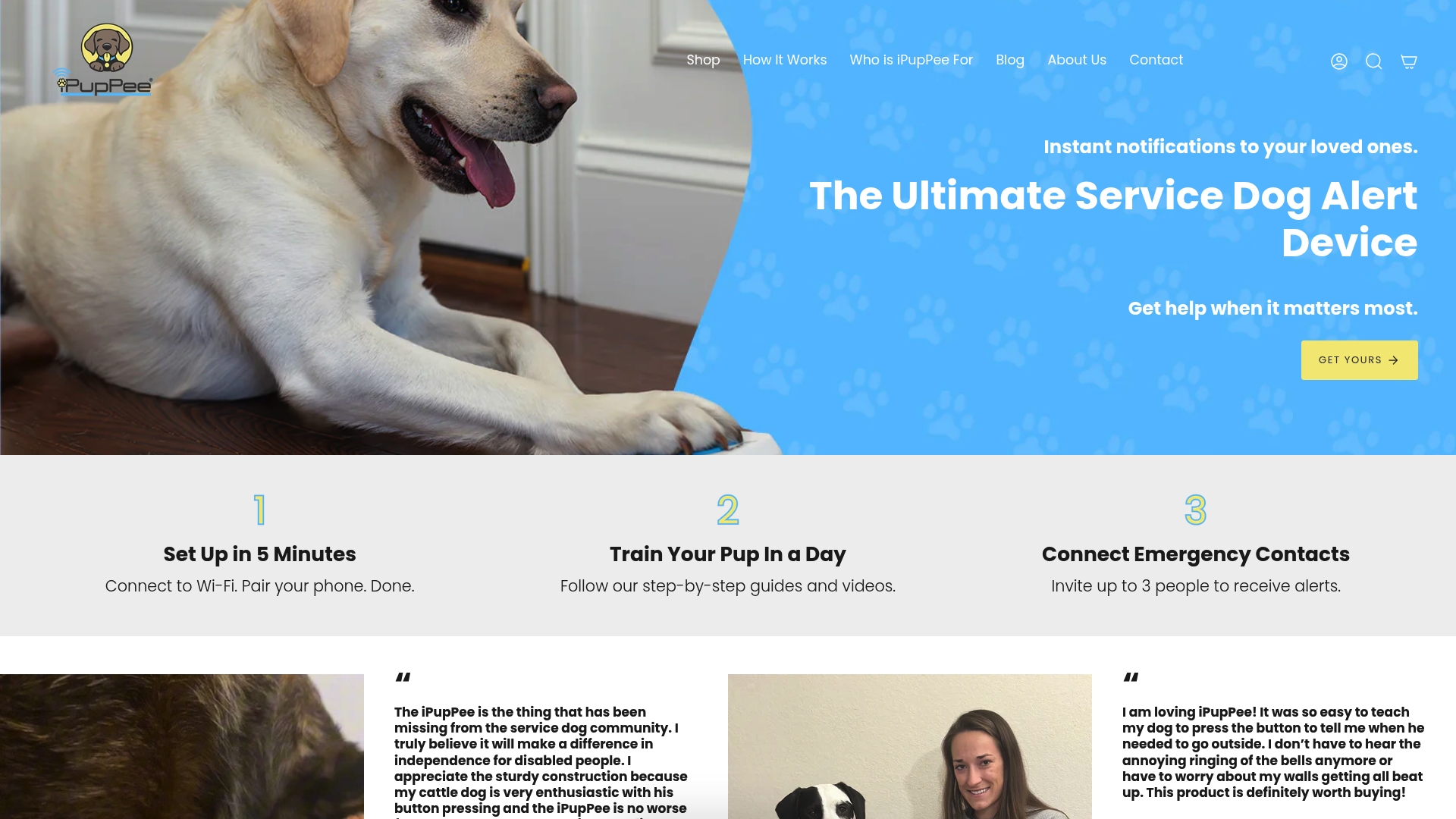
Setup typically takes a single evening, and training guides help you with five-minute daily sessions. Customer support and FAQ resources may be available to assist with pairing or placement questions. If you’re ready to add one low-maintenance safety layer to your pet’s routine, visit the iPupPee product page to see device details, training materials, and setup instructions, and order when you’re ready to get started.
Sources
- Smart Home Devices for Aging in Place: A Complete Setup Guide (2026) | SafeAtHome Guide
- Smart Home Starter Kit Emergency Alerts Checklist for Seniors | Simple Smart Home
- A Guide to Safe Pet Ownership for Seniors and Aging in Place | Holo Alert
- Blending Smart Devices with Personal Care at Home for Safer Living
FAQ
How long does it take to train a dog to use an alert button?
Most companion breeds learn a reliable press within a few weeks of five-minute daily practice sessions with consistent rewards.
Does an alert device replace a human caregiver?
No. A device like iPupPee adds a fast communication layer, but it works best paired with at least one backup caregiver who can physically respond.
What’s the single most useful first change for a senior pet owner?
Start with one motion night light on your pet’s most-used indoor path, since it delivers strong safety impact for very little setup effort or cost.
Who should I call if my pet’s alert goes off and I can’t respond?
Your designated backup caregiver from your Pet Emergency File should be the first call, followed by your vet if the alert relates to a health concern.
Can these routine changes work for cats too?
Yes. Feeding schedules, night lighting, and simplified daily checklists apply just as well to cats, though litter box placement and scooping tools matter more than walk routines.