

Preventing pet accidents comes down to a repeatable loop: identify the hazards in your pet’s environment, secure or remove them, train and supervise around what’s left, then prepare for the emergencies you can’t fully eliminate. Run that loop room by room, season by season, and most injuries never get the chance to happen. The rest of this guide breaks each step into a checklist you can actually use, plus the go-bag and vet contacts you need on hand for when prevention isn’t enough.
TL;DR:
- Proper pet-proofing involves daily room scans, securing hazards, and maintaining a routine check to prevent most accidents.
- Toxin exposure risks are extremely high for small amounts of antifreeze, acetaminophen, chocolate, grapes, and household chemicals.
- Behavioral training in recall, leave it, and threshold manners significantly reduces the chances of pet escapes and ingestion incidents.
- Pet emergency go-bags should include several days of supplies, current vet records, and current microchip registration for quick recovery.
- Safety devices like alert buttons and remote cameras support supervision but must be paired with physical barriers and trained habits to be effective.
Table of Contents
- What causes most pet accidents at home?
- How do you build a repeatable pet accident prevention process?
- Room-by-room pet-proofing that actually holds up
- Which training skills actually reduce accident risk?
- What belongs in a pet emergency go-bag?
- Where pet safety devices and iPupPee fit into the process
- How often should you check your pet for injury risks?
- Do risks change by breed, age, or size?
- How do you supervise safely in a multi-pet household?
- What products help prevent pet accidents?
- Small habits, tested daily, prevent more accidents than big fixes
- How iPupPee supports a consistent pet accident prevention process
- Sources
What causes most pet accidents at home?
Five hazard categories account for the vast majority of pet injuries: vehicle incidents, falls, toxin exposure, choking, and heat or overexertion. Each one turns dangerous through a small, predictable failure. A gate left ajar becomes a car accident. A countertop within jumping distance becomes a fall. A pill bottle knocked off a nightstand becomes a poisoning.
Toxins deserve special attention because the margin for error is so thin.
As little as one teaspoon of antifreeze can kill a 3 kg cat, and less than a tablespoon can kill a 9 kg dog — a garage puddle most owners wouldn’t think twice about.
A single 500 mg acetaminophen tablet can be fatal to a cat weighing about 3 kg, which is why a dropped painkiller matters as much as a spilled chemical.
Other everyday culprits stack up fast:
- Chocolate, xylitol, grapes, raisins, and onions, all common in kitchens
- Rodenticides and insecticides stored at floor or paw level
- Small toys, bones, and dental chews that pose choking risks
- Hot pavement and closed vehicles that cause heat injury in minutes
Recognizing these patterns is the whole point of the first step in the prevention process: you can’t secure a hazard you haven’t identified.
How do you build a repeatable pet accident prevention process?
A prevention process only works if it’s boring enough to repeat. Here’s a four-step version that fits most households, adapted from vet-recommended pet-proofing habits.
- Audit each room. Walk through at pet height, not your own. Get on your knees in the kitchen, garage, and bathroom and look for anything chewable, swallowable, or edible within reach.
- Secure or remove what you find. Childproof latches on cabinets, cord covers on blinds and chargers, anchors on bookshelves and TVs, and locked storage for chemicals and medications.
- Train and supervise the gaps. No amount of latching fixes a dog that bolts through an open door. Layer basic obedience on top of physical controls.
- Prepare for what still gets through. Keep a go-bag, current ID, and vet contacts ready, because even a well-proofed home has an off day.
Cadence matters as much as the steps themselves. Do a 30-second visual sweep of the main living areas every day, since most ingestion emergencies start with small items left at floor level. Handle a deeper weekly check of latches, gates, and trash lids. Then run a full room-by-room audit at major life moments, a new pet, a move, a renovation, or a seasonal shift like the first hot week of summer or first ice of winter.
Pro Tip: Keep a five-minute timer on your phone labeled “pet sweep” and run it right before bed. Most owners catch dropped pills, loose wrappers, and unlatched cabinets in that final nightly pass, not during the big audits.
If your dog shows anxiety around specific triggers, resource guards, or reacts unpredictably around doors and gates, that’s the moment to bring in a certified trainer or behaviorist rather than trying to latch your way around a behavior problem.
Room-by-room pet-proofing that actually holds up
Pet-proofing isn’t a one-time chore.
Kitchen and dining room. Trash cans need locking lids or a cabinet home, since food scraps and packaging cause a huge share of choking and toxin cases. Store cleaning products above counter height, and consider a low gate if your dog free-feeds on dropped scraps while you cook.
Bathroom and bedroom. Medications go in a latched cabinet, never a bedside table. Small objects, hair ties, floss, bobby pins, are frequent swallowing hazards. Check under beds and behind furniture weekly; that’s where lost pills and dropped batteries end up.
Garage, workshop, and yard. Antifreeze, fertilizer, and pesticides belong on a high, locked shelf, never on the floor where a leak becomes a puddle. Walk your fence line seasonally for gaps, since frost heave and storm damage both open new escape routes.
Vertical hazards for cats. Secure window screens, anchor tall furniture that could tip during a climb, and check your houseplants against a toxic-plant list. Cats fall from open windows more often than most owners expect.
Which training skills actually reduce accident risk?
Not every trick matters equally here. A handful of behaviors do most of the safety work.
- Reliable recall. The single highest-value skill for preventing car accidents and escape injuries.
- “Leave it.” Stops ingestion of dropped food, medication, or trash before it happens.
- Threshold and door manners. Reduces bolting incidents at the exact moment doors and gates are most vulnerable.
- Calm behavior in the car. Lowers the odds of a startled lunge into traffic or a driver during transport.
Practice each skill in a low-distraction setting first, a quiet hallway before a busy sidewalk, a fenced yard before an open park. Gated practice, where you rehearse door manners with a baby gate as backup, lets you correct mistakes without real risk.
Pro Tip: Training and management aren’t either/or. A dog with excellent recall still gets a gate at the top of the stairs. Redundancy is the point, not a lack of trust in the training.
What belongs in a pet emergency go-bag?
Preparedness works because it removes decision-making from the moment you’re least equipped to make good decisions, according to CDC emergency guidance. Rehearsing your evacuation route and keeping supplies near an exit cuts down on the frantic, error-prone choices that cause secondary injuries during a crisis.
Your go-bag should include, per ASPCA disaster-preparedness guidance:
- several days of food and water
- enough medication for about two weeks
- Copies of vaccination and medical records
- A recent photo of your pet, in case you’re separated
- A spare collar, leash, and carrier
Confirm your pet’s microchip registration is current, since that’s often the most reliable recovery tool if a tag falls off during an emergency. If you’re traveling, feed your pet several hours before departure to reduce car sickness to reduce car sickness and secure them in a crate or harness rather than loose in the vehicle.
If you suspect poisoning, call the ASPCA Animal Poison Control Center or the Pet Poison Helpline immediately rather than attempting a home remedy. Inducing vomiting on your own can sometimes make things worse.
Where pet safety devices and iPupPee fit into the process
Alert devices work best layered onto the process above, not in place of it. A door-mounted button lets your dog signal you before slipping outside unsupervised, and remote video checks give you a way to confirm they’re safe while traveling or at work. Pairing a device-press with recall training reinforces the same “leave it” and threshold habits already doing the heavy lifting. Devices supplement supervision. They don’t replace a locked cabinet, a trained recall, or a saved emergency contact list.
How often should you check your pet for injury risks?
A prevention process that only looks outward, at cabinets and gates and cords, misses half the picture. Your pet’s own body changes the risk equation constantly, and a checkup schedule catches problems the room audit never will.
Weight changes are the easiest indicator to track and one of the most predictive. A dog that’s gained weight since last season is at higher risk of joint strain on stairs or slips on hard flooring. A cat that’s lost weight might be hiding pain that changes how it jumps, misjudging a leap it’s made a hundred times before.
Vision and hearing decline gradually enough that owners often miss it until an accident forces the issue. A dog that’s started misjudging curb heights or bumping into furniture at dusk needs a vet check, not just patience. The same goes for a cat that no longer reacts to a door opening behind it. Both conditions change how a pet navigates stairs, decks, and traffic.
Joint stiffness matters just as much for injury prevention as it does for comfort. A dog favoring one leg on a walk is a dog more likely to slip going down basement stairs or misjudge a jump onto furniture. Build a simple physical check into your routine: watch your pet walk on a flat surface, check gait on stairs, and feel along the spine and joints for flinching.
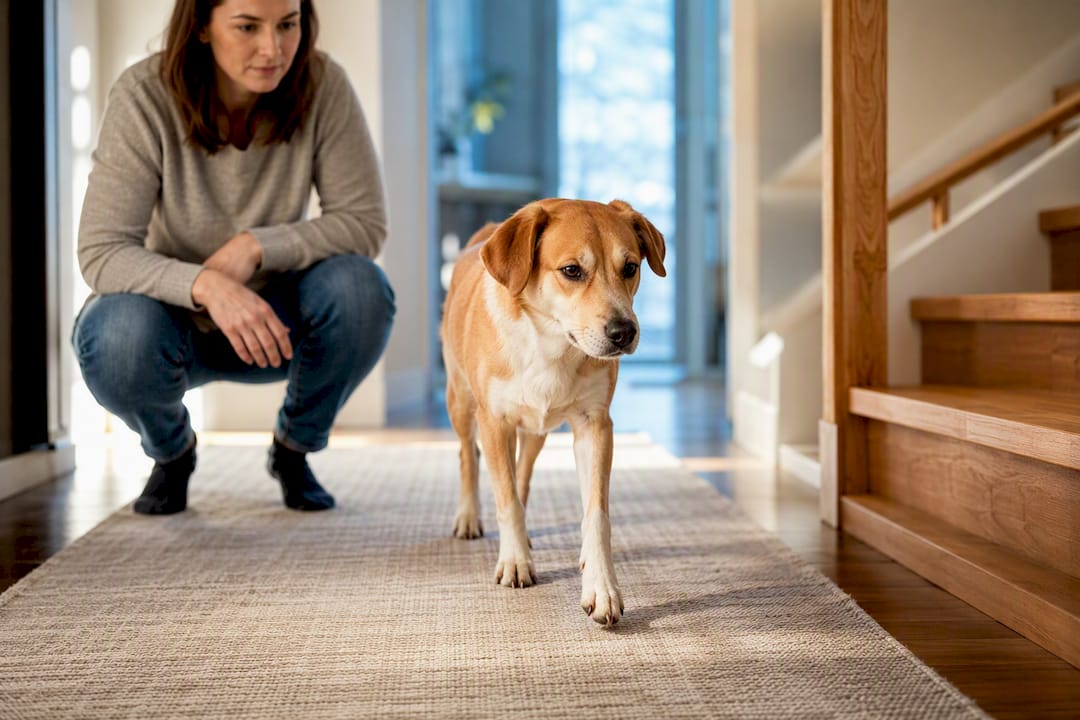
None of this replaces a real veterinary exam. It’s a habit that flags when to schedule one sooner rather than waiting for the annual visit.
Do risks change by breed, age, or size?
Yes, and treating every dog or cat with the same prevention checklist misses real, predictable differences.
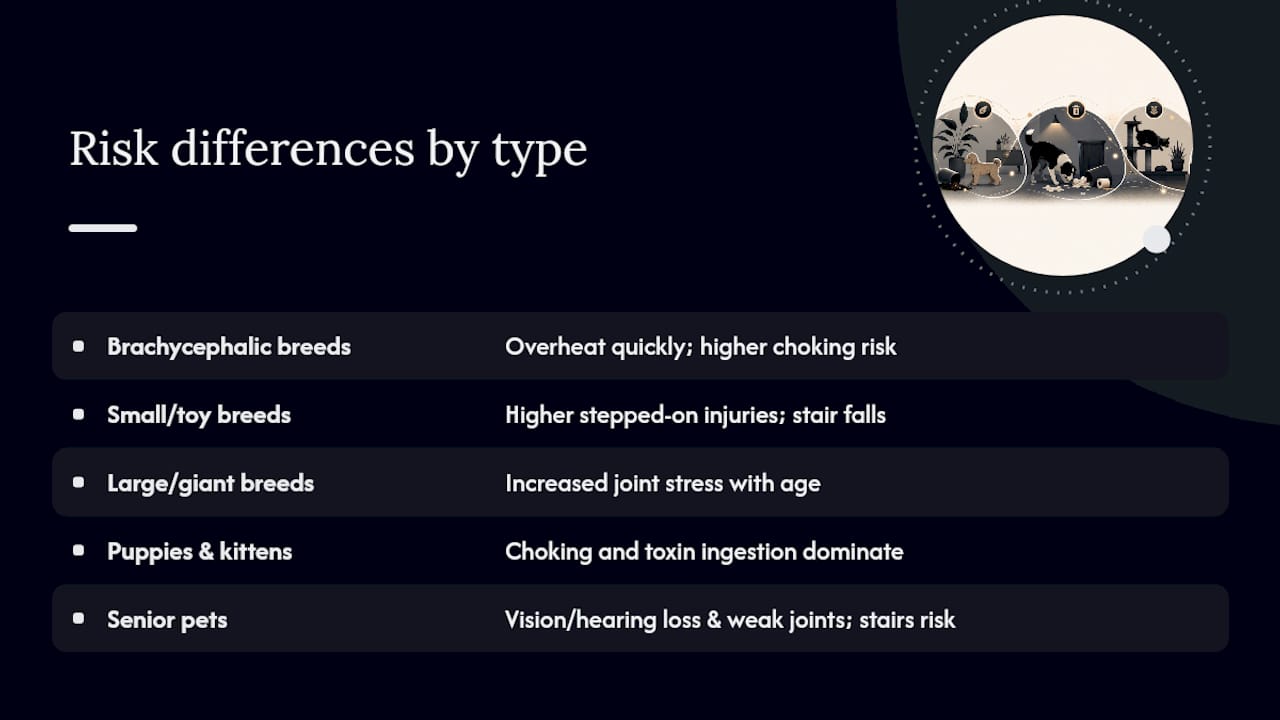
Brachycephalic breeds (bulldogs, pugs, Persian cats) overheat faster and are especially vulnerable to heat injury during travel or hot pavement walks. Their shortened airways also raise choking risk with certain treats and toys. Toy and small-breed dogs face higher odds of stepped-on injuries and stairway falls simply due to their size relative to a busy household. Large and giant breeds carry more joint stress, which makes the physical checkups above especially relevant as they age.
Puppies and kittens explore with their mouths, which makes choking and toxin ingestion the dominant risk category for the first year of life. Senior pets flip that pattern: declining vision, hearing, and joint strength turn familiar stairs and furniture into new hazards. A ramp by a bed or car door, once optional, becomes a real prevention tool as a pet ages.
Size also changes toxin math directly. A dose that only sickens a large dog can be fatal to a cat or small dog at the same exposure level, which is exactly why the antifreeze and acetaminophen thresholds cited earlier scale so sharply with body weight. Match your hazard audit to the specific animal in front of you, not a generic pet.
How do you supervise safely in a multi-pet household?
More animals mean more variables, and most multi-pet accidents happen at transition points, feeding time, doorways, and greetings, rather than during calm downtime.
Feed pets in separate spaces or at a distance if there’s any history of resource guarding, even mild. Food-related tension is one of the most common triggers for multi-pet injuries, and it’s also one of the easiest to prevent with simple spatial separation. Stagger door and gate access so you’re never opening an exit with two excited animals converging on it at once; that’s a recipe for a bolt or a scuffle.
Supervise new introductions closely, whether it’s a new pet joining the household or an unfamiliar visitor, and keep initial interactions short and gated rather than open-floor. A crate or separate room for the newer or more anxious animal during the adjustment period prevents the kind of cornered, defensive reaction that leads to bites or falls.
Watch for one animal’s training gaps becoming another’s risk. A dog with poor leash manners can pull a second dog into traffic during a joint walk just as easily as it endangers itself. Train and walk pets individually until each has reliable manners, then combine.
What products help prevent pet accidents?
Physical products fill the gaps that training and supervision can’t cover every minute of the day.
Pet gates remain the highest-value low-tech tool for stairs, kitchens, and rooms with chemical storage, since they don’t rely on a pet remembering a rule. Harnesses, particularly front-clip designs, reduce pulling-related falls and give you more physical control near roads and doorways than a collar alone. Crash-tested crates and seatbelt harnesses cut injury risk significantly during car travel, where a sudden stop turns an unrestrained pet into a projectile.
Door and window alarms alert you to an exit opening before a pet slips through unsupervised, closing one of the most common gaps in an otherwise well-proofed home. Smart alert devices extend that same idea further, letting a dog signal you directly or letting you check in remotely, which matters most for owners who are frequently away or who share a home with a service or support animal. Combined with the training habits in this guide, these tools turn a good prevention process into one that holds up even when you’re not standing in the room.
Small habits, tested daily, prevent more accidents than big fixes
The biggest shift I’ve seen in how owners approach pet safety isn’t buying more gear. It’s converting one bad habit into a five-second checkpoint. A friend’s dog kept getting into the trash until she moved the can behind a cabinet door with a child lock, a $6 fix that ended a recurring vet bill. Start with the smallest, most repeated risk in your house, not the scariest one. Build the daily sweep into a routine you already have, like locking the door at night, and keep your pet’s ID tag and microchip registration current so a bad day doesn’t turn into a lost pet on top of an injured one.
— Andrew
How iPupPee supports a consistent pet accident prevention process
Some pet safety devices are designed to address the exact gap most prevention checklists leave open: the moment you’re not in the room. These devices can let a dog press a button to alert you directly, often with live video and two-way audio, so a door slipping open or a pet in distress doesn’t go unnoticed just because you’re upstairs or away for the afternoon. Paired with related training courses, such devices can reinforce recall and threshold habits rather than replacing them. It’s a supplement to supervision, not a substitute. You still need the locked cabinet, the current microchip, and a saved vet number. If you want to see how the alert device and training resources fit into a household that already runs on gates, leashes, and a solid recall, that’s the next step worth taking.
Sources
- Pet safety tips | Ontario Veterinary Medical Association
- Acetaminophen toxicity in cats | VCA Hospitals
- Disaster preparedness for pets | ASPCA
Save your local vet and nearest 24-hour emergency clinic number where you can find it fast, not just in your phone.