

Yes, most dogs can learn to tolerate loud noises through a graded desensitization and counterconditioning program combined with sensible management, though severe cases sometimes need medication and a veterinary behaviorist. This guide walks through the tools, the step-by-step protocol, the troubleshooting fixes, and where medical support fits into the picture.
TL;DR:
- Raising noise volume too quickly can undo progress, so dogs should only be advanced after several calm, consecutive sessions at each level.
- Desensitization generally takes weeks for mild cases but can extend to months for severe phobias that also require medication.
- Counterconditioning, paired with sound exposure, is more effective when treats are given immediately after the noise and the dog is relaxed.
- Management tools like safe havens, pressure wraps, and noise-canceling earmuffs provide temporary relief but do not replace structured training or professional help.
- Starting noise desensitization early, before fear fully develops, is far more effective and less costly than trying to treat a severely entrenched phobia later.
Table of Contents
- What Tools Do You Need for Noise Desensitization Training?
- How Do You Run a Noise Desensitization Protocol Step by Step?
- How Does Counterconditioning Change Your Dog’s Emotional Response?
- What Management and Calming Aids Actually Help During Loud Events?
- When Should You Involve a Veterinarian or Behaviorist?
- How Do You Prevent Noise Fear in Puppies Before It Starts?
- What Goes Wrong Most Often and How Do You Fix It?
- How Long Does Noise Desensitization Actually Take?
- How Ipuppee’s Training Resources Fit Into Your Desensitization Plan
- The Overlooked Piece of Noise Desensitization Training
- Sources
What Tools Do You Need for Noise Desensitization Training?
Realistic playback matters more than expensive gear. A decent Bluetooth speaker and a folder of high-quality recordings (thunderstorms, fireworks, gunshots, vacuum cleaners) will cover most cases, though recordings work better for fireworks and gunshots than for storms since storms involve barometric pressure changes and flashes that speakers can’t reproduce.
Before your first session, gather:
- A speaker you can move to different rooms, so the sound seems to come from various directions rather than one fixed spot
- Short, editable audio clips (10 to 30 seconds) so you control exactly how much noise your dog hears
- High-value treats your dog only gets during these sessions, like chicken or squeeze cheese
- A designated safe space, such as a covered crate or a quiet back room
- A volume-controlled setup where you can test the lowest audible level before you start
Do a quick safety check every session: confirm exits are calm, other pets are elsewhere, and you have full attention to spare.
How Do You Run a Noise Desensitization Protocol Step by Step?
Progress happens in stages, and skipping ahead is the single biggest reason desensitization plans fail. Here’s the sequence that actually works.
- Assessment. Play a recording at a very low volume, barely audible, and watch for stress signals: ears back, panting, pacing, or refusing treats. That volume is your dog’s threshold, meaning the point just below where fear kicks in. Everything starts there.
- Beginner stage. Play the sound at threshold volume for three to five seconds, then immediately feed a treat. Repeat 8 to 10 times per session. Keep sessions under 15 minutes, and run them three to five times a week rather than once a day, since frequent short sessions build tolerance faster than occasional long ones.
- Intermediate stage. Once your dog stays loose and relaxed for several sessions at a given volume, move the speaker out of sight and vary clip length randomly. Raise volume in small increments only after multiple calm sessions in a row at the current level.
- Advanced stage. Introduce “danger zone” volumes that approach real-world intensity, but only if your dog has handled everything before it without hesitation. This is also where ad hoc counterconditioning during actual events pays off. If fireworks start unexpectedly outside, feeding treats calmly during the real noise reinforces the same lesson your recordings have been building.
- Maintenance. Once your dog handles full volume calmly, don’t stop. Run surprise sessions monthly, and refresh training a few weeks before your area’s known noisy season, whether that’s holiday fireworks or summer storms.
Success looks like a loose body, normal breathing, and a dog that takes treats without hesitation, not just a dog that sits still because it’s frozen.
Pro Tip: End every single session on a “win,” meaning the last repetition should be at a volume your dog handled easily. Ending on a struggle is what your dog remembers walking into tomorrow’s session.
How Does Counterconditioning Change Your Dog’s Emotional Response?
Desensitization gradually lowers reactivity to a sound. Counterconditioning goes further: it rewires the emotional association so the sound itself starts to predict something good. The two work as a pair, not as substitutes for each other.
Timing is everything here. The treat has to land within a second or two of the sound, not before it and not several seconds after, or your dog won’t connect the two.
- Use food your dog rarely gets elsewhere, so the sound genuinely becomes special
- Pair sound exposure with teaching a settle cue, meaning a specific spot (mat or bed) where lying down earns calm praise and slow petting
- Practice the settle cue with zero noise first, until it’s automatic, then layer in low-volume sound
- Reinforce physical signs of relaxation, like a released jaw or a flopped hip, rather than just rewarding a static “stay”
Owner-reported outcomes back this combination strongly. Relaxation training and counterconditioning report notable success rates in surveyed cases in surveyed cases, noticeably ahead of many standalone remedies. Layering a trained calm response onto sound exposure gives your dog a job to do besides being afraid, and that shift in focus is often what makes the difference between tolerating a noise and genuinely relaxing through it.
What Management and Calming Aids Actually Help During Loud Events?
Training takes weeks. Storms and fireworks don’t wait. On nights you know will be loud, management buys your dog comfort while the desensitization work keeps progressing behind the scenes.
- Set up a safe haven ahead of time: an interior room, curtains drawn, white noise or a TV running to mask outside sound
- Trial a pressure wrap (like a snug-fitting vest) during a calm afternoon first, never for the first time mid-panic
- Test noise-canceling earmuffs made for dogs the same way, during a quiet trial run
- Be skeptical of pheromone diffusers, herbal drops, and essential oils used alone; these generally lack strong evidence as standalone fixes for real noise phobia
- Treat management as a bridge, not a cure. It reduces suffering tonight while your training routine does the actual long-term work
When Should You Involve a Veterinarian or Behaviorist?
Some dogs need more than training and a weighted vest. Watch for panic that doesn’t ease, self-injury from clawing at doors or windows, or zero progress after several consistent weeks. Any of those means it’s time to call a vet.
- Ask whether situational medication (used only before known events) or daily medication makes more sense for your dog’s pattern
- Understand that medication doesn’t replace training, it lowers the fear response enough that learning can actually happen
- Bring notes on triggers, session history, and specific symptoms to your appointment
- Ask which anxiolytics have documented efficacy for noise-specific fear, since dosing needs to be individualized by a professional, not guessed from an internet forum
Peer-reviewed guidance recommends a clear treatment ladder: environmental management first, then desensitization and counterconditioning, then calming aids, then prescription medication when needed. Medication sits at the top of that ladder, not because it’s a last resort of shame, but because it works best alongside behavior work already underway.
How Do You Prevent Noise Fear in Puppies Before It Starts?
Prevention is far easier than treatment. Puppies exposed to varied, low-level sounds during their early weeks tend to build lasting tolerance without ever needing a formal desensitization plan.
- Start sound exposure the week you bring your puppy home, always below any visible stress threshold
- Include vacuum cleaners, doorbells, thunder recordings, motorcycles, and blenders on rotation
- Keep every exposure short (under a minute) and pair it with a treat or a game
- Use a packaged puppy sound program if you want structure, or build your own playlist if you already know your local noise triggers
What Goes Wrong Most Often and How Do You Fix It?
Most failed desensitization attempts share the same handful of mistakes, and nearly all of them come from moving too fast.
- Raising volume too soon: drop back two levels and hold there for three extra sessions before advancing again
- Comforting fear with anxious energy: stay calm and businesslike, since your dog reads your tone as data
- Flooding (jumping straight to full volume): stop immediately, exit to the safe space, and restart at a much lower baseline next session
If your dog freezes, pants heavily, or tries to hide mid-session, that’s your cue to end the session there, not push through it.
Pro Tip: A single flooded session can undo weeks of careful progress, so when in doubt, go quieter, not louder.
Hard red flags, like self-injury, destructive escape attempts, or panic that lasts hours after the noise stops, mean it’s time for urgent veterinary evaluation rather than more home training.
How Long Does Noise Desensitization Actually Take?
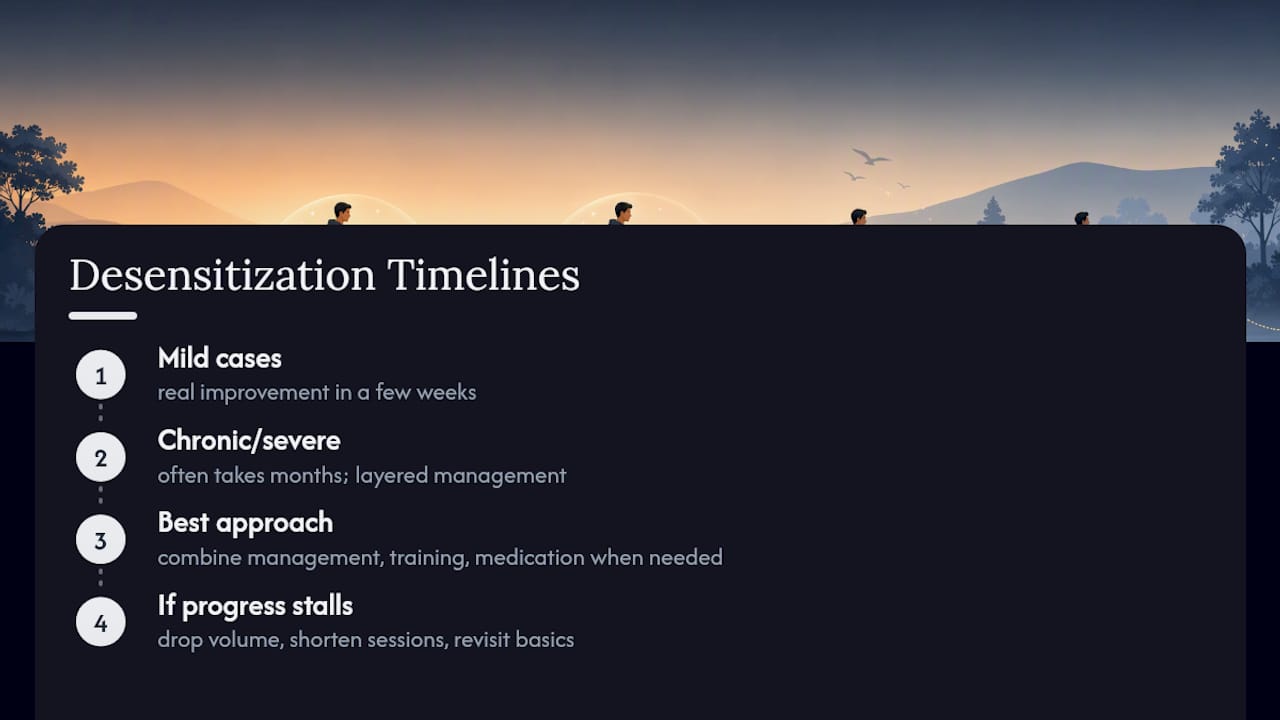
Timelines vary by dog, trigger severity, and consistency. Mild cases can show real improvement in a few weeks; chronic, severe phobias often take months of layered management, training, and sometimes medication together.
Owner-reported outcomes vary widely across desensitization methods, and combining approaches, management plus behavior work plus medication when warranted, tends to outperform any single method alone. If progress stalls for more than a few weeks, drop the volume, shorten sessions, and revisit the basics before assuming the method has failed.
How Ipuppee’s Training Resources Fit Into Your Desensitization Plan
Ipuppee’s training guides and on-demand course map naturally onto the staged protocol above, giving structure to assessment, exposure, and maintenance phases. For handlers managing noisy events remotely, an alert device can help you monitor your dog’s stress signals from another room, complementing behavior work rather than replacing it.
The Overlooked Piece of Noise Desensitization Training
Most guides treat desensitization as a mechanical volume dial: start low, go higher, repeat. That framing misses what actually predicts success, which is whether the dog’s whole body relaxes, not whether it holds a sit-stay through a scary sound.
A dog that sits rigidly through a thunder recording while its jaw stays clenched and its tail stays tucked hasn’t been desensitized. It’s been suppressed. Those two states look identical on a leash and completely different in the nervous system, and only one of them holds up when the real storm hits at 2 a.m. with no treats in your pocket.
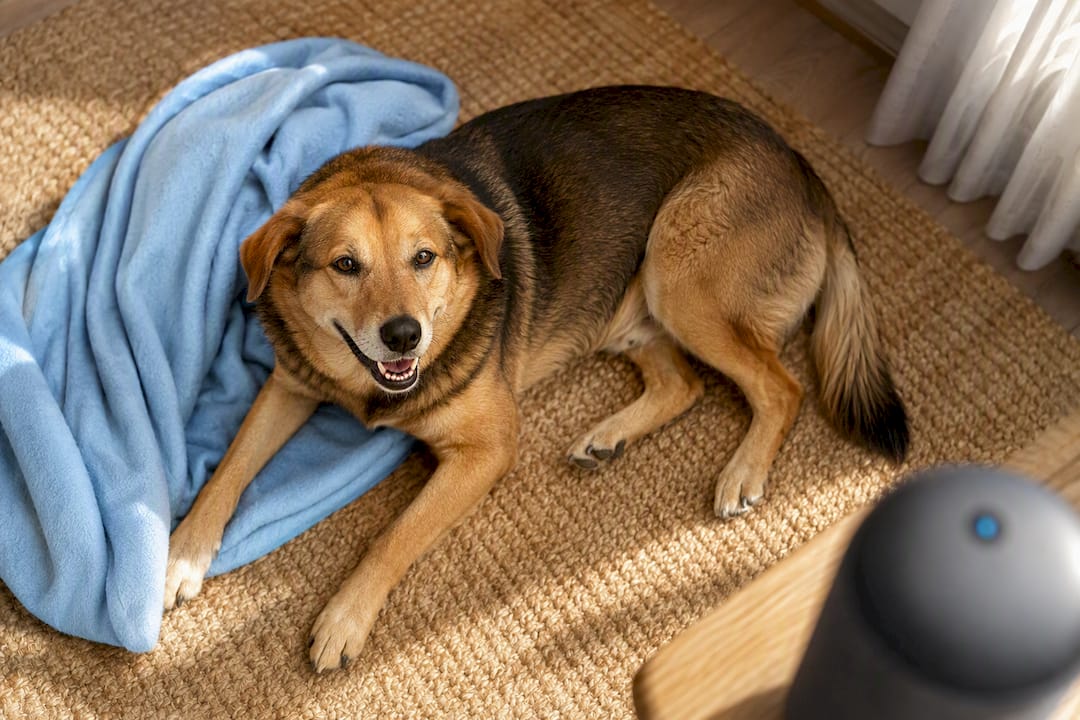
The other underrated factor is timing relative to the calendar. Owners tend to start desensitization work reactively, right after a bad fireworks night, when the dog is already sensitized and the training window is tightest. Starting months ahead of a known noisy season, even with a dog that’s shown no problems yet, is cheaper insurance than any calming aid on the market.
Medication gets treated as a last resort in a lot of owner forums, almost like an admission of failure. That’s backwards. It’s a tool that makes the learning possible in dogs whose fear response is too strong for counterconditioning to get a foothold. Waiting months to try it, hoping training alone will eventually break through, often costs more time than it saves.
— Andrew
Sources
- Fear of Loud Noises: How to Train Sound Desensitization for Dogs
- Therapy and Prevention of Noise Fears in Dogs — A Review of the Current Evidence for Practitioners
- Therapy and Prevention of Noise Fears in Dogs — Animals (MDPI) review
- Noise phobia in dogs: signs, triggers & treatment — Petful