

Most American service dog handlers rely on just a handful of commands to guarantee both safety and independence in daily life. Studies show that over 80 percent of successful service dog partnerships start with strong foundational obedience. Mastering sit, stay, come, alert, touch, leave it, and heel gives American service dogs the solid groundwork they need to assist their handlers with confidence and reliability in any situation.
Table of Contents
- 1. Understanding Foundational Sit and Stay Commands
- 2. Mastering The ‘Come’ Cue For Reliable Recall
- 3. Teaching ‘Alert’ For Service Task Notifications
- 4. Introducing The ‘Touch’ Cue For Communication Devices
- 5. Using ‘Leave It’ To Ensure Safety In All Environments
- 6. Training ‘Heel’ For Controlled Mobility Assistance
- 7. Strengthening Consistency With Practice And Reinforcement
Quick Summary
| Key Message | Explanation |
|---|---|
| 1. Master the Sit and Stay Commands | These foundational commands enhance control and safety in various environments for service dogs. |
| 2. Train the Come Command for Recall | Reliable recall is essential for safety, enabling the dog to return immediately to the handler, regardless of distractions. |
| 3. Use the Alert Command for Health Notifications | This command allows dogs to indicate specific health changes or emergencies, enhancing their handler’s safety and well-being. |
| 4. Teach the Touch Command for Technology Interaction | The touch command enables dogs to operate assistive devices, boosting the independence of their handlers. |
| 5. Practice Leave It for Safety Awareness | This command trains dogs to ignore potential hazards, preventing dangerous situations for both the dog and handler. |
1. Understanding Foundational Sit and Stay Commands
Mastering sit and stay commands represents the cornerstone of effective service dog training. These foundational behaviors are not just basic obedience skills but critical safety mechanisms that enable service dogs to maintain control and provide reliable assistance in diverse environments.
The sit command serves as a fundamental control technique that helps your service dog pause and focus on you during potentially challenging situations. When a service dog understands and responds consistently to sit, they can immediately stop movement and prevent potential accidents or disruptions. This command becomes especially crucial in crowded spaces, public transportation, or medical settings where precise positioning matters.
Similarly, the stay command reinforces self discipline and provides handlers with an essential tool for managing their dog’s movements. Service dog obedience training demands that dogs learn to remain stationary until explicitly released, which protects both the dog and their handler in unpredictable scenarios.
Practical training requires breaking down these commands into simple, repeatable steps. Start with short duration stays and gradually increase the time and complexity. Use positive reinforcement techniques like treat rewards and verbal praise to encourage consistent performance. Practice in various environments to ensure your service dog can execute these commands reliably whether at home, in a busy street, or inside a quiet medical facility.
Research from organizations like 4 Paws for Ability highlights that consistent sit and stay training dramatically improves a service dog’s ability to support individuals with diverse needs. By investing time in these fundamental skills, you create a strong communication foundation that enhances safety, independence, and mutual trust between you and your service dog.
2. Mastering the ‘Come’ Cue for Reliable Recall
The come command represents a critical safety mechanism for service dogs, transforming a simple verbal instruction into a potential lifesaving skill. This essential recall cue enables handlers to instantly redirect their dog’s attention and movement in unpredictable or potentially dangerous situations.
Reliable recall means your service dog will return to you promptly regardless of distractions, environment, or potential competing stimuli. Dog voice commands play a significant role in establishing this communication foundation, with the come command being particularly crucial for maintaining safety and control.
Training this command requires patience, consistency, and positive reinforcement. Start practicing in controlled environments with minimal distractions. Use a clear, distinct vocal tone and pair the command with an enthusiastic reward system. Begin close to your dog and gradually increase distance and complexity of training scenarios. Practice in different locations like home, park, and public spaces to ensure consistent performance.
Professional service dog training emphasizes that a strong come command can prevent potential accidents. Whether navigating crowded spaces, managing medical emergencies, or avoiding unexpected hazards, this skill allows handlers to maintain immediate control over their service dog’s movements.
Consistent practice transforms the come command from a simple instruction into an instinctive response. Your service dog learns that returning to you is not just a command but a positive experience filled with praise, treats, and reinforced trust. Remember that timing, tone, and genuine enthusiasm are key to making this command truly effective.
3. Teaching ‘Alert’ for Service Task Notifications
The alert command represents a sophisticated communication mechanism that transforms a service dog from a companion into a proactive medical and safety assistant. This specialized skill enables dogs to notify their handlers about specific conditions or imminent health changes through deliberate, trained behaviors.
Alert training goes beyond standard obedience by teaching dogs to recognize and communicate subtle physiological or environmental signals. Dog alerts provide critical communication pathways that can potentially prevent medical emergencies or provide crucial intervention for handlers with specific health conditions.
Successful alert training requires understanding your dog’s natural behaviors and systematically reinforcing specific notification gestures. This might involve teaching your dog to nudge you, bark in a specific pattern, or physically position themselves in a way that demands your attention. The key is consistency in both training methodology and reward systems.
For service dogs supporting individuals with conditions like epilepsy, diabetes, or anxiety disorders, the alert command can be lifesaving. Dogs can be trained to recognize changes in body chemistry, detect oncoming seizures, or identify panic attack triggers before the handler becomes fully aware.
Practical implementation involves breaking down complex alert behaviors into smaller, manageable steps. Start with basic recognition tasks, gradually increasing complexity and specificity. Use positive reinforcement techniques like treats, praise, and focused training sessions to help your service dog develop reliable alert skills. Remember that each dog and handler relationship is unique, so alert training must be personalized to individual needs and capabilities.
4. Introducing the ‘Touch’ Cue for Communication Devices
The touch command represents a sophisticated communication tool that empowers service dogs to directly interact with assistive technology and support devices. This versatile skill allows dogs to press buttons, activate switches, or engage communication systems with precision and reliability.
Training the touch command transforms your service dog into an active technological partner. Dog voice commands play a crucial role in teaching dogs to understand and execute specific targeting behaviors that can significantly enhance handler independence.
The fundamental training process involves teaching your dog to make deliberate physical contact with a specific object using their nose or paw. Start by selecting a clear target like a large button or designated touchpad. Use positive reinforcement techniques such as treats and enthusiastic praise to encourage consistent and accurate touching. Begin with close proximity targets and gradually increase distance and complexity of the touch task.
Practical applications of the touch command extend far beyond simple device interaction. Service dogs can learn to press emergency alert buttons, activate mobility assistance switches, or even operate specialized communication tools designed for individuals with specific disabilities. The key is creating a clear, consistent training approach that builds the dog’s confidence and precision.
Successful touch training requires patience, repetition, and a deep understanding of your service dog’s learning style. Each successful interaction builds trust and demonstrates the incredible potential of service dogs as adaptive technology partners. Remember that every dog learns differently, so customize your training approach to match your dog’s unique abilities and communication style.
5. Using ‘Leave It’ to Ensure Safety in All Environments
The leave it command represents a critical safety mechanism that transforms service dogs into proactive guardians capable of avoiding potential hazards. This powerful cue teaches dogs to instantly disengage from anything that might pose a risk to themselves or their handler.
Safety awareness is paramount for service dogs, and dog safety training provides the foundation for preventing dangerous interactions. The leave it command goes beyond simple obedience it becomes a lifesaving skill that protects dogs and handlers in unpredictable environments.
Training the leave it command requires consistent practice and progressive difficulty levels. Start with low stakes items like treats or toys, teaching your dog to ignore the object when commanded. Gradually increase complexity by introducing more tempting or potentially dangerous distractions. Use positive reinforcement techniques such as high value rewards and enthusiastic praise to reinforce the desired behavior.
Practical applications of the leave it command extend far beyond basic training. Service dogs might encounter dangerous substances on streets, potentially toxic food items, aggressive animals, or hazardous objects. The ability to immediately stop and not engage can prevent serious medical emergencies or life threatening situations.
Successful leave it training requires patience, consistency, and understanding that each dog learns differently. Some dogs might require more repetition or varied training approaches. The goal is creating an automatic response where the dog prioritizes handler safety and instruction over immediate impulses. Remember that mastering this command could quite literally save a life.
6. Training ‘Heel’ for Controlled Mobility Assistance
The heel command represents a sophisticated communication technique that transforms a service dog into a precise mobility partner. This critical skill enables dogs to maintain a consistent position relative to their handler, providing crucial support and navigation assistance in complex environments.
Mobility support requires exceptional spatial awareness and puppy training for disabilities focuses on developing these intricate movement skills. The heel command goes beyond simple walking together it creates a synchronized movement pattern where the dog becomes an extension of the handler’s navigational abilities.
Successful heel training involves teaching your service dog to walk directly beside you without pulling or lagging. Start with short training sessions in quiet environments, using treats and consistent verbal markers to reinforce the correct positioning. Gradually increase complexity by introducing distractions, changing walking speeds, and practicing in more challenging environments like crowded streets or uneven terrain.
For handlers with mobility challenges, a well trained heel command can mean the difference between independence and limitation. The dog learns to match the handler’s pace precisely, provide physical support, and navigate obstacles smoothly. This requires an intuitive understanding of body language, subtle physical cues, and unwavering focus on the handler’s movements.
Practical implementation demands patience and consistent practice. Each service dog will develop their unique heel style based on their handler’s specific needs. Some dogs might need to learn how to adjust for mobility aids like wheelchairs or walkers, while others might focus on providing direct physical support during walking.
7. Strengthening Consistency with Practice and Reinforcement
Consistency represents the critical foundation that transforms basic training into reliable service dog performance. Mastering behavior cues requires more than occasional practice it demands a structured, intentional approach to skill development and maintenance.
Dog training consistency forms the backbone of service dog reliability. Muscle memory and behavioral patterns develop through repetitive, structured training sessions that challenge and reinforce the dog’s understanding of each command. Think of training as building neural pathways that become automatic responses.
Practical reinforcement involves creating a predictable training environment with clear expectations. Short, frequent training sessions work better than long, infrequent ones. Aim for 5 to 10 minute practice intervals multiple times daily, focusing on precision and positive feedback. Use high value rewards that motivate your specific dog treats, praise, or play can all serve as powerful reinforcement tools.
Variability is key to true mastery. Practice commands in different environments with varying levels of distraction. A service dog must respond consistently whether at home, in a crowded grocery store, or during a medical appointment. This means gradually increasing complexity training first in quiet spaces, then progressively adding more challenging scenarios.
Remember that every interaction is a training opportunity. Consistent expectations create confident, reliable service dogs. Your dog learns not just through formal training sessions but through every interaction that reinforces desired behaviors. Patience, positive reinforcement, and unwavering consistency will transform basic commands into lifelong skills that support independence and safety.
Below is a comprehensive table summarizing key aspects of service dog training commands and their importance as discussed throughout the article.
| Command | Implementation | Benefits/Outcomes |
|---|---|---|
| Sit & Stay | Break down commands into simple steps. Use positive reinforcement in various environments. | Enhances control and safety; essential in crowded or medical settings. |
| Come | Practice in low-distraction environments. Gradually increase complexity and range. | Offers immediate control, preventing accidents in unpredictable situations. |
| Alert | Train dogs to recognize physiological signals and communicate alerts through gestures. | Provides proactive medical notifications, potentially lifesaving. |
| Touch | Teach deliberate contact with objects using nose or paw. Use treats and praise for accuracy. | Empowers interaction with assistive technology, enhancing handler independence. |
| Leave It | Start with less tempting items, increase complexity, and use high value rewards. | Prevents dangerous interactions and potential hazards. |
| Heel | Focus on consistent positioning beside the handler. Increase complexity and handle obstacles. | Offers synchronized movement and independence for handlers with mobility issues. |
| Consistency | Short, frequent training sessions with positive feedback. Practice in varied environments. | Builds reliable behavior patterns and supports lifelong service skills. |
Enhance Your Service Dog’s Training with Smart Communication Tools
Training essential service dog cues like alert, touch, and leave it requires dedication and the right resources. Many handlers face challenges ensuring their dogs can reliably communicate in critical situations, especially when it comes to activating safety devices or signaling needs. At ipuppee.com, we understand these pain points and provide innovative solutions designed to strengthen the bond and communication between you and your service dog.
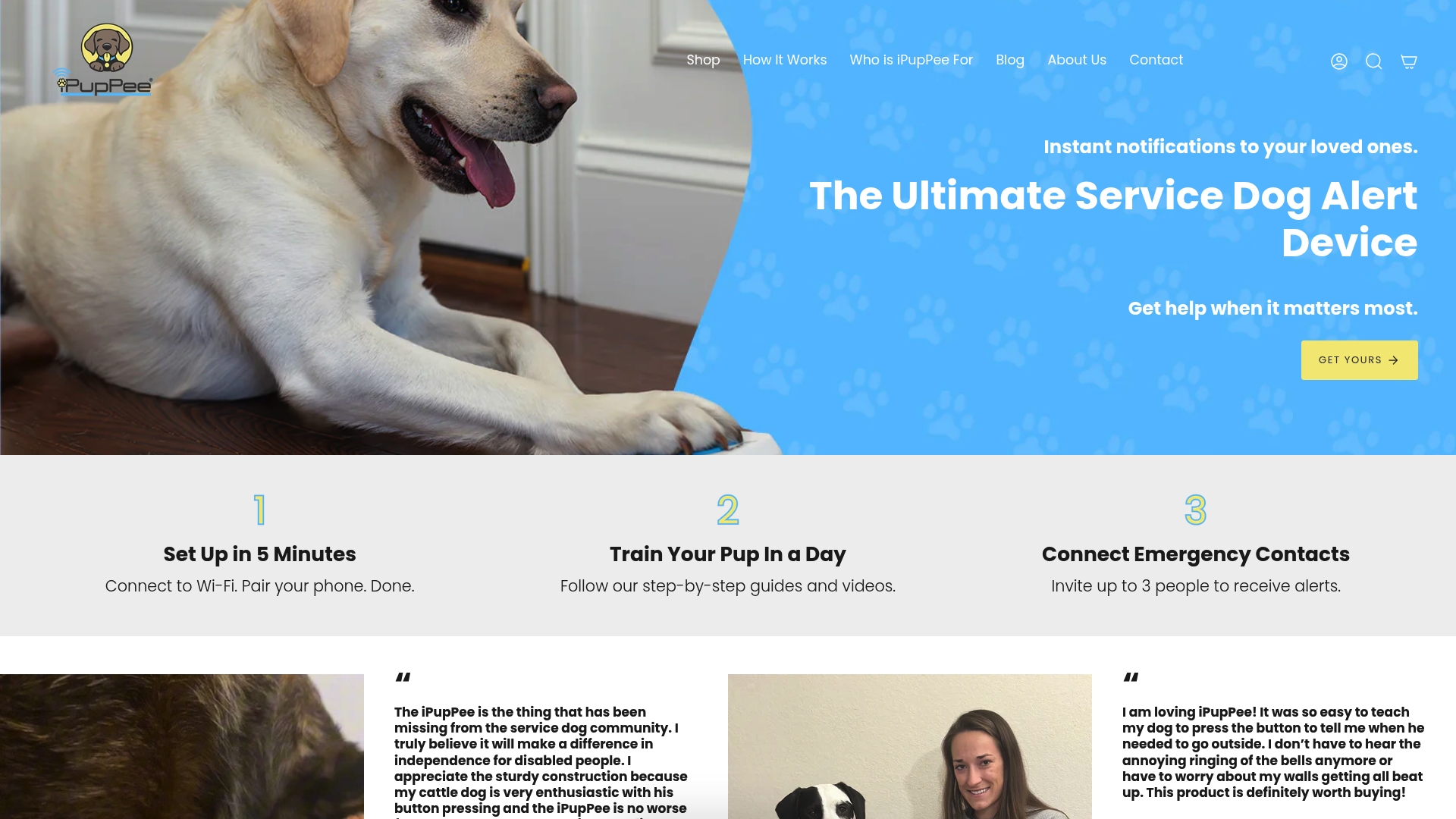
Discover the power of the iPupPee device, a simple yet effective communication tool that enables your service dog to alert you instantly with a button press. Whether you are teaching your dog to touch technology or reinforcing alert behaviors, the iPupPee supports safety, independence, and clear communication every step of the way. Don’t let critical moments slip by; visit ipuppee.com to explore training instructions, customer testimonials, and how this device can elevate your service dog’s skills. Take the next step toward confidence and safety by integrating this technology into your training routine today.
Learn more about effective service dog obedience training and the importance of dog voice commands to create a lasting partnership with your service dog.
Frequently Asked Questions
What are the most essential behavior cues I should teach my service dog?
The most essential behavior cues include sit, stay, come, alert, touch, leave it, and heel. Begin teaching these commands gradually, with a focus on consistency and positive reinforcement to help your dog master each cue over time.
How long does it typically take to train a service dog to respond reliably to these cues?
Training time can vary based on the dog and the handler’s consistency, but expect to see noticeable improvements within 30–60 days of dedicated practice. Set aside short, frequent training sessions to maintain focus and reinforce learning.
What methods can I use to reinforce my service dog’s behavior cues?
Use positive reinforcement methods like treats, verbal praise, and playtime to encourage your dog to respond to cues correctly. For effective reinforcement, select high-value rewards that motivate your dog, ensuring you reward them immediately after they perform the desired behavior.
How can I practice these commands in different environments?
To ensure your service dog responds well in various situations, practice commands in different environments with varying distractions. Start in quiet spaces, gradually increasing the complexity by introducing busier and more challenging locations.
What should I do if my service dog struggles with a specific command?
If your service dog struggles with a specific command, break it down into smaller, more manageable steps. Focus on patience and consistent practice, allowing your dog to learn at their own pace while providing ample positive reinforcement for any progress made.
How often should I review the behavior cues with my service dog to maintain their skills?
Review the behavior cues regularly, aiming for daily practice sessions. This consistent reinforcement helps maintain your dog’s skills and ensures they respond reliably, even after long breaks between training periods.
Recommended
- Understanding Service Dog Behavior: 2025 Guide for Owners & Handlers – iPupPee
- Service Dog Obedience in 2025: Essential Training for Success – iPupPee
- Training Service Dogs 101: Essential Steps for Success in 2025 – iPupPee
- 7 Essential Service Dog Etiquette Tips for All Dog Owners – iPupPee
- Border collie – den smarte, lydige og utrettelige gjeterhund — Dr-Clauder Norge