

Yes, a dog can learn to use an alert device, and the method that works is button-based shaping paired with a consistent, meaningful response every time the button gets pressed. The training builds on simple obedience, careful modeling by the handler, and a device like iPupPee that turns a paw press into a real notification. Skip the consistency piece and the whole system falls apart within days.
TL;DR:
- Consistent, meaningful consequences are crucial, as ignoring or inconsistent responses can quickly undermine a dog’s ability to use the alert device reliably.
- Dogs typically need several weeks to months of training to press the button confidently and generalize the behavior across different contexts and household members.
- Addressing common issues such as repeated pressing, biting, or avoidance requires specific fixes like boundary commands, slowing shaping pace, or simplifying the setup.
- Reaction to stress signals during training, such as flattened ears or lip licking, indicates the need to pause or stop, prioritizing the dog’s emotional well-being.
- Effective training emphasizes short, frequent sessions, modeling by all household members, and regular practice drills, including emergency simulations, to maintain responsiveness.
Table of Contents
- Is Your Dog Ready to Train as a Therapy Dog?
- How to Teach a Dog to Press an Alert Button
- Shaping and Chaining Complex Alert Behaviors
- Fixing Random Pressing and Other Common Problems
- Welfare Rules and Realistic Expectations for Handlers
- What Breed and Temperament Work Best for Alert Training?
- Socialization Steps That Support Reliable Alert Behavior
- What Certification and Legal Rules Actually Apply?
- What Ethical Responsibilities Come with Alert Training?
- A Practical Pre-Session Checklist Worth Following
- Get Started with iPupPee’s Alert Device and Training Course
- Sources
Is Your Dog Ready to Train as a Therapy Dog?
Not every dog or household is set up for this yet, and figuring that out first saves weeks of frustration. Age and health matter: a dog in chronic pain or under six months old will struggle with the focus this requires, so check with a veterinarian before you start. Your dog also needs a baseline of obedience, sit, stay, and leave-it, plus enough impulse control to wait a beat before acting.
Someone in the household has to commit to modeling the button consistently, and everyone else needs to follow through the same way, or the dog gets mixed signals fast.
Before your first session, gather:
- The alert device itself, plus at least one spare button in case of wear
- A stable mat or tile surface so the buttons don’t slide during a hard press
- Clear labels or symbols next to each button, placed at nose height
- A quiet, low-traffic spot away from the dog’s food and water bowls
Pro Tip: Watch your dog’s body language during the first few sessions. Flattened ears, lip licking, or turning away means stop, not push through. Training a therapy dog around device communication should never look like coercion.
Most dogs need several weeks before a press becomes reliable, and some take a couple of months. That timeline is normal, not a sign you’re doing it wrong.
How to Teach a Dog to Press an Alert Button
Training a therapy dog to communicate through a button breaks into four phases, and rushing any one of them is the most common reason people stall out.
- Teach the press itself. Use free shaping or a target stick: reward any nose or paw contact with the button, then narrow the criteria until a firm, deliberate press is what earns the reward. Clicker training speeds this up because the marker sound tells the dog exactly which instant mattered.
- Attach one consequence per button. Pick a single, immediate result for that press. Chewy’s dog-button guide recommends starting with one to three words tied to routines the dog already knows, like “outside” or “walk,” and modeling the button every time you perform the action so the dog sees you press it before you open the door.
- Generalize across contexts. Move the button setup to different rooms, practice at different times of day, and slowly fade food rewards in favor of the functional payoff, the door opening, a caregiver showing up, playtime starting.
- Train the actual alert task. For medical or safety alerts, chain the press to the target behavior. A diabetic-alert dog might be taught to press a “help” button immediately after detecting a scent change; a seizure-response dog presses before or during the trained response behavior. Rehearse the full sequence, scent cue to press to notification, so it holds up under real stress.
Structure sessions short: three to six minutes, three to five times a day early on works better than one long drilling session. Rotate who models the button among household members once the dog is solid with the primary handler, since real alerts need to work for whoever’s home.
Pro Tip: Practice a “fire drill” version of the alert sequence once a week, even after your dog seems reliable. Emergency behaviors decay fastest when they’re never rehearsed under low-stakes conditions.
The IAABC Foundation Journal makes a point that’s easy to underweight: buttons only hold meaning if consequences are clear and delivered fast. A press that gets ignored for even a few sessions starts eroding the whole system.
Shaping and Chaining Complex Alert Behaviors
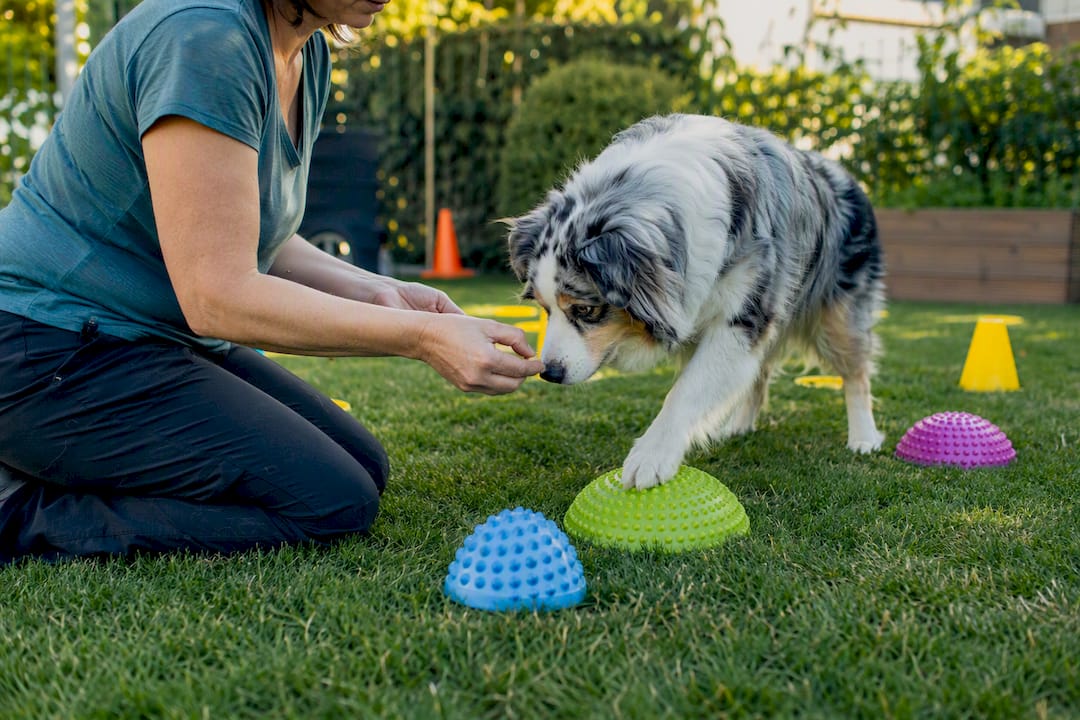
Complex alert tasks rarely get taught in one leap; they get built from small pieces stacked in order. Breaking a target behavior into micro-steps and rewarding each successive approximation is standard shaping, and it’s how you get from “touches button” to “presses button unprompted the moment a seizure aura starts.”
Two chaining directions matter here:
- Backward chaining teaches the last step first (the press itself), then adds earlier steps working backward, useful when the final action is the hardest part to get reliable.
- Forward chaining teaches the first step first (detecting the medical change), then adds the response, useful when detection is the harder skill to build.
Once a behavior is reliable, switch from rewarding every press to an intermittent or variable schedule. Constant rewards actually create dependency on the reward, not the behavior, and they can drive random pressing just to test if a reward is available. Vary the environment, run practice sessions in a new room, with a visitor present, during noise, and repeat drills for medical alerts every few weeks so the skill doesn’t quietly decay.
Fixing Random Pressing and Other Common Problems
Indiscriminate pressing, biting the button, or refusing to approach the device at all are the three problems that show up most, and each has a specific fix rather than a generic one.
- Indiscriminate or repeated pressing usually means the reward schedule was too generous. Add a boundary button, “later” or “all done”, so the dog learns pressing doesn’t always produce an instant payoff.
- Biting or mouthing the button often points to overexcitement built in during early shaping. Slow down, reward calmer approaches, and remove the device between sessions if the dog can’t disengage.
- Avoidance of the device can mean the surface is unstable, the sound startles the dog, or an earlier session created pressure. Reset by simplifying back to one word and rebuilding the modeling from scratch.
If pressing spikes when you can’t respond consistently, physically remove the device rather than let it ring unanswered. Sploot Vets recommends matching every consequence to the button’s actual meaning and adding boundary vocabulary specifically to prevent compulsive pressing.
Pro Tip: If a fix doesn’t stick within a week, the issue is usually inconsistent human follow-through, not the dog. Audit your own responses before assuming the dog needs to relearn the behavior.
For persistent behavior problems unrelated to the device itself, a certified trainer is worth the consultation.
Welfare Rules and Realistic Expectations for Handlers
Device communication has real limits, and pretending otherwise sets handlers up for disappointment or, worse, an unsafe reliance on an unproven system. Never force a press, and never train through visible stress, panting, avoidance, or shutting down means the session ends immediately, not in five more minutes.
A button that reliably signals “outside” is not the same as formal medical monitoring, and it never should replace a vet visit, glucose monitor, or seizure-response plan. The ADA is explicit that a dog only qualifies as a service animal when trained to perform a task directly tied to a person’s disability, which means alert work aimed at service-animal status needs far more rigor than household communication training.
Caregiver research backs this up directly: outcomes research on assistance dog placements points to long placement timelines and the necessity of caregiver preparation as major factors in whether training actually succeeds. Households that skip that preparation see higher failure rates.
Build in supports before you need them:
- A backup handler who can model and respond if the primary caregiver is unavailable
- A written emergency protocol so every household member knows what an alert press means and what to do next
- Regular veterinary checkups that continue independent of any training milestone
Handler consistency, more than the dog’s aptitude, is what research repeatedly flags as the deciding factor in long-term success.
What Breed and Temperament Work Best for Alert Training?
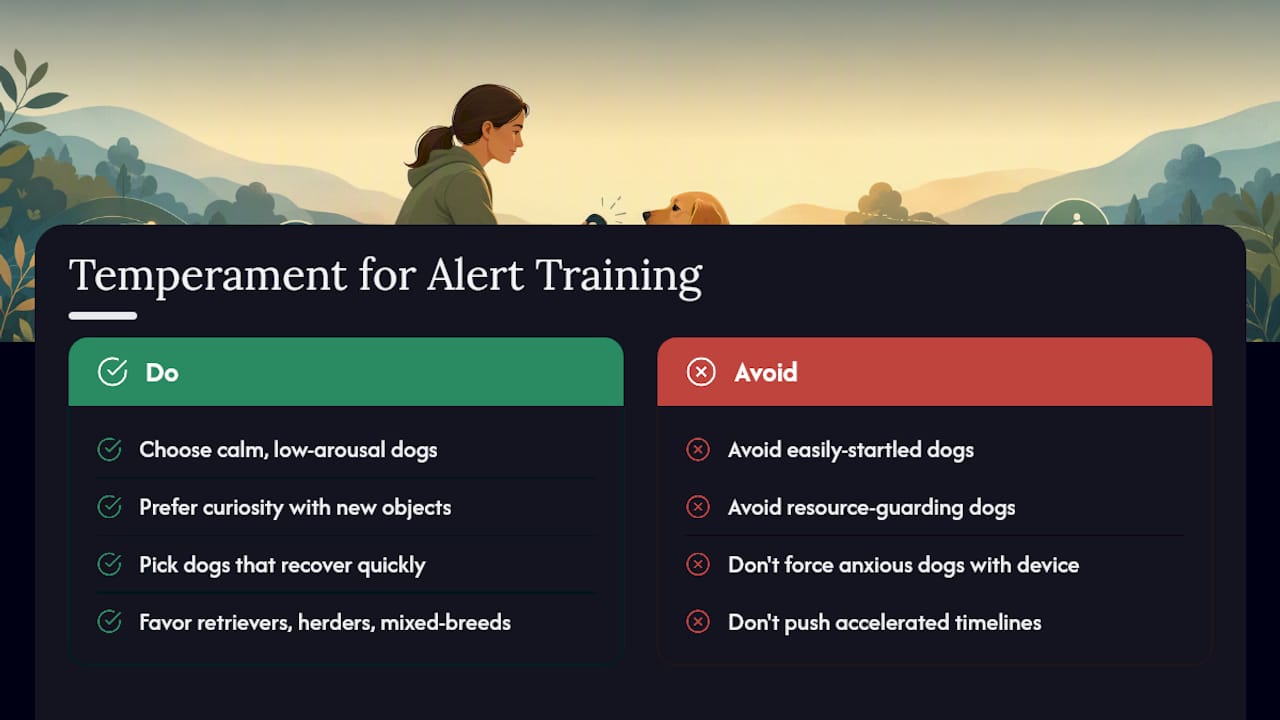
Breed matters less than most people assume, but temperament matters enormously. A dog that startles easily, guards resources, or struggles with novel objects will need far more foundational work before a button session goes smoothly. Retrievers, herding breeds, and many mixed-breed dogs tend to take to shaping quickly because they’re food-motivated and comfortable interacting with objects, but plenty of terriers, hounds, and toy breeds succeed too once the pace matches their personality.
What actually predicts success is a calm baseline arousal level, curiosity rather than anxiety around new equipment, and a dog that recovers quickly from mild frustration during shaping. A dog that gives up or shuts down after a few unrewarded attempts needs a gentler shaping curve, smaller approximations, more frequent small wins, rather than a breed swap.
Age plays a role too. Puppies younger than six months can start simple targeting games, but full alert-task training works better once basic obedience and impulse control are solid, usually closer to a year old depending on the individual dog. Older dogs with established routines can still learn button communication; they often learn faster because they already understand cause and effect from years of household patterns.
Rescue dogs are not automatically harder to train. Many adapt well once trust is established, and a slower, patience-first introduction to the device usually works better than pushing an accelerated timeline just to catch up to a training schedule.
Socialization Steps That Support Reliable Alert Behavior
A dog that startles at unfamiliar sounds or freezes around new people will struggle to hold focus on a button during a real alert moment, so socialization isn’t separate from device training, it’s a prerequisite for it. Expose your dog gradually to the environments where alert behavior actually needs to hold up: different rooms, visitors, outdoor noise, other pets, and the specific routines of daily life in your household.
Controlled exposure works better than flooding. Introduce one new variable at a time, a visitor, a different floor surface, a louder room, and reward calm engagement rather than just tolerance. If your dog needs to alert in public settings eventually, practice the button sequence in progressively busier environments once it’s solid at home.
Pair socialization with the same modeling principle used in button training itself: show your dog what calm behavior looks like around a new stimulus rather than just hoping exposure alone teaches composure. A dog that’s still working through basic social confidence isn’t ready to layer a high-stakes medical alert task on top, so sequence the two properly, foundational comfort first, alert precision second.
What Certification and Legal Rules Actually Apply?
This is where a lot of confusion creeps in, so it’s worth being precise. Under the ADA, a dog becomes a legally recognized service animal only when trained to perform a task directly related to a person’s disability, alerting to a medical event counts, but the training and reliability standard for that legal status is considerably higher than teaching a household communication button.
There’s no single nationwide certification requirement for service animals in the United States, and no official registry confers legal status, despite what many online “certification” sellers imply. What matters legally is documented, task-specific training and consistent public reliability, not a certificate or vest. If your goal is formal service-dog status for medical alert work, that typically means working with a program or professional trainer experienced in task training, not relying solely on a communication device.
Button-based alert communication at home sits in a different category entirely. It’s a household tool for clearer communication and can support an alert routine, but it doesn’t by itself confer any legal service-animal designation. Handlers pursuing both goals, home communication and legal service-dog status, should treat them as parallel tracks with different requirements rather than assuming one leads automatically to the other.
What Ethical Responsibilities Come with Alert Training?
Training a dog for alert work puts real weight on the handler, not just the dog, and that responsibility starts with honest self-assessment about whether you can maintain the consistency this training demands long term. A half-trained alert system that sometimes works creates false confidence, which is arguably more dangerous than having no system at all.
Never present a dog as more reliable than it actually is, especially in a medical-alert context where someone’s safety depends on the signal.
Watch for signs of burnout or stress accumulation in a working dog. Alert dogs carry a cognitive load that a purely companion dog doesn’t, and rest, play, and normal dog life still need protected space in the schedule. A dog that’s always “on call” without downtime will eventually show it through avoidance or decreased reliability, which then compounds the original problem.
Finally, be honest with family members and caregivers about what the dog’s alert actually means and doesn’t mean. A button press signaling “something’s different” is not the same as a diagnosis, and treating it that way sets everyone up for a dangerous misunderstanding during an actual emergency.
A Practical Pre-Session Checklist Worth Following
Before any session, I run through the same four checks: device charged and buttons secure, handler calm and not rushed, location quiet with no competing distractions, and a quick read of the dog’s stress signals. Skip any one of those and the session usually underperforms regardless of how solid the training plan looks on paper.
My three non-negotiables: model the button yourself before ever expecting a press, deliver the same consequence every single time, and end sessions on a win rather than pushing for one more rep. The three mistakes I see most: rewarding presses with unrelated treats, letting different household members respond differently, and continuing a session after the dog has clearly checked out.
None of this replaces professional guidance for medical-alert work specifically, but it covers the habits that determine whether a communication button becomes a reliable tool or a source of confusion.
— Andrew
Get Started with iPupPee’s Alert Device and Training Course
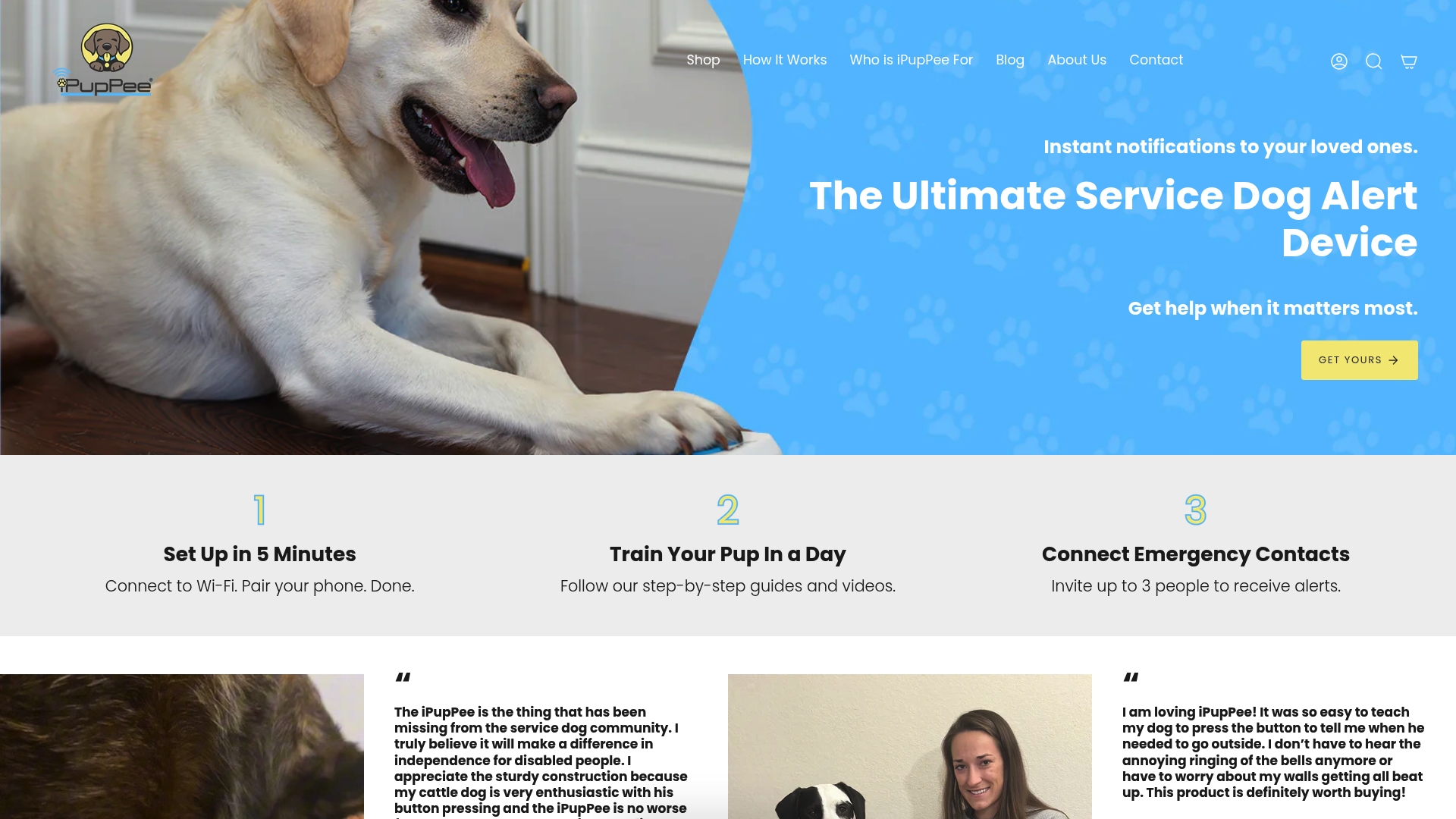
Ipuppee built the iPupPee device specifically for this kind of work: a Wi-Fi enabled button that sends a real notification, complete with live video and two-way audio, so a press isn’t just a sound in an empty room, it reaches you wherever you are. That’s the missing piece for a lot of households trying to DIY a communication setup with generic talk buttons never designed for actual alerting.
Alongside the device, Ipuppee offers training guides, video walkthroughs, and an on-demand dog psychology and training course that walks through shaping, modeling, and alert-task chaining step by step, useful whether you’re starting from scratch or troubleshooting a stalled button. If you want the fuller training curriculum behind the plan outlined here, the complete guide to training therapy dogs covers additional session structures and video demonstrations. Ready to see the device and course details for yourself? Visit Ipuppee to check current options and get started.
Sources
This article draws on the IAABC Foundation Journal on button shaping, ADA.gov on service-animal task rules, caregiver research from PMC, and practical guidance from Chewy and Sploot Vets. For broader canine wellness practices that support any training routine, Dr-Clauder’s health guide is worth a look too.
- Outcomes and caregiver experiences with assistance dogs (PMC article)
- Pushing ALL My Buttons: Dogs Using Communication Buttons - IAABC Foundation Journal
- Teach Your Pup to ‘Talk’ with Dog Buttons—Here’s How | Chewy
- How To Teach A Dog To Talk with Talk Buttons | Sploot Vets
- Ada