

The fastest, safest way to approach dogs teaching is reward-based training: mark the behavior you want, pay it immediately, and repeat. Start today with one cue, a pouch of tiny soft treats, and multiple short sessions lasting a few minutes each. Keep the first week narrow, one behavior at a time, in a quiet space with no distractions, and let consistency do the heavy lifting.
TL;DR:
- Consistent timing of marking and rewarding behaviors within one to two seconds is crucial for effective training.
- Focusing on one cue at a time and progressively adding complexity helps ensure reliability in different environments.
- Using high-value rewards and gradually increasing distance, duration, and distraction prevents training stalls.
- Proper equipment, like a flat collar and a 4-6 foot leash, supports training without correcting or punishment devices.
- Addressing behavioral issues early with gatekeeping strategies can prevent setbacks and may require professional help for aggression or severe fear.
Table of Contents
- Quick-Start Checklist for Dogs Teaching Sessions
- How Dogs Learn: Markers, Conditioning, and Why Timing Wins
- Teaching Sit, Down, Stay, Come, and a Loose Leash
- Session Tactics: Timing, Rewards, and Proofing That Actually Sticks
- Why Training Stalls and When to Call in a Professional
- Where This Training Advice Comes From
- Socialization: The Training Step Owners Skip Too Often
- Learning Styles and Breed Traits That Shape Your Approach
- Common Mistakes That Slow Down Dogs Teaching Sessions
- Leashes, Harnesses, and the Gear That Actually Helps
- Fixing Behavioral Problems That Surface Mid-Training
- An Editor’s Take on the “Start Today” Approach
- Keep Training and Communication Going With Ipuppee
- Sources
Quick-Start Checklist for Dogs Teaching Sessions
You don’t need a training bag full of gear to get moving. Grab these four things before your first session:
- Tiny soft treats (pea-sized, so your dog doesn’t fill up after three reps)
- A clicker or a consistent marker word like “yes”
- A flat collar and a short leash
- A quiet room or corner with no other pets or foot traffic
From there, a 7-day micro-plan keeps things simple enough that neither of you gets frustrated:
- Days 1 to 2: Load the marker. Say “yes” or click, then treat, over and over, with no cue attached. Your dog is learning that the sound means a reward is coming.
- Days 3 to 4: Teach “sit.” Lure with a treat over the nose, mark the instant the hips hit the floor, then pay.
- Days 5 to 7: Add recall practice and start proofing “sit” in a slightly different spot, like the hallway or backyard.
Run several brief sessions daily rather than one long one. Watch portions so treats don’t replace meals, supervise every session, and keep chew hazards and off-limits items out of reach while your dog’s attention is elsewhere.
How Dogs Learn: Markers, Conditioning, and Why Timing Wins
Operant conditioning is the mechanism behind almost every training win you’ll have: behaviors followed by something good happen more often, and behaviors that produce nothing tend to fade. That’s the entire case for positive reinforcement, and it’s why trainers increasingly steer away from corrections, which can create fear without teaching the dog what to do instead.
Classical conditioning matters here too, in a quieter way. Your dog isn’t just learning “sit equals treat.” He’s also associating your kitchen, your tone of voice, and your body position with the whole experience. That’s why a rock-solid “sit” at home can fall apart at the park. The fix isn’t more repetition in the kitchen. It’s deliberately practicing in new places once the behavior is solid.
Markers speed all of this up. A clicker or a sharp verbal “yes” tells your dog the exact half-second that earned the reward, not the three seconds after when he’d already stood up and wandered off.
- Mark the instant, not after
- Pay within one to two seconds of the mark
- Keep the marker sound identical every time
A well-timed marker paired with immediate reward measurably sharpens precision compared to reward alone.
Teaching Sit, Down, Stay, Come, and a Loose Leash
Master one cue before layering on the next. Trying to teach all five at once is how owners end up with a dog who’s mediocre at everything instead of reliable at one thing.
- Sit. Hold a treat at your dog’s nose, lift it slowly back over the head. As the head tilts up, the hips drop. Mark the moment they touch the floor, then treat. Repeat until the lure isn’t needed, then add the word “sit” right before the motion.
- Down. From a sit, lower a treat straight to the floor between the paws. Mark when the elbows touch down, then pay. Some dogs “down” fast; others need you to be patient and reward partial crouches first.
- Stay. Ask for a sit, mark, but hold the treat back for one extra second before paying. Build duration in small increments, one second at a time, before you ever add distance.
- Come. Start in a hallway or small room where “away” isn’t very far. Say “come” once, crouch down, and mark the second your dog turns toward you, not just when he arrives. Never call your dog to come for something unpleasant, like nail trims.
- Loose-leash walking. Reward for any moment the leash isn’t taut, not just for perfect heel position. Stop moving the instant the leash tightens, and only continue once your dog circles back toward you.
Each cue follows the same skeleton: set up the environment, prompt the behavior, mark the exact moment it happens, reward fast, then raise the bar gradually. That last part is where most owners rush. Reliability comes from the three Ds, distance, duration, and distraction, added one at a time, never all three at once.
Pro Tip: If your dog fails a cue twice in a row, you didn’t lower the criteria enough when you added a distraction. Back up one step rather than repeating the same failed rep.
Session Tactics: Timing, Rewards, and Proofing That Actually Sticks
Five minutes is the right length for most sessions, especially early on. Dogs, like people, lose focus fast, and a tired, distracted learner isn’t actually learning; he’s just going through motions for treats.
Reward every single correct rep at first. Once the behavior is reliable in a quiet room, thin the rewards to a variable schedule, sometimes every rep, sometimes every third, so the behavior doesn’t collapse the day you run out of treats.
- Build a reward hierarchy: kibble for easy reps at home, chicken or cheese for tough ones near distractions
- Track proofing progress in a notebook or phone note, one variable at a time
- Increase distance first, then duration, then distraction, and only after each is solid separately
Reserving your dog’s favorite reward for the hardest asks keeps that reward valuable instead of watered down through overuse.
Pro Tip: Train right before a meal, not after. A dog who just ate a full bowl has zero motivation to work for a treat, no matter how good it smells.
Why Training Stalls and When to Call in a Professional
Most stalls trace back to one of four things: your timing was a beat too slow, the reward wasn’t worth the effort, you jumped criteria too fast, or your dog is too distracted or anxious to focus in that environment.
The fixes are usually smaller than they feel:
- Reset criteria back to the last point of easy success
- Move training to a quieter space and rebuild distraction tolerance gradually
- Upgrade to a higher-value reward for that specific challenge
- Rule out pain or illness if a previously reliable dog suddenly stops responding
Some situations are past the point of a home fix. If you’re seeing real aggression, severe fear responses, or a dog who shows zero improvement after weeks of consistent, correct practice, a certified trainer or veterinary behaviorist can catch what a well-meaning owner might miss, before a small issue turns into a dangerous one.
Where This Training Advice Comes From
This guide draws on operant conditioning research from the AKC, applied reward-based methods, and practical session structures tested across thousands of pet households. Andrew, a contributor focused on dog training and owner-dog communication, put this micro-plan together for readers who want a plan they can start today, not a semester of theory.
A few places to go deeper:
- Easy dog training methods for better communication walks through cue delivery and timing in more detail
- How dogs learn commands, step by step expands on the conditioning concepts above
- Puppy training basics for safety and communication is worth a look if you’re starting with a young puppy
Socialization: The Training Step Owners Skip Too Often
Socialization isn’t a separate project from obedience training; it’s the environment your training has to survive in. A dog who only ever practiced “sit” in your living room hasn’t really learned “sit.” He’s learned “sit, in this specific room, with you.”
Start exposing your dog, especially puppies during the early socialization window, to new sounds, surfaces, people, and other calm dogs in small, controlled doses. A five-minute visit to a quiet parking lot to watch cars from a distance counts. So does have a calm neighbor stop by to hand-feed a treat.
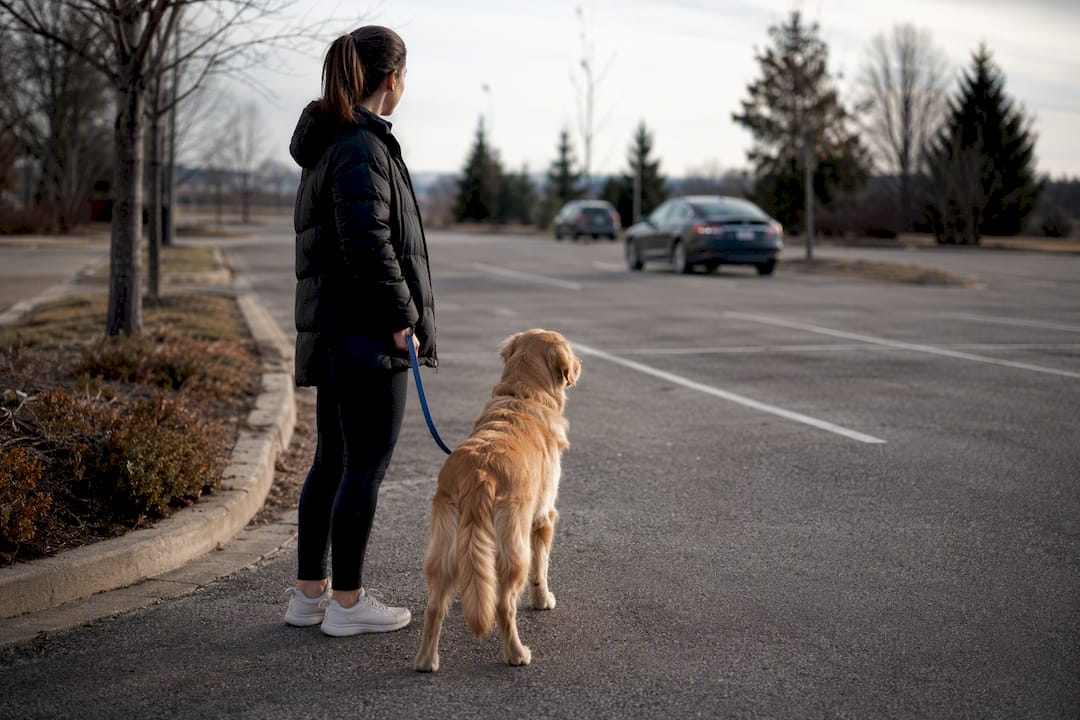
Watch your dog’s body language during every new exposure. Recognizing early stress signals, a tucked tail, a lowered head, excessive lip licking, tells you when to end the exposure before it becomes a bad memory instead of a neutral one.
Pair every new experience with something good: treats, calm praise, or a favorite toy. The goal isn’t to force interaction. It’s to let your dog choose to approach at his own pace while good things happen nearby. Rushing this step, flooding a fearful dog with too much too fast, is one of the more common reasons training stalls later. A dog who’s anxious about the world won’t focus on your cues no matter how good your timing is.
Learning Styles and Breed Traits That Shape Your Approach
Not every dog learns at the same speed, and that’s not a reflection of your training skill. A Border Collie bred for split-second responsiveness to a shepherd’s whistle is going to pick up hand signals faster than a Basset Hound bred to follow a scent trail for hours, nose down, ignoring everything else.
Herding breeds and working breeds often respond fastest to motion-based cues and hand signals. Scent hounds and independent breeds, think Beagles or Akitas, tend to need more repetitions and higher-value rewards to compete with their nose or their independent streak. Toy breeds sometimes need extra patience with leash pressure and confidence-building around bigger dogs or loud environments.
None of this changes the method. Positive reinforcement works across breeds because it’s based on how dogs learn generally, not on temperament. What changes is your pacing and your reward choice. A food-driven Labrador might work all day for kibble. A more independent breed might need real chicken to compete with the smell of a squirrel three yards away.
Age matters too. Puppies have shorter attention spans and need more frequent, shorter sessions. Senior dogs learning new cues for the first time, common with rescues, often do better with extra repetition and patience rather than faster progression.
Common Mistakes That Slow Down Dogs Teaching Sessions
A few habits show up again and again in owners who feel stuck, and almost all of them are fixable once you spot them.
Training too long. Ten or fifteen minutes sounds efficient, but attention fades hard after five, and a bored dog stops offering good behavior.
Rewarding too late. Even a two-second delay between the behavior and the treat teaches the wrong moment. This is the single biggest reason markers exist.
Stacking new cues too fast. Teaching “sit,” “down,” and “stay” in the same week, before any one is solid, usually means none of them stick reliably.
Using punishment instead of ignoring. Yelling or leash-popping for mistakes doesn’t teach the right behavior; it just teaches your dog to be less predictable or more anxious around you. Redirecting toward the behavior you actually want works better than correcting the one you don’t.
Inconsistent cues. Saying “down” for both “lie down” and “get off the couch” confuses even a smart dog. Pick one word per behavior and stick with it across every household member.
Skipping proofing. A cue that only works in your kitchen isn’t finished training. It’s step one.
Leashes, Harnesses, and the Gear That Actually Helps
Equipment doesn’t teach your dog anything by itself, but the wrong gear can undo good training fast, and the right gear makes sessions noticeably smoother.
A flat collar works fine for dogs who don’t pull hard and is the standard choice for everyday wear and ID tags. A front-clip harness gives you better steering for dogs still learning loose-leash walking, since pulling redirects the dog sideways instead of letting him drag forward. Back-clip harnesses are comfortable but offer less control for a dog who hasn’t learned leash manners yet.
Keep leash length practical: a standard 4 to 6-foot leash for structured training, never a retractable leash during teaching sessions, since the constant tension undermines the loose-leash lessons you’re trying to build.
For treat delivery, a simple treat pouch clipped to your waistband beats digging through a pocket. Fumbling for a treat costs you the one to two seconds that make marker timing effective in the first place.
If you’re working on recall or stay at a distance, a longer 15 to 20-foot training lead, not a retractable one, lets your dog range further while you keep control if he gets distracted. Skip prong or shock collars for basic obedience work; they’re built around corrections, not the reward-based mechanics this entire guide is built on.
Fixing Behavioral Problems That Surface Mid-Training
Jumping, barking, and mild leash reactivity often show up right as basic obedience training is underway, and owners sometimes read that as regression. It’s usually just your dog testing which behaviors still get attention.
For jumping, the reliable fix is removing the reward, which is your attention. Turn away, wait for four paws on the floor, then mark and reward calm greeting behavior instead.
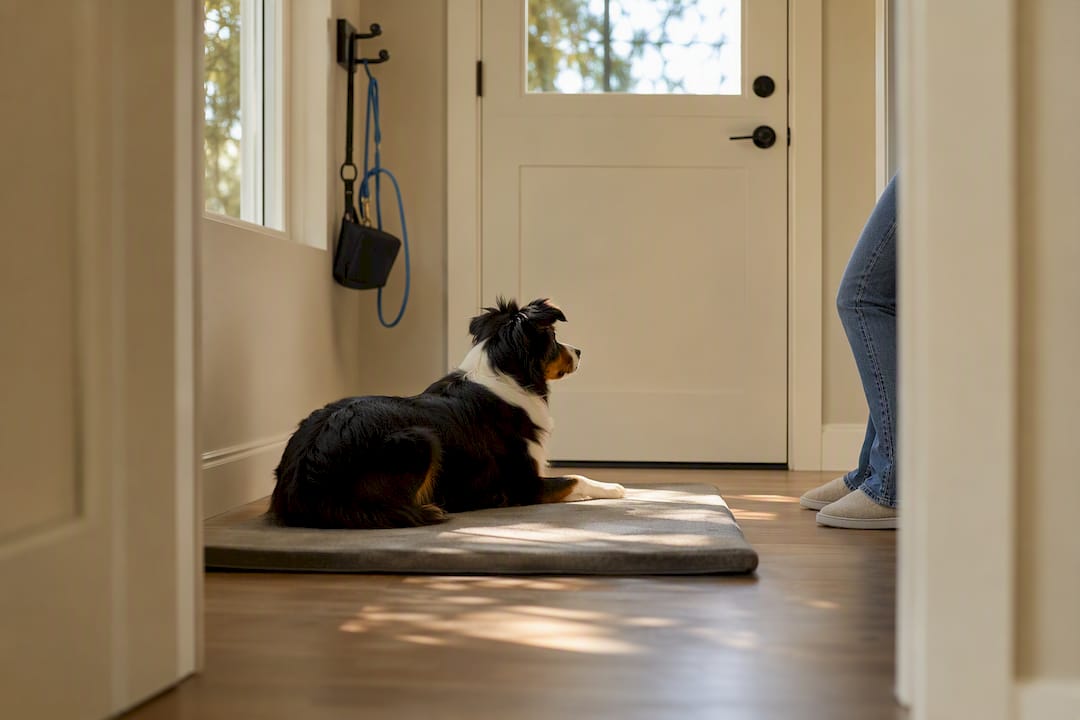
For barking at doorbells or passersby, teach an incompatible behavior, like going to a mat, rather than just saying “no.” A dog lying on a mat physically can’t be jumping at the window at the same time.
For mild leash reactivity, increase distance from the trigger until your dog can stay calm, then reward that calm state before gradually closing the gap over multiple sessions, not one.
If any of these problems involve growling, snapping, or a dog who seems genuinely afraid rather than just excitable, that’s the line where a certified trainer or veterinary behaviorist should get involved. Basic reward-based fixes work well for everyday pushiness; they’re not a substitute for professional support with real aggression or fear.
An Editor’s Take on the “Start Today” Approach
Most training advice online oversells complexity. Owners read about clicker mechanics, reinforcement schedules, and proofing variables, and conclude they need a course before they can start. That’s backwards. The research on operant conditioning is genuinely simple: mark the moment, pay fast, repeat. You can start that tonight with kibble from your dog’s own bowl.
Where conventional advice actually falls short is proofing. Most owners nail the cue at home and assume the dog “knows” it, then get frustrated when it falls apart at the vet or on a busy sidewalk. That’s not disobedience. It’s an unfinished training plan. Distance, duration, and distraction were never added, so the behavior only exists in one context.
If you take one thing from this guide, prioritize timing over technique. A dog rewarded a beat late learns something different than the dog you meant to reward. Get that right before worrying about hand signals, verbal cues, or which treat is “best.” Everything else is refinement.
— Andrew
Keep Training and Communication Going With Ipuppee
Positive reinforcement gets you a dog who knows the cues. Ipuppee’s Wi-Fi-enabled alert device extends that same reward-based relationship into everyday communication, letting a trained dog press a button to send you a real notification with live video and two-way audio, whether you’re in the next room or across town. It’s built for exactly the situations this guide covers: service dog handlers, seniors living alone, and owners who want their dog’s learned behaviors to actually mean something practical.
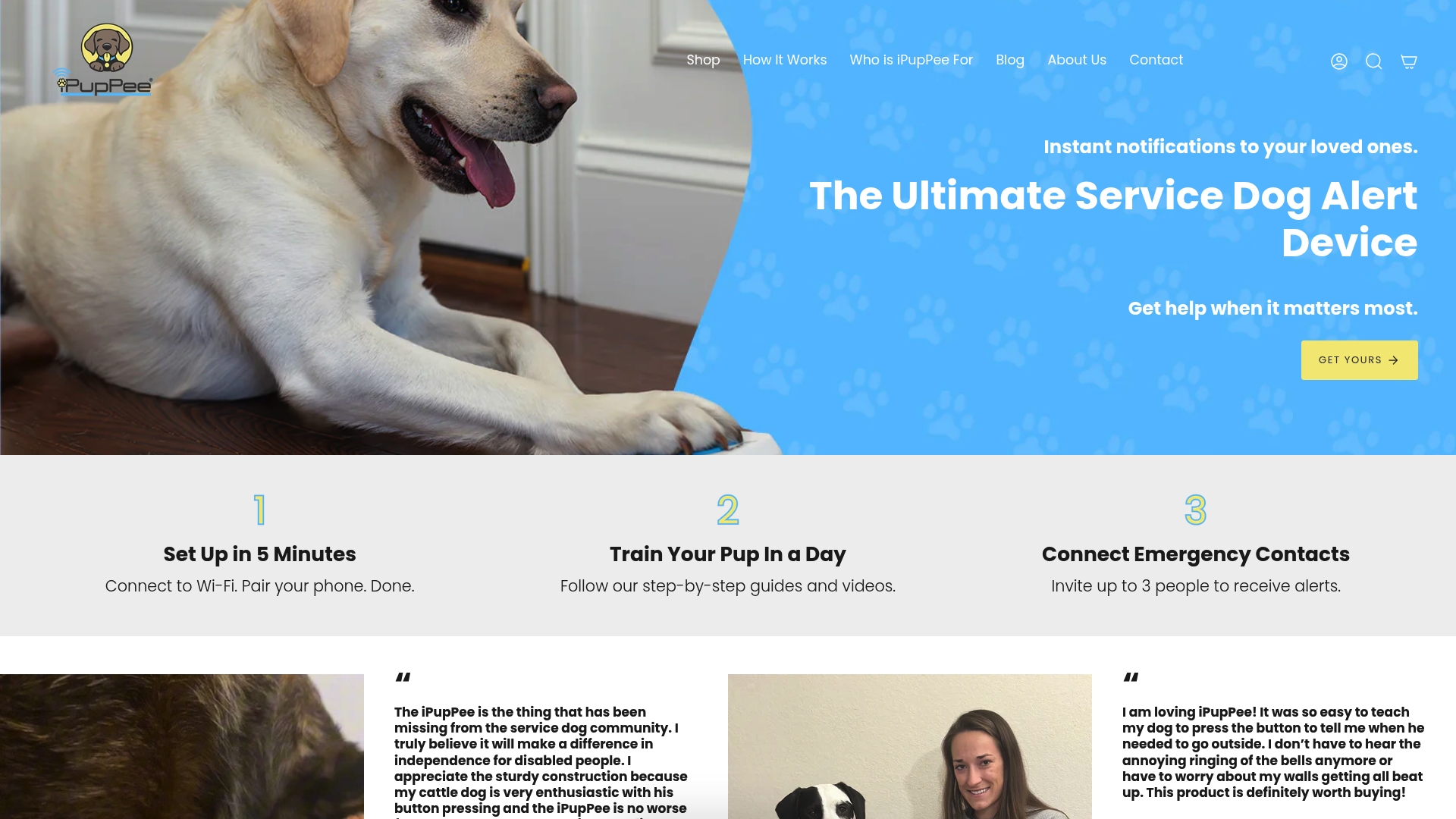
Alongside the device, Ipuppee’s on-demand training courses and video guides walk through device-linked cue training in more depth than any single article can, including how to shape a button press using the same marker-and-reward timing you just learned for sit, down, and come. If your household has a service dog, a new rescue, or a senior who could use extra independence, visit Ipuppee to check out the device and course lineup and see which training package fits your dog’s current stage.
Sources
- Operant conditioning and positive reinforcement | AKC
- Reward-based training for dogs | Purina
- How to train a dog with positive reinforcement | PetMD