

Nearly half of American households now include a pet, and service dogs are becoming an essential part of daily life for many families. Inviting a service dog into your home is not just about companionship, it involves careful preparation to guarantee safety, comfort, and successful integration. This guide gives you clear steps to transform your space, set routines, and create a supportive atmosphere that allows both you and your service dog to thrive together.
Table of Contents
- Step 1: Prepare Your Home For The Service Dog
- Step 2: Set Up Safe Spaces And Essential Supplies
- Step 3: Introduce The Service Dog To Family Members
- Step 4: Establish Communication And Training Routines
- Step 5: Monitor Progress And Address Challenges
Quick Summary
| Key Point | Explanation |
|---|---|
| 1. Conduct a Home Assessment | Thoroughly evaluate your living space for obstacles like tight spaces and slippery floors to accommodate the service dog effectively. |
| 2. Create Designated Spaces | Establish comfortable areas for the service dog, including a specific sleeping location and access to water, to enhance their integration. |
| 3. Educate Family Members | Inform all family members about the service dog’s role, and establish guidelines to support the dog’s training and working responsibilities. |
| 4. Implement Training Routines | Develop a structured training schedule focusing on obedience and tasks, ensuring consistent communication to strengthen the partnership. |
| 5. Monitor Progress Continuously | Regularly assess the service dog’s performance, document improvements, and adapt training strategies to address any emerging challenges effectively. |
Step 1: Prepare Your Home for the Service Dog
Welcoming a service dog into your home requires thoughtful preparation and strategic planning. Your goal is to create a safe, comfortable environment that supports both the service dog and its handler, ensuring smooth integration and optimal functionality.
Start by conducting a comprehensive home assessment to identify potential challenges. Animal Health Foundation experts recommend evaluating your entire living space to accommodate the service dog’s unique requirements. This means examining each room for potential obstacles like tight spaces, slippery floors, or furniture arrangements that might impede the dog’s movement. Remove scatter rugs, secure loose electrical cords, and create clear pathways that allow easy navigation.
Establish designated areas for your service dog that provide comfort and practicality. According to Guardian Angels Medical Service Dogs, this includes setting up comfortable bedding in main living spaces and ensuring constant access to fresh water. Choose a durable, washable dog bed positioned away from high traffic zones but still close enough for the dog to feel connected to household activities. Consider using non slip mats under the bed to prevent sliding and provide additional stability.
Additional preparation steps include creating an emergency plan that accounts for your service dog’s specific needs. This means identifying safe spaces during potential emergencies, preparing an emergency kit with the dog’s medical records, extra medication, and essential supplies. Always maintain a calm environment and establish consistent routines that help your service dog feel secure and perform its critical support functions effectively.
What comes next? Introducing your service dog to specific home zones and establishing clear training boundaries that will help both of you adapt smoothly to your new living arrangement.
Step 2: Set Up Safe Spaces and Essential Supplies
Creating a secure and functional environment for your service dog requires strategic planning and thoughtful preparation. Your primary goal is to design living spaces that support your service dog’s mobility, comfort, and ability to perform critical support functions.
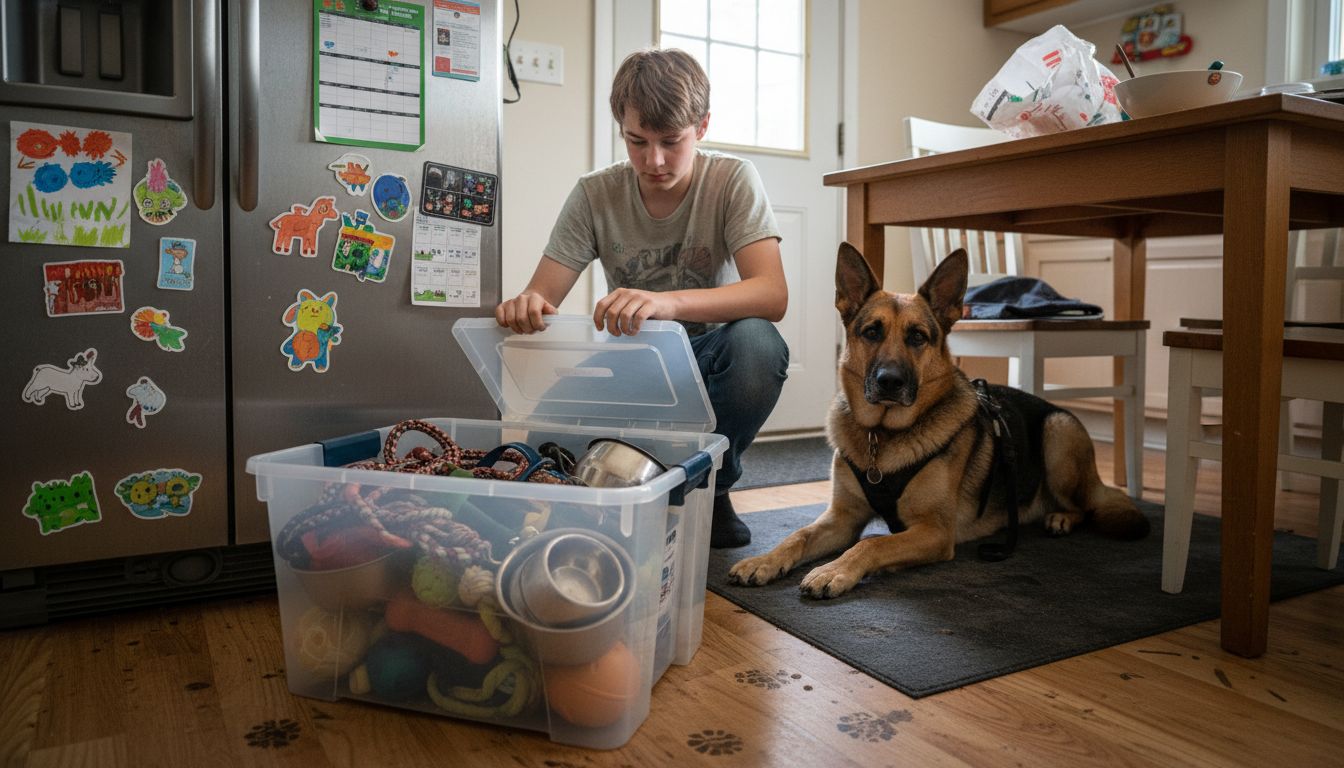
Today’s Homeowner recommends carefully modifying your home to accommodate a service dog’s unique needs, focusing on practical adjustments that ensure smooth navigation. This means examining doorway widths, ensuring clear pathways throughout your home, and creating designated areas for the dog’s activities. Install wide, unobstructed corridors that allow easy movement, remove low furniture that might impede walking, and consider using non slip floor coverings in high traffic zones to prevent accidental slipping.
Preparing essential supplies goes beyond basic equipment. Primary Health Net emphasizes creating strategic storage solutions that keep daily necessities accessible. Set up a dedicated area for veterinary documents, medications, grooming tools, and emergency contact information. Choose durable, washable bedding positioned in a quiet yet connected area of your home. Include comfortable sleeping arrangements with supportive surfaces that accommodate the dog’s size and potential mobility requirements.
Outdoor space preparation is equally crucial. Create a secure fenced area with shaded spots and constant water access. Install appropriate bathroom areas and ensure the outdoor environment supports your service dog’s training and exercise needs. Always maintain a calm, structured atmosphere that helps your service dog feel secure and ready to perform its critical support functions.
What happens next? You will begin the process of introducing your service dog to these carefully prepared spaces, establishing trust and comfort in your shared living environment.
Step 3: Introduce the Service Dog to Family Members
Successfully integrating a service dog into your family requires careful planning, clear communication, and a strategic approach to building relationships. Your goal is to create a supportive environment where every family member understands the dog’s critical role and respects its professional responsibilities.
Service Dog Training School International emphasizes the importance of educating family members about the service dog’s unique purpose, highlighting the need for comprehensive understanding and cooperative interaction. Begin by hosting a family meeting to discuss the service dog’s specific tasks, explaining how each member can support the dog’s training and working capabilities. Establish clear guidelines about not distracting the dog during work hours, avoiding unnecessary petting, and maintaining consistent behavior around the animal.
Creating structured interactions is crucial for smooth integration. Develop a family protocol where each member understands their role in supporting the service dog. Assign specific responsibilities like monitoring water supply, ensuring clean bedding, and maintaining a calm household environment. Guardian Angels Medical Service Dogs recommends maintaining a stable home atmosphere to help the service dog remain focused on its primary responsibilities. This means avoiding introducing new pets, minimizing loud noises, and creating predictable daily routines that support the dog’s working effectiveness.
Encourage gradual, positive interactions that build trust without overwhelming the service dog. Allow family members to participate in controlled training sessions, using positive reinforcement techniques that help the dog associate family members with positive experiences. Teach children especially to respect the dog’s working status, understanding that the animal is not a typical household pet but a highly trained professional with critical support functions.
What comes next? You will begin establishing consistent training routines that help your service dog feel secure and integrated into your family’s daily life.
Step 4: Establish Communication and Training Routines
Building a strong communication foundation with your service dog requires patience, consistency, and strategic training approaches. Your ultimate goal is developing a seamless partnership where both you and your dog understand each other’s signals and expectations.

Service Dog Certifications emphasizes the critical importance of progressive training techniques, recommending a systematic approach that begins in quiet environments and gradually introduces more complex scenarios. Start with basic command training in a calm, distraction free space, using positive reinforcement methods like treats and verbal praise. Focus on teaching fundamental commands that will support the dog’s specific service functions, such as retrieving items, providing physical support, or alerting to medical conditions.
Consistent daily routines are the cornerstone of successful service dog integration. Guardian Angels Medical Service Dogs advises maintaining normal activities while allowing ample bonding time between handler and dog. Develop a structured training schedule that includes multiple short sessions throughout the day, typically 10 to 15 minutes each. These sessions should cover obedience training, task specific skills, and public access behaviors. Use clear, consistent verbal and hand signals to communicate expectations, ensuring the dog understands and responds reliably.
Pay special attention to public behavior training, which requires gradually increasing environmental complexity. Begin in quiet indoor spaces, then progress to moderately busy areas, and eventually practice in more challenging public environments. Always reward calm, focused behavior and maintain a patient, calm demeanor that helps your service dog feel secure and confident. Remember that building communication is a continuous process that requires dedication, understanding, and mutual respect.
What comes next? You will start implementing your training plan, tracking progress, and adjusting techniques to match your service dog’s learning style and specific needs.
Step 5: Monitor Progress and Address Challenges
Successfully integrating a service dog involves continuous assessment, adaptability, and proactive problem solving. Your mission is to create an environment of ongoing learning and support that helps your service dog perform at its highest potential.
Service Dog Training School International recommends implementing systematic progress evaluations through regular Public Access Tests that comprehensively assess the dog’s behavior and performance in real world scenarios. These assessments help identify specific areas requiring additional training or refinement. Develop a structured tracking system that documents the dog’s skills, tracking improvements and noting any challenges that emerge during training or daily activities. Create detailed logs that capture the dog’s response to different environments, task performance, and behavioral consistency.
Guardian Angels Medical Service Dogs emphasizes the critical importance of maintaining open communication with professional trainers throughout your service dog’s journey. Schedule regular check-ins with your training professional to discuss progress, address potential issues, and receive expert guidance on handling specific challenges. These consultations provide an opportunity to review training techniques, adjust strategies, and ensure your service dog continues developing the skills necessary for effective support.
Be prepared to approach challenges with patience and flexibility. Recognize that each service dog is unique and may require individualized training approaches. When you encounter difficulties, resist frustration and instead view these moments as opportunities for growth and deeper understanding. Document behavioral patterns, environmental triggers, and specific scenarios that might be causing performance issues. This systematic approach allows you to develop targeted strategies that support your service dog’s continued development and success.
What comes next? You will continue refining your communication techniques, celebrating small victories, and building an increasingly strong partnership with your service dog.
Enhance Your Service Dog Journey with Innovative Communication Tools
Integrating a service dog into your home involves careful training, clear communication, and creating safe spaces as highlighted in the “Introducing Service Dogs Home: Step-by-Step Success Guide.” A key challenge is establishing reliable communication that supports your dog’s critical tasks and your daily routines. Ensuring your service dog can alert you effectively and stay connected reduces stress and enhances safety, especially during complex training phases or emergency situations.
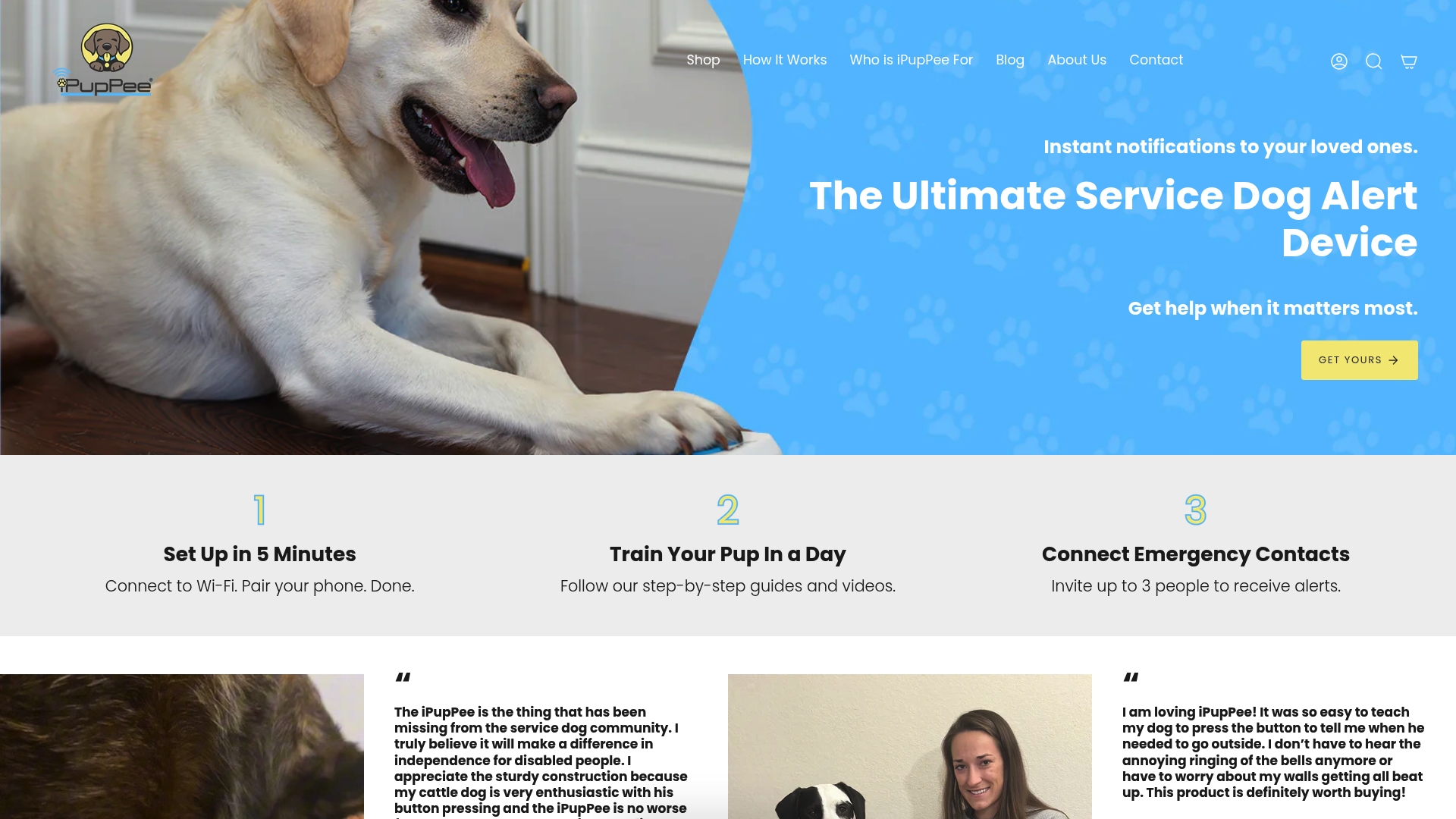
Discover the iPupPee device, uniquely designed to bridge the communication gap between you and your service dog. This innovative alert system simplifies signals with a button press, supporting your training routines and helping your dog perform at its best. Build trust with your service dog through clearer communication and enjoy peace of mind knowing help is always within reach. Act now to empower your home and enrich the bond with your service dog. Explore more at ipuppee.com and take the next step toward safer, more effective service dog integration.
Frequently Asked Questions
How do I prepare my home for a service dog?
To prepare your home for a service dog, assess your living space for potential obstacles and create a safe, comfortable environment. Remove hazards, secure loose cables, and establish clear pathways for easy navigation.
What essential supplies do I need for my service dog?
You will need a durable dog bed, food and water bowls, grooming tools, and an emergency kit that includes medical records and extra medications. Set up a designated area for these supplies to ensure they are easily accessible.
How do I introduce my service dog to my family members?
Introduce your service dog to family members by educating them about the dog’s role and responsibilities. Hold a family meeting to discuss guidelines and establish clear protocols for interacting with the service dog to ensure a supportive environment.
What training routines should I establish for my service dog?
Establish daily training routines that involve short, focused training sessions using positive reinforcement. Plan for multiple training sessions lasting 10 to 15 minutes to cover commands that support the dog’s service functions.
How can I monitor the progress of my service dog’s training?
Monitor your service dog’s training progress by keeping detailed logs of their performances in various situations. Assess behaviors, track improvements, and schedule check-ins with a professional trainer to refine techniques as needed.
What should I do if I encounter challenges integrating my service dog into my home?
Approach integration challenges with patience and flexibility, viewing difficulties as opportunities for growth. Document any behavioral patterns and work closely with a trainer to develop targeted strategies for improvement.