

Did you know that puppies introduced to over 90 different scenarios before 14 weeks old show stronger social skills and fewer problem behaviors? Early socialization shapes a dog’s entire personality, influencing confidence, friendliness, and emotional health. Learning how and when to guide your puppy through new situations can make all the difference in raising a calm, well-adjusted companion who thrives in any environment.
Key Takeaways
| Point | Details |
|---|---|
| Importance of Socialization | Early socialization is crucial for developing self-confidence and behavioral predictability in dogs, particularly within the age range of 3-12 weeks. |
| Critical Developmental Stages | Understanding specific stages of puppy socialization helps owners design positive experiences that foster emotional resilience. |
| Consequences of Poor Socialization | Inadequate socialization can lead to long-term behavioral issues, including anxiety and aggression, impacting both dogs and their owners. |
| Communication Techniques | Effective dog-owner communication hinges on understanding canine body language and consistent behavioral reinforcement to strengthen the human-animal bond. |
Table of Contents
- Defining Dog Socialization And Core Concepts
- Types And Stages Of Dog Socialization
- Proven Socialization Techniques And Tools
- Risks Of Poor Dog Socialization
- Enhancing Safety And Communication For All Owners
Defining Dog Socialization and Core Concepts
Dog socialization represents a critical developmental process where puppies learn to interact positively with other dogs, humans, and environments during their early life stages. According to research from UC Davis School of Veterinary Medicine, this process helps dogs become self-confident, secure, and behaviorally predictable - fundamental qualities that prevent future behavioral problems.
The most critical socialization window occurs between 3-12 weeks of age, a sensitive period where puppies are most receptive to new experiences. During this timeframe, positive interactions can significantly shape a dog’s long-term social behavior. Key developmental objectives include:

- Reducing fear responses in novel situations
- Building confidence through controlled exposure
- Creating positive associations with different stimuli
- Establishing foundational communication skills
Research indicates that well-socialized dogs are less likely to develop aggressive tendencies or experience anxiety-related behavioral issues. By systematically introducing puppies to diverse scenarios - different people, animals, sounds, and environments - owners can help their dogs develop robust emotional resilience. Read more about essential dog training skills to complement your socialization strategy and create a well-adjusted canine companion.
Types and Stages of Dog Socialization
According to the American Kennel Club, puppy socialization unfolds through distinct developmental stages, each playing a crucial role in shaping a dog’s future behavior and emotional resilience. These stages represent a carefully orchestrated journey of sensory exploration, learning, and confidence building.
Key Developmental Periods
Puppy socialization can be broken down into several critical stages:
- Early Sensory Awareness (0-3 weeks): Initial sensory system development
- Curiosity Stage (5-7 weeks): Heightened exploration and environmental interaction
- Behavioral Refinement (7-9 weeks): Learning social cues and communication
- Fear Imprint Period (8-11 weeks): Heightened sensitivity to potentially traumatic experiences
- Environmental Awareness (9-12 weeks): Expanding understanding of surroundings
- Seniority Classification (13-16 weeks): Establishing social hierarchies
Research indicates that timing and quality of interactions during these stages are paramount. Puppy safety tips become critical, as negative experiences can have long-lasting behavioral impacts. An expert source specializing in canine behavior notes that while the critical socialization window typically spans 3-8 weeks, the exact timing can vary slightly between different dog breeds.
By understanding these developmental stages, dog owners can strategically design positive, controlled experiences that build their puppy’s confidence, reduce potential anxiety, and create a foundation for well-adjusted adult behavior. The goal is not just exposure, but creating positive associations that will help your dog navigate future social interactions with ease and self-assurance.
Here’s an overview of the key stages of puppy socialization:
| Stage | Age Range | Main Focus |
|---|---|---|
| Early Sensory Awareness | 0-3 weeks | Sensory development |
| Curiosity Stage | 5-7 weeks | Exploration Interaction |
| Behavioral Refinement | 7-9 weeks | Social cues Communication |
| Fear Imprint Period | 8-11 weeks | Sensitivity to trauma |
| Environmental Awareness | 9-12 weeks | Learning surroundings |
| Seniority Classification | 13-16 weeks | Social hierarchy formation |
Proven Socialization Techniques and Tools
Strategic exposure is the cornerstone of effective puppy socialization. Research from UC Davis recommends introducing puppies to approximately 90 different scenarios before they reach 14 weeks old, ensuring comprehensive and controlled social experiences that build confidence and reduce potential anxiety.
Key Socialization Strategies
Successful socialization involves multiple targeted approaches:
- Controlled Environment Encounters: Structured meetings with different people, animals, and settings
- Sensory Challenge Exercises: Exposure to varied sounds, textures, and unexpected stimuli
- Positive Reinforcement: Rewarding calm, curious behavior during new experiences
- Problem-Solving Tasks: Introducing mild challenges that build cognitive resilience
A controlled scientific study revealed that puppies exposed to challenge exercises and novel objects between 3-12 weeks demonstrate significantly improved stress resilience and reduced fear responses. These early interactions are critical for developing emotionally balanced adult dogs. Explore our recommended dog training tools to support your socialization journey.
Practical techniques include puppy preschool classes, supervised social outings, short car rides, and carefully managed interactions with friendly humans and vaccinated dogs.
Risks of Poor Dog Socialization
Inadequate socialization can have profound and long-lasting consequences for a dog’s behavioral and emotional development. Research published in a comprehensive survey study reveals that puppies with limited social exposure are significantly more likely to develop social fearfulness towards strangers and other dogs, creating potential lifelong challenges in their interactions.
Primary Behavioral Risks
Poor socialization can manifest through multiple detrimental behavioral patterns:
- Generalized anxiety and fearfulness
- Extreme sound sensitivity
- Difficulty with handling and grooming
- Reluctance to explore new environments
- Aggressive defensive responses
- Chronic nervous behaviors
Certain demographic factors can amplify these risks, including:
- Urban living environments
- Prolonged inactivity
- Smaller dog breeds
- Female dogs
- Neutered animals
Authoritative sources highlight that under-socialized dogs often experience severely limited quality of life, struggling with basic interactions that well-socialized dogs navigate easily. Learn more about dog safety strategies to mitigate these potential developmental challenges.
Ultimately, the consequences of poor socialization extend beyond individual behavioral issues. Unsocialized dogs are more likely to experience chronic stress, potential rehoming, and reduced capacity for meaningful human-animal bonds.
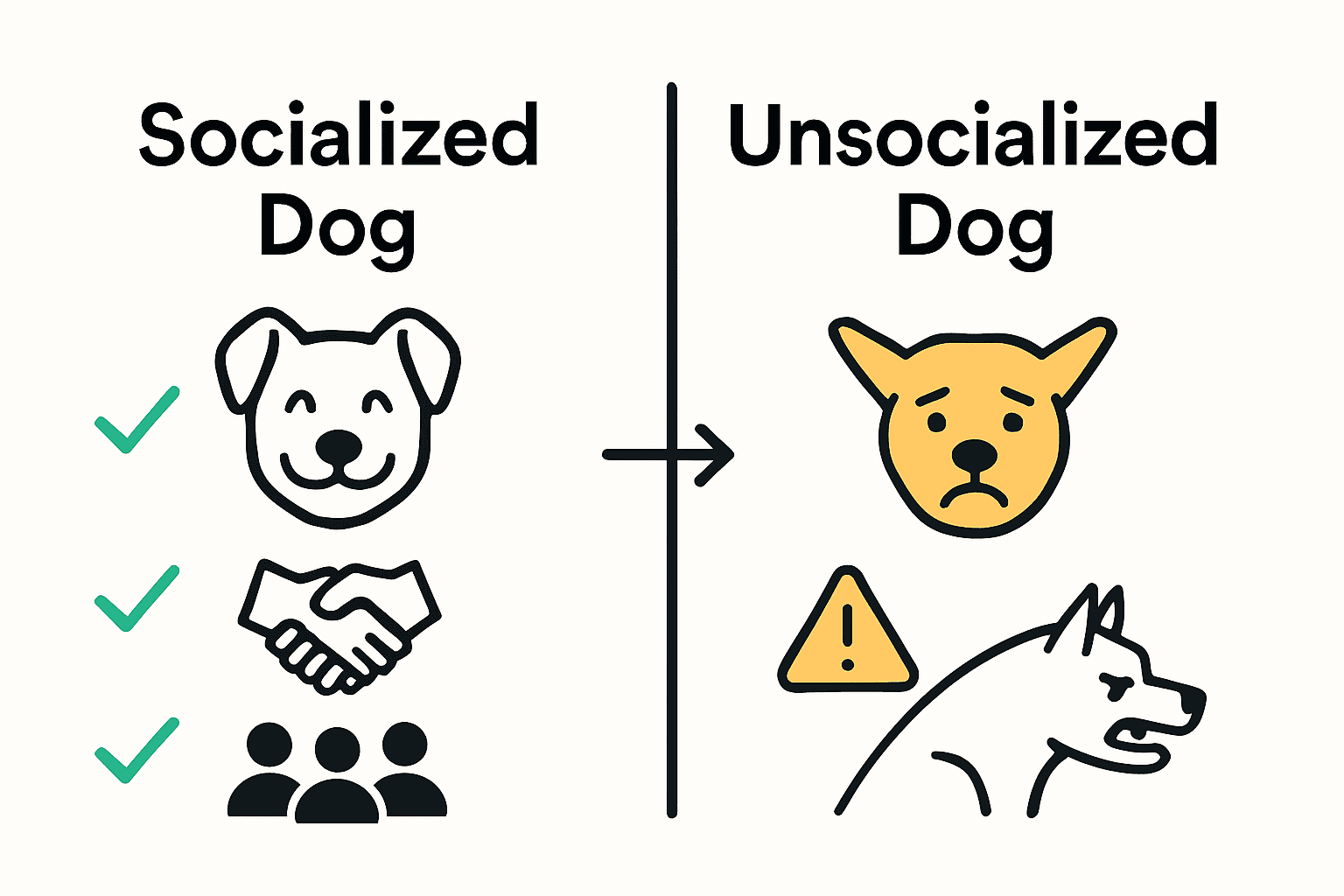 Proactive, intentional socialization remains the most effective prevention strategy for these complex psychological challenges.
Enhancing Safety and Communication for All Owners
Canine communication is a sophisticated system involving complex interactions beyond simple verbal commands. Research on dog communication reveals that dogs utilize multiple channels including vocalizations, body postures, facial expressions, and scent to convey intricate messages, with domestication enabling them to become remarkably adept at interpreting human emotional signals.
Key Communication Strategies
Effective dog-human communication requires understanding fundamental interaction principles:
- Body Language Awareness: Recognizing subtle physical cues
- Consistent Vocal Tone: Maintaining predictable communication patterns
- Emotional Mirroring: Matching energy and intention
- Predictable Boundary Setting: Establishing clear interaction rules
Bite inhibition, a critical safety skill developed during early socialization, represents a fundamental communication mechanism. Explore our comprehensive dog safety training guide to understand how dogs learn to moderate their bite strength and interact appropriately with humans and other animals.
By investing time in understanding canine communication nuances, owners can create safer, more harmonious relationships. This approach goes beyond basic training, fostering mutual understanding and respect that transforms interactions from mere command-response scenarios to genuine emotional connections.
Take the Next Step in Dog Socialization and Safety
Struggling to help your dog feel confident in new situations or frustrated by communication challenges despite doing your best with socialization? We understand that preventing fear, anxiety, and safety risks begins with positive early experiences. But truly effective results also require practical tools that bridge the gap between your dog’s needs and your daily life. The article highlighted the importance of early, consistent socialization, bite inhibition, and emotional resilience. If these goals feel difficult to reach, you are not alone.
Let iPupPee give your dog a voice that supports everything you are building from day one. With our easy-to-use communication device, you can improve training outcomes and create safer environments for puppies, service dogs, or dogs with special needs. See how our technology reinforces lessons from controlled exposure and supports stress-free interactions at home. Explore real stories from dog owners, understand dog safety strategies, and check out our essential puppy safety tips. Visit iPupPee today and give your dog the best start. The sooner you act, the more confident and secure your dog becomes.
Frequently Asked Questions
What is dog socialization and why is it important?
Dog socialization is the process through which puppies learn to interact positively with other dogs, humans, and their environments. It is crucial for preventing future behavioral problems and helps dogs become confident and secure.
What are the critical windows for puppy socialization?
The most critical socialization window occurs between 3-12 weeks of age. During this time, puppies are most receptive to new experiences, and positive interactions can shape their long-term behavior.
What risks are associated with inadequate dog socialization?
Poor socialization can lead to various behavioral issues, including anxiety, fearfulness, difficulty with handling, reluctance to explore new environments, and aggressive responses. Such dogs may struggle with basic social interactions throughout their lives.
How can I effectively socialize my puppy?
Effective socialization involves exposing your puppy to various scenarios in a controlled manner, using strategies like positive reinforcement, sensory challenge exercises, and structured encounters with different people and environments.