

A predictable feeding routine comes down to three things: consistent times, measured portions, and short training reps at every meal. That’s the whole system. Pick two or three daily windows you can hit reliably, measure food instead of eyeballing it, and use a brief “wait” cue before the bowl hits the floor.
Life-stage matters here; new puppy owners can follow a puppy vaccine schedule alongside feeding routines to align vet visits and meal times effectively. The Merck Veterinary Manual recommends four meals a day for puppies between 6 and 12 weeks old, tapering down as they mature. VCA Animal Hospitals notes that a fixed schedule gives dogs a sense of security and makes house training far more predictable, since bathroom needs tend to follow meals closely. For service-dog handlers or owners managing a dog’s needs remotely, a device like iPupPee can help a dog signal hunger or discomfort directly, adding a layer of communication on top of the schedule.
Start today with three steps:
- Choose two fixed meal windows that fit your actual schedule, not an aspirational one.
- Measure exactly one day’s portions with a kitchen scale or the manufacturer’s scoop.
- Practice one short “wait” drill (five to ten seconds) before setting the bowl down.
Key Takeaways
A reliable feeding routine combines a consistent time window, measured portions, and short mealtime training reps, adjusted for life stage and monitored over time.
| Point | Details |
|---|---|
| Match frequency to age | Follow Merck’s brackets: 4 meals at 6 to 12 weeks, tapering to 1 to 2 meals after 12 months. |
| Prioritize the window, not the minute | Aim for a consistent 30-minute daily window rather than exact clock precision. |
| Train wait and release at every meal | Hold, wait for calm, lower slowly, pause, release, building longer pauses over time. |
| Use tools to slow eating | Slow feeders, puzzle toys, and snuffle mats reduce gulping and add enrichment. |
| Log and adjust | Track portions, stool quality, and weight; escalate to a vet if appetite drops for 48 hours. |
| Layer in communication | Ipuppee’s device adds a trained hunger signal and remote notification on top of a solid routine. |
Table of Contents
- Life-Stage Feeding Frequency: A Quick Reference
- How to Choose Feeding Times That Actually Stick
- Teaching Calm Mealtimes: The Wait-and-Release Method
- Slow Feeders, Puzzle Toys, and Other Mealtime Tools
- Adjusting Feeding Routines for Special Situations
- Changing Foods or Schedules Without Upsetting Your Dog
- Teaching a Hunger Signal and Where a Communication Device Fits
- Tracking Progress and Knowing When to Adjust
- How Feeding Routines Affect Digestion and Overall Health
- A Device That Supports Your Feeding Routine, Not a Replacement for It
- Sources
Life-Stage Feeding Frequency: A Quick Reference
Meal frequency isn’t static. It shifts as a puppy grows, and getting it wrong in either direction (too few meals for a young puppy, too many for an adult) creates blood sugar dips or unnecessary weight gain.
| Age | Recommended meals per day |
|---|---|
| 6 to 12 weeks | 4 meals |
| 3 to 6 months | 3 meals |
| 6 to 12 months | 2 meals |
| 12 months and older | 1 to 2 meals |
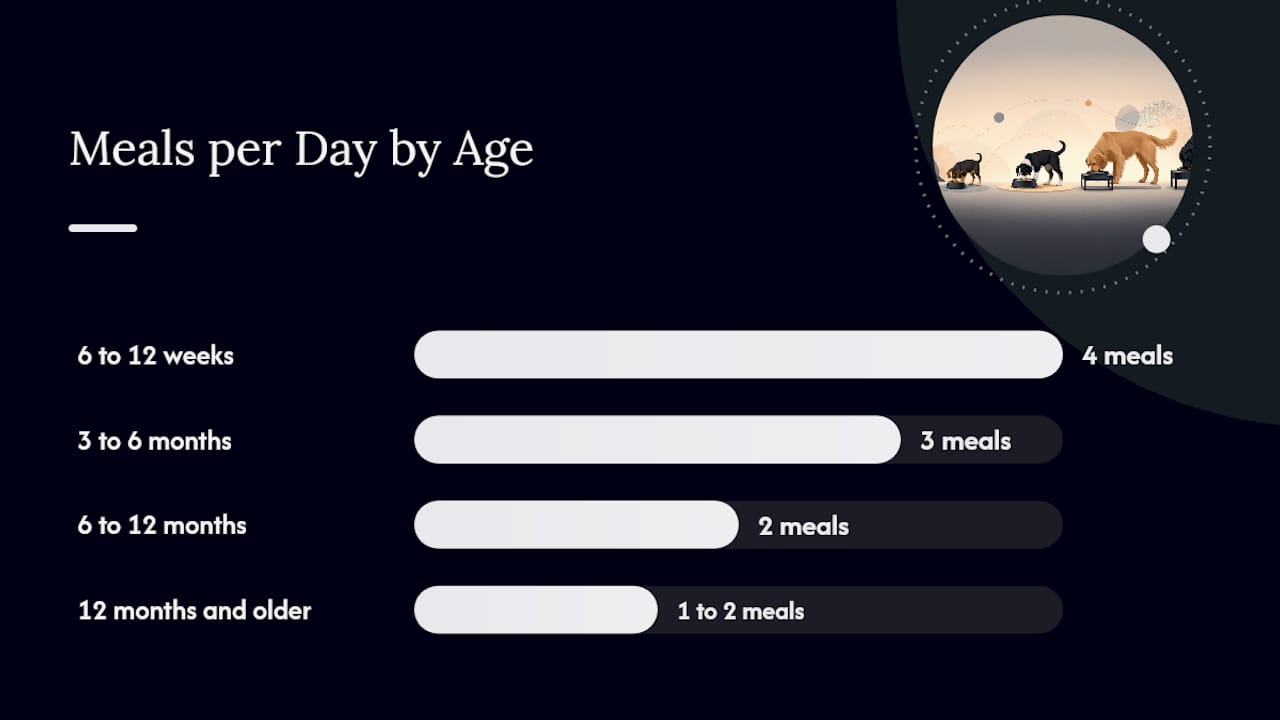
These brackets come from Merck Veterinary Manual guidance on puppy care, and they’re a starting point, not a prescription. Breed size, activity level, and any medical condition can shift the numbers, so check with your veterinarian before locking in a plan for a giant breed puppy or a dog with a known digestive issue.
Life stage also affects portion size and bathroom timing directly. A young puppy eating four small meals will need bathroom breaks four separate times, roughly 20 to 30 minutes after eating. An adult dog on two meals needs only two predictable windows, which is one reason scheduled meals support house training so effectively.
How to Choose Feeding Times That Actually Stick
Clock-perfect timing isn’t the goal. Reliability is. A dog fed at 7:00 AM one day and 9:30 AM the next learns nothing predictable, but a dog fed sometime within a consistent 30-minute window every day builds a stable internal clock. That window matters more than the exact minute.
If you need to shift an existing schedule, move it by 15 to 30 minutes a day rather than jumping straight to the new time. A dog’s digestive system and bathroom habits adjust more smoothly to gradual change than to an abrupt reset.
Before locking in your times, run through this checklist:
- What time do you leave for work, and what time do you realistically get home?
- When does your dog need to go outside, and how long after eating does that happen?
- Does your dog take medication that needs to be given with food?
- Do multiple caregivers share feeding duties, and do they know the exact times?
Pro Tip: Weigh food on a kitchen scale rather than trusting the scoop that came with the bag. Scoops vary by brand and get less accurate as they get worn or bent, and grams give you a number you can actually track over weeks. If you give training treats throughout the day, subtract that from the meal portion so total calories stay consistent.
Teaching Calm Mealtimes: The Wait-and-Release Method
The method in one line: hold the bowl, wait for calm, lower it slowly, pause, then give a release cue. Repeat that sequence at every meal and you’re not just feeding your dog, you’re running a daily impulse-control drill.
- Hold the bowl at chest height and wait for your dog to stop jumping, barking, or spinning. Even a half-second of stillness counts as a win at first.
- Lower the bowl a few inches, then stop. If your dog surges forward, raise it back up and wait again.
- Once the bowl reaches the floor, pause for one to two seconds before releasing your dog with a consistent cue like “okay” or “go ahead.”
- Over several days, stretch the pause from two seconds to five, then ten, then longer, only advancing once the dog is reliably calm at the current step.
- Add distractions once the base behavior is solid: a doorbell sound, a second person walking by, another dog in the room.
This progression mirrors the stepwise wait protocol trainers use to build impulse control, and it works because each rep is short and low-stakes.
Watch for resource guarding as you work through this. Stiffening over the bowl, a hard stare, growling, or freezing when you approach are signs to stop the drill immediately and consult a certified trainer or veterinary behaviorist rather than pushing through it yourself.
Pro Tip: If your dog is too excited to hold still even for a second, try drip-feeding during the lowering phase. Instead of setting the full bowl down at once, lower it an inch, drop in a few pieces of food, raise it again, and repeat. This keeps a high-arousal dog succeeding often enough to stay engaged instead of shutting down or escalating.
Impulse-control feeding protocols work because they turn an everyday moment into dozens of tiny training reps a dog can’t opt out of.
Slow Feeders, Puzzle Toys, and Other Mealtime Tools
Fast eaters benefit from tools that force the meal to take longer, and slower eating tends to mean fewer digestive complaints. A few categories to know:
- Slow-feeder bowls with raised ridges or maze patterns that make each bite deliberate.
- Food-dispensing puzzle toys that require rolling, nudging, or manipulating to release kibble.
- KONG-style chew toys stuffed with frozen wet food, which stretches out a meal into a longer, calmer activity.
- Snuffle mats, where food is hidden in fabric folds and a dog has to sniff it out piece by piece.
Turning part of the meal into a training tool also gives you built-in reinforcement throughout the day instead of dumping the whole calorie budget into one bowl at once.
Supervise any new toy the first several times, since some dogs chew rather than lick or nudge. Pick toys sized appropriately for your dog’s jaw strength, inspect for cracks or missing pieces before each use, and pull the toy after 15 to 20 minutes whether it’s empty or not. That keeps the item’s novelty and “mealtime value” intact rather than letting it become just another chew lying around.
Pro Tip: If you use puzzle toys as part of daily training, deduct that portion from the regular meal. A dog getting a quarter cup in a KONG and a full bowl afterward is quietly eating more calories than the label plan accounts for.
Adjusting Feeding Routines for Special Situations
Multiple dogs, medical needs, and older dogs all bend the standard routine.
In multi-dog households, feed dogs in separate spaces, use baby gates or closed doors during meals, and measure each dog’s portion individually rather than filling a shared bowl. Free-feeding (leaving food out all day) makes weight control and appetite monitoring nearly impossible, which is why scheduled meals are generally the better default for tracking how much a dog actually eats.
Medical conditions like diabetes or GERD often require meals timed around medication, and senior dogs frequently do better on smaller, more frequent meals rather than one or two large ones.
Call your veterinarian if you see any of these:
- No appetite for more than 48 hours.
- Rapid weight loss or gain over a short period.
- Vomiting or diarrhea that persists beyond a day.
Pro Tip: Keep a printed or app-based feeding log if you have more than one dog. It takes the guesswork out of “did Max already eat?” during busy mornings.
Changing Foods or Schedules Without Upsetting Your Dog
Sudden changes to food or timing are the most common cause of a temporary digestive mess. A gradual approach avoids that almost entirely.
- Mix a small amount of new food into the current food, starting around 25% new to 75% old.
- Increase the new food’s share every two to three days over a 7 to 10 day period until it’s the only food served.
- Watch stool quality, appetite, and energy the whole time. If stool gets loose or your dog seems off, hold at the current ratio for a few extra days before advancing.
- For schedule shifts, move meal times by 15 to 30 minutes each day rather than jumping to the new time all at once.
Teaching a Hunger Signal and Where a Communication Device Fits
Some dogs benefit from a deliberate, reproducible signal, a bell touch, a paw target, or a gentle bowl nudge, that tells you they’re hungry or it’s close to mealtime. Train it the same way you’d train any behavior: reward the specific signal consistently, and ignore (rather than punish) inappropriate early attempts so the dog learns the signal only works at the right time. Expect a short burst of extra signaling when you first stop reinforcing early attempts. That’s a normal part of the learning curve, not a sign the training failed.
This is where a device like iPupPee can slot in for handlers who need remote awareness. The signal triggers a notification to the owner or caregiver, who can then confirm it’s feeding time or check in through live video. It’s a communication layer, not a replacement for training or the schedule itself.
For a service-dog handler with limited mobility, a dog that can reliably signal hunger through a trained cue and a connected device closes a real communication gap.
Tracking Progress and Knowing When to Adjust
Keep a simple log: meal times, portion size, how much food went uneaten, stool quality, weight trend, and how your dog behaved at the bowl. Patterns show up fast once it’s written down instead of remembered.
Adjust the plan when you see:
- Weight change beyond roughly 10% in either direction.
- Appetite loss lasting more than 48 hours.
- Consistently uneaten food at the same meal, which may mean the portion or timing is off.
Pro Tip: Bring your feeding log to vet visits. A few weeks of real data on portions and behavior gives your veterinarian far more to work with than “she’s been eating less lately.”
How Feeding Routines Affect Digestion and Overall Health
A dog’s gut runs on predictability. Enzyme production and gastric motility both ramp up in anticipation of a meal, and when meals arrive at wildly different times, that internal timing gets thrown off, which can show up as inconsistent stool quality, gas, or a dog who seems randomly hungry or disinterested in food.
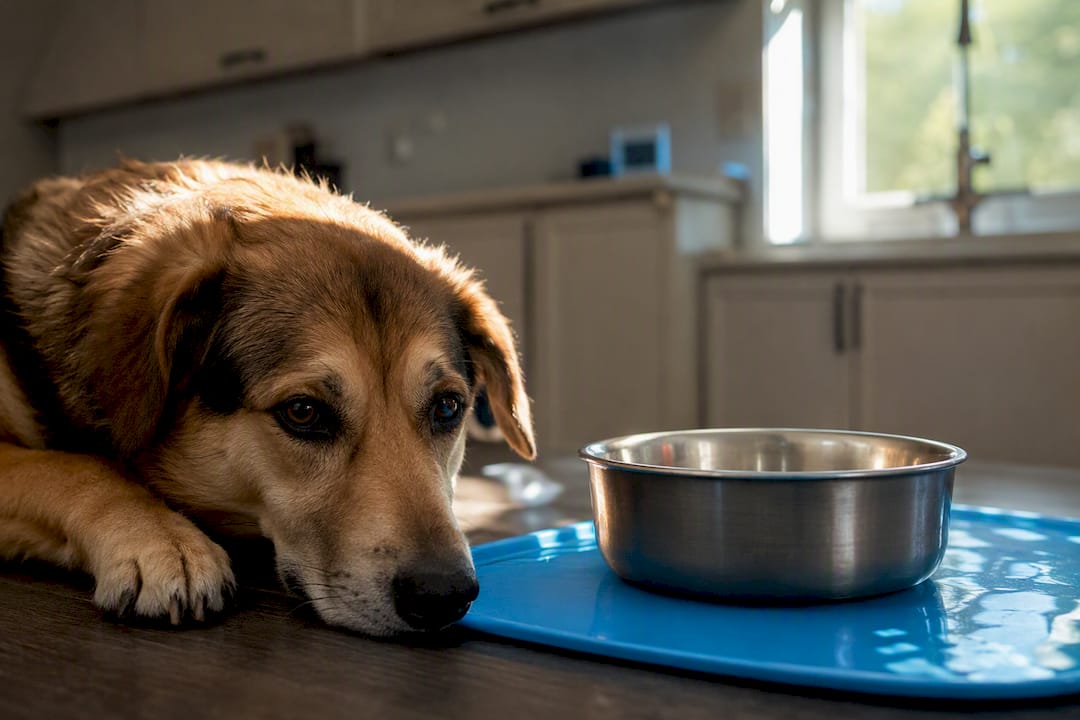
Scheduled meals also make it dramatically easier to catch problems early. If a dog eats at the same two times every day and skips a meal, that’s an immediate, obvious red flag. A free-fed dog grazing all day can go a full day or more with reduced intake before anyone notices, because there’s no clear baseline to compare against.
Consistent timing and location also reduces stress-related digestive upset. Dogs that eat in the same spot with the same routine show fewer signs of mealtime anxiety, like gulping, guarding, or refusing to eat around other pets. And removing uneaten food after about 20 minutes rather than leaving it out prevents the slow, mindless grazing that makes both portion tracking and appetite monitoring unreliable.
For dogs on medication tied to meals, or those managing a condition like pancreatitis, timing isn’t just a convenience. Consistent, appropriately spaced meals directly affect how well the treatment works. That’s a conversation for your veterinarian, but the routine itself is the foundation that makes the medical plan possible in the first place.
First-person note: how we teach routines in practice
We keep it simple: two measured meals, a two to three minute wait drill before each one, and a puzzle toy at dinner for enrichment. Consistency beats complexity every time.
A Device That Supports Your Feeding Routine, Not a Replacement for It
Training builds the habit. A device just makes sure you never miss the signal. For handlers managing a service dog’s needs, or anyone caring for a dog while working long hours, an iPupPee device lets your dog send a direct alert when it’s hungry or something’s off, complete with live video and two-way audio so you can check in without guessing.
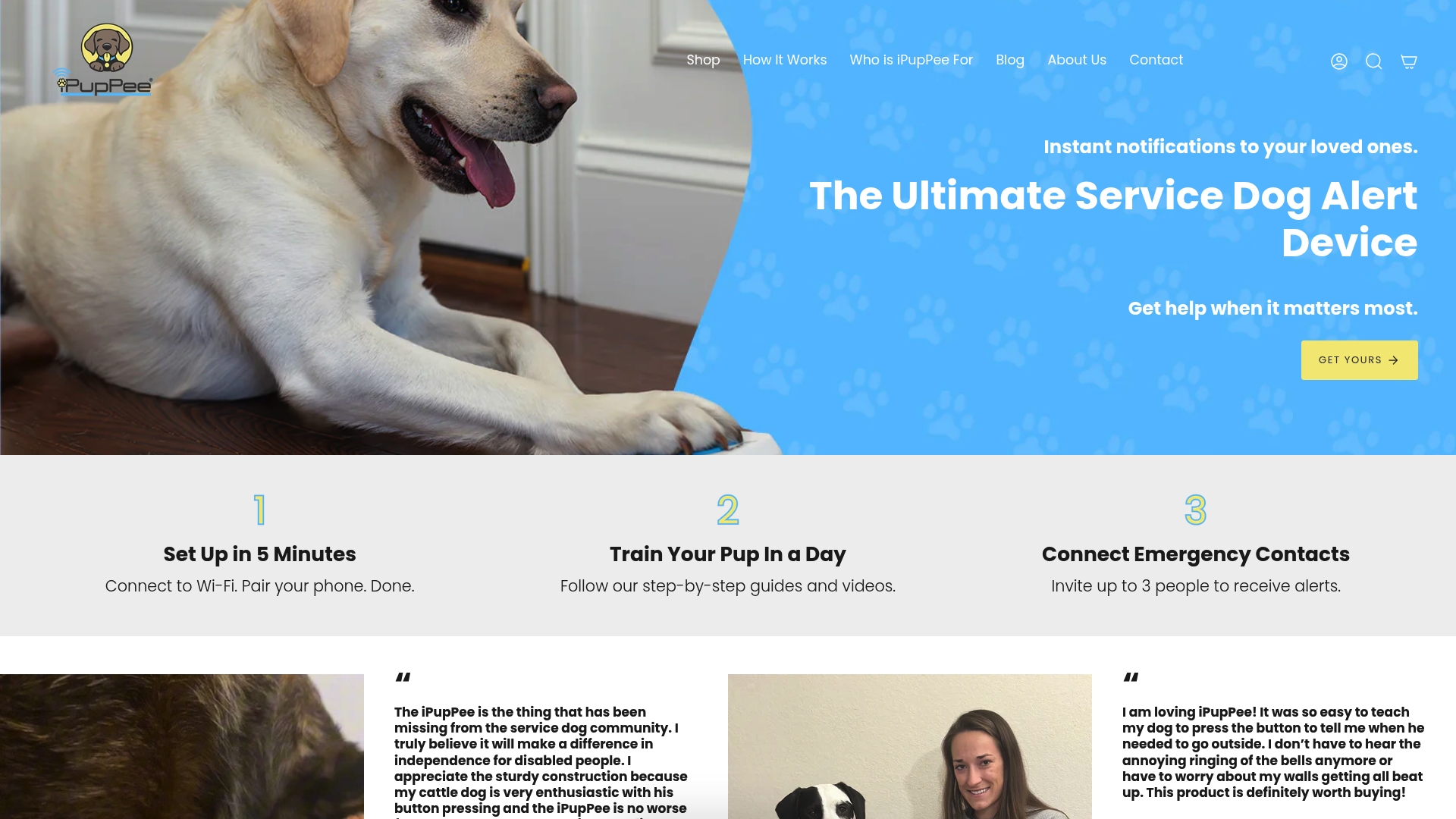
The benefits are straightforward: your dog gets a trained, reliable way to communicate; you get a notification instead of a mystery; and iPupPee’s training resources walk you through teaching that hunger cue step by step. None of this replaces a consistent schedule or a veterinarian’s guidance on portions and health. It’s a layer on top of the routine you’ve already built, useful for the moments you’re not in the room to notice a paw at the bowl. If a predictable meal schedule paired with a reliable communication tool sounds like the missing piece in your household, explore the iPupPee device and see how it fits your dog’s routine.
Sources
- Merck Veterinary Manual — Puppy care / routine care of dogs
- Feeding times and frequency for your dog | VCA Animal Hospitals
- Mealtime training: turning dinnertime into training time | AKC
- How to teach a dog to wait for food | Dogster