

Rescue dogs deserve a fresh start, but past trauma often creates behavior challenges that leave owners feeling stuck. Understanding trauma-informed training methods helps you connect with your dog, reduce anxiety, and build the confident companion relationship you both need. This guide delivers expert-backed strategies tailored specifically for rescue dog owners ready to transform their pet’s behavior and strengthen your bond.
Table of Contents
- How To Choose The Right Behavior Management Approach For Your Rescue Dog
- Common Behavioral Challenges In Rescue Dogs
- Training Techniques Proven Effective For Rescue Dogs
- Building Trust And Strong Bonds With Rescue Dogs
- Managing Anxiety And Fear In Rescue Dogs
- Training Tools And Technology To Support Behavior Management
- Implementing Behavior Management Techniques At Home
- Summary Comparison And Situational Recommendations
- How Ipuppee Supports Your Rescue Dog’s Behavior Journey
Key takeaways
| Point | Details |
|---|---|
| Trauma-informed training prevents re-traumatization | Positive reinforcement and consistent routines reduce anxiety and build trust effectively. |
| Most rescue dogs show anxiety initially | Approximately 80% exhibit fear-related behaviors shortly after adoption, requiring patient management. |
| Positive methods outperform punishment | Reward-based training increases adoption success by 30% compared to punitive approaches. |
| Routines reduce separation anxiety significantly | Predictable daily schedules lower anxiety behaviors by 35%, creating security for your dog. |
| Communication tools enhance understanding | Devices like iPupPee bridge communication gaps, reducing frustration during training and improving safety. |
How to choose the right behavior management approach for your rescue dog
Selecting the right behavior management strategy requires understanding your rescue dog’s unique history and current emotional state. Trauma-informed training methods and consistent routines form the foundation for successful behavior modification. Unlike dogs raised in stable environments, rescue dogs carry emotional baggage that demands specialized approaches.
Start with a behavioral assessment to identify specific triggers, fears, and stress responses. This evaluation reveals whether your dog struggles primarily with separation anxiety, fear-based aggression, or general mistrust. Understanding these patterns allows you to tailor your training approach rather than applying generic methods that may worsen existing issues.
Consistency creates the predictability rescue dogs desperately need. Establish clear routines for feeding, walking, training sessions, and rest periods. When your dog knows what to expect, anxiety decreases naturally. Combine this structure with positive reinforcement techniques that reward desired behaviors immediately, creating clear associations between actions and positive outcomes.
Pro Tip: Document your dog’s triggers and progress weekly. Patterns emerge quickly, helping you adjust training methods before frustration sets in for either of you.
Commitment matters more than perfection. Rescue dogs need weeks or months to adjust, not days. Patient owners who maintain consistent training approaches see far better results than those who switch methods frequently. Your dedication signals safety to your dog.
Key factors when choosing your approach:
- Assess trauma history through shelter records or veterinary behavioral consultations
- Match training intensity to your dog’s current stress tolerance levels
- Prioritize methods that build trust before demanding obedience
- Consider communication devices that help you read your dog’s signals accurately
- Commit to daily practice sessions, even brief 10-minute intervals
- Plan for gradual progress measured in weeks, not days
Common behavioral challenges in rescue dogs
Rescue dogs face behavioral hurdles rooted in their past experiences, requiring owners to recognize and address these specific issues with compassion. Research shows approximately 80% of rescued dogs exhibit anxiety and fear-related behaviors shortly after adoption, making these challenges the norm rather than the exception.
Separation anxiety ranks among the most frequent problems. Dogs previously abandoned or rehomed multiple times often panic when left alone, leading to destructive behaviors, excessive barking, or attempts to escape. This isn’t defiance but genuine distress stemming from fear of abandonment.
Fear-triggered aggression emerges when dogs feel cornered or threatened in unfamiliar situations. A rescue dog may growl, snap, or bite not from inherent aggression but from learned survival responses. New environments, loud noises, sudden movements, or unfamiliar people can all activate these defensive reactions.
“Trust-building with rescue dogs is a marathon, not a sprint. Each small victory compounds over time, transforming fearful reactions into confident responses.”
Common behavioral patterns you may observe:
- Excessive barking or whining when anticipating separation
- Destructive chewing focused on doors, windows, or owner’s belongings
- Cowering, trembling, or hiding during routine household activities
- Food guarding or resource protection due to past scarcity
- Resistance to touch, especially around head, paws, or hindquarters
- Hypervigilance and inability to relax even in safe spaces
Adjustment timelines vary dramatically based on trauma severity and consistency of care. Some dogs show improvement within weeks, while others require six months or longer. Understanding common training challenges helps set realistic expectations and prevents owner burnout.
Recognizing these behaviors as trauma responses rather than personality flaws shifts your approach from correction to rehabilitation. Your rescue dog isn’t being difficult; they’re showing you exactly where they need support and patience.
Training techniques proven effective for rescue dogs
Evidence-based training methods make the difference between frustration and breakthrough moments with rescue dogs. Positive reinforcement training increases adoption success rates by 30% and reduces fear responses far more effectively than punishment-based approaches that can retraumatize already anxious dogs.
Positive reinforcement works by rewarding desired behaviors immediately with treats, praise, or play. When your rescue dog sits calmly instead of jumping, mark that behavior instantly with a reward. This creates clear associations: calm behavior equals good outcomes. Over time, your dog actively chooses behaviors that earn rewards.
Punishment-based methods, including yelling, physical corrections, or intimidation, backfire with rescue dogs. These techniques increase cortisol levels, heighten anxiety, and damage the fragile trust you’re working to build. Fear-based training may suppress behaviors temporarily but fails to address underlying emotional triggers.
Gradual exposure and desensitization help overcome specific fears. If your dog panics at car rides, start by simply sitting near the parked car with treats. Progress to sitting inside with the engine off, then short drives around the block. Each step builds tolerance without overwhelming your dog’s coping capacity.
| Training Method | Effectiveness | Best For | Caution |
|---|---|---|---|
| Positive Reinforcement | 30% higher adoption success | Building trust, basic commands, anxiety reduction | Requires consistency and immediate rewards |
| Punishment-Based | Increases fear and stress | Not recommended for rescue dogs | Damages trust and worsens trauma responses |
| Gradual Desensitization | Highly effective for phobias | Fear of specific triggers, anxiety management | Progress must be slow to avoid overwhelming dog |
| Clicker Training | Precise behavior marking | Complex commands, shy dogs | Initial learning curve for timing clicks correctly |
Consistency in commands prevents confusion. Choose one word per command and ensure all family members use identical cues. “Down” should always mean lie down, never used interchangeably with “off” for furniture. This clarity helps anxious dogs understand expectations without guessing.
Pro Tip: Keep training sessions short (10-15 minutes) but frequent (3-4 times daily). Rescue dogs often have limited attention spans initially, and brief sessions prevent mental exhaustion while maintaining engagement.
Key training principles for success:
- Reward approximations of desired behavior, not just perfect execution
- End every session on a positive note, even if progress seems minimal
- Avoid training when you feel frustrated; dogs sense emotional tension
- Use high-value treats (cheese, chicken) for challenging behaviors
- Celebrate small wins; incremental progress builds lasting change
Avoid harsh training tools like prong collars, choke chains, or shock devices. These increase stress hormones and undermine the safety your rescue dog needs to thrive. Start with foundational training basics that prioritize emotional security alongside behavioral goals.
Building trust and strong bonds with rescue dogs
Trust forms the bedrock of successful behavior management, transforming fearful rescue dogs into confident companions through deliberate relationship-building practices. Without trust, even the most sophisticated training techniques fall flat because your dog remains in survival mode rather than learning mode.
Controlled exposure exercises reduce fear responses systematically. Introduce new experiences in small doses while staying below your dog’s panic threshold. If your dog fears strangers, start with one calm person sitting quietly across the room, gradually decreasing distance over multiple sessions as your dog’s comfort grows.
Gentle handling and calm presence communicate safety nonverbally. Speak in soft tones, move deliberately rather than suddenly, and give your dog space to approach you rather than forcing interaction. This patience demonstrates that you respect their boundaries, building confidence that you won’t push them beyond their limits.
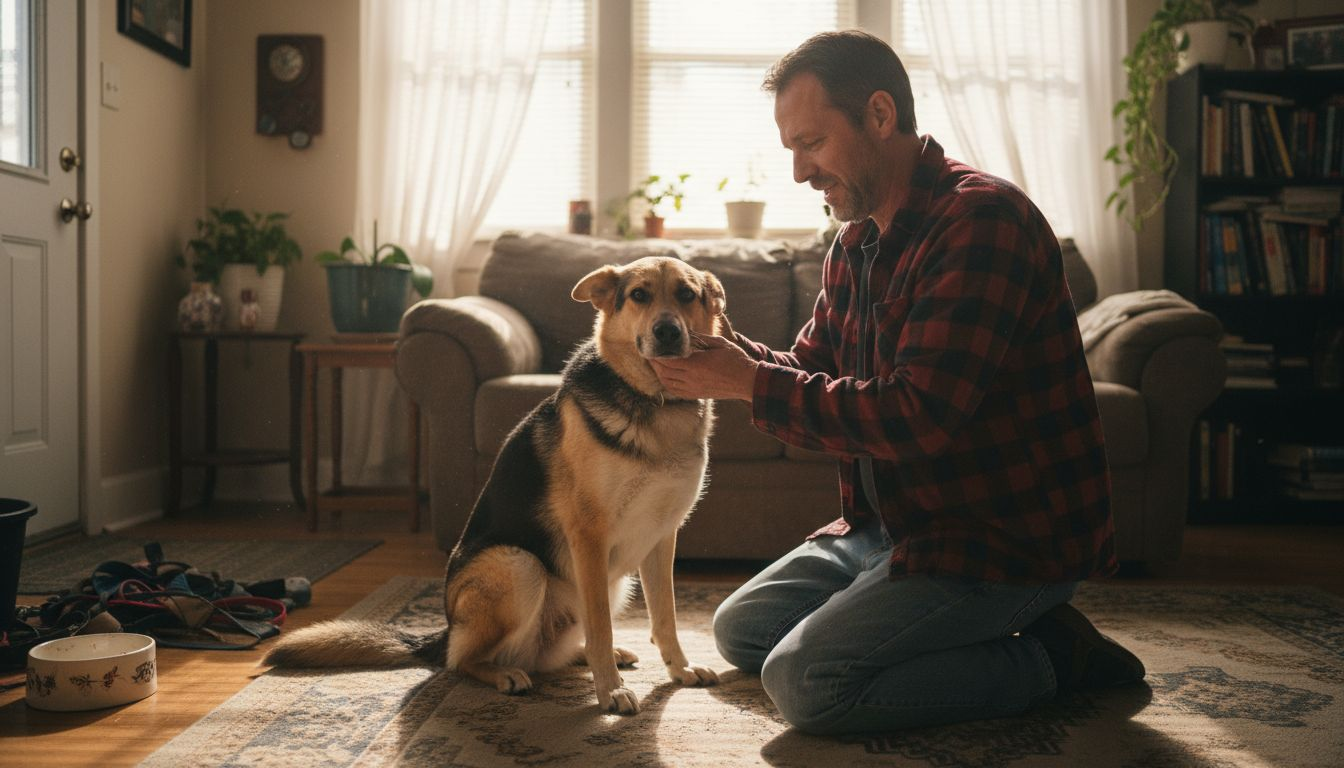
Behavioral assessments enable customized trust-building plans tailored to your specific dog’s needs. A professional evaluation identifies whether your dog responds better to food rewards, play, or quiet companionship. Some rescue dogs crave physical affection immediately, while others need weeks before accepting touch.
Communication aids significantly enhance mutual understanding during the trust-building phase. Tools like communication devices designed for rescue dogs help owners recognize subtle stress signals before they escalate into panic or aggression. When you accurately read your dog’s emotional state, you can adjust your approach in real time.
Trust-building practices to implement daily:
- Maintain consistent daily schedules for all activities
- Respect your dog’s body language signals for space or rest
- Hand-feed portions of meals to create positive associations
- Practice calm greetings without overwhelming excitement
- Provide secure spaces where your dog can retreat freely
- Engage in parallel activities like reading nearby without demanding interaction
Consistent routines foster predictability and security that anxious rescue dogs crave. When feeding, walking, and sleeping happen at similar times daily, your dog’s nervous system relaxes. Predictability means safety. Understanding why communication training matters helps you recognize how clear signals between you and your dog accelerate trust development.
Remember that trust building isn’t linear. Your rescue dog may show progress one week and regress the next when stressed by environmental changes. These setbacks are normal, not failures. Maintain consistency and patience through fluctuations.
Managing anxiety and fear in rescue dogs
Anxiety and fear drive most behavioral problems in rescue dogs, making effective management essential for long-term success and your dog’s quality of life. Predictable routines reduce separation anxiety behaviors by 35%, demonstrating how environmental management powerfully impacts emotional regulation.
Identifying specific anxiety triggers requires careful observation. Keep a log noting when anxious behaviors occur: time of day, preceding events, environmental factors like sounds or visitors. Patterns emerge quickly, revealing whether your dog fears abandonment, loud noises, strangers, or specific locations.
Gradual desensitization reduces sensitivity to triggers through controlled, positive exposure. For noise phobias, play recordings of triggering sounds at very low volume while engaging in enjoyable activities. Slowly increase volume over weeks as your dog remains calm, building tolerance without triggering panic.
Counter-conditioning pairs anxiety triggers with positive experiences, changing your dog’s emotional response. If your dog panics when you pick up keys (signaling departure), randomly pick up keys throughout the day without leaving, immediately offering high-value treats. Eventually, keys predict treats, not abandonment.
Step-by-step anxiety management protocol:
- Document triggers and anxiety symptoms for one week minimum
- Establish rock-solid daily routines for feeding, walking, and rest
- Create a safe space (crate or room) where your dog can self-soothe
- Practice departure cues without actually leaving initially
- Gradually increase alone time starting with 30-second absences
- Reward calm behavior during exposure exercises immediately
- Adjust intensity if your dog shows distress signs
Pro Tip: Leave recently worn clothing in your dog’s safe space. Your scent provides comfort during alone time, reducing separation anxiety intensity naturally.
“Patience transforms anxiety from an insurmountable wall into a series of small, manageable steps. Each successful exposure builds resilience your rescue dog will carry forward.”
Specific strategies for separation anxiety include:
- Avoid dramatic departures or arrivals that heighten emotional intensity
- Provide puzzle toys or frozen treats to occupy your dog during absences
- Consider calming supplements like L-theanine after veterinary consultation
- Practice leaving through different doors to reduce predictability anxiety
- Use white noise or calming music to mask environmental sounds
Understanding practical solutions for training challenges helps you troubleshoot when standard approaches don’t yield expected results. Some rescue dogs need medication alongside behavioral modification for severe anxiety; consult your veterinarian about anti-anxiety options if progress stalls completely.
Success requires patience and realistic expectations. Anxiety reduction happens gradually, with setbacks during stressful periods completely normal. Celebrate every small improvement rather than focusing on remaining challenges.
Training tools and technology to support behavior management
Innovative communication devices and thoughtfully selected training tools amplify traditional methods, helping rescue dog owners bridge understanding gaps that often lead to frustration. Technology doesn’t replace hands-on training but enhances it by providing clearer feedback loops between you and your dog.
Communicative devices like iPupPee improve owner-dog interaction by giving dogs a simple way to signal needs. When your rescue dog can press a button to indicate bathroom needs, thirst, or desire for attention, communication becomes clearer for both parties. This reduces frustration that often triggers anxiety or undesirable behaviors.
Technology helps read dogs’ signals accurately by creating consistent communication pathways. Many rescue dogs struggle to express needs appropriately because previous environments punished or ignored their attempts. Communication devices establish new, reliable patterns where your dog’s signals consistently produce positive responses.
These tools integrate seamlessly with positive reinforcement training. When your dog uses a communication device successfully and you respond appropriately, you reinforce that clear communication works. This builds confidence while teaching your dog that expressing needs properly gets them met.
Benefits of communication technology:
- Reduces anxiety by giving dogs control over basic needs
- Prevents destructive behaviors stemming from frustrated communication
- Enhances safety by enabling clearer distress signals
- Decreases owner frustration from guessing what dogs need
- Accelerates training progress through clearer feedback
- Supports independence for dogs and owners with special needs
Customer testimonials consistently highlight improved bonding after implementing communication training devices. Owners report fewer behavioral incidents and stronger connections because both parties understand each other better. This mutual understanding forms the foundation for advanced behavior management.
Communication tools designed specifically for rescue dogs account for trauma histories and anxiety patterns common in this population. Features emphasizing simplicity and consistency work best for dogs still building confidence in their new environments.
Accessible tools fit various training needs and owner capabilities. Whether you live alone, have mobility limitations, or simply want clearer communication pathways, modern devices adapt to different household situations. The key is selecting tools that complement your existing training approach rather than complicating it.
Implementing behavior management techniques at home
Daily execution determines whether training techniques translate into lasting behavior change or remain theoretical concepts that never quite stick. Creating the right home environment and maintaining consistent practices ensure rescue dogs generalize learned behaviors across all situations.
Establish a consistent daily routine covering all major activities. Feed at the same times, walk similar routes at predictable hours, and maintain regular sleep schedules. This structure reduces anxiety by eliminating uncertainty about when needs will be met. Your dog relaxes when they trust the pattern.
Provide environmental enrichment that engages your dog’s mind and body. Puzzle feeders, rotating toy selection, and scent games prevent boredom that often manifests as destructive behavior. Mental stimulation tires dogs as effectively as physical exercise while building problem-solving confidence.
Create designated safe spaces where your dog can retreat when overwhelmed. This might be a crate, specific room, or corner with a bed and familiar items. Never disturb your dog in their safe space; it must remain a guaranteed sanctuary from demands or stress.
Regular exercise reduces stress hormones and excess energy that fuel anxiety and reactivity. Most rescue dogs need 60-90 minutes of physical activity daily, split across multiple sessions. Walking, fetch, or swimming provide outlets for nervous energy while strengthening your bond.
Pro Tip: Take photos or videos weekly to document progress visually. Changes happen gradually, and visual records reveal improvements you might miss day-to-day, keeping motivation high during challenging periods.
Home implementation checklist:
- Post family training rules in common areas ensuring everyone uses consistent commands
- Keep training treats in multiple rooms for immediate reinforcement opportunities
- Remove or secure items that trigger resource guarding or anxiety
- Designate quiet zones away from household traffic and noise
- Schedule training sessions at times when your dog is alert but not overstimulated
- Review progress weekly and adjust techniques based on results
Monitor progress through behavior logs tracking frequency and intensity of problem behaviors. Note improvements in duration of calm behaviors, response times to commands, and reduction in anxiety signals. Quantifying progress prevents discouragement when change feels slow.
Celebrate successes publicly with your dog through enthusiastic praise, play, or special treats. Your excitement reinforces that you notice and value their efforts. This positive feedback loop motivates continued cooperation and strengthens your relationship.
Practical solutions for common challenges help troubleshoot when home implementation hits roadblocks. Environmental factors you overlook might undermine training efforts, so periodic reassessment ensures your home setup supports rather than sabotages behavior goals.
Summary comparison and situational recommendations
Matching behavior management approaches to your specific situation and your rescue dog’s unique challenges maximizes success while conserving your limited time and energy. Different behavioral issues require tailored strategies for optimal results.
| Approach | Pros | Cons | Best For | Expected Timeline |
|---|---|---|---|---|
| Positive Reinforcement | Builds trust, reduces fear, sustainable | Requires consistency, slower initial progress | All rescue dogs, anxiety, trust issues | 6-12 weeks for basic commands |
| Desensitization | Addresses root causes, lasting results | Time-intensive, requires patience | Fear-based behaviors, phobias | 8-16 weeks depending on severity |
| Counter-Conditioning | Changes emotional responses, prevents triggers | Complex implementation, needs timing | Separation anxiety, fear aggression | 12-20 weeks with consistent practice |
| Communication Devices | Improves understanding, reduces frustration | Requires training to use properly | Communication gaps, safety concerns | 2-4 weeks for basic usage |
| Routine Establishment | Easy to implement, broadly effective | Limited impact on severe trauma alone | General anxiety, adjustment period | 3-6 weeks to see behavioral changes |
For anxiety-dominant rescue dogs, prioritize routine establishment combined with gradual desensitization. These dogs need predictability first, then careful exposure to triggers. Expect three to four months before significant anxiety reduction becomes apparent.
Rescue dogs showing fear-based aggression require professional assessment alongside positive reinforcement methods. Never attempt to punish aggression, as this worsens the underlying fear driving the behavior. Timeline extends to six months or longer for noticeable improvements.
Trust-building challenges respond best to patience, consistent positive interactions, and communication tools that reduce misunderstandings. Focus less on obedience training initially and more on relationship development. Trust typically solidifies around the three-month mark with dedicated effort.
Situational recommendations:
- First-time rescue owners: Start with basic training foundations before advanced techniques
- Limited time available: Focus on routine consistency and short training bursts throughout the day
- Multiple behavioral issues: Address anxiety first, as it often drives other problems
- Severe trauma history: Expect longer timelines and consider professional behavioral support
- Living alone or with disabilities: Communication devices provide significant independence benefits
Realistic expectations prevent owner burnout. Most rescue dogs show meaningful progress within three months but continue improving for a year or more. Early wins build momentum, while patience through plateaus ensures long-term success.
How iPupPee supports your rescue dog’s behavior journey
Transforming behavior management theory into daily practice becomes simpler when you have tools designed specifically for rescue dog challenges. iPupPee offers innovative communication devices that bridge the understanding gap between you and your rescue dog, reducing frustration during training while enhancing safety and bonding.

These communication tools support consistent, positive behavior management by giving your dog clear ways to express needs. When your rescue dog can reliably signal bathroom requirements, thirst, or distress, you respond appropriately every time. This consistency builds the trust and security anxious rescue dogs desperately need. Customer stories highlight how iPupPee devices improve safety and strengthen bonds between rescue dogs and their owners, particularly for individuals living alone or managing mobility challenges. Discover why communication training accelerates behavior management success. Explore specialized solutions for rescue dogs that complement your training efforts and help your dog thrive.
FAQ
What if my rescue dog shows aggression despite training?
Aggression often stems from fear or anxiety rather than dominance. Continue positive reinforcement while avoiding any punishment that increases stress. Consult a certified professional behaviorist for persistent aggression, as safety requires expert assessment and customized intervention plans.
How long does it typically take to see behavior improvements?
Most rescue dogs show noticeable progress within three months of consistent training and routine establishment. Patience and daily practice remain critical for lasting results. Some behaviors rooted in severe trauma require six months or longer depending on your dog’s history and stress tolerance.
Can communication devices like iPupPee replace traditional training?
Communication devices enhance understanding between you and your dog but work alongside positive reinforcement training rather than replacing it. These tools reduce frustration and improve safety by creating clear communication pathways. They complement behavior management techniques, making training more effective overall.
Should I expect setbacks during behavior training?
Setbacks are completely normal and expected with rescue dogs. Stressful events, environmental changes, or even growth phases can trigger temporary regression. Maintain consistency through these fluctuations rather than abandoning proven techniques. Progress resumes once your dog’s stress levels normalize again.
Recommended
- Rescue Dog Training 2025: Step-by-Step Success for All Owners – iPupPee
- Dog Rescue Training Challenges: Practical Solutions for Success – iPupPee
- Dog Communication for Rescue – Improving Safety and Trust – iPupPee
- Dog Rescue Training: Keys to Success for Owners & Handlers 2025 – iPupPee
- Rebuilding Trust After Betrayal: A Step-by-Step Process - Mastering Conflict