

Start by turning one meal into a 10- to 15-minute scatter feeding session or a slow sniff walk. That single swap delivers more mental tiring than an hour of fetch, and it costs nothing. Aim for daily sniffing and puzzle feeding sessions of moderate duration, then rotate categories weekly so the effect doesn’t wear off.
TL;DR:
- Scatter feeding and sniff walks offer high mental energy burn at low effort, especially when treats are hidden outdoors or in challenging setups.
- Scent work provides stronger mood benefits than obedience training, making it a crucial part of enrichment for positive behavioral impacts.
- DIY enrichment tools like muffin-tin puzzles and cardboard dig boxes can be built in under 10 minutes, maintaining engagement without extra cost.
- A daily routine of about 20 minutes each of sniffing, puzzles, and structured play suits most dogs, but should be adjusted for age and drive.
- Proper supervision and hygiene are essential to ensure safe enrichment experiences, with regular toy rotation and activity modification based on individual dog signals.
Table of Contents
- What Is Dog Enrichment, and Why Does It Matter?
- Which Enrichment Categories Actually Move the Needle?
- DIY Enrichment Setups You Can Build in Under 10 Minutes
- How Do You Build a Daily Enrichment Schedule?
- How Should Enrichment Change With Age and Drive?
- What Safety Rules Should You Follow?
- Where Does This Advice Come From?
- A Small Habit Worth Testing First
- How a Communication Device Fits Into Your Dog’s Routine
- Sources
- FAQ
What Is Dog Enrichment, and Why Does It Matter?
Enrichment means letting a dog do the things its nose, brain, and body evolved to do: sniff, forage, chew, and solve small problems. A dog left with a bowl of food and a fenced yard gets calories and space, not much else.
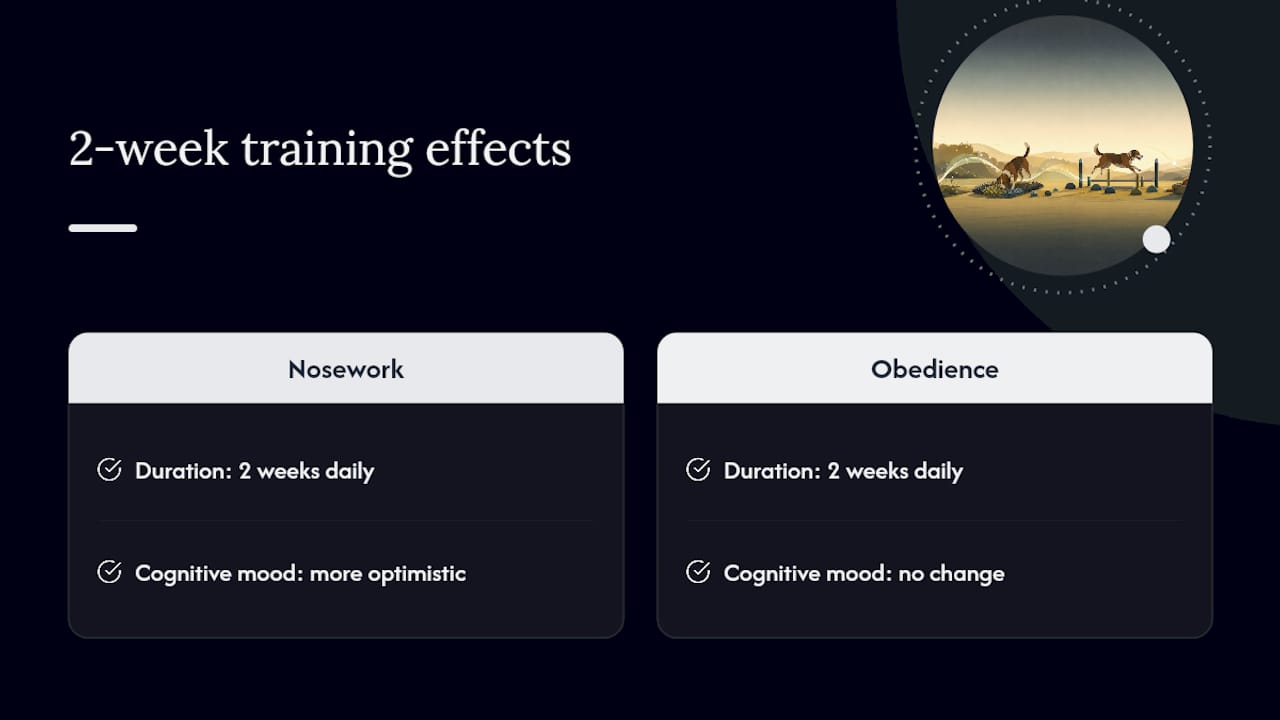
The evidence for prioritizing the nose specifically is stronger than most owners realize. A 2019 study found that dogs given two weeks of daily nosework training showed more optimistic behavior on a cognitive test than dogs given two weeks of standard obedience training. Obedience work still matters, but it didn’t move the needle on mood the way scent work did.
Enrichment isn’t a replacement for a walk. It’s what turns a walk, a meal, or twenty minutes on the living room floor into something that actually tires out a dog’s brain, which is usually what’s missing when a dog seems “bored” despite plenty of exercise.
Which Enrichment Categories Actually Move the Needle?
The ASPCA groups canine enrichment into a few practical buckets: food-based, scent-based, cognitive puzzles, physical play, and social or environmental variety. You don’t need all five every day, but hitting three or four across a week keeps a dog from getting stuck in one behavior pattern.
- Feeding and foraging: scatter feeding on grass or a towel, muffin-tin puzzles, slow-feed bowls. Low effort, works for almost every dog.
- Scent and sniff work: sniff walks, scent trails hidden around a room, “find it” games with treats. This is the highest return for the lowest effort of anything on this list.
- Cognitive puzzles: treat-dispensing toys, hide-and-seek with a favorite toy, short trick-training sessions. AAHA recommends short training sessions and scavenger hunts as go-to indoor options when weather or time keeps you inside.
- Physical play: structured fetch, tug with rules, flirt pole for dogs with strong chase drive.
- Social and environmental: new walk routes, meeting a calm dog, rearranging furniture so a house dog has new smells to investigate.
Pro Tip: If you only have five minutes, skip the toy box and hide a handful of kibble in the grass instead. Sniffing burns more mental energy per minute than almost any toy you own.
DIY Enrichment Setups You Can Build in Under 10 Minutes
You don’t need a shopping trip. Most of the best enrichment tools are already in a kitchen drawer or recycling bin, and the Sniffspot blog has documented these DIY builds as consistently effective, low-cost options.
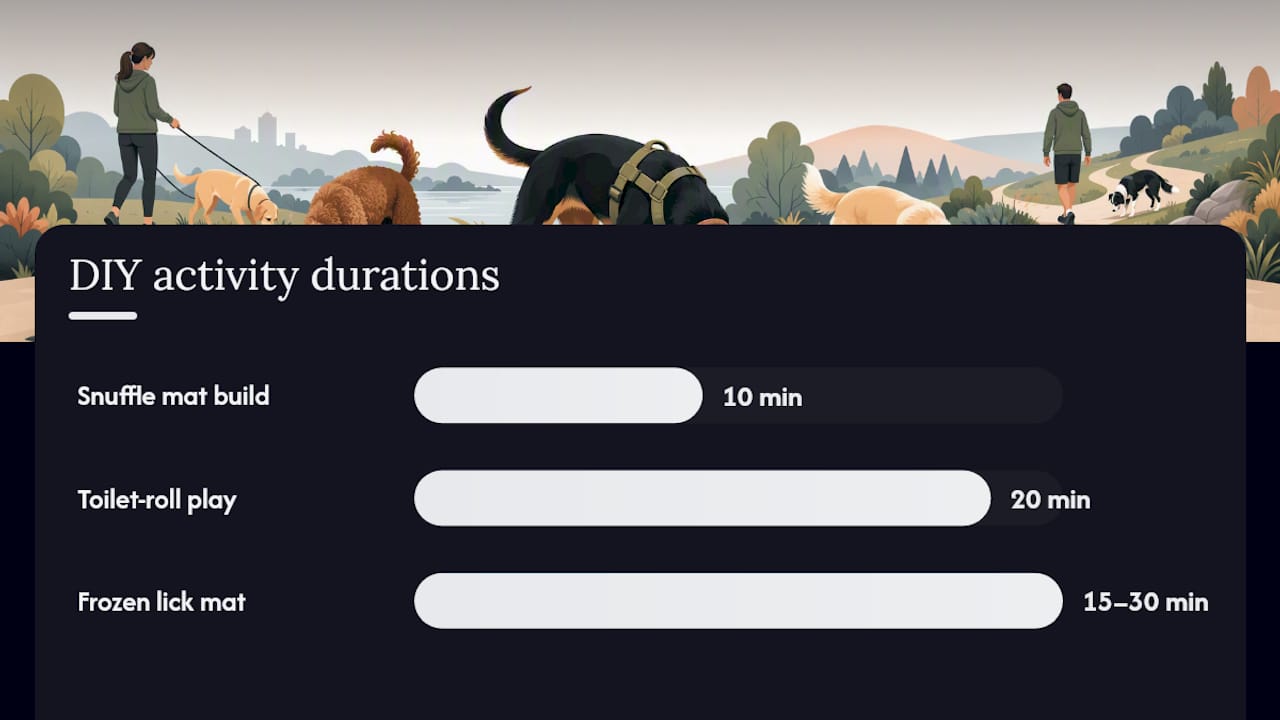
- Snuffle mat: knot fleece strips into a rubber mat or a dish rack, sprinkle kibble through the folds. Ten minutes to build, reusable for months.
- Muffin tin puzzle: drop treats into the cups, cover each one with a tennis ball. Dogs have to nose the balls out one at a time.
- Cardboard dig box: fill a shallow box with crumpled paper or empty toilet paper rolls, hide treats throughout. Best done outdoors or on a mat you don’t mind getting shredded.
- Toilet paper roll foraging: fold the ends closed around a treat. Cheap, disposable, and great for a dog home alone for twenty minutes.
- Frozen lick mat or stuffed chew toy: smear plain yogurt or wet food into the grooves and freeze overnight. This buys 15 to 30 minutes of calm, focused chewing.
Scale difficulty up by hiding treats deeper or adding a second layer of obstacles once your dog solves the easy version too fast. Keep cardboard and paper-based setups outdoors or on a washable mat, since shredded material makes a mess indoors. Toss soggy cardboard and wash mats and lick toys after each use to avoid mold.
Pro Tip: Save two or three “boredom buster” builds in a bin by the door. When you’re short on time, grab one instead of starting from scratch.
How Do You Build a Daily Enrichment Schedule?
A simple baseline works better than an elaborate plan you’ll abandon in a week: About 20 minutes each of sniffing, puzzle or scatter feeding, and structured play or training. That’s the 20/20/20 rule, and it fits into a normal day without turning into a second job.
Three quick templates to steal:
- Busy owner: morning sniff walk before work, frozen lick mat at the door when you leave, five minutes of trick training after dinner.
- Work-from-home: scatter-feed breakfast on the floor, short puzzle toy during a midday break, evening walk with a new route.
- High-energy dog: structured fetch or flirt pole session in the morning, puzzle feeder for lunch, sniff walk in the evening to wind down before bed.
Rotate toys and puzzles every several days to a week. A puzzle a dog has mastered stops being a puzzle, and novelty is most of what keeps enrichment working. The easiest long-term habit is replacing the food bowl with a puzzle feeder, which adds real cognitive work to a meal you were serving anyway, at no extra time cost.
How Should Enrichment Change With Age and Drive?
A bored, destructive adolescent dog and an anxious senior need almost opposite plans. Watch for the signals: pacing and shredding things points to under stimulation, while a dog fixated on squirrels or joggers is telling you it has unmet chase drive.
- Puppies: short sessions, five minutes at a time, gentle scent games and easy puzzles to build confidence without frustration.
- Moderate adult dogs: the full 20/20/20 mix works well as a starting point.
- High prey-drive dogs: lean on handler-controlled outlets like a flirt pole or structured fetch rather than unstructured chase, which can reinforce the wrong habits.
- Senior or anxious dogs: favor scent work and slow feeding over anything high-arousal. Sniffing calms; fetch often revs a nervous dog up further.
If a dog seems anxious, obsessive, or aggressive around enrichment toys rather than engaged, that’s a signal to bring in a certified trainer or a structured nosework class instead of troubleshooting alone.
What Safety Rules Should You Follow?
Enrichment goes wrong fastest when nobody’s watching. Supervise any new toy or chew the first several times, and skip small, brittle items for dogs that chew hard and fast.
- Stop an activity if you see labored breathing, gagging, or a dog trying to swallow large pieces.
- Choose chews sized for your dog’s mouth. Something that disappears in one bite is a choking risk.
- Wash lick mats, muffin tins, and chew toys after each use, especially anything that held wet food or yogurt.
- Store frozen treats no longer than you’d store the ingredients on their own, and toss anything that smells off.
General vet and welfare guidance from groups like the ASPCA backs up the basic rule: new activity, direct supervision, every time. For more on fitting safety checks into daily walks and play, this rundown of daily dog exercise safety tips covers the exercise side of the equation.
Where Does This Advice Come From?
Ipuppee’s dog mental stimulation guides and pet safety resources cover training and device use in more depth for owners who want to go further.
A Small Habit Worth Testing First
Swap one meal a day for a puzzle feeder for two weeks and watch what changes. Owners who track it usually notice calmer evenings before they notice anything else.
— Andrew
How a Communication Device Fits Into Your Dog’s Routine
Enrichment handles the boredom side of the equation. It doesn’t solve what happens when your dog needs you and you’re in another room, or when an aging or anxious dog needs a way to signal distress. That’s a separate problem, and it’s the one Ipuppee’s alert device is built around.
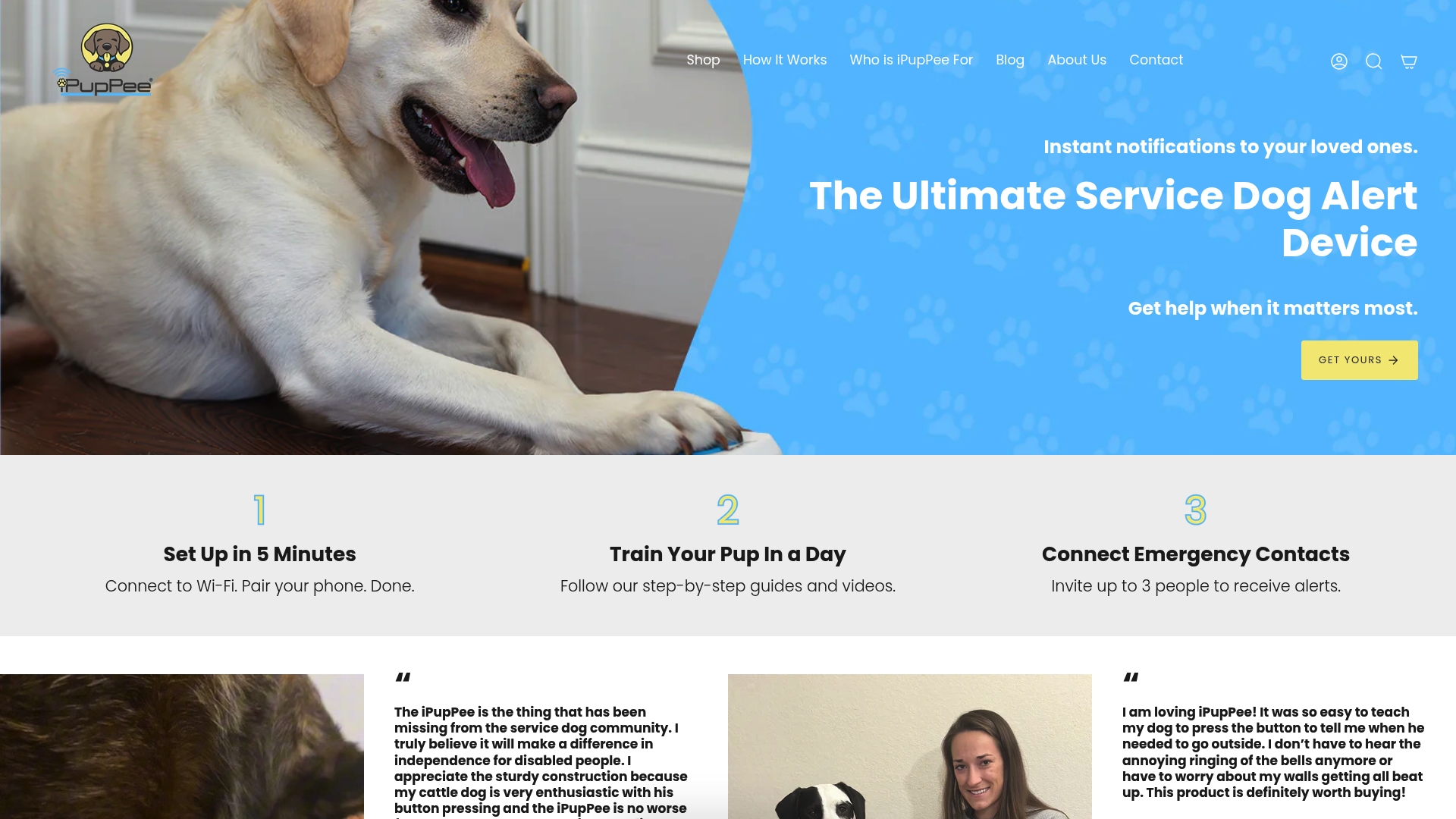
The iPupPee device lets a dog press a button to send you a direct alert, complete with live video and two-way audio, so you know what’s happening before you even walk in. It’s a natural complement to a solid enrichment routine, not a substitute for one: a dog working a frozen lick mat during your work call still benefits from a way to reach you if something goes wrong. For service dog handlers, seniors living alone, or anyone managing a dog with separation anxiety, that layer of communication closes a gap no puzzle toy addresses. Check out the iPupPee device and training resources to see whether it fits your household.
Sources
For readers who want the primary sources behind this guide:
- Allowing dogs to sniff helps them think positively — Psychology Today
- Canine DIY Enrichment — ASPCA
- Boredom busters: indoor enrichment for dogs — AAHA
FAQ
How Much Enrichment Does a Dog Need Each Day?
Aim for roughly 20 minutes of sniffing, 20 minutes of puzzle or scatter feeding, and 20 minutes of structured play or training, adjusted for your dog’s age and energy.
What’s the Single Best Enrichment Activity to Start With?
Scatter feeding or a slow sniff walk, since a 2019 study tied nosework to more optimistic behavior on cognitive tests compared to standard obedience training.
How Often Should I Rotate Toys and Puzzles?
Rotate every five to seven days so puzzles stay novel; a toy your dog has fully mastered stops offering much mental challenge.
Can Enrichment Replace Daily Walks?
No. Enrichment adds mental work on top of physical exercise, and the two address different needs, so a well-rounded routine includes both.
Are Store-Bought Puzzle Toys Necessary, or Can I Use DIY Options?
DIY setups like muffin-tin puzzles, snuffle mats, and frozen lick mats work as well as store-bought versions for most dogs and cost far less.
How Can I Tell if My Dog Needs More or Different Enrichment?
Pacing, destructive chewing, or fixation on prey-type objects usually signals unmet needs; adjust the mix of categories or add handler-controlled play before assuming it’s a training problem.