

TL;DR:
- Dog sensory enrichment involves intentionally stimulating a dog’s five senses to promote mental engagement, reduce anxiety, and support natural behaviors through safe, varied activities. It emphasizes targeting smell, sound, touch, taste, and sight, with tools like scent games and textured toys that foster cognitive health across all ages. Consistent, choice-led enrichment improves emotional well-being and should be tailored to each dog’s environment and sensitivities.
Dog sensory enrichment is the purposeful stimulation of a dog’s five senses to build mental engagement, reduce anxiety, and encourage natural behaviors through safe, varied activities. It goes far beyond giving your dog a toy to chew. True sensory enrichment targets smell, sound, touch, taste, and sight in ways that mirror what dogs would naturally seek out in the wild. Tools like KONG Classic, snuffle mats, and scent games are among the most effective starting points. Research confirms that consistent cognitive enrichment reduces error rates on learning tasks by about 30% in dogs. That number tells you this is not optional entertainment. It is a core part of keeping your dog mentally healthy.
What is dog sensory enrichment across the five senses?
Each of a dog’s senses offers a distinct pathway for mental stimulation. Understanding which sense does what helps you build a well-rounded enrichment plan rather than defaulting to the same activity every day.

Smell is the dominant sense in dogs, and it deserves the most attention. Sniffing releases feel-good brain chemicals and actively reduces stress and anxiety. A dog processing a scent trail is doing the canine equivalent of solving a puzzle. Scatter feeding in grass, hiding treats under cups, or introducing non-food scents like lavender or oregano all count as olfactory enrichment.
Touch covers texture variety. Walking across different surfaces like gravel, grass, sand, and rubber mats gives your dog tactile input that a carpeted apartment simply cannot provide. Safe objects with varied textures, such as crinkle toys, rubber chews, and fleece tug ropes, also stimulate the nervous system in low-stress ways.
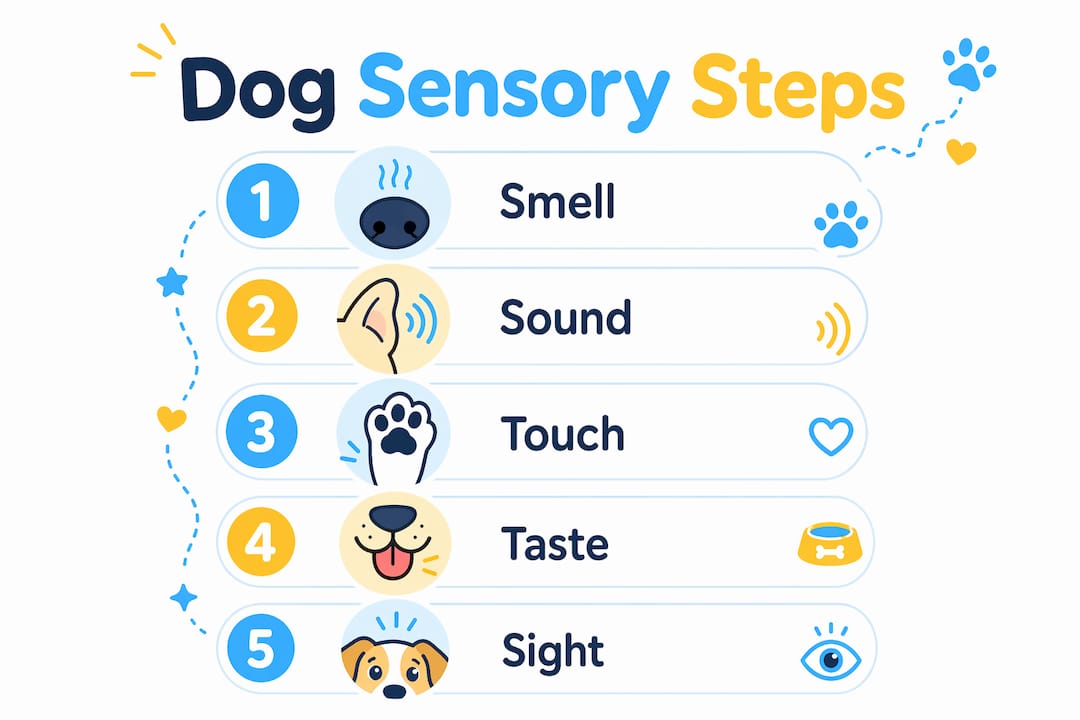
Sound requires the most caution of all five senses. Classical music and white noise benefit many dogs, while loud or unpredictable sounds can trigger anxiety. The goal is predictable, low-volume auditory input that the dog can associate with calm.
Taste and sight round out the picture. Lick mats loaded with peanut butter or plain yogurt deliver taste-based enrichment while slowing eating and reducing gulping. Visual enrichment can be as simple as placing a bird feeder outside a window your dog can safely watch.
- Olfactory: scatter feeding, snuffle mats, scent trails with lavender or oregano
- Tactile: textured surface walks, crinkle toys, rubber chews, fleece tug ropes
- Auditory: classical music, white noise, low-volume nature sounds
- Taste: lick mats, KONG Classic stuffed with frozen food, slow feeders
- Visual: window bird feeders, nature videos designed for dogs, garden watching
Pro Tip: Introduce one new sense-based activity per week rather than all five at once. This lets you observe your dog’s response clearly and identify what they genuinely enjoy.
How does sensory enrichment benefit dogs’ minds and emotions?
The benefits of dog enrichment extend well beyond keeping a bored dog occupied. The science points to measurable improvements in both cognitive function and emotional regulation.
Structured 5-day cycles of novel challenges reduce stereotypical behaviors significantly in dogs. Stereotypical behaviors, like repetitive pacing, excessive licking, or tail chasing, are signs of an understimulated nervous system. Enrichment addresses the root cause rather than the symptom.
“Allowing dogs to walk away or disengage is part of cognitive engagement and emotional well-being.” — Psychology Today
Older dogs gain the most from consistent mental work. Dogs aged 8–12 years show significant benefits from regular cognitive enrichment, particularly in managing early cognitive decline. Think of it as keeping the brain active the same way crossword puzzles work for aging humans. The principle is identical.
Choice-led participation is the factor most owners overlook. Forcing a dog to engage with an enrichment activity, or rewarding compliance when the dog clearly wants to disengage, undermines the entire benefit. The dog’s ability to choose whether to participate is itself a form of cognitive and emotional exercise. Respecting that choice builds trust and reduces anxiety over time.
Introducing non-food scents like lavender or oregano increases resting time and decreases barking. That is a direct behavioral improvement you can observe within a single session. The importance of dog mental stimulation becomes obvious when you see a previously reactive dog settle quietly after a 15-minute scent activity.
What are the best dog sensory play ideas for home and outdoors?
Practical dog sensory play ideas do not require expensive equipment or a large yard. Most of the most effective activities use items you already own.
- The “Find It” scent game. Hide small treats around a room before letting your dog in. Start with easy hiding spots and gradually increase difficulty. This targets smell and problem-solving simultaneously.
- Snuffle mat feeding. Replace your dog’s bowl with a snuffle mat at least three times a week. The foraging motion engages the nose and slows eating, which reduces digestive stress.
- Tactile surface trail. In your backyard or a park, walk your dog across at least three different surfaces in one outing. Grass, gravel, a wooden bridge, and wet pavement each deliver distinct tactile input.
- Frozen KONG Classic. Stuff a KONG Classic with a mix of kibble, peanut butter, and plain pumpkin puree, then freeze it overnight. The combination of taste, smell, and physical manipulation keeps dogs engaged for 20–30 minutes.
- Sniffari walks. Let your dog lead the walk entirely by their nose. Fully attentive, slow-paced sniff walks generate more mental stimulation and satisfaction than long, rushed walks. A 20-minute sniffari tires a dog more thoroughly than a 45-minute power walk.
- Lick mat rotation. Rotate between peanut butter, plain yogurt, mashed banana, and wet food on a lick mat. Novelty in taste keeps the activity engaging rather than routine.
- Calming sound sessions. Play classical music or a nature sounds playlist at low volume during rest periods. Pair the sound with a calm activity like chewing to build a positive association.
Pro Tip: Rotate your dog’s toy collection weekly. Enrichment novelty fades within 2–3 days without a rotation system. Keeping 70–80% of toys out of sight at any given time sustains genuine interest.
How do you tailor enrichment to your dog’s environment and sensitivities?
Not every dog lives in a house with a yard. For dogs in urban areas with limited space, sensory enrichment is not a bonus. It is a necessity for emotional stability. An apartment dog that never gets olfactory or tactile variety is at high risk for anxiety and destructive behavior.
Adapting enrichment to your specific situation requires honest assessment of three things: your dog’s sensory sensitivities, your available space, and your daily schedule.
| Environment | Best Enrichment Approach | Key Caution |
|---|---|---|
| Urban apartment | Snuffle mats, lick mats, indoor scent games | Avoid loud sound toys in shared buildings |
| Suburban home with yard | Tactile trails, garden sniffaris, outdoor scatter feeding | Check yard for toxic plants before scent games |
| Rural or large property | Off-leash sniff exploration, varied terrain walks | Monitor for ingestion of wild plants or fungi |
| Noise-sensitive dog | White noise, low-volume classical music, scent-only activities | Never use squeaky or unpredictable sound toys |
| Senior dog (8+ years) | Short, frequent cognitive games, gentle tactile activities | Avoid high-impact physical enrichment |
Auditory enrichment deserves special attention for noise-sensitive dogs. Sound enrichment should be low-volume and predictable to avoid distress. Start with five minutes of classical music at a barely audible level and observe your dog’s body language. Ears pinned back, yawning, or leaving the room are clear signals to stop.
Safety is non-negotiable across all enrichment types. Always verify that any scent used in enrichment activities is non-toxic to dogs. Lavender and oregano are generally safe in small amounts, but essential oil concentrations can be harmful. Use dried herbs or diluted scents rather than concentrated oils. For urban dog safety considerations specific to city environments, the risks multiply with traffic, pollution, and limited green space.
Respecting your dog’s disengagement is also a safety measure. If a dog chooses to stop engaging with an enrichment activity, that choice itself provides cognitive and emotional benefit. Forcing continuation creates negative associations that make future enrichment harder.
Key takeaways
Dog sensory enrichment works because it targets the brain directly through natural sensory pathways, reducing anxiety, improving cognition, and building emotional resilience across every life stage.
| Point | Details |
|---|---|
| Smell is the priority sense | Start with scent games and snuffle mats before any other enrichment type. |
| Choice matters more than compliance | Let your dog disengage freely; forced participation cancels the cognitive benefit. |
| Rotate toys weekly | Novelty fades within 2–3 days, so keep 70–80% of toys out of rotation at any time. |
| Older dogs need it most | Dogs aged 8–12 years show measurable cognitive gains from consistent enrichment. |
| Adapt to your environment | Urban dogs, noise-sensitive dogs, and seniors each need a tailored enrichment approach. |
The enrichment mistake most owners make
I have watched hundreds of owners set up elaborate enrichment stations, buy every snuffle mat on the market, and then wonder why their dog still seems anxious or disengaged. The problem is almost never a lack of equipment. It is a lack of presence.
The most common error I see is treating enrichment as a task to complete rather than an experience to share. Owners toss a KONG across the room and immediately check their phone. They clip the leash on for a sniff walk and spend 20 minutes scrolling while their dog pulls toward every lamppost. That is not enrichment. That is supervised boredom.
The second mistake is confusing quantity with quality. Many owners mistake enrichment for adding more activities instead of providing slow, choice-driven sensory opportunities. A single 15-minute scent game where you are fully present and letting your dog lead does more for their mental health than three rushed activities crammed into an afternoon.
Start with one activity. Watch your dog’s body language the entire time. Notice what makes their tail relax, what makes their nose go into overdrive, and what makes them walk away. That observation is the real work of enrichment. The tools are just props. You can also explore dog cognitive training methods that complement sensory work and deepen the mental challenge over time.
— Andrew
How Ipuppee supports your dog’s mental well-being
Ipuppee builds products and resources specifically for dog owners who take their pet’s cognitive and emotional health seriously. Whether you are managing a service dog’s daily routine, supporting a rescue dog through anxiety, or simply giving a senior dog the mental engagement they need, Ipuppee has tools and guidance designed for real-world situations.
The Ipuppee blog covers practical enrichment strategies, home setup ideas for dogs, and communication tools that support dogs at every life stage. The iPupPee alert device itself supports sensory communication between dogs and their owners, which is especially valuable for dogs with special needs or owners with disabilities. Visit Ipuppee to explore the full range of products and resources built around your dog’s well-being.
FAQ
What is dog sensory enrichment in simple terms?
Dog sensory enrichment is the deliberate use of activities and objects to stimulate a dog’s smell, sound, touch, taste, and sight. The goal is mental engagement, stress reduction, and support for natural behaviors.
How often should i do sensory enrichment with my dog?
Daily enrichment is ideal, even if sessions are short. A 15-minute scent game or a slow sniffari walk provides meaningful mental stimulation and reduces anxiety-driven behaviors.
What are the best sensory toys for dogs?
The KONG Classic, snuffle mats, lick mats, and textured chew toys are among the most effective options. Rotating these tools weekly sustains novelty and keeps your dog genuinely engaged.
Can sensory enrichment help older dogs?
Dogs aged 8–12 years benefit significantly from consistent cognitive enrichment, with research showing roughly a 30% reduction in learning task errors. Short, frequent sessions work better than long, infrequent ones for senior dogs.
Is sensory enrichment safe for noise-sensitive dogs?
Yes, with adjustments. Keep auditory enrichment low-volume and predictable, and focus primarily on scent and tactile activities. Always watch for signs of overstimulation like pinned ears, yawning, or leaving the area.