

TL;DR:
- Communication gaps between humans and dogs often occur due to environmental noise, inconsistent signals, and misinterpreted body language. Dogs respond more to tone, rhythm, and full-body cues than to words alone, making clarity and consistency essential. Haptic technology offers new ways to bridge communication barriers, especially in noisy or distance-challenged situations, but fundamental understanding remains vital.
Dog communication barriers are the gaps that arise when human signals fail to reach dogs clearly, or when owners misread what dogs are actually expressing. These barriers are not about dogs being stubborn or slow. They stem from a fundamental mismatch between how humans communicate and how dogs perceive the world. Research from 2026 confirms that audio and visual cues between handlers and dogs are far more fragile than most owners realize. Understanding where these gaps occur is the first step toward fixing them.
1. What are the most common dog communication barriers?
The biggest dog communication barriers fall into three categories: environmental interference, human inconsistency, and signal misinterpretation. Each one quietly undermines the connection between you and your dog every day.
- Environmental noise drowns out verbal commands. A busy street, a crowded dog park, or a loud household can make your voice functionally invisible to your dog.
- Distance and sightlines break visual cues. Hand signals and body gestures only work when your dog can see you clearly.
- Human vocal inconsistency confuses dogs. Saying “sit” in a calm tone one day and a sharp tone the next sends two different messages.
- Isolated signal misreading leads owners astray. A tail wag does not always mean happiness. Interpreting single cues in isolation is one of the most common mistakes owners make.
Pro Tip: Before assuming your dog is ignoring you, check for hidden obstacles. Noise, distance, or a blocked sightline may be the real problem, not your dog’s attitude.
2. How do stacked body language signals create communication challenges?
Dogs do not communicate with one signal at a time. They use a combination of ear position, eye softness or hardness, tail height and movement, posture, and facial tension all at once. Missing any one of these turns a clear message into a confusing one.

A tail wag is the classic example of a misread signal. A high, stiff wag signals arousal or tension. A low, loose wag signals relaxation. The tail alone tells you almost nothing. Whole-body signals stacked together give you the full picture. This is why a dog can wag its tail and still bite.
Early stress signals are the most commonly missed. Yawning, lip licking, and looking away are not random behaviors. They are your dog telling you something is wrong. Calming signals like these must be read in context alongside other cues, not dismissed as quirks. When owners ignore these early signals, dogs escalate to growling or snapping because nothing else worked.
A practical framework used by trainers is a color-level system. Green signals mean your dog is relaxed and engaged. Yellow signals mean your dog is uncertain or mildly stressed. Red signals mean your dog is at its limit. Tracking which level your dog is at during any interaction helps you respond before things go wrong.
Pro Tip: Watch your dog’s eyes and mouth, not just the tail. Soft, blinking eyes and a loose mouth mean green. Hard, wide eyes and a tight mouth mean yellow or red.
3. Why vocal tone matters more than the words you use
Dogs do not understand English. They understand patterns, rhythm, and tone. A 2026 study from ELTE University found that dogs decoded meaning from vocal tone even when researchers used nonsense syllables. The dogs responded correctly based on the intonation pattern alone, not the actual words.
This finding has a direct practical consequence. When your commands fail, the problem is often your delivery, not your dog’s comprehension. A command spoken with rising, uncertain intonation reads as a question to your dog. The same command spoken with a calm, flat, confident tone reads as an instruction.
Consistency in timing matters just as much as tone. Vocal signal consistency shapes how reliably your dog responds. A command given half a second after the behavior you want to reinforce lands differently than one given immediately. Dogs connect the sound to whatever they were doing at the exact moment they heard it.
- Use a calm, even tone for commands. Save higher pitch for genuine praise.
- Avoid repeating commands in a frustrated voice. Each repetition with a different tone teaches your dog that the word means something different each time.
- Practice commands in a quiet environment first, then gradually add distractions.
- Record yourself giving commands. Most owners are surprised by how much their tone shifts without realizing it.
4. How haptic communication technology helps bypass traditional barriers
Haptic communication uses touch or vibration to send signals to dogs when audio and visual channels fail. A 2026 review published in PMC identified haptic signals as a reliable alternative when noise or poor visibility makes verbal and visual cues unreliable. This is not a niche concept. It has direct applications for working dogs, dogs with hearing loss, and everyday dogs in high-distraction environments.
Dogs have a well-developed sense of touch. They can distinguish between different vibration patterns and intensities, which means haptic devices can carry multiple distinct commands. A short pulse might mean “stop.” A longer pulse might mean “come.” The signal reaches the dog regardless of ambient noise or distance, as long as the device is within range.
Current applications focus heavily on working dogs, search and rescue teams, and military handlers. These are environments where audio and visual communication regularly breaks down due to chaos, noise, and distance. The technology is now becoming more accessible for everyday dog owners, particularly those with dogs that have hearing impairments or high anxiety around loud sounds.
- Vibration collars (used for communication, not correction) can deliver distinct pulse patterns for different commands.
- Touch-based reinforcement through physical contact at the right moment can substitute for a verbal marker.
- Wearable haptic devices designed for dogs are an emerging category worth watching as the research base grows.
- Research gaps remain. Long-term studies on how dogs learn and retain haptic command associations are still limited.
Pro Tip: If you are introducing a haptic device, pair each vibration pattern with a known verbal command first. This gives your dog a familiar reference point for the new signal.
5. Practical steps to overcome canine communication issues
Fixing canine communication issues does not require expensive equipment. It requires attention, consistency, and a willingness to see interactions from your dog’s perspective.
- Read the full body, not just one part. Train yourself to scan ears, eyes, mouth, tail, and posture together. A single-cue focus is the most common source of misreading.
- Regulate your own vocal tone. Before giving a command, take a breath. A calm handler produces a calm, clear signal. An anxious or frustrated tone produces noise.
- Reduce environmental interference first. Practice new commands in low-distraction settings. Add noise and movement gradually as your dog builds fluency.
- Use touch deliberately. Physical contact during training can reinforce or redirect. A gentle hand on the shoulder during a stressful moment communicates safety. Rough or sudden touch communicates threat.
- Respond to early stress signals. When your dog yawns, looks away, or licks its lips during training, spot distress early and give it space. Pushing through early stress signals teaches your dog that communication does not work.
- Consider assistive communication tools. Haptic devices, button-based alert systems, and structured training aids can fill gaps that voice and gesture cannot. Ipuppee’s iPupPee device, for example, lets dogs initiate communication through a simple button press, which shifts the dynamic from one-way commands to two-way interaction.
- Build a consistent daily routine. Dogs learn patterns. A predictable schedule reduces the cognitive load on your dog and makes your signals easier to read against a stable background.
Pro Tip: Keep a short log of when communication breaks down. Note the environment, your tone, and your dog’s body language. Patterns emerge quickly and tell you exactly where to focus.
6. Why dogs appear noncompliant when the real problem is signal failure
Noncompliance is almost always a signal failure, not a character flaw. Single-cue focus misleads handlers into assuming the dog understood and chose to ignore the command. The reality is that the signal may never have landed clearly in the first place.
Environmental context changes which sensory channel dominates. In a noisy environment, your dog may be relying primarily on visual cues. If you are giving a verbal command while facing away, the signal is effectively absent. Practitioners recommend checking for hidden physical barriers before concluding that a dog is being difficult.
This reframe matters because the response to signal failure is different from the response to defiance. Signal failure calls for clearer delivery, a better environment, or a different channel. Defiance calls for behavioral work. Confusing the two leads owners to apply the wrong solution and deepen the communication gap.
Key Takeaways
Effective communication with your dog depends on delivering clear, consistent signals across the right channels and reading your dog’s full-body responses accurately.
| Point | Details |
|---|---|
| Environmental interference is primary | Noise, distance, and poor sightlines disrupt verbal and visual cues before dogs can process them. |
| Stacked signals reveal true meaning | Read ears, eyes, tail, posture, and mouth together. Single cues mislead. |
| Tone outweighs vocabulary | Dogs respond to intonation patterns and consistency, not the words themselves. |
| Haptic signals fill critical gaps | Touch and vibration-based communication works when audio and visual channels fail. |
| Early stress signals prevent escalation | Responding to yawning, lip licking, and look-aways stops problems before they grow. |
What I have learned from watching handlers get this wrong
The most common mistake I see is owners treating communication failure as a training problem when it is actually a delivery problem. A handler will repeat a command five times, each time louder and more frustrated, and genuinely believe the dog is being stubborn. What is actually happening is that the signal is getting worse with each repetition, not better.
The second thing I have noticed is how rarely owners watch their own body language. Dogs are reading you constantly. Your tension, your posture, your eye contact, all of it carries information. A handler who is anxious about whether the dog will comply often telegraphs that anxiety through tight shoulders and a slightly raised voice. The dog picks up on the anxiety, not the command.
The research on vocal tone from ELTE University in 2026 confirmed something I had observed for years. Dogs are not listening to your words. They are listening to the shape of your voice. Once you accept that, you stop trying to find the magic word and start working on the consistency of your delivery.
Haptic technology is genuinely promising, and I am cautiously optimistic about where it goes. But the owners who will benefit most from it are the ones who already understand the basics of signal clarity. Technology does not fix a communication gap. It adds a channel. The fundamentals still apply.
Patience and empathy are not soft skills in this context. They are technical requirements. A calm, attentive handler produces better signals and reads better responses. That is not a sentiment. It is the mechanism.
— Andrew
How Ipuppee helps you close the communication gap
Dog owners who want to go deeper on these topics will find practical, research-grounded resources at Ipuppee. The blog covers everything from reading dog body language for early stress detection to proven communication methods that work in real environments.
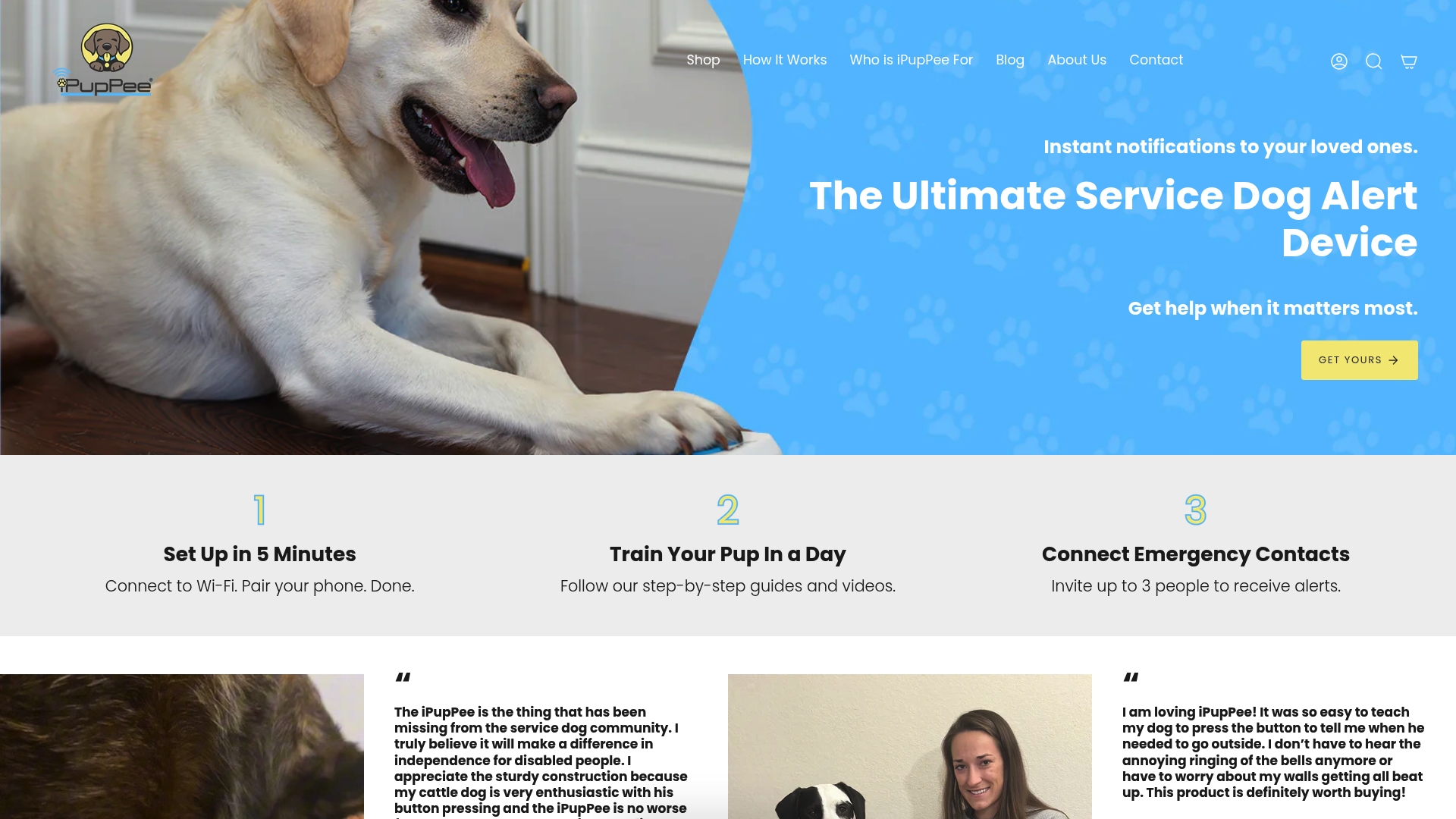
The iPupPee device itself addresses one of the hardest communication barriers to solve: the one-way nature of most owner-to-dog signaling. By giving dogs a way to initiate contact through a button press, it creates a two-way channel that builds trust and reduces the frustration that comes from unmet needs. For service dog handlers, seniors, and owners with mobility challenges, that shift is significant. Visit Ipuppee to see the full range of tools and guides available.
FAQ
What are dog communication barriers?
Dog communication barriers are obstacles that prevent clear signal exchange between humans and dogs. They include environmental interference, inconsistent vocal tone, and misreading of canine body language signals.
Why does my dog ignore commands in noisy places?
Noise disrupts verbal cues before they reach your dog clearly. Research confirms that audio and visual channels are fragile under real-world conditions, making your command functionally absent even when you feel you spoke clearly.
Does my dog understand the words I use?
Dogs respond to the tone and intonation pattern of your voice, not the specific words. A 2026 ELTE University study showed dogs decoded meaning from nonsense syllables based on vocal modulation alone.
What does a tail wag actually mean?
A tail wag signals arousal or engagement, not necessarily friendliness. The height, speed, and stiffness of the wag, combined with the dog’s overall posture and facial expression, determine the actual emotional state.
How do I know if my dog is stressed during training?
Early stress signals include yawning, lip licking, looking away, and lowered body posture. These appear before growling or snapping and tell you the dog needs space, not more pressure.