

TL;DR:
- Digital safety is crucial for service dogs due to higher travel risks and data privacy concerns.
- Layer multiple tools like GPS collars and medical ID tags for reliable protection.
- Consistent daily routines and understanding device vulnerabilities build resilience and safety.
Most people assume keeping a service dog safe means a good harness, a bright vest, and solid leash training. That thinking leaves dangerous gaps. Today, a service dog’s safety is just as much a digital challenge as a physical one. GPS signals can fail, communication apps can malfunction, and sensitive handler data can be exposed without warning. This guide walks you through the specific digital tools, real-world strategies, and daily routines that genuinely protect service dogs and the people who depend on them.
Table of Contents
- Why digital dog safety matters for service dogs and owners
- Essential digital safety tools for service dogs
- Recognizing and preventing digital risks for service dogs
- Everyday digital safety routines for service dog handlers
- Beyond the basics: What most digital dog safety guides miss
- Explore digital dog safety solutions with iPupPee
- Frequently asked questions
Key Takeaways
| Point | Details |
|---|---|
| Digital safety is crucial | Using digital tools greatly enhances service dog independence and safety. |
| Choose the right tech | Pair GPS collars, communication apps, and ID tags for layered protection. |
| Update and secure devices | Regular updates and strong passwords reduce hacking and misuse risks. |
| Make safety a habit | Build daily device checks and tech routines into your training sessions. |
| Don’t rely on tech alone | Blend digital solutions with training and partnership for truly resilient service dog support. |
Why digital dog safety matters for service dogs and owners
Service dogs and pet dogs live very different lives. A family pet might spend most of the day in a yard or a house. A service dog travels through airports, hospitals, crowded transit systems, and unfamiliar environments every single week. That exposure creates a unique set of digital risks that most standard pet safety advice simply doesn’t address.
One of the biggest challenges is remote monitoring. If you’re a handler with a mobility or sensory disability, you may not always be in a position to physically search for your dog if something goes wrong. You need reliable technology to fill that gap. Another challenge is data privacy. Many GPS trackers and monitoring apps collect location history and personal information. If that data is poorly secured, it could expose your routines, your home address, and your medical needs to bad actors.
Then there’s communication. Service dogs are trained to alert handlers to specific needs, but what happens in a medical emergency when the handler can’t relay information to first responders? Digital tools like emergency response apps and digital medical ID tags can communicate critical details instantly, even when the handler cannot.
“Emerging pet safety tech empowers service dog independence and supports handlers with disabilities.”
The good news is that the digital landscape is rapidly improving. Handlers who invest time in understanding these tools gain real independence and real peace of mind. You’ll also find practical digital safety tips for dog owners that translate directly into stronger daily routines. The key is knowing which tools solve which problems and how to layer them effectively.
Key reasons digital safety matters more for service dogs than for average pets:
- Service dogs travel far more frequently and into higher-risk environments
- Handler disabilities can limit physical response options in emergencies
- Sensitive medical and location data is often tied to service dog tech
- Communication breakdowns between dog, handler, and first responders can be life-threatening
- Service dog certification and records are increasingly stored digitally and need protection
Essential digital safety tools for service dogs
The market has expanded significantly in the last few years. There are now specialized dog communication apps that enhance safety and management for service dog teams, going far beyond the basic bark-alert systems most people imagine.
Here’s a breakdown of the four major tool categories and how they work in practice:
1. GPS tracking collars These are the most widely used digital safety tool. A GPS collar allows you to track your dog’s real-time location on a smartphone app. For service dog handlers who live alone or travel frequently, this is non-negotiable. Example scenario: A handler with low vision loses physical contact with her service dog in a busy train station. Her GPS collar app pinpoints the dog’s location within 10 feet, allowing station staff to guide her to the animal.
2. Emergency response apps These apps can alert emergency contacts, dispatch services, or nearby community members in seconds. Some integrate with wearable devices that the handler wears. Example scenario: A veteran with PTSD experiences a crisis episode in public. His service dog alerts, and the emergency app on his phone automatically notifies his support coordinator and shares his GPS location.
3. Digital medical ID tags These are QR code or NFC-enabled tags that link to a secure online profile containing the handler’s medical conditions, emergency contacts, and dog’s training certifications. Anyone with a smartphone can scan the tag and access life-saving information without needing the handler to communicate verbally.
4. Wearable communication devices Alert buttons and two-way communication devices worn by the handler or attached to the dog allow for quick, low-effort signaling. Smart technology integrated with collars, tags, and home devices provides tailored safety solutions that work even when traditional communication fails.
| Tool | Key feature | Accessibility | Estimated cost | Best use case |
|---|---|---|---|---|
| GPS tracking collar | Real-time location | High | $30 to $150/yr | Lost dog recovery |
| Emergency response app | Instant alerts | Medium | Free to $20/mo | Medical emergencies |
| Digital medical ID tag | QR/NFC profile | Very high | $15 to $50 | First responder info |
| Wearable alert device | One-touch signaling | Very high | $50 to $200 | Non-verbal communication |
| Smart home integration | Remote monitoring | Medium | $100 to $500 | Home-based routines |
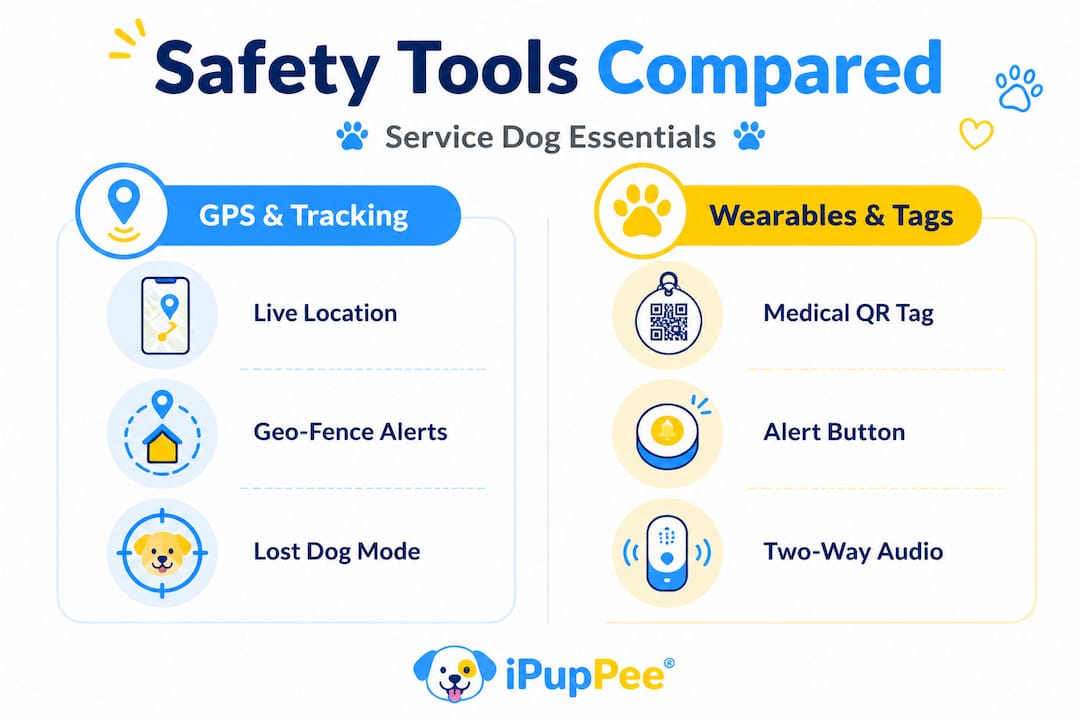
Pro Tip: Don’t rely on a single device. Layer at least two tools, such as a GPS collar paired with a digital medical ID tag, so that if one system fails, another picks up the slack. Service dog safety should never have a single point of failure.
Recognizing and preventing digital risks for service dogs
Understanding what tools exist is only half the equation. You also need to understand what can go wrong. Dog safety awareness education is key to avoiding digital pitfalls that even experienced handlers overlook.
Here are the top digital risks every service dog handler should know:
- Device hacking: GPS trackers and communication apps connected to the internet can be compromised if they run on weak passwords or outdated software. A hacked tracker can give strangers access to your real-time location.
- GPS spoofing: This is a less common but serious risk where a bad actor broadcasts a fake GPS signal to trick a tracker into reporting the wrong location. It’s more likely in urban environments with dense wireless interference.
- Signal loss in emergencies: Many GPS systems rely on cellular networks. In rural areas, basements, or signal-dead zones, your tracker may stop working exactly when you need it most.
- Accidental data sharing: Many apps ask permission to share location data with third-party advertisers. Handlers often don’t realize how much personal information is being passed along.
- Outdated firmware: Old software on tracking collars or communication apps can contain security flaws that expose data or cause device failures.
| Vulnerability | Risk level | Practical precaution |
|---|---|---|
| Weak device passwords | High | Use 12-character passwords with symbols |
| Outdated app firmware | High | Enable auto-updates on all devices |
| Public Wi-Fi use | Medium | Avoid logging into pet apps on open networks |
| Third-party data sharing | Medium | Review and restrict app permissions monthly |
| Signal loss in dead zones | High | Pair GPS with a secondary Bluetooth tracker |
| GPS spoofing | Low to medium | Choose trackers with anti-spoofing encryption |
Practical steps to reduce your exposure right now:
- Set strong, unique passwords for every app or device associated with your service dog’s safety system
- Enable two-factor authentication on your primary emergency response app
- Review location-sharing permissions in every app every 90 days
- Choose GPS collar brands that publish their data privacy policies clearly
- Keep all firmware and software updated, and set alerts so you don’t miss critical patches
These aren’t just tech-savvy suggestions. They’re the difference between a system that works under pressure and one that fails at the worst possible moment.
Everyday digital safety routines for service dog handlers
Knowledge without action doesn’t keep your dog safe. The handlers who get the most out of digital safety tools are the ones who build consistent daily routines around them. Training on digital safety protocols directly decreases response times and increases dog safety in critical moments.
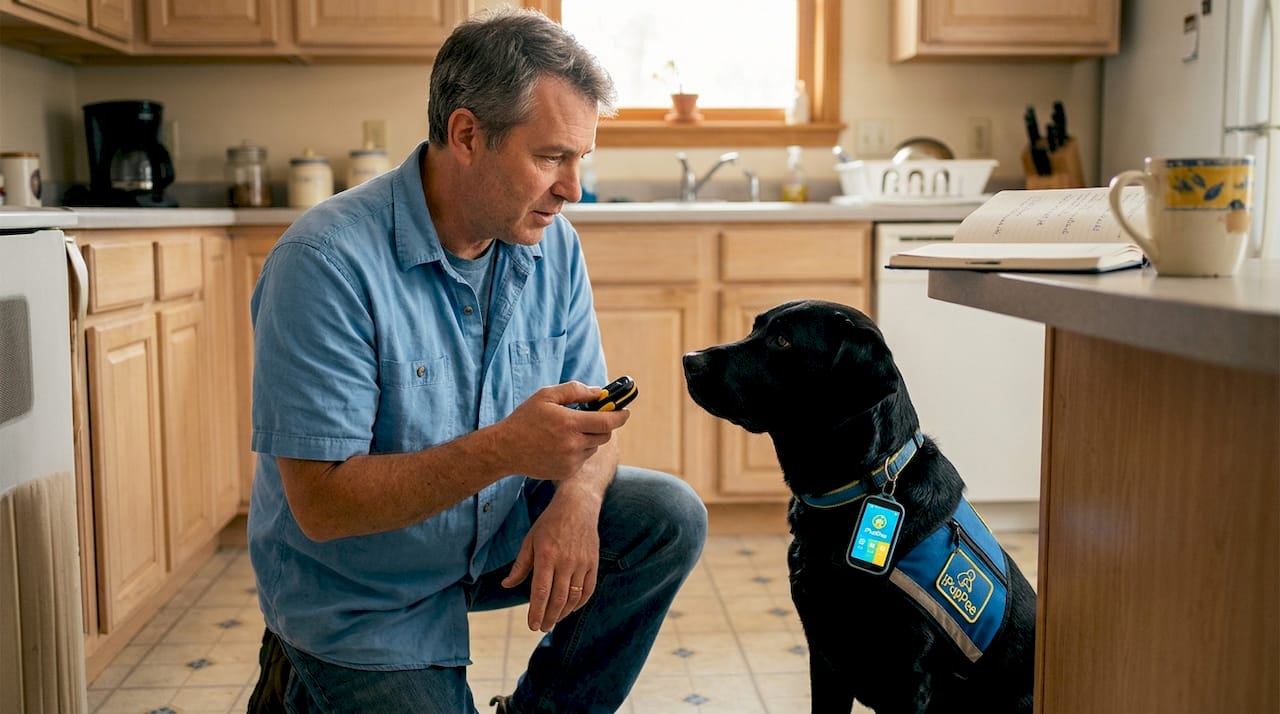
Here’s a practical daily and weekly checklist you can start using today:
Daily checks (takes less than 5 minutes):
- Confirm your GPS collar is charged and showing an accurate location on your app
- Test your emergency alert button to confirm it connects to your emergency contacts
- Verify your phone has a strong signal or that your backup tracker is active
- Check that your dog’s digital medical ID tag URL is loading correctly
- Make sure your emergency contacts are reachable and still accurate
Weekly routines:
- Review your location history on your GPS app for any unusual gaps or errors
- Check for app updates on all safety-related software
- Test your emergency response app’s notification function with a trusted contact
- Back up your dog’s digital profile, including certifications and medical records, to a secure cloud storage service
- Run a quick review of any privacy permissions that may have changed after app updates
Integrating digital safety into your training sessions makes the technology feel natural rather than like a burden. For example, practice pressing your emergency alert button during routine training drills so that the motion becomes automatic under stress. Work with your dog around the GPS tracker so the device doesn’t feel foreign during high-stress moments. You’ll find additional ideas for improving dog safety at home that complement these digital routines.
Pro Tip: Create a dedicated “safety folder” in your cloud storage with backups of your dog’s training certifications, vet records, emergency contact lists, and app login recovery codes. If your phone is lost or damaged during an emergency, you can access everything from any device within seconds.
Beyond the basics: What most digital dog safety guides miss
Here’s an uncomfortable truth that the gadget-focused corners of the internet don’t talk about enough. Technology fails. Batteries die. Networks go down. Apps get discontinued. If your entire safety system depends on devices working perfectly, you’re one bad firmware update away from a serious gap in protection.
The handlers who navigate emergencies most successfully are the ones who treat digital tools as one layer of a much larger strategy, not as a replacement for genuine teamwork and adaptability. Empowering service dog independence isn’t just about devices. It’s about creating a resilient partnership between dog, handler, and technology that can flex when any single component fails.
What that means in practice: your dog should still know how to lead you to safety even if your GPS tracker dies. You should still have a physical emergency card in your wallet even if your digital ID tag stops loading. Your emergency contacts should still know your routine even if your alert app crashes.
There’s also a longer-term trend worth watching. As AI-powered wearables and smart home systems become more accessible, the temptation will grow to automate more and more of your safety planning. Automation is genuinely useful, but over-dependence on it creates fragility. The most resilient service dog partnerships combine strong digital tools with equally strong human-dog communication, consistent training, and community networks of other handlers who can step in when technology lets you down.
Our perspective at iPupPee is that the best investment you can make isn’t the most expensive GPS collar on the market. It’s the time you spend learning how each tool in your system works, what its failure modes are, and how you’d manage without it. That knowledge makes everything else more effective.
Explore digital dog safety solutions with iPupPee
You’ve covered a lot of ground here, from understanding the unique digital risks for service dogs to building daily safety routines that actually hold up under pressure. The next step is putting it all into practice with the right resources behind you.
At iPupPee, we specialize in exactly this space. Our blog covers the latest in service dog safety technology, communication devices, and practical training strategies for handlers at every experience level. Whether you’re evaluating your first GPS tracker or looking to upgrade your full safety system, we’ve curated guidance that speaks directly to the needs of service dog handlers, seniors living independently, and anyone who depends on their dog for safety and communication. Explore our using technology with dogs for safety resources and discover tools designed with real handlers in mind.
Frequently asked questions
What are the biggest digital risks for service dogs?
Service dogs face risks including device hacking, GPS signal loss in emergencies, and accidental sharing of location or medical data through poorly secured apps. Dog safety awareness is essential for recognizing and preventing these vulnerabilities before they become emergencies.
Which digital safety device is best for service dogs?
No single device covers every scenario, but smart technology with collars and tags paired together provides the most reliable layered protection. A GPS collar combined with a digital medical ID tag covers both location tracking and emergency communication.
How can I make my dog’s devices safer from hacking?
Update all devices and apps regularly, use strong unique passwords, and audit your app privacy permissions every 90 days. Dog safety awareness education gives you a clear framework for turning these steps into consistent habits.
What’s the best way to train myself and my service dog on digital routines?
Practice daily device checks and incorporate your safety tech into regular training sessions so both you and your dog are comfortable with the equipment under pressure. Following digital safety training tips from experienced handlers shortens your learning curve and builds real confidence in your system.