

Traveling with a service dog through busy cities can come with unexpected hurdles, from complex travel requirements to choosing gear that keeps both you and your companion secure. For urban pet owners, understanding what makes a dog truly ready for the road is the key to confident, stress free journeys. This guide breaks down every step, from health checks and legal travel documents to tailored equipment and communication essentials, so you and your service dog can move safely and comfortably across any city.
Table of Contents
- Step 1: Assess Your Dog’s Travel Readiness
- Step 2: Select Proper Gear and Communication Devices
- Step 3: Plan Travel Logistics and Safety Measures
- Step 4: Train Your Dog With Essential Commands
- Step 5: Verify Device Setup and Trip Readiness
Quick Summary
| Key Insight | Explanation |
|---|---|
| 1. Assess Your Dog’s Health | Ensure your dog is microchipped, vaccinated, and evaluated for any health concerns before traveling. |
| 2. Choose the Right Gear | Assemble a comprehensive travel kit, including safety equipment and comfort items tailored to your dog’s size and needs. |
| 3. Plan for Logistics | Research your destination’s pet regulations and prepare necessary travel documents to avoid complications. |
| 4. Train Essential Commands | Teach your dog key commands that improve their behavior in unfamiliar situations, helping to ensure their safety during travel. |
| 5. Verify Device Readiness | Check all travel-related devices and documents for correctness and functionality to prevent any travel delays or issues. |
Step 1: Assess Your Dog’s Travel Readiness
Before planning any journey, understanding your dog’s physical and psychological preparedness is crucial for safe mobility. Travel readiness involves evaluating several key factors that determine whether your canine companion can comfortably and safely accompany you on trips.
Start by conducting a comprehensive health assessment with your veterinarian. Your dog must be microchipped and vaccinated before traveling internationally, which requires specific documentation. Key evaluation criteria include your dog’s age, fitness level, temperament, and previous travel experiences. Dogs with anxiety, motion sickness, or underlying health conditions might require additional preparation or alternative travel arrangements.
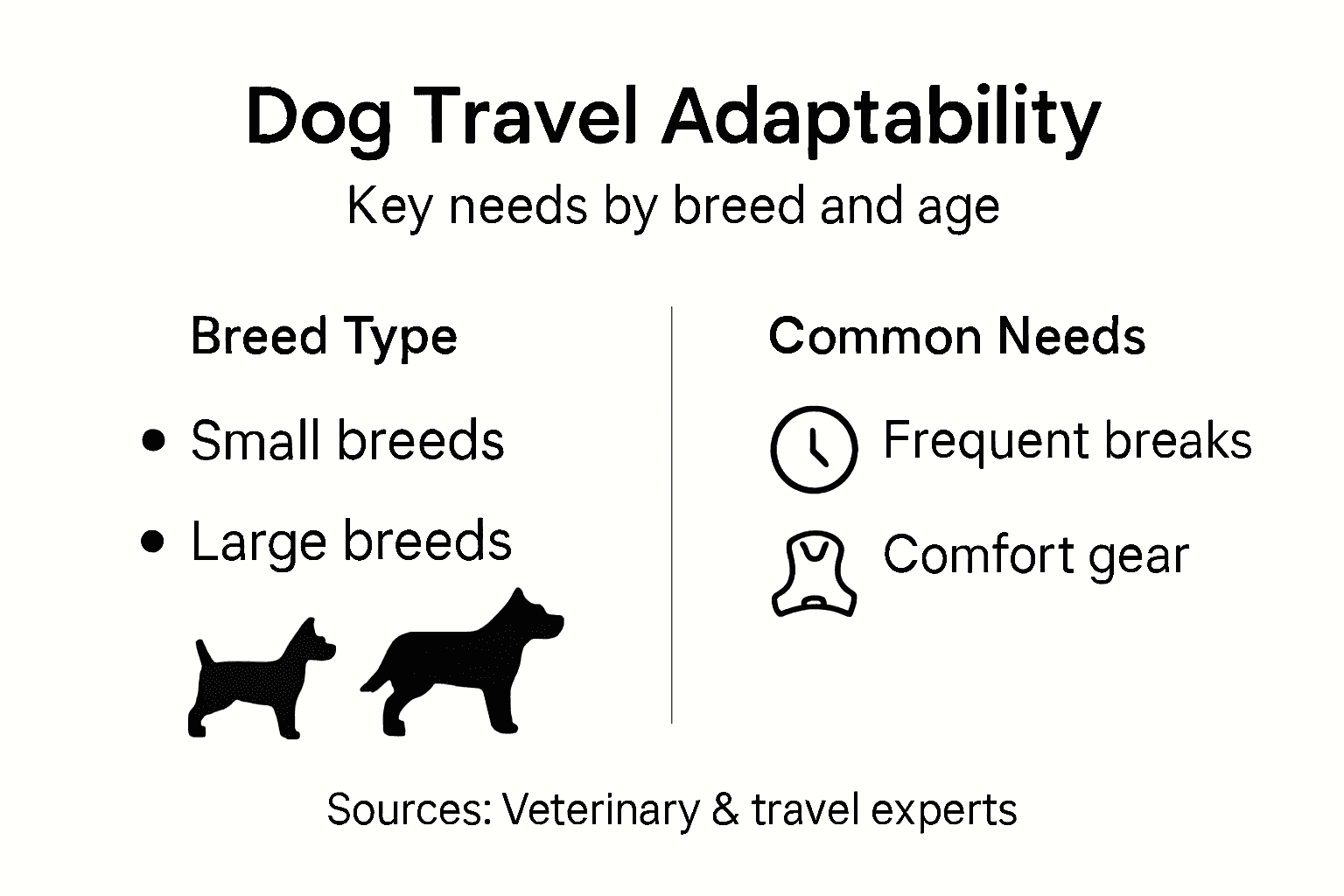
Consider your dog’s individual characteristics: energetic young dogs often adapt more easily than seniors or puppies, while breed characteristics can significantly impact travel comfort. Small breeds might need more frequent breaks, while larger dogs could handle longer journeys more comfortably. Assess your dog’s crate training, ability to remain calm in confined spaces, and previous car or public transportation experiences.
Here’s how different dog breeds may adapt to travel challenges:
| Breed Type | Adaptability to Travel | Common Needs |
|---|---|---|
| Small breeds | May need more breaks | Frequent water, comfort items |
| Large breeds | Handle longer journeys | Spacious crate, strong restraint |
| Brachycephalic (e.g., Pug) | Prone to breathing issues | Temperature control, short trips |
| Energetic breeds | Adapt quickly, need stimulation | Mental toys, exercise stops |
| Senior dogs | May stress easily | Soft bedding, mobility aids |
Pro tip: Schedule a pre-trip veterinary checkup at least two weeks before your departure to ensure all health requirements are met and obtain necessary travel documentation.
Step 2: Select Proper Gear and Communication Devices
Preparing the right equipment is essential for ensuring your dog’s safety and comfort during travel. Your gear selection will directly impact your journey’s success, providing both practical functionality and peace of mind throughout the trip.
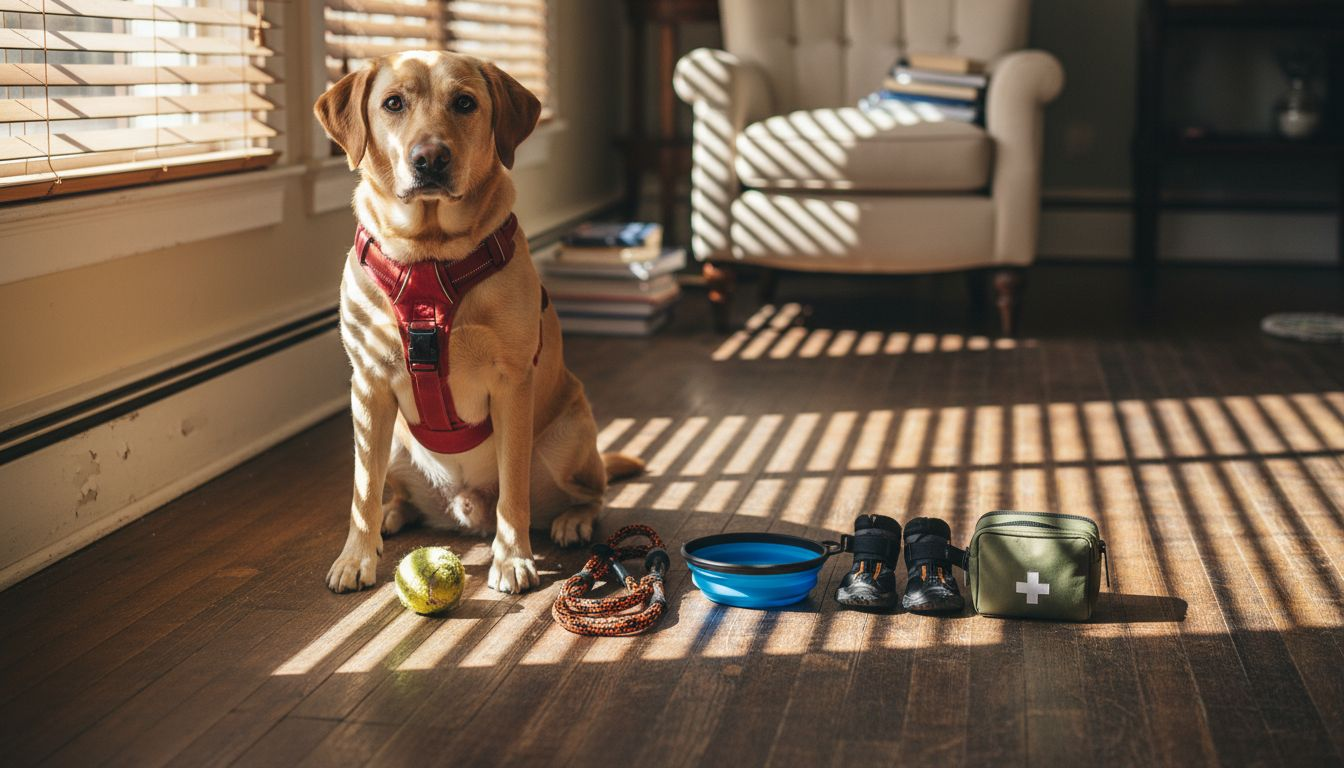
Begin by assembling a comprehensive travel kit that addresses all your dog’s potential needs. Essential travel equipment includes a secure harness or crate, identification tags, collapsible water bowls, portable food containers, waste bags, and a first aid kit. Consider your specific travel mode when selecting gear invest in airline approved carriers for air travel or crash tested restraints for vehicle journeys. Communication devices like specialized alert buttons can help dogs signal their needs during extended trips, particularly for service animals or dogs with specific health requirements.
Pay careful attention to sizing and comfort when choosing travel gear. Protective items like paw booties for rough terrain, cooling vests for hot environments, and lightweight jackets for cold conditions can make significant differences in your dog’s travel experience. Ensure all gear allows natural movement and does not restrict your dog’s ability to sit, stand, or lie down comfortably.
Pro tip: Test all travel gear at home before your trip to help your dog become familiar and comfortable with the equipment.
Step 3: Plan Travel Logistics and Safety Measures
Successful dog travel requires meticulous planning and strategic preparation to ensure both your and your dog’s comfort and safety throughout the journey. This step involves comprehensive logistical considerations that will minimize potential challenges and create a smooth travel experience.
Travel preparation involves multiple critical components including health documentation, destination research, and transit safety protocols. Start by obtaining updated health certificates from your veterinarian, confirming all vaccinations are current, and researching specific entry requirements for your destination. Consider factors like quarantine regulations, local pet restrictions, and necessary documentation. When planning transportation, prioritize your dog’s safety by selecting direct routes, avoiding extreme temperature conditions, and ensuring proper restraint mechanisms whether traveling by car, plane, or public transit.
Develop a comprehensive travel kit that addresses potential scenarios during your journey. Pack essential items like portable water containers, familiar comfort items, medication, first aid supplies, waste management tools, and backup identification documents. Research pet friendly accommodations in advance, understand local veterinary resources at your destination, and create a flexible contingency plan that accounts for unexpected situations. Always maintain your dog’s routine as much as possible to reduce travel related stress and anxiety.
Pro tip: Create a digital and physical backup of all your dog’s travel documents and store them in separate locations for added security.
Step 4: Train Your Dog With Essential Commands
Preparing your dog for travel goes beyond packing supplies it requires building a robust communication foundation through strategic command training. Mastering specific commands will transform your travel experience by ensuring your dog remains safe, responsive, and calm in unfamiliar environments.
Key travel commands protect dogs in unpredictable situations and provide critical safety mechanisms. Focus on five essential commands that will make traveling smoother transition commands like ‘Wait’ for doorways and street crossings, ‘Come’ for immediate recall during emergencies, ‘Leave It’ to prevent interactions with potential hazards, ‘Go to Bed’ for settling in new spaces, and comprehensive crate training. Use positive reinforcement techniques like treats, praise, and consistent practice to help your dog understand and internalize these instructions.
Implement command training gradually and systematically. Start in familiar environments with minimal distractions, progressively increasing complexity and introducing travel simulated scenarios. Practice these commands during short car rides, in different rooms of your home, and in mildly challenging outdoor settings. Remember that repetition and patience are key successful training requires multiple short sessions spread across weeks rather than intense single encounters. Your goal is building muscle memory and confidence so your dog responds automatically even in stressful travel conditions.
Pro tip: Record training sessions on video to track your dog’s progress and identify areas needing additional practice.
Step 5: Verify Device Setup and Trip Readiness
The final stage of preparing for travel involves a comprehensive verification process that ensures every technical and logistical detail is perfectly aligned for a smooth journey. This critical step transforms your preparation from theoretical planning to practical readiness.
Comprehensive documentation verification prevents travel complications and ensures seamless mobility. Systematically check all travel related devices including microchips, identification tags, communication tools, and tracking systems. Confirm that your dog’s microchip meets international ISO standards, operates correctly, and contains updated contact information. Validate all health certificates, vaccination records, and travel permits well in advance of your departure date. Cross reference these documents against destination country requirements to prevent potential entry restrictions or quarantine situations.
A summary of essential travel documents for your dog:
| Document Type | Purpose | When Needed |
|---|---|---|
| Health certificate | Confirms fitness for travel | All international trips |
| Vaccination record | Proves disease protection | Most countries, all airlines |
| Microchip registration | Identifies owner and pet | International border crossing |
| Import permit | Legal entry approval | Countries with restrictions |
Conduct a final equipment test by simulating travel conditions and observing your dog’s response to various devices and restraints. Ensure carriers, harnesses, and communication tools fit comfortably and function as intended. Practice short mock travel scenarios that help your dog acclimate to different equipment and environments. Pay special attention to how your dog interacts with safety devices, communication tools, and restraint systems. Make incremental adjustments based on these practice sessions to maximize comfort and minimize potential stress during actual travel.
Pro tip: Create a digital backup of all travel documents and store copies in multiple secure locations, including cloud storage and email.
Enhance Your Dog’s Travel Experience With Innovative Support
Traveling with your dog can present many challenges such as ensuring clear communication, managing anxiety, and maintaining safety throughout your journey. The article highlights crucial steps like assessing travel readiness, using proper gear, and training essential commands, all of which emphasize the need for reliable ways to connect with your dog during travel. Pain points like difficulty signaling needs, stress in unfamiliar environments, and maintaining safety under varying conditions are common concerns for every dog owner.
That is where iPupPee offers a smart solution. This innovative alert device empowers you and your dog to communicate easily through a simple button press. It supports service dogs, puppies, and rescue dogs alike by providing an extra layer of safety and independence while traveling, helping you stay connected even in complex travel situations. Whether you want to reinforce training commands or ensure your dog’s needs are understood instantly, the iPupPee device is designed to make your journeys safer and more enjoyable.
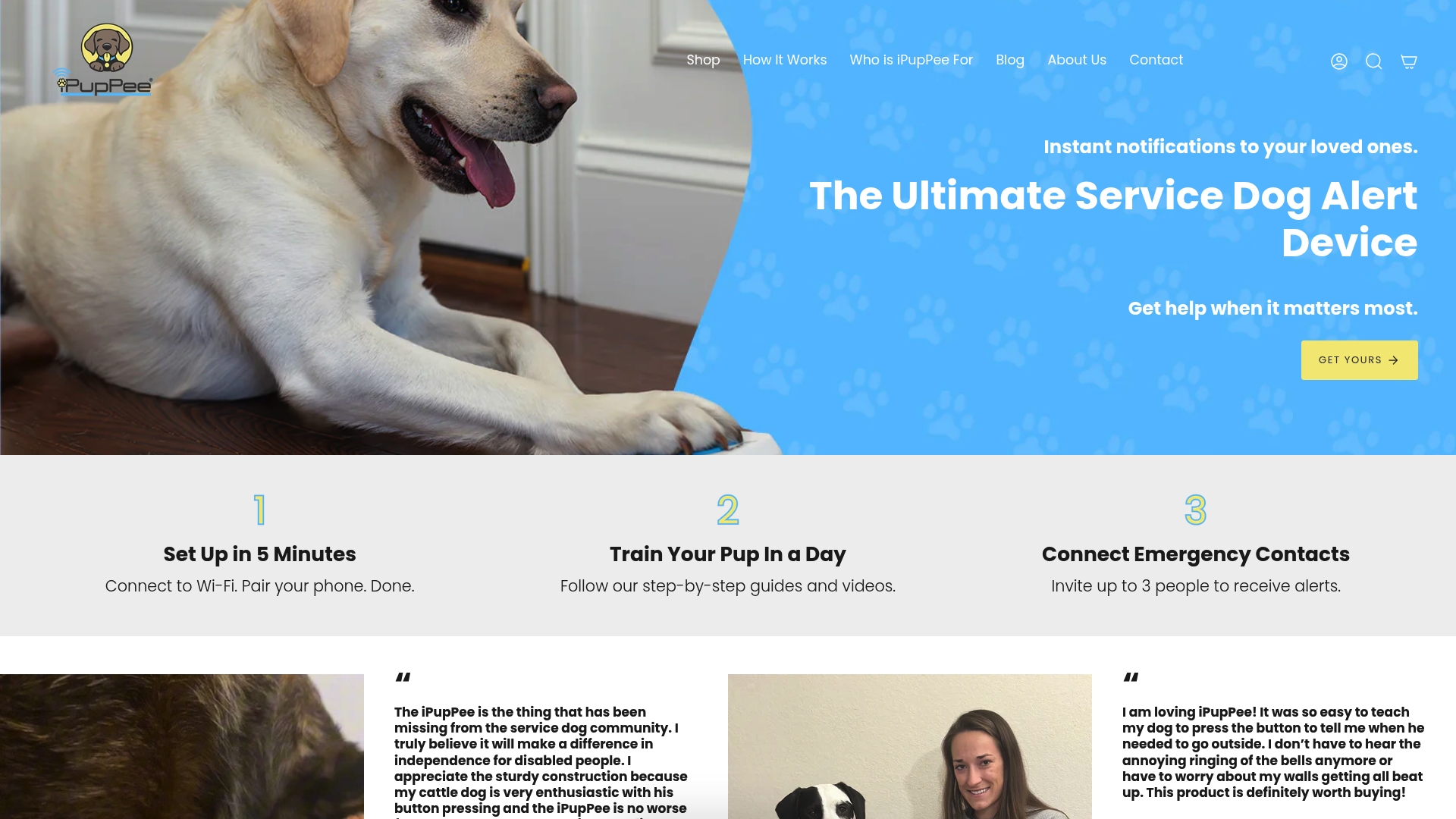
Discover how to simplify travel logistics and enrich your dog’s comfort and security today by visiting iPupPee main site. Explore product details, real user testimonials, and get started on enhancing your travel preparations with tools that truly make a difference.
Frequently Asked Questions
How can I assess my dog’s travel readiness?
To assess your dog’s travel readiness, conduct a thorough health check with your veterinarian and evaluate key factors such as age, fitness, and temperament. Schedule this assessment at least two weeks before your trip to ensure you have all necessary documentation and address any health concerns.
What essential gear should I pack for traveling with my dog?
Pack essential gear such as a secure harness or crate, identification tags, collapsible water bowls, and waste bags to ensure your dog’s safety and comfort. Create a travel kit that can adapt to your dog’s needs during the journey, including a first aid kit and familiar comfort items.
What safety measures should I consider for my dog during travel?
Prioritize safety by obtaining updated health certificates and researching specific entry requirements for your destination. Use proper restraint mechanisms and avoid extreme temperatures while transporting your dog, whether by car, plane, or public transit.
Which commands should I train my dog for a smoother travel experience?
Train your dog on essential commands such as ‘Wait,’ ‘Come,’ and ‘Leave It’ to ensure they remain safe and calm during travel. Implement a consistent training routine over several weeks to build their muscle memory and confidence in responding to these commands under various conditions.
How do I verify my dog’s travel documentation?
Verify your dog’s travel documentation by checking that all microchip information, health certificates, vaccination records, and other permits are accurate and up-to-date. Cross-reference these documents against the requirements of your destination well before your departure date to avoid complications.
Recommended
- Traveling With Dogs Safely: Achieve Stress-Free Journeys – iPupPee
- Senior Pet Safety: Keeping Aging Companions Secure – iPupPee
- Traveling with Your Dog: Tips for a Smooth Journey – iPupPee
- Master Dog Safety During Walks: Essential Guide for Owners – iPupPee
- Pet Food Intolerance Test For Dogs | UK Food Intolerance | Blog