

Schedule two set meals a day instead of free-feeding, keep treats to a limited portion of daily calories, and run several 5 to 10 minute sessions timed 30 to 60 minutes before mealtime. Pull training rewards from that day’s measured food ration rather than adding extra calories. Stretch those rewards further with slow feeders, puzzle toys, and hand-feeding, and you’ll get sharper focus, steadier weight, and a dog who actually wants to work with you.
TL;DR:
- Training treats should be limited to about 10% of the dog’s daily calories, with a typical adult dog of 700 calories receiving around 70 calories worth of treats.
- Short, frequent training sessions of 5 to 10 minutes timed 30 to 60 minutes before meals maximize focus and effectiveness without causing digestive issues.
- Use measured portions and treat pieces that are small enough (2 to 5 calories each) to allow for 15 to 20 reps per session without exceeding caloric limits.
- Adjust feeding and training routines based on the dog’s age, activity level, and medical needs, with more frequent, smaller meals for puppies and a strict schedule for service dogs.
- Support consistency and routine, especially for service dogs, by reserving treats from meal portions and avoiding sudden changes that could reduce food drive or cause digestive upset.
Table of Contents
- Meal Schedule Templates for Puppy, Adult, and Service-Dog Training
- What Is the 10% Treat Rule and How Do You Apply It?
- Converting Calories Into Treat Pieces You Can Count
- How Should You Time and Structure Training Sessions?
- Turning Mealtime Into a Training Opportunity
- Adjusting for Puppies, Seniors, and Service Dogs
- Fixing Low Food Drive, Weight Gain, and Over-Treating
- Your Copy-and-Use Sample Training Day
- Hydration Guidelines Around Training Sessions
- Signs of Digestive Upset From Meal Timing and Exercise
- Adjusting Meal Timing for Light, Moderate, and Heavy Training Days
- What I’ve Learned About Making This Stick
- Support Your Training Routine with Technology
- Sources
- FAQ
Meal Schedule Templates for Puppy, Adult, and Service-Dog Training
Your ideal schedule depends on the dog’s age, workload, and your own calendar. Here are three starting points you can adjust within a day or two of testing.
- Puppy (8 to 16 weeks): Four meals at 7 a.m., 11 a.m., 3 p.m., and 7 p.m. Reserve a portion of each meal’s kibble for training. Run three to four sessions of 3 to 5 minutes, right before each meal.
- Adult dog in heavy training: Two meals at 7 a.m. and 6 p.m. Set aside a portion of the day’s total calories as treats, split across four short sessions: morning, midday, pre-dinner, and evening wind-down.
- Service-dog handler on a work schedule: Meals at 6:30 a.m. and 5:30 p.m., with a small midday snack (a fifth of a meal) if the workday runs long. Training happens in five-minute bursts during natural pauses, since consistent timing supports reliable feeding routines that a working dog can count on.
Scale portions up for large or highly active breeds and down for toy breeds or dogs with lower energy needs. If your class schedule or work shift shifts meal times by an hour, shift training sessions with it. Consistency in the gap between food and practice matters more than the clock time itself.
What Is the 10% Treat Rule and How Do You Apply It?
Veterinary nutrition guidance from VCA Animal Hospitals caps treats at roughly 10% of a dog’s daily calorie intake, a figure echoed by the WSAVA’s treat feeding guidance. The rest should come from a balanced, complete diet.
Worked example: A 30-pound adult dog eating around 700 calories a day gets about 70 calories in treats. That’s roughly a moderate number of small training treats depending on calories per piece, or a much smaller number if you’re using higher-calorie jerky or cheese.
- High-value or caloric treats (cheese, hot dogs, liver) count faster against that budget, so use them sparingly for tough behaviors.
- Average your treat count across a few days rather than resetting rigidly at midnight; a heavier training day balanced by a lighter one keeps the week on target.
- Pre-count treats each morning into a small container so nobody in the household accidentally doubles up.
The core number to remember: keep treats at or under a limited fraction of daily calories, and deduct anything given during training from that day’s meal portion.
Converting Calories Into Treat Pieces You Can Count
Measuring in calories is accurate but useless mid-session. Convert that budget into pieces you can count on your fingers.
- Weigh or measure the full day’s kibble ration first, then set aside the training portion (10% by calorie, not by volume, since treats and kibble differ in density).
- A cup of standard dry kibble runs roughly 300 to 400 calories, so 10% might be 30 to 40 calories, or about a tablespoon’s worth broken into pea-sized pieces.
- Common small training treats run 2 to 5 calories per piece; check the label or ask the manufacturer per VCA’s guidance if it’s not listed.
- A kitchen scale, a set of small pre-measured containers, and a treat pouch clipped to your belt make the daily math almost automatic.
Pro Tip: Break soft treats into smaller pieces to get more reward opportunities from one treat, which matters a lot during a 10-minute session where you want 15 to 20 reps.
How Should You Time and Structure Training Sessions?
A dog that’s slightly hungry pays attention better than one that just finished a full bowl. Time sessions 30 to 60 minutes before a meal, or use part of that meal’s withheld portion as the session’s reward pool.
- Keep sessions to 5 to 10 minutes, run two to four times a day rather than one long block. Tufts’ Petfoodology program backs short, frequent repetition over marathon sessions.
- Start with something the dog already knows well, like a sit or hand target, so the first few reps build momentum.
- Add difficulty only while motivation holds. The moment focus drops, end on an easy win instead of pushing through.
- Once a behavior is reliable, switch to intermittent reinforcement, rewarding every second or third correct response instead of every one, so the behavior holds up without a treat in your hand.
Turning Mealtime Into a Training Opportunity
A bowl set down in ten seconds flat teaches nothing. Slow that moment down and it becomes one of the easiest enrichment windows in your dog’s day.
- Slow-feeder bowls and puzzle toys turn a two-minute meal into ten minutes of problem-solving, which is valuable for dogs that inhale food or get bored easily.
- A stuffed food-dispensing toy works for longer independent sessions, useful for a service-dog handler who needs the dog settled during a task.
- Hand-feeding part of a meal builds eye contact and focus faster than almost any other technique, according to AKC trainers.
- Ask for a calm sit or down before lowering the bowl. That small pause teaches impulse control every single day, for free.
- Match chew and toy size to your dog’s jaw and always supervise, since improperly sized items are a genuine choking risk regardless of training value.
Adjusting for Puppies, Seniors, and Service Dogs
Not every dog fits the standard template, and forcing one usually backfires.
- Puppies need four to six small meals early on, with training food built into that count rather than added on top. Watch growth and weight gain, especially in large breeds prone to fast skeletal growth.
- Seniors and dogs on medical diets should stay on their prescribed food for training rewards. Cornell’s Riney Canine Health Center recommends checking with a vet before adding new treats or shifting meal timing, and transitioning any diet change gradually to avoid gastrointestinal upset.
- Service dogs benefit from rigid timing consistency, since predictable feeding supports predictable task performance for the handler who depends on it.
- Talk to a vet or veterinary nutritionist before starting any weight-loss plan, managing food allergies, or adjusting a dog with an existing medical condition.
Fixing Low Food Drive, Weight Gain, and Over-Treating
Start with one question: is the dog overweight, or has it been free-fed? Free access to food flattens motivation, and switching to a scheduled feeding routine often restores interest within a week.
- Overweight dog: cut treat calories first, switch to plain kibble as the reward, add more exercise, and ask a vet about a safe calorie deficit before restricting further.
- Low drive, normal weight: rotate in higher-value treats, change the training location, or swap food rewards for a play reward temporarily.
- Anxiety-driven low drive: a dog too stressed to eat treats usually needs desensitization work or a veterinary behavior consult, not more or better snacks.
Your Copy-and-Use Sample Training Day
Run through this checklist each morning, then follow the sample schedule below.
- Measure the day’s full food ration on a kitchen scale.
- Pre-count and set aside training treats (about 10% of daily calories).
- Pick treat types: kibble for easy reps, higher-value pieces for tough behaviors.
- Block out two to four short session times around meals.
- Log weight weekly and adjust portions if the scale trends up or down.
Sample day, adult medium dog (700 calories): 7 a.m. quick sit/stay session using reserved treats; 5:30 p.m. On heavier training days, shift more of the ration into the treat pouch and trim the actual meal portions slightly to keep total calories flat.
Hydration Guidelines Around Training Sessions
Water access matters just as much as food timing, and it’s the piece most handlers overlook. Keep fresh water available before and after every session, but pull the bowl for 15 to 20 minutes right before intense physical work, especially in warm weather, since a full stomach of water plus vigorous movement raises bloat risk in deep-chested breeds.
After a session, offer water in small amounts rather than letting a hot, panting dog gulp a full bowl at once. Several short drinks over 10 minutes settle better than one large one. For sessions lasting longer than 20 to 30 minutes, especially outdoors or in heat, offer a water break halfway through rather than waiting until the end.
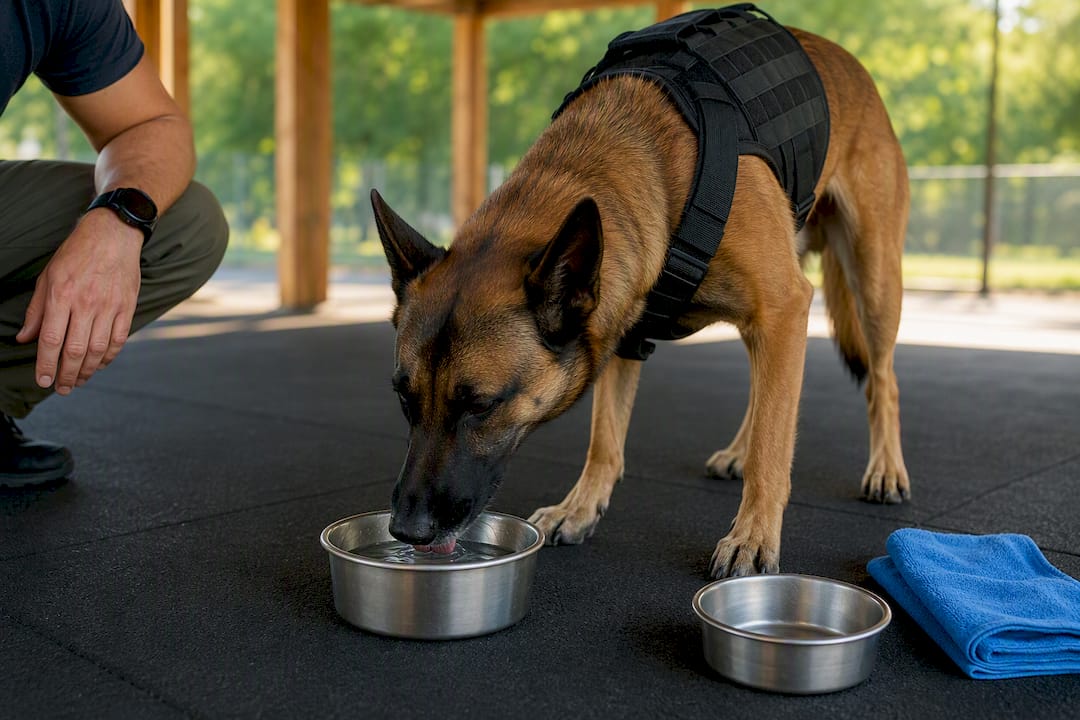
Puppies and small dogs dehydrate faster relative to their size, so check in more often during longer sessions. Service dogs working extended shifts need scheduled water breaks built into the handler’s routine, not just whenever there happens to be a lull. If a dog is unusually thirsty, drinking far more or less than normal, or reluctant to drink after exercise, that’s worth mentioning at the next vet visit rather than dismissing as a one-off.
The safest general rule: water before, water after, and a deliberate pause between a full drink and hard running or jumping. It costs nothing and prevents one of the more serious training-day emergencies.
Signs of Digestive Upset From Meal Timing and Exercise
Training too soon after a full meal is one of the more common, avoidable mistakes handlers make. Vomiting, excessive drooling, or a dog that suddenly refuses treats mid-session are early signals that the timing needs adjusting, not that the dog is being stubborn.
Watch for a distended or hard abdomen, unproductive retching, or restlessness after a meal followed by vigorous activity. These can be early signs of bloat, a genuine emergency in deep-chested breeds, and warrant an immediate vet call rather than a wait-and-see approach.
Softer signs are more common and less urgent: loose stool the next day, a dog that seems sluggish after a big meal followed by running, or reduced treat enthusiasm late in a session because the stomach is already fuller than expected. If these show up repeatedly, push training back further from mealtime, roughly an hour instead of thirty minutes, and see if the pattern resolves.
Diet changes compound the risk. Cornell’s veterinary guidance recommends transitioning any new food gradually over several days rather than switching outright, since abrupt changes combined with exercise are a common cause of loose stool. If a dog on a stable diet and consistent schedule still shows recurring digestive symptoms around training, that’s a conversation for a vet, not a training fix.
Adjusting Meal Timing for Light, Moderate, and Heavy Training Days
A single fixed schedule doesn’t hold up once training intensity changes week to week, and treating every day identically is where a lot of over-treating creeps in.
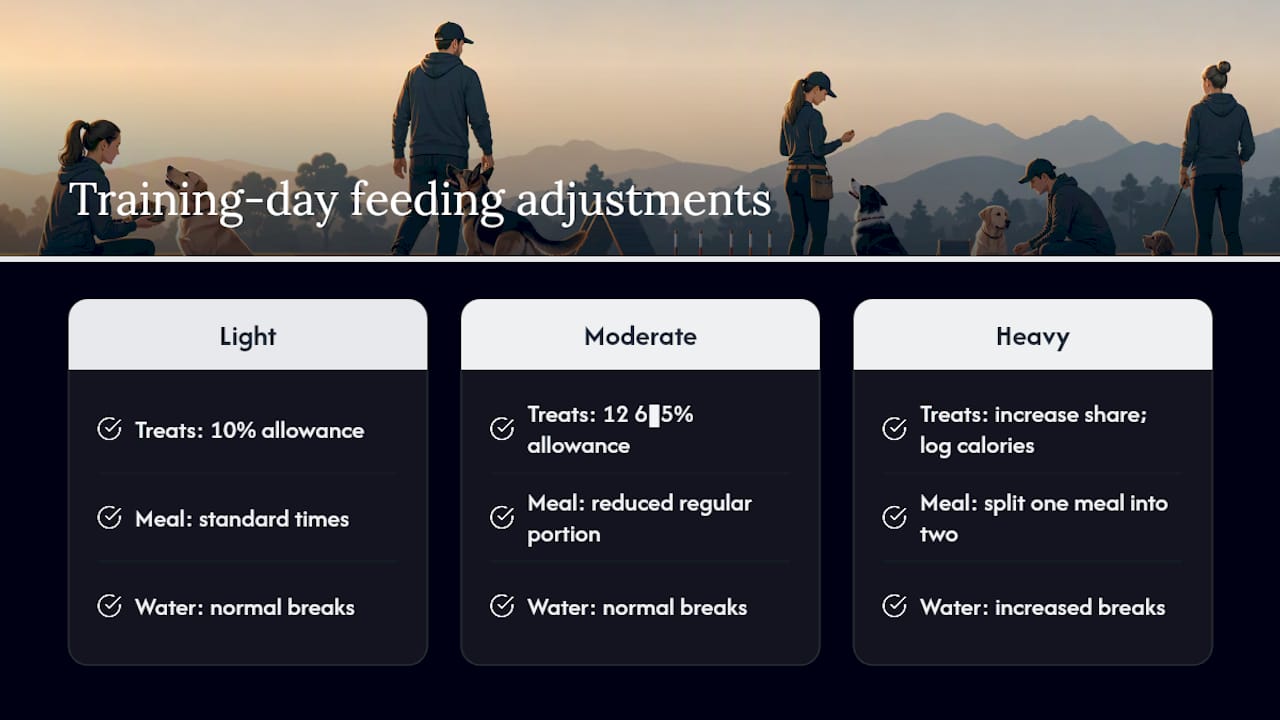
Light days (basic obedience refreshers, short sessions) need no schedule change at all. Standard meal times and the normal 10% treat allowance cover it.
Moderate days (new skill-building, agility practice, longer service-dog task work) benefit from shifting a slightly larger share of the day’s calories into the treat pouch, maybe 12 to 15% instead of 10%, balanced by a corresponding trim to the regular meal portion so total intake stays flat.
Heavy days (multi-hour training, trials, intensive skill-proofing) call for splitting one meal into two smaller ones around the activity, so the dog isn’t running on an empty stomach for hours or working right after a large meal. Increase water breaks accordingly and watch for the digestive warning signs covered above, since heavy exertion combined with meal timing changes is exactly when problems surface.
The adjustment that matters most isn’t the treat percentage, it’s staying deliberate about it. Decide the day’s intensity level each morning, adjust the ration split accordingly, and log the day’s total calories so a string of heavy days doesn’t quietly turn into weight gain.
What I’ve Learned About Making This Stick
Start smaller than feels necessary. Weigh one day’s ration, run one short session, and build from there rather than overhauling everything at once. Easy wins early on build confidence for the dog and the handler both, and that confidence is what keeps a schedule alive past week one. Ipuppee’s feeding routine and reward-based training resources are worth a look once you’ve got the basics running.
— Andrew
Support Your Training Routine with Technology
A meal schedule only works if you know what’s happening when you’re not in the room, and that’s exactly where a lot of handlers hit a wall with service dogs or dogs left alone during long shifts. A smart alert device can help your dog send notifications to you or an emergency contact with live video and two-way audio, helping maintain feeding and training routines even when you are not present.
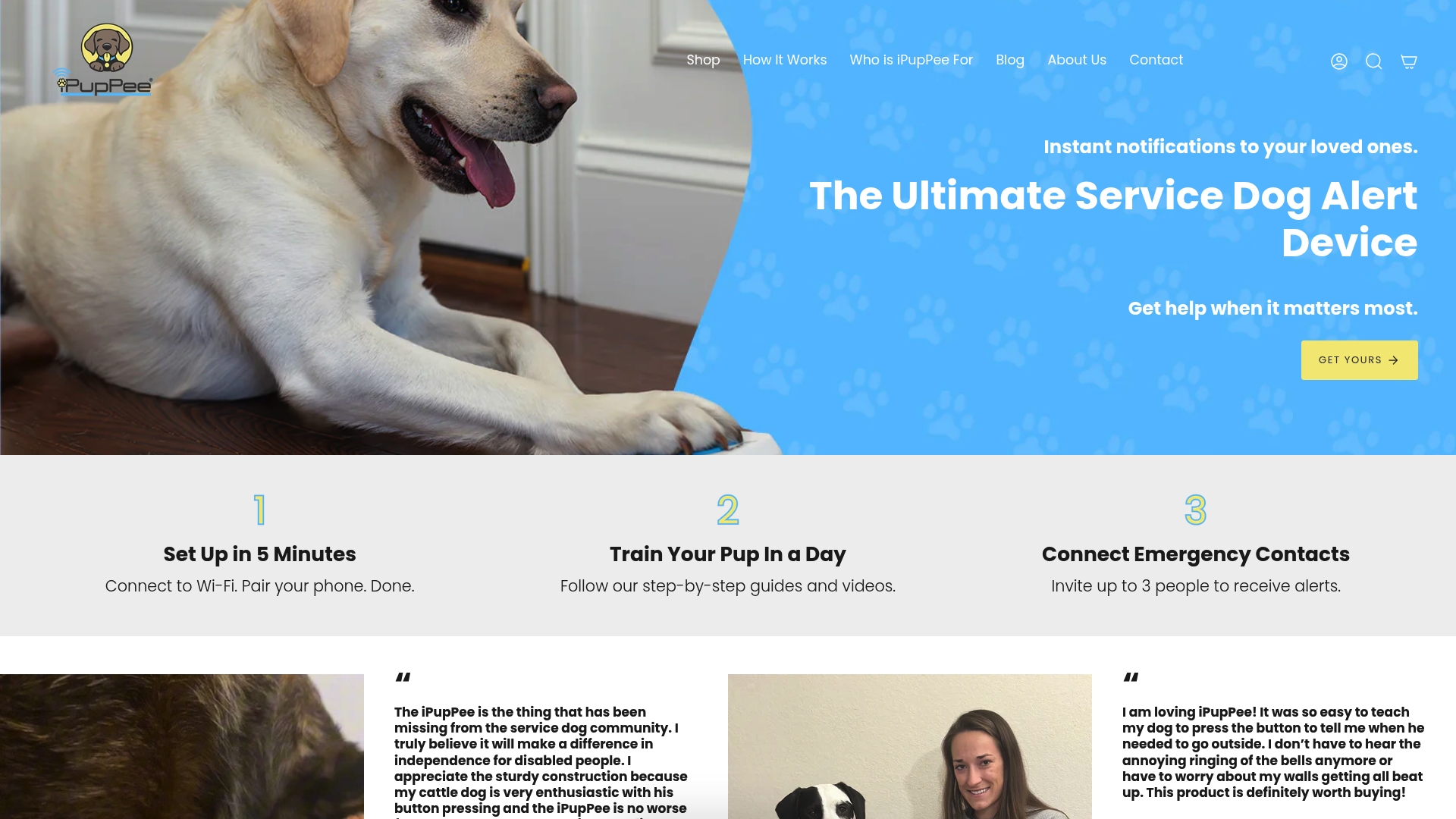
Try the sample schedule from this guide for a week before adding any hardware. Once the timing feels natural, visit the iPupPee training and product page for the device itself, along with training guides and video walkthroughs built around the same reward-based approach covered here. It’s a practical next step for handlers who want the routine to hold up on the days they can’t be right there watching it happen.
Sources
- Mealtime training: Teach your dog while they eat — AKC
- Using food and treats for training dogs — VCA Animal Hospitals
- Feeding treats to your dog — WSAVA
- Re-evaluating your dog’s diet — Cornell Riney Canine Health Center
FAQ
How Many Calories Should Training Treats Be?
Keep treats at roughly 10% of your dog’s total daily calorie intake, a limit backed by VCA Animal Hospitals and the WSAVA. For a 700 calorie daily diet, that’s about 70 calories in treats.
Should I Train Before or After Meals?
Train 30 to 60 minutes before a meal, or hold back part of that meal to use as rewards during the session. A slightly hungry dog stays more focused than one that just ate a full bowl.
How Long Should a Training Session Last?
Keep sessions to 5 to 10 minutes and run two to four of them across the day rather than one long block, ending each on an easy, successful behavior.
Can I Use My Dog’s Regular Kibble as a Training Reward?
Yes. Reserving part of the daily kibble ration for training, as recommended by Cornell’s canine health researchers, avoids extra calories and works especially well for dogs on prescribed diets.
How Do I Fix a Dog That Won’t Work for Food?
Check whether the dog is free-fed or overweight first, since both flatten food drive. Switching to scheduled meals, rotating in higher-value treats, or ruling out anxiety with a vet usually resolves it.