

A high-energy dog is managed with a daily structure, not with more miles alone: safe exercise matched to age and health, brain work that tires the mind, a trained ability to settle, and real rest. Start by ruling out pain or illness. Then build a routine the dog can predict. If you train your own dog, live with a disability, or handle a service dog, a course on dog psychology and training, plus a device that lets your dog reach you when you can’t get up, supports that routine. Both are covered below.
TL;DR
- Energy that persists across settings, can’t be interrupted and hurts daily life deserves a vet visit before any training plan.
- Exercise needs vary by breed, age and health. Puppies, seniors and flat-faced breeds need special care, and extreme heat is risky for all dogs.
- Sniffing, food puzzles and short training games tire a dog’s mind. Pair them with exercise instead of simply adding more laps.
- Teach settling on a mat with rewards. Reward-based methods are what veterinary behaviorists recommend.
- Most adult dogs need 12 to 14 hours of sleep a day. An overtired dog often looks wired, not sleepy.
Table of Contents
- Is your dog high-energy, or is something else going on?
- How much exercise, and what kind
- Brain work that tires a dog without a longer walk
- Teaching a high-energy dog to settle
- Rest is part of the plan
- A daily structure that works
- Rescue dogs, trainers and busy households
- Where we come in
- Our perspective
- FAQ
- Sources
Is your dog high-energy, or is something else going on?
Most “hyper” dogs are healthy dogs whose needs aren’t being met. The Merck Veterinary Manual separates overactivity from true hyperactivity. An overactive dog is very energetic but can calm down and respond to you. True hyperactivity, which doesn’t respond to correction, redirection or restraint, is rare.
That difference tells you where to start. A dog that revs up before a walk and winds down afterward is behaving normally. A dog that can’t settle in any setting even when exercise, food and rest are covered needs a closer look. One veterinary resource describes concern as energy that is persistent, out of proportion to the situation, hard to interrupt and harmful to the dog’s welfare or daily function.
Medical causes to rule out
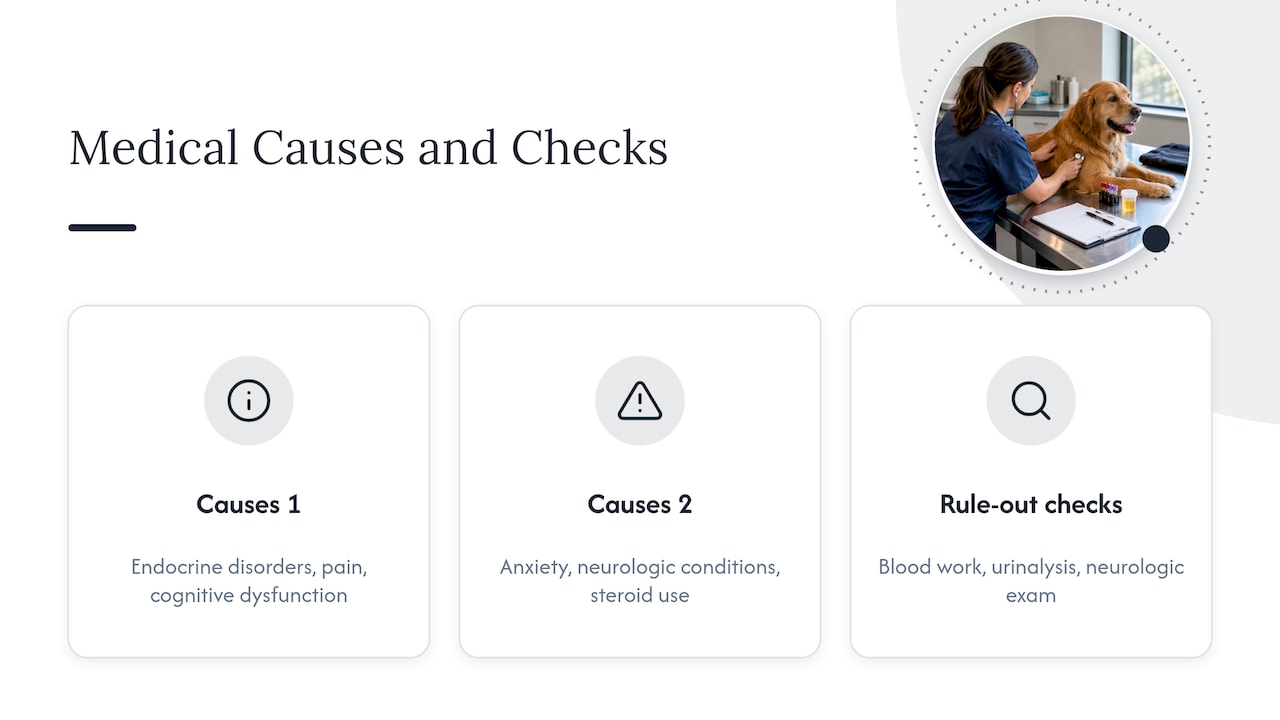
A 2024 review in the scientific literature lists medical causes of hyperactivity and impulsivity, including thyroid and other endocrine disorders, pain, cognitive dysfunction, anxiety disorders, neurologic conditions and steroid use. It recommends blood work, urinalysis and a neurologic exam to rule them out. The same review notes there is no veterinary consensus on diagnosing an ADHD-like condition in dogs, and that excess activity often reflects a genetically high-energy dog that isn’t getting enough stimulation.
Age matters too. Pacing, fidgeting and constant attention-seeking in an adult dog are often signs of stress, and in an older dog sudden restlessness can point to pain.
See your veterinarian if the restlessness is new, if it began with a change in health or medication, or if your dog stays frantic whatever you do. Bring a record of your dog’s 24-hour schedule, how long the behavior has lasted, what you’ve already tried, and what happens just before and after it. The Merck Manual lists these as the core of a behavioral history. A week of notes or short phone videos makes that visit far more useful.
How much exercise, and what kind
There is no single number. Exercise needs depend on breed, age, health, fitness and personality. Some breeds need an hour or two a day, working breeds need more, and most dogs need at least one or two walks. Build fitness gradually, as you would for yourself.
For an otherwise healthy adult with plenty of drive, one shelter handout suggests a 45 to 60 minute brisk walk daily. Some dogs need two long walks. It suggests starting by raising current exercise by 50 percent and adjusting from there.
A sample week for a healthy adult working or sporting breed might look like this:
| Day type | Physical | Mental |
|---|---|---|
| Weekdays | One brisk walk, 45 minutes, plus a short second outing | A sniff-focused stretch on the walk, one food puzzle |
| Weekend | A longer outing on soft trails | Two or three five-minute training games |
| Rest day | Easy, slow sniff walk | A shredding box or snuffle mat, then a long nap |
Treat it as a starting point. Your own dog’s recovery tells you more than any chart.
For more on building a safe routine, see our guides on exercising your dog safely in 30 to 45 minutes a day and dog exercise needs.
Puppies: protect growing bones
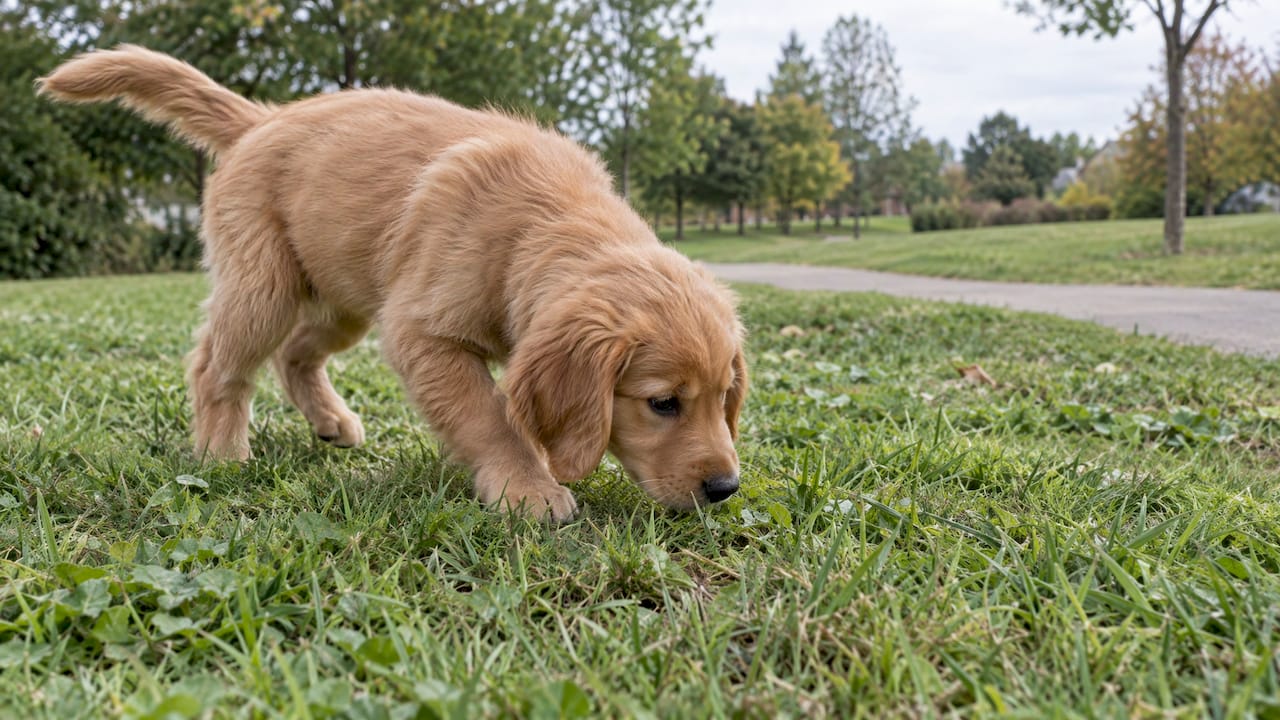
Puppies feel limitless, but their joints aren’t finished. A veterinary journal piece notes that growth plates stay vulnerable until about 12 to 18 months, or longer for heavier-impact activity in dogs neutered early. It cautions against jogging with a puppy to burn off energy and against repeated jumps down from height.
VCA Animal Hospitals advises that puppies under 12 months in tiny breeds, and under 18 to 24 months in larger breeds, shouldn’t routinely jog or run on hard surfaces. The AKC adds that several short walks or play sessions are safer than one long walk for a growing puppy. Use short, self-paced outings on varied, softer surfaces, and let the puppy rest often. Skip long forced marches, bike runs and endless high-speed ball chasing.
Seniors, flat-faced dogs and dogs with health conditions
Purdue’s canine welfare researchers advise avoiding exercise in extreme temperatures. They note that older dogs may need frequent breaks and low-impact activity, and that flat-faced breeds can overheat when overexercised. For senior dogs, veterinary guidance favors several shorter walks, flatter routes, nonslip surfaces, extra sniffing time and a supportive harness. Dogs with hip dysplasia or heart or respiratory problems need a vet-approved routine.
Dogs working with a handler who has a disability
If you can’t give a dog long walks, you can still meet its needs. The same veterinary journal notes that working dogs with disabilities can stay active through rehabilitation exercises, and that rehabilitation professionals can design safe routines. For the handler, that means more weight on shorter outings, scent games at home and trained settling, which the next sections cover.
Brain work that tires a dog without a longer walk
When exercise goes up and the dog still can’t settle, the answer is often thinking, not running. Dogs Trust attributes overexcitement partly to under-stimulation and inconsistent routines, and notes that working breeds are commonly affected because they were bred for busy jobs. Predictable food, exercise, rest and brain work help a dog feel satisfied and relax.
The Animal Humane Society makes a useful point: put thinking into the energy outlets themselves. Pause fetch for a sit, or scatter food for a sniff break. That keeps play from tipping a dog into a frantic, can’t-stop state.
Activities that work for most dogs:
- Sniff walks. Let your dog choose the route and linger. Ten slow minutes of sniffing often leaves a dog calmer than ten fast ones.
- Scatter feeding. Toss part of a meal in the grass or across a rug.
- Food puzzles and snuffle mats. Rotate them so they stay interesting.
- Short training games. Three five-minute sessions of name recognition, targeting or a new trick beat one long drill.
- Shredding boxes. Hide treats in a cardboard box and let your dog tear it apart under supervision.
Our guides on dog mental stimulation ideas, sniffing-first enrichment with a 20/20/20 routine and environmental enrichment go deeper on each. Indoors, a calm, dog-proofed space helps too, and these pet-friendly home decor ideas can help you set up rooms where an active dog is easier to live with.
Teaching a high-energy dog to settle
Exercise and enrichment fill the tank. Settling teaches the dog to turn the engine off. This is a skill, and it must be taught.
The American Veterinary Society of Animal Behavior recommends only reward-based training methods for all dog training, including behavior problems. It says aversive tools such as shock collars, prong collars and leash corrections should not be used. Everything below follows that approach.
The mat routine, step by step
Trainers in the force-free world commonly teach a place mat: a portable rug or bed your dog learns to lie down and relax on. Whole Dog Journal’s impulse-control guide lays it out in detail. The core steps:
- Make the mat rewarding. Show interest in it, then place treats on it. Reward your dog every time any part of the body touches it.
- Reward lying down. Give your higher-value treats whenever your dog drops onto the mat. Dogs soon start offering downs on their own.
- Stretch the duration. Reward calmly and quietly, a little longer each time, before you add anything else.
- Add the cue. Once your dog reliably lies on the mat for a long stretch, add a word such as “mat” or “place.”
- Add distance and distraction. Send your dog to the mat from farther away, then while you move around, then with mild noise.
Where it goes wrong: sessions that run too long, treats that are too exciting, or a start in the busiest room of the house. Practice when your dog has already had some exercise, and keep early sessions to a few minutes.
Other impulse-control basics
The same guide lists wait, leave it, polite greetings and an on-off switch as the usual companions to the mat. Practice them in daily life: wait at the door, sit before the leash goes on, pause before a bowl goes down. Each is a small chance to reward a dog for choosing calm.
Frustration is part of learning. If your dog escalates, make the task easier and the reward faster instead of repeating the cue louder. If you’re not sure why your dog reacts, a course that explains canine behavior helps you read the signals, which is where our training resource comes in below.
Rest is part of the plan
A dog that can’t settle isn’t always under-exercised. Sometimes it is overtired. Dogs Trust says most adult dogs need 12 to 14 hours of sleep a day, and puppies and older dogs need more. It suggests short breaks every 5 to 10 minutes during fun activities and planned quiet time and naps.
The Animal Humane Society warns that too much fetch can create a compulsion to play until the dog drops. It lists pacing, restlessness, constant movement, chewing the wrong things and trouble focusing as signs a dog needs a nap on the schedule.
Signs of overexertion to watch for, per VCA Animal Hospitals, include slower response to cues, irritability, difficulty lying down or getting up, and a “sloppy” sit. If you see them, call your veterinarian. For practical routines, read our guide on preventing dog overexertion and our list of 10 healthy dog habits.
A daily structure that works
Put the pieces together in a rhythm your dog can predict:
- Morning: a sniff-focused walk, then breakfast from a puzzle or scattered on the floor.
- Midday: a five-minute training game, then mat time and a nap.
- Afternoon: the main exercise session, with pauses to sit or sniff.
- Evening: a calm chew, a settle on the mat while you eat dinner, and bed.
Change the amounts for age and health, and keep the order steady. Predictability itself calms dogs.
Rescue dogs, trainers and busy households
Rescue dogs and newly adopted adults often start with stress-driven restlessness. Give them quiet rest, a routine and short, easy wins before you ramp up exercise. Rescues and trainers who coach adopters can hand over a one-page schedule like the one above, because owners who understand the structure return fewer dogs to the shelter than owners who only hear “more exercise.”
Where we come in
Our dog psychology and training course is a one-time, on-demand course for owners who want to understand why their dog behaves as it does and train it step by step. It costs $119.
For handlers, seniors and anyone living with a disability, the iPupPee device adds safety to the routine. It’s a Wi-Fi alert device that lets a dog notify you or emergency contacts with a button press, with live video and two-way audio. It costs $129.99 with no monthly subscription fees.

See the iPupPee device, the training course or how it works.
Our perspective
Energy isn’t the problem. A dog with a lot of drive is a dog with a lot to give, and our job as owners is to give that drive somewhere to go.
We built iPupPee around communication between dogs and the people who depend on them. The same idea applies to energy management: a dog that has a clear way to tell you what it needs is a calmer dog, and a person who understands the dog’s signals can respond sooner. That’s why we pair the device with training guides and an on-demand dog psychology and training course.
For service dog handlers, seniors and owners who live alone, a day can’t always include a three-mile walk. Short, structured sessions, brain work and a trained settle fill much of the gap, and a way for your dog to reach you or your contacts keeps both of you safer between sessions. We design our device to work for dogs of all sizes, and our guides walk you through the training.
Andrew
FAQ
How much exercise does a high-energy dog need?
It depends on breed, age, health and personality. Some breeds need one to two hours a day and working breeds need more, according to PDSA. Build up gradually and add mental work. Puppies, seniors and dogs with health conditions need a plan approved by your vet.
Can too much exercise make a dog more hyper?
Yes. Constant fetch or running can build a habit of needing it, and an overtired dog often shows pacing, restlessness and trouble focusing. Add naps, pauses during play and thinking games so exercise doesn’t become the only outlet.
When is hyperactivity a vet issue?
See your vet if the behavior is new, persistent across settings, hard to interrupt or affecting your dog’s welfare. Pain, thyroid and other medical conditions, and anxiety can all look like high energy, so a vet exam comes before any training plan.
What is the fastest way to teach a dog to calm down?
There’s no shortcut, but the mat routine is the most dependable. Reward your dog for lying down on a mat, build up the time, then add a cue, distance and distractions. Keep sessions short and use rewards, not corrections.
Sources
- Behavior Problems in Dogs, Merck Veterinary Manual
- Diagnosing Behavior Problems in Dogs, Merck Veterinary Manual
- Can Dogs Have ADHD? Hyperactivity vs. the Real Thing
- New Advances in Attention-Deficit/Hyperactivity, PMC review (2024)
- Help! Why Is My Dog Hyper?
- Exercise for dogs, PDSA
- Living With an Energetic Dog, handout
- Preventing injuries in canine athletes, IVC Journal
- Play and Exercise, VCA Animal Hospitals
- How Much Exercise Does a Dog Need?, AKC
- Exercising your dogs, Purdue canine welfare
- How to Walk Your Dog for Exercise, Enrichment and Training
- Helping an Overexcited Dog Settle Down, Dogs Trust
- How much exercise is enough exercise for your dog?, Animal Humane Society
- Position Statements, American Veterinary Society of Animal Behavior
- Dog Impulse Control Training, Whole Dog Journal