

Dog training needs are simple: humane, reward-based methods; a short, regular practice routine; a small set of essential skills; reliable tools; and timely professional help when safety or complex behavior appears. That approach reflects current expert consensus, not personal preference. The sections below walk through the skills to teach first, the gear worth buying, how to structure sessions, and the specific signs that call for a professional.
TL;DR:
- Reward-based training methods are essential, as aversive tools pose risks to the dog’s welfare and weaken the owner-dog relationship.
- Key skills include name recognition, recall, sit, down, stay, leave it, and crate cues, prioritized based on the dog’s environment and daily risks.
- Effective training requires short, frequent sessions that progressively increase in difficulty, using data tracking to monitor progress and setbacks.
- Professionals should be consulted for aggression, sudden behavior changes, or safety risks, with emphasis on force-free methods and clear, measurable goals.
- Consistent, daily practice and early professional intervention are more effective than occasional training, especially when behavior issues persist or escalate.
Table of Contents
- Core training needs and principles
- Essential skills every dog should learn
- Essential tools and supplies to support training
- How to structure sessions and progress training
- When to seek professional help and what to ask
- Integrating training into daily life and maintenance
- Author background and iPupPee resources for training support
- Where owners get training advice wrong
- How iPupPee supports a reward-based training plan
- Sources
- FAQ
Core training needs and principles
Every training plan starts with the same question: what method actually works without harming the dog? The American Veterinary Society of Animal Behavior recommends reward-based methods for all training and behavior work, and warns that aversive tools carry real risk to the dog’s welfare and to the relationship between dog and owner. The IAABC’s core competencies echo this: qualified professionals are expected to use a science-based approach that weighs physical health, environment, and learning theory together, not just the behavior in front of them.
That whole-dog view matters because behavior and health are tangled. A peer-reviewed review of behavioral evaluation notes that sudden aggression, new house-soiling, or a dog who suddenly resists being touched can be medical rather than behavioral, and a veterinary check should come before behavior modification when those signs appear.
With health ruled out, training has three practical jobs:
- Keep the dog and everyone around it safe.
- Build reliable two-way communication between dog and owner.
- Establish manners that make daily life predictable at home and in public.
Essential skills every dog should learn
A handful of skills cover most of what a dog needs for a safe, manageable life. Teach them in roughly this order.
- Name recognition and attention: the foundation skill that gets a dog’s focus before anything else can be taught.
- Recall (come): the single most safety-critical command, and the one to master fully before allowing off-leash freedom in unfenced areas.
- Sit, down, and stay: these give an owner a way to pause the dog in place around traffic, guests, or other hazards.
- Leave it: prevents a dog from grabbing dropped food, trash, or something dangerous.
- Crate or kennel cues and calm handling: makes travel, grooming, and veterinary visits far less stressful.
Which skills come first depends on the household. A dog living near a busy road needs recall and leave it early. A dog headed to frequent vet visits or boarding benefits from crate comfort and handling practice sooner than off-leash recall.
Essential tools and supplies to support training
Good equipment makes training easier and prevents avoidable injuries. The basics:
- A well-fitted harness or flat collar paired with a sturdy leash gives control without pressure on the throat.
- High-value treats (small, soft, easy to chew fast) and a treat pouch keep rewards ready during real moments, not just planned sessions.
- A clicker or a consistent verbal marker helps the dog understand exactly which action earned the reward.
- Enrichment toys and a crate or mat give the dog a job to do and a defined space for calm training reps.
Skip anything designed to cause pain, fear, or intimidation, including shock collars, prong collars, and choke collars. Both the AVSAB and IAABC explicitly list these tools as ones to avoid, tying them to worse welfare and weaker learning outcomes than reward-based approaches.
How to structure sessions and progress training
Short and frequent beats long and occasional. Aim for short focused sessions lasting several minutes, plus small practice moments scattered through the day such as a sit before meals or a wait at the door.
Progression follows a simple pattern: once a skill is solid in a quiet room, add distance, then distractions, then duration, one variable at a time. As the dog gets reliable, start reducing how often you reward every single rep and fade the treat lure into an occasional bonus rather than a guaranteed payment. This mirrors how the IAABC recommends tracking progress with data rather than guesswork, something owners can do with a simple notebook.

Pro Tip: Keep a one-line training log each day noting one win and one setback. Patterns show up fast, and they tell you exactly where to slow down.
When to seek professional help and what to ask
Some situations call for more than a home routine. Watch for these red flags:
- Aggression toward people or other animals, even mild growling or snapping.
- A sudden change in behavior with no clear trigger.
- Any situation posing a real safety risk to the dog, family, or others.
- Repeated failure despite consistent, correct practice over several weeks.
The right professional depends on the problem. A general trainer can help with manners and basic obedience. A certified behavior consultant, credentialed through a body like IAABC, handles more complex behavior issues. A veterinary behaviorist or a veterinarian should be the first call when the behavior may have a medical or neurological root, or when medication might be part of the plan.
Before hiring anyone, ask about their methods, credentials, and what a written plan with measurable goals looks like. Force-free methods, clear goals, and willingness to explain their reasoning are green flags. Aversive equipment, dominance-based explanations, and promises of a quick fix are reasons to look elsewhere.
Integrating training into daily life and maintenance
Training sticks when it lives inside ordinary routines, not just scheduled sessions.
- Practice sit or wait at mealtimes, before leash clips, and at doorways.
- Manage the environment (baby gates, closed doors, leashes indoors) so the dog can’t rehearse habits like door-dashing or counter-surfing while you’re not actively training.
- Revisit basic cues every few months, and again after any big change like a move or a new pet.
- Pair training with enough physical and mental exercise: a well-exercised dog has less pent-up energy driving barking, chewing, or jumping.
Guides like how to teach dogs boundaries and improving dog behavior at home walk through this kind of everyday integration in more depth.
Author background and iPupPee resources for training support
This guide was written by Andrew at iPupPee, drawing on published behavior science and current veterinary behavior guidance rather than personal anecdote. For readers who want the evidence base behind reward-based methods, why reward-based training works breaks down the AVSAB position in plain terms. Owners managing more complex behavior can also review dog behavioral training for owners and handlers, which considers both environment and medical factors alongside training technique. Every recommendation here traces back to AVSAB and IAABC positions rather than trend or opinion.
Where owners get training advice wrong
The biggest gap isn’t method, most owners already believe in rewards over punishment. The gap is consistency. People buy the right treats, read the right articles, then train in five-minute bursts once a week and expect a reliable dog. Reliability comes from repetition scattered through ordinary moments, not from occasional intensity.

The second overrated idea is that a trained dog should never need a refresher. Dogs regress after moves, new pets, or long gaps in practice, and that’s normal, not failure. The third: owners wait too long to call a professional, often after months of frustration, when an early consult with a certified consultant or veterinarian would have caught a medical cause or a training mistake much sooner.
If you take one thing from this guide, prioritize the boring part: short daily practice, consistent rewards, and a willingness to ask for help the moment something feels beyond a home fix.
— Andrew
How iPupPee supports a reward-based training plan
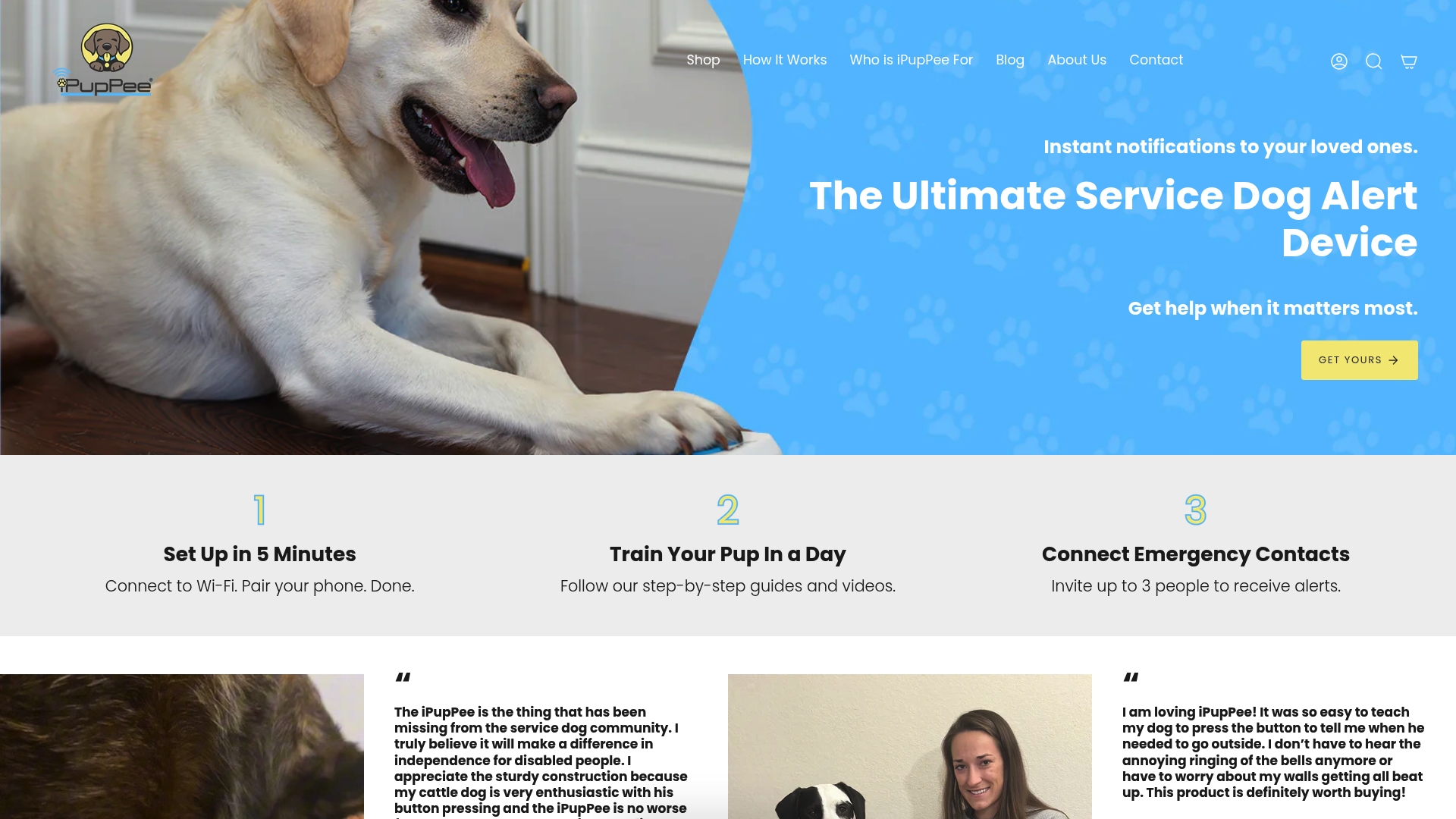
For service dog handlers, seniors, and owners who need a safety net beyond basic commands, the iPupPee device lets a dog send a direct alert with live video and two-way audio to a chosen contact, at a one-off price of $129.99. It doesn’t replace the fundamentals in this guide, it builds on them: a dog who already knows how to target a button through reward-based shaping picks it up faster. For owners who want a structured curriculum rather than piecing advice together from articles, the Psychology & Training Course covers training methods and dog psychology for $119 as a one-off purchase, with no subscription required.
Sources
- AVSAB: Position Statement on Humane Dog Training (2021)
- IAABC core competencies
- Behavioral evaluation and medical differential diagnoses (peer-reviewed review)
FAQ
What is the 3-3-3 rule for dog training?
The 3-3-3 rule is a general guideline some trainers use to describe a new dog’s adjustment period: roughly 3 days to decompress, 3 weeks to settle into routine, and 3 months to feel fully at home. It’s a rough framework for expectations, not a training method, and individual dogs vary widely.
What are the essentials for dog training?
The essentials are a reward-based approach, a handful of core skills like recall, sit, stay, and leave it, a properly fitted harness or collar with a sturdy leash, high-value treats, and short, frequent practice sessions. Health should be checked first if any behavior change is sudden, since some behavior issues have medical causes.
What is the 7-7-7 rule for dogs?
Definitions vary, but a common version suggests exposing a puppy to seven different surfaces, sounds, people, and experiences during early socialization windows. It’s a popular informal guideline rather than a standard backed by a named veterinary body, so treat it as a loose framework, not a strict target.
What are the 7 basic commands for dog training?
Commonly recommended basics include sit, stay, come, down, leave it, heel, and a release cue like “okay,” though exact lists vary across trainers and resources. These commands build the foundation for safety and manners covered earlier in this guide.
How long should a dog training session last?
Most practical training guides recommend sessions of about 10 to 15 minutes, done several times a day rather than one long block. Short sessions keep the dog focused and make it easier to fit practice into daily routines like mealtimes and walks.