

Finding reliable ways to keep your service dog safe during emergencies is a constant concern for American pet owners with disabilities. Communication goes far beyond simple barking. Recent research from UC San Diego shows that dogs trained with soundboard buttons can produce meaningful, intentional signals to ask for help. This guide details how understanding and enhancing dog help signals can increase safety, improve response times, and strengthen the bond between handlers and their dogs.
Table of Contents
- What Dog Help Signals Really Mean
- Variations of Signals and Communication Tools
- Training Dogs to Use Alert Devices
- Legal Rights and Safety Obligations
- Risks, Common Mistakes, and Alternatives
Key Takeaways
| Point | Details |
|---|---|
| Understanding Dog Help Signals | Dogs use complex communication strategies that go beyond barking, influenced by their evolutionary bond with humans. |
| Role of Training and Devices | Successful communication training with alert devices involves positive reinforcement and consistent methods tailored to individual dogs. |
| Legal Rights and Responsibilities | Handlers must understand service dog legal protections, ensuring compliance with behavioral standards in public spaces. |
| Common Training Mistakes | Avoid punishment-based methods and inconsistent reinforcement to maintain effective communication and ensure animal welfare. |
What Dog Help Signals Really Mean
Dog help signals represent a sophisticated communication system that goes far beyond simple barking or whining. Advanced communication studies reveal these signals are complex behavioral strategies designed to influence human attention and prompt specific actions.
These signals emerge from a deep evolutionary partnership between dogs and humans, where canines have developed nuanced ways to communicate their needs, emotions, and potential emergencies. Dogs don’t just randomly make sounds or gestures - they strategically use signals that have been refined through generations of human-animal interaction.
Key characteristics of dog help signals include:
- Intentional behavioral patterns
- Context-specific communication
- Targeted attempts to gain human attention
- Specific body language and vocal variations
Physiological Triggers play a crucial role in how dogs generate help signals. When experiencing distress, pain, or sensing danger, dogs activate specific neurological and hormonal responses that manifest as distinctive communication behaviors. Research from UC San Diego demonstrates that trained dogs can even use specialized communication buttons to articulate precise needs and emotions.
Understanding these signals requires careful observation and recognition of subtle canine communication cues. Each dog develops a unique signaling system based on their individual personality, training, and relationship with their human companions.
Here’s a breakdown of key dog help signal types and how handlers can benefit from recognizing them:
| Signal Type | Typical Use Cases | Handler Benefit |
|---|---|---|
| Vocalizations | Alerting to danger | Swift response to emergencies |
| Body Gestures | Highlighting discomfort | Early issue recognition |
| Eye Movements | Indicating specific need | More accurate need assessment |
| Device Activation | Requesting assistance | Improved real-time monitoring |
Pro tip: Pay close attention to your dog’s consistent behavioral patterns and learn to distinguish between routine communication and genuine help signals.
Variations of Signals and Communication Tools
Dog communication has evolved far beyond traditional barking, encompassing a wide range of sophisticated signaling methods. Cross-species referential signaling reveals that dogs utilize complex gesture systems to direct human attention, including pointing behaviors and nuanced eye movements that communicate specific needs and urgencies.
Modern communication tools have dramatically expanded dogs’ ability to signal for help, introducing technological innovations that bridge communication gaps. Signal Variation Types include:
- Vocal signals (barking, whining)
- Body language gestures
- Technological communication devices
- Haptic communication tools
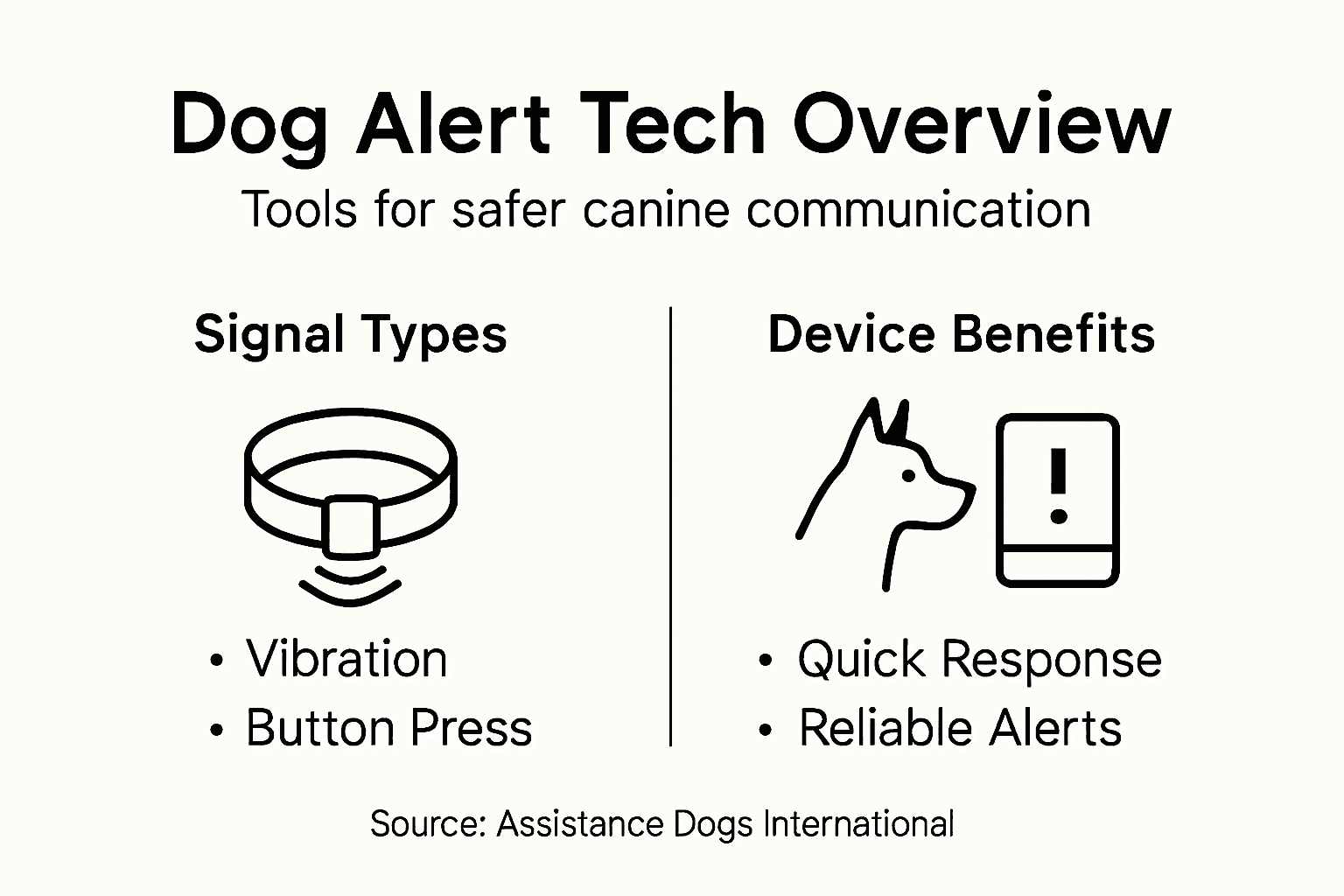
Technological Innovations are revolutionizing how dogs communicate. Vibration-based communication tools like specialized vibrate collars and remote harnesses enable silent, precise alerts particularly useful for service dogs, hearing-impaired handlers, and working dog scenarios.

These communication methods demonstrate the remarkable adaptability of canine-human interaction. Each signaling approach offers unique advantages, allowing dogs to convey complex emotional and physical states through increasingly sophisticated communication channels.
Understanding these varied signal types requires careful observation, training, and technological integration. Dogs can learn to use multiple communication strategies, adapting their approach based on specific contexts and individual handler needs.
The table below compares traditional and technological dog communication tools:
| Method | Main Strength | Limitation |
|---|---|---|
| Traditional signals | Universal understanding | Less precision, ambiguity |
| Technological devices | High specificity | Requires consistent training |
| Haptic tools | Silent communication | Handler must interpret |
Pro tip: Invest time in learning your specific dog’s unique communication style and practice recognizing their individual signaling patterns.
Training Dogs to Use Alert Devices
Successful alert device training requires a strategic, patient approach that transforms technological tools into reliable communication channels. Canine detection training methods demonstrate that integrating positive reinforcement with precise training protocols is crucial for developing accurate alert responses.
Training Fundamentals for alert devices involve several critical components:
- Consistent positive reinforcement
- Gradual skill progression
- Clear communication pathways
- Individualized learning approaches
- Regular practice and validation
The process of teaching dogs to use alert devices is complex and multifaceted. Glycemic alert dog research highlights that the dog-handler partnership and ongoing training significantly impact the effectiveness of alert device usage. Successful training demands understanding each dog’s unique learning style, motivation mechanisms, and communication potential.
Technological alert devices require systematic introduction, where dogs learn to associate specific device interactions with desired outcomes. This involves breaking down complex alert mechanisms into simple, manageable steps that dogs can comprehend and execute reliably.
Advanced training techniques incorporate gradual complexity, starting with basic device interactions and progressively introducing more nuanced signaling methods. Handlers must remain patient, observant, and consistently supportive throughout the learning process.
Pro tip: Begin alert device training in a quiet, distraction-free environment and use high-value treats to maintain your dog’s enthusiasm and engagement.
Legal Rights and Safety Obligations
Service dog rights represent a critical intersection of legal protections and public safety considerations. Americans with Disabilities Act guidelines establish comprehensive legal frameworks that ensure service dogs have essential access rights while maintaining rigorous behavioral standards for public spaces.
Key legal protections for service dogs include:
- Unrestricted public space access
- Protection from discrimination
- Mandatory reasonable accommodations
- Clear handler responsibilities
- Defined behavioral conduct expectations
Global Policy Frameworks extend beyond national regulations. Assistance Dogs International policies advocate for consistent international standards that protect both service dog handlers and public safety. These policies emphasize that legal rights are intrinsically linked to demonstrated training quality and consistent behavioral performance.
Handlers must understand that legal protections are not unconditional. Service dogs must consistently demonstrate appropriate public behavior, indicating reliable training and controlled responses in diverse environments. This means maintaining discipline, avoiding disruptive behaviors, and responding immediately to handler commands.
Navigating legal rights requires proactive communication, documentation, and a clear understanding of both handler and public entity responsibilities. Handlers should carry appropriate documentation, be prepared to explain their dog’s specific alert or assistance functions, and respect established public space guidelines.
Pro tip: Maintain updated training certifications and carry concise documentation that clearly explains your service dog’s specific alert functions and legal access rights.
Risks, Common Mistakes, and Alternatives
Alert device training involves nuanced challenges that can significantly impact a dog’s communication effectiveness and overall safety performance. Dog training studies reveal that inappropriate training techniques can compromise both alert reliability and animal welfare.
Critical Training Mistakes include:
- Using punishment-based training methods
- Inconsistent reinforcement strategies
- Overcomplicating alert signals
- Neglecting individual dog learning styles
- Failing to maintain ongoing training
Technological alert devices require sophisticated training approaches that go beyond traditional behavioral modification techniques. Each mistake can potentially undermine the dog’s ability to communicate effectively, creating gaps in critical safety communication systems.
Alternative training strategies emphasize positive reinforcement, individualized learning pathways, and gradual skill development. Handlers must remain adaptable, recognizing that each dog processes information and develops communication skills uniquely. This means developing flexible training protocols that accommodate different learning speeds and communication preferences.
Successful alert device integration demands patience, consistent practice, and a deep understanding of canine communication dynamics. Handlers should approach training as a collaborative process, viewing their dog as an active partner in developing reliable communication strategies.
Pro tip: Document your dog’s training progress, identifying specific challenges and adapting your approach to maintain consistent, positive learning experiences.
Enhance Your Dog’s Help Signals with Innovative Communication Tools
Dogs use unique and intentional help signals to communicate urgent needs or discomfort, but recognizing and responding to these cues quickly is a challenge many pet owners face. Whether your dog uses vocalizations, body gestures, or technological alert devices, consistent and clear communication is vital for safety and peace of mind. The sophisticated strategies dogs employ deserve equally advanced support systems that foster better understanding and real-time assistance.
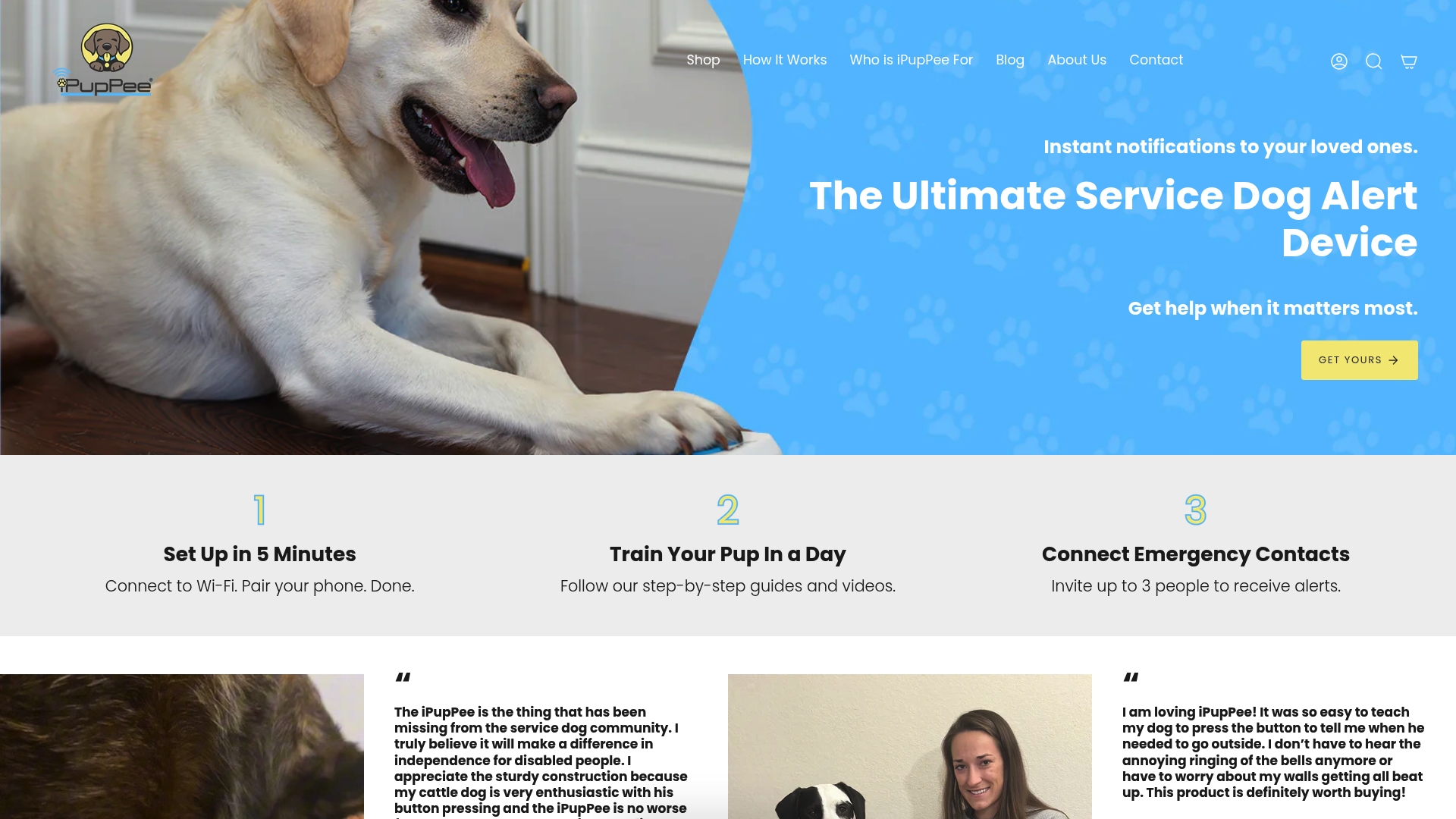
Discover how the iPupPee alert device revolutionizes canine communication by enabling your dog to send clear, precise signals with a simple button press. Designed for service dog handlers, seniors, and all pet owners concerned about safety, the device bridges the gap between canine signals and human response. Explore helpful training instructions and customer testimonials to learn how technology enhances your dog’s ability to express urgent needs confidently. Don’t wait for an emergency to reveal communication barriers. Visit ipuppee.com now and give your dog the voice they deserve.
Frequently Asked Questions
What are dog help signals?
Dog help signals are sophisticated communication methods that dogs use to convey their needs, emotions, and emergencies. They go beyond simple barking and include intentional behavioral patterns, body language, and vocal variations.
How do I train my dog to use alert devices effectively?
To train your dog to use alert devices, focus on positive reinforcement, gradual skill progression, and consistent practice. Start training in a quiet environment, and use high-value treats to keep your dog engaged throughout the learning process.
What are the benefits of using technological communication tools for dogs?
Technological communication tools enhance a dog’s ability to signal for help with high specificity and precision. They can include devices like vibration collars and remote harnesses, which are particularly beneficial for service dogs and responding to specific needs.
What are common mistakes in alert device training for dogs?
Common mistakes in alert device training include using punishment-based methods, inconsistent reinforcement, overcomplicating alert signals, and neglecting individual dog learning styles. It’s important to keep the training process positive and tailored to your dog’s unique communication style.
Recommended
- How Dogs Respond to Signals for Independence – iPupPee
- Dog Communication Technology: Enhancing Safety and Independence – iPupPee
- Pet Alert System Overview: Enhancing Safety and Independence – iPupPee
- Dog Safety Technology: Elevating Independence for Owners – iPupPee
- Building a Safer Tomorrow: Pioneering Digital Solutions in Construction