

For reliable obedience, use short, reward-based video drills that teach one command at a time, then proof it in real environments. Pick one command like sit or recall, watch a single lesson, and run a 5 minute session twice today. The AVSAB backs this approach, and it works best when your marker (a clicker or the word “yes”) is followed by a reward within 1 to 2 seconds.
TL;DR:
- Use short, reward-based video drills focused on one command at a time for consistent obedience, with reward delivery within two seconds of correct behavior.
- Match video format to your dog’s learning stage, using single-drill clips for puppies and structured playlists for older dogs mastering new skills.
- Trustworthy videos emphasize reward-based language, clear marker use, step-by-step progression, and demonstrate commands in multiple environments.
- Break training into two-week schedules with daily short sessions and incremental difficulty, aiming for reliable command performance indoors and outdoors.
- Avoid common training stalls caused by repeating cues, rushing steps, using low-value rewards, or long sessions, and ensure progress is proofed in distracting environments.
Table of Contents
- Which Types of Obedience Dog Training Videos Should You Use?
- What Makes a Training Video Trustworthy?
- Step-by-Step Video Drills for the Core Commands
- A Two-Week Video Training Schedule You Can Actually Follow
- Why Video Training Sessions Stall (and How to Fix Them)
- The Evidence Behind This Approach
- A Publisher’s Note on Video Drills and Everyday Communication
- Get Guided Video Courses and Lesson Plans
- Sources
Which Types of Obedience Dog Training Videos Should You Use?
Different video formats solve different problems, and matching the format to your dog’s stage saves weeks of frustration. A single distracted puppy doesn’t need a 40 minute seminar. A dog who already knows “sit” in the kitchen but ignores it at the park needs something else entirely.
- Single-drill clips (30 seconds to 3 minutes): best for teaching one mechanical skill fast, like the hand signal for “down.” Watch, pause, practice, repeat.
- Multi-episode playlists: built for stepwise learning, where each video adds one layer of difficulty. These work well once your dog has the basic mechanics and needs structured progression.
- Proofing and real-world footage: shows a dog obeying around distractions like other dogs, traffic, or food on the ground. Use these once your dog is reliable at home.
- Live Q&A or troubleshooting sessions: useful when a specific problem crops up, like a dog who sits fine on carpet but never on grass.
Puppies do best with single-drill clips repeated often. Beginner adult dogs benefit most from a structured playlist that builds skills in order. Dogs who seem stubborn or unmotivated often aren’t broken. The step is usually too hard or the reward isn’t worth their attention, so look for videos that show simpler intermediate steps rather than force-based corrections.
What Makes a Training Video Trustworthy?
Not every dog training tutorial on the internet is worth your time, and some are actively counterproductive. A fast checklist keeps you from wasting sessions on outdated methods.
- Reward-based language throughout — the presenter talks about treats, praise, and marking good choices, not “corrections” or “showing the dog who’s boss.”
- Clear use of a marker — a clicker or a consistent word like “yes” that tells the dog the instant it did something right.
- Short session structure — the video itself models sessions under 10 minutes, not a 45 minute monologue.
- Visible step progression — you can see the skill build in stages, not jump from zero to a finished behavior.
- Demonstration in multiple settings — a credible trainer shows the same command working indoors, outdoors, and around mild distraction.
Red flags include leash jerks, raised voices, “alpha” or dominance rhetoric, and corrections applied after the dog has already moved on. Any of those signal an outdated approach the scientific literature no longer supports.
Pro Tip: Skip any video that spends more time explaining theory than actually training the dog on camera. If you can’t see the technique in action within the first minute, move on.
Step-by-Step Video Drills for the Core Commands
Each core command pairs with a specific video length and a proofing sequence. Watch the lesson once fully, then rewatch each step right before you practice it.
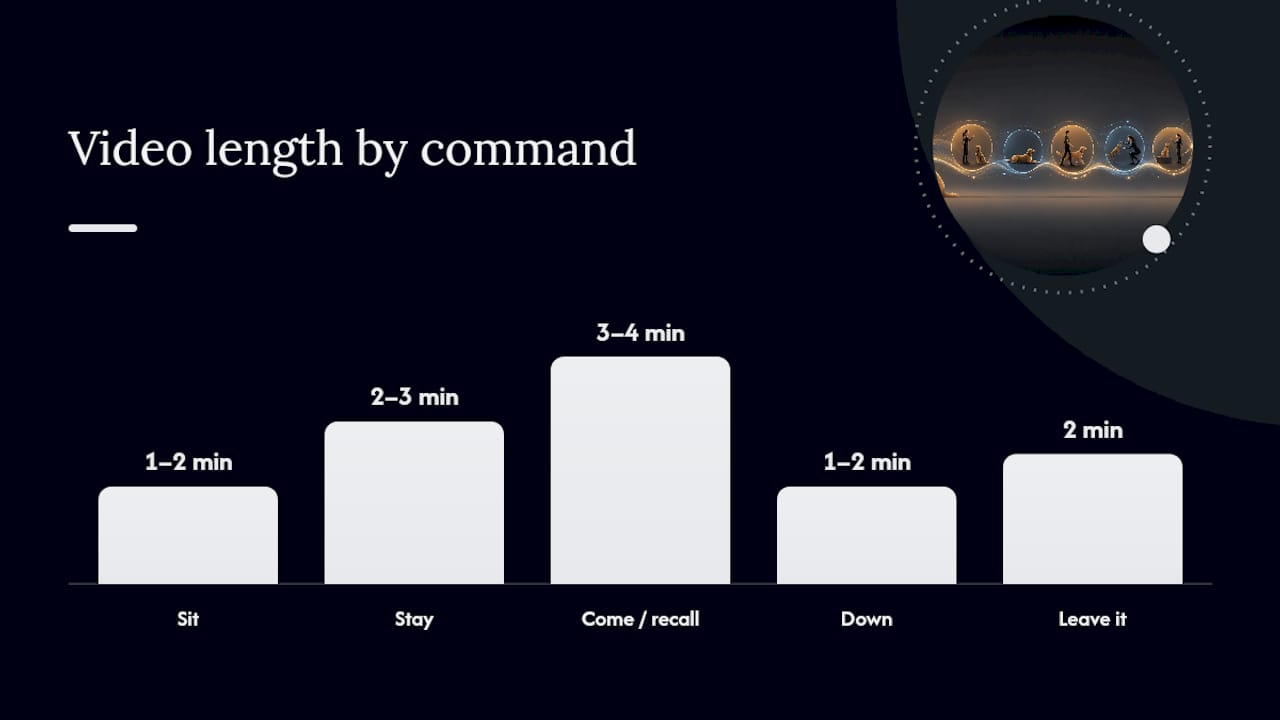
Sit: A 1 to 2 minute video is enough. Lure the nose up and back until the hips drop, mark the instant the hips touch the ground, then reward. Initial mechanics often click within 1 to 3 days, but reliability around distractions takes several more weeks.
Stay: Use a 2 to 3 minute clip that shows duration building in small increments, one second at a time before distance is added.
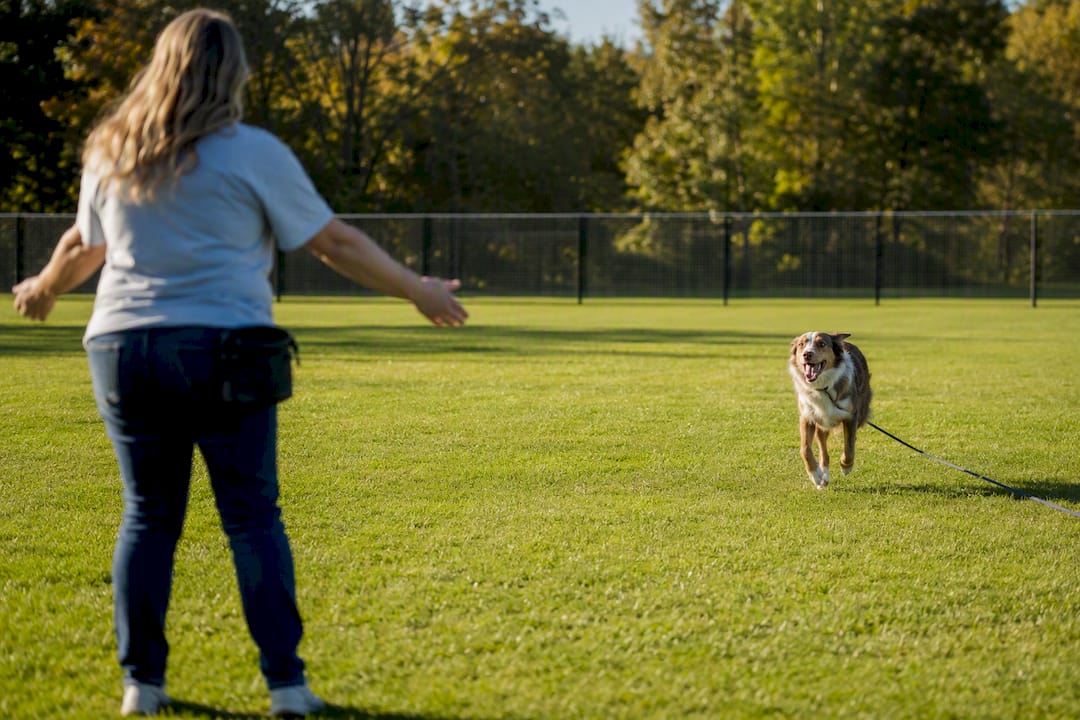
Come/recall: Look for a 3 to 4 minute video, since recall needs the most repetition. Build 60 or more successful, low-distraction recalls with a high-value reward before testing it on a long line anywhere distracting.
Down: A 1 to 2 minute lesson works, luring from a sit into a down along the floor.
Leave it: A 2 minute video showing the closed-fist method translates well to real food on the ground.
Heel/place: These take the longest to teach cleanly, so a 3 to 4 minute step-by-step video with visible foot position helps more than a short clip.
The reward timing matters more than most owners realize. Mark the exact moment of correct behavior, then deliver the reward within 1 to 2 seconds. Wait longer than that and your dog can’t connect the reward to the choice it just made.
- Puppies: use higher rates of reward and shorter videos, since attention spans are brief.
- Adult dogs learning a new skill: standard drill length works, but increase reward value if progress stalls.
- Distracted environments: use a long line for safety and switch to your dog’s highest-value treat, not the everyday kibble.
A Two-Week Video Training Schedule You Can Actually Follow
Consistency beats intensity. Two or three short sessions a day, spaced a few hours apart, build a command faster than one long marathon session ever will.
- Days 1 to 3: Pick one command. Watch its single-drill video, then run two 5 minute sessions daily at home, no distractions.
- Days 4 to 6: Add a second command using the same pattern. Alternate which one you train first in each session.
- Days 7 to 9: Rewatch the proofing clip for your first command and add one new environment, like the backyard or a different room.
- Days 10 to 12: Increase distance or duration on your strongest command, but change only one variable at a time.
- Days 13 to 14: Test both commands in a mildly distracting setting, like a quiet sidewalk, and note which one needs more repetition.
By the end of two weeks, expect solid mechanics indoors and the beginning of reliability outdoors. Full proofing, especially for recall in high-distraction settings, often takes three to six months of continued practice, and generalizing a cue across at least three different environments is what actually locks it in.
Why Video Training Sessions Stall (and How to Fix Them)
Most stalled progress traces back to a handful of repeatable errors, and every one of them has a quick fix.
- Repeating the cue over and over. Saying “sit, sit, SIT” teaches your dog that the first cue doesn’t count. Reset and lure instead of repeating.
- Jumping steps too fast. If a video shows five progressions and your dog is stuck on step two, go back to step one and rebuild before moving forward.
- Using low-value rewards. Dry kibble might work at home but won’t compete with a squirrel outside. Upgrade to real chicken or cheese when the environment gets harder.
- Marathon sessions. A 30 minute session with no breaks teaches frustration, not obedience. Stick to 5 to 10 minutes, done multiple times a day.
Pro Tip: If your dog seems to “forget” a command it knew yesterday, check the environment before blaming the dog. New locations reset reliability until you proof the cue there specifically.
For a deeper breakdown of these traps, see 10 Common Dog Training Mistakes Every Owner Should Avoid.
The Evidence Behind This Approach
This method leans on published behavioral guidance, not guesswork. The AVSAB’s position on reward-based training is the backbone of every drill in this piece, and Andrew’s editorial work draws on that same guidance when shaping Ipuppee’s training content. For command-specific detail, How Dogs Learn Commands: A Step-by-Step Guide and Dog Training Fundamentals 2025 go further into session structure and proofing timelines. Video courses and downloadable lesson plans build directly on these same principles.
A Publisher’s Note on Video Drills and Everyday Communication
I keep coming back to the same pattern: dogs who learn fastest are the ones whose owners repeat short, identical drills rather than improvising longer sessions. That consistency is reflected in certain training workflows, where video lessons pair with device-based communication so the whole household reinforces the same cues the same way.
— Andrew
Get Guided Video Courses and Lesson Plans
You’ve seen what makes a drill effective. Some platforms turn that same structure into ready-made courses instead of scattered clips. Where free playlists leave you piecing together formats and figuring out proofing order yourself, Ipuppee’s on-demand video course and downloadable lesson plans sequence it for you, command by command, week by week.

The course pairs directly with the reward timing and session length covered above, so there’s no guesswork about what to watch next or when to move to a harder step. It also connects naturally to alert devices based on consistent cues, helping dogs adapt faster to communication tools built around the same marker and reward system. Visit the Ipuppee training courses and device guides to access the full lesson library and start your dog’s next session today.
Sources
- AVSAB: Positive reinforcement is more effective at training dogs than an electronic collar, study shows
- How to Train a Dog: The Seven Essential Commands Every Dog Should Learn
- How to Train a Dog: The Complete Guide for Every Breed (TailorPup)