

Nearly one in five adults in the United States experiences a mental health issue each year. For many, emotional support dogs can offer life-changing comfort and stability when everyday stress feels overwhelming. These animals provide far more than ordinary companionship by creating a sense of calm and reassurance through their steady presence, helping owners handle anxiety, depression, and isolation in ways few other supports can.
Key Takeaways
| Point | Details |
|---|---|
| Emotional Support Dogs Defined | Emotional support dogs provide psychological relief through companionship, mainly offering emotional comfort without specialized training. |
| Types of Emotional Support Dogs | Various breeds, like Labs and Golden Retrievers, are selected for their calming presence and ability to support mental health. |
| Legal Protections | Emotional support dogs have limited legal protections compared to service dogs, with no mandatory training, and housing rights under the Fair Housing Act. |
| Handler Responsibilities | Owners must ensure proper care and socialization of their emotional support dogs, avoid misunderstandings of legal status, and commit to their wellbeing. |
Table of Contents
- Defining Emotional Support Dog Roles
- Types Of Emotional Support Dogs Explained
- How Emotional Support Dogs Benefit Owners
- Legal Protections And Registration Requirements
- Responsibilities And Common Mistakes For Handlers
Defining Emotional Support Dog Roles
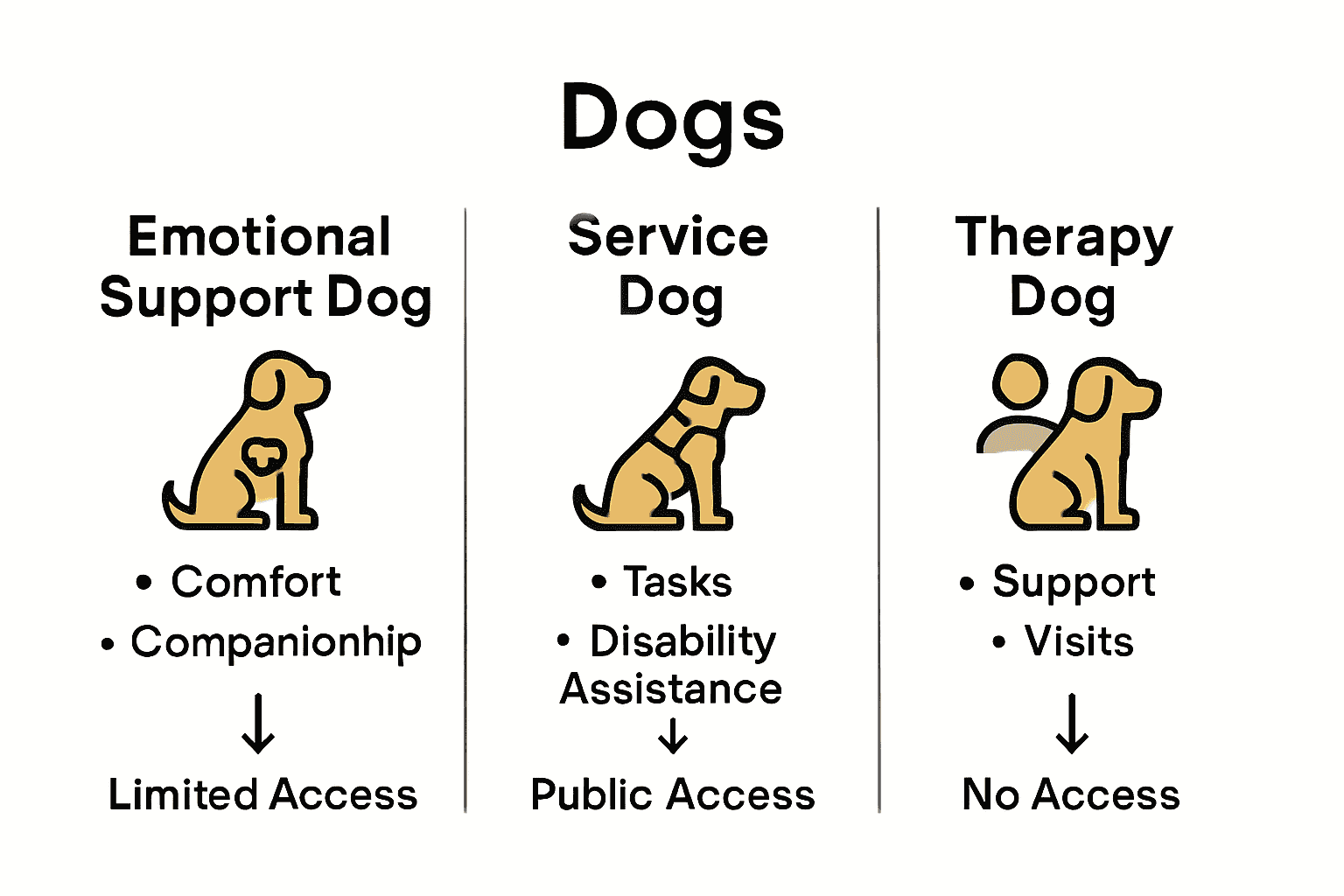
Emotional support dogs provide critical psychological relief through companionship, offering comfort and emotional stability for individuals struggling with mental health challenges. Unlike service dogs that undergo extensive specialized training to perform specific tasks, emotional support dogs primarily offer therapeutic companionship through their presence and affection.
According to research from global collaboration involving over 100 researchers, emotional support animals represent a distinct category within animal-assisted support, clearly differentiated from assistance animals, therapy animals, and companion animals. Their primary function centers on providing psychological comfort without requiring complex task-specific training. Learn more about service dog benefits in our comprehensive guide.
The key characteristics of emotional support dogs include:
- Providing unconditional emotional comfort
- Helping reduce symptoms of anxiety and depression
- Offering consistent companionship
- Supporting mental health through their calming presence
- Requiring no specialized task training
While emotional support dogs do not have the same legal protections as service animals, they play a crucial role in supporting individuals managing mental health conditions. Their ability to provide emotional stability makes them invaluable companions for those experiencing psychological challenges.
Types of Emotional Support Dogs Explained
Emotional support dogs come in various breeds and sizes, each offering unique characteristics that can provide psychological comfort and companionship to individuals struggling with mental health challenges. While these dogs do not require specialized training like service dogs, their intuitive nature and ability to provide emotional stability make them invaluable companions.
According to research on assistance animals, there are several distinct types of emotional support dogs characterized by their temperament and potential to support mental health. Discover how service dogs help in our comprehensive guide on real benefits.
Common types of emotional support dogs include:
Here’s how the most common emotional support dog breeds compare:
| Breed | Key Traits | Ideal For |
|---|---|---|
| Labrador Retriever | Gentle, empathetic, loyal | General comfort Anxiety |
| Golden Retriever | Nurturing, calm, patient | Anxiety Depression |
| Poodle | Intelligent, adaptable, hypoallergenic | Allergy sufferers Various needs |
| Cavalier King Charles Spaniel | Sensitive, affectionate, small size | Apartment living Emotional support |
| German Shepherd | Protective, intuitive, supportive | Security Emotional stability |
- Labrador Retrievers: Known for their gentle temperament and high empathy
- Golden Retrievers: Exceptionally nurturing and calm, perfect for anxiety support
- Poodles: Intelligent and adaptable, excellent for individuals with varying emotional needs
- Cavalier King Charles Spaniels: Small breed with remarkable emotional sensitivity
- German Shepherds: Protective and intuitive, providing a sense of security
These dogs are selected not for specific task performance, but for their natural ability to provide comfort, reduce stress, and offer unconditional emotional support. Their primary role is to be a constant, calming presence for individuals managing mental health conditions.

How Emotional Support Dogs Benefit Owners
Emotional support dogs provide profound psychological benefits that extend far beyond simple companionship, offering critical mental health support for individuals struggling with various emotional and psychological challenges. These remarkable animals create a unique bond that helps owners navigate complex emotional landscapes, providing unconditional love and a sense of stability during difficult times.
Research involving veterans with PTSD demonstrates the significant therapeutic potential of emotional support dogs. Learn more about the emotional benefits of dog training in our comprehensive guide, which reveals how these animals can dramatically improve mental health outcomes and personal well-being.
Key benefits of emotional support dogs include:
- Reducing symptoms of anxiety and depression
- Providing consistent emotional comfort
- Decreasing feelings of loneliness and isolation
- Helping regulate emotional responses
- Offering a calming presence during stressful situations
Unlike service dogs with specific task training, emotional support dogs excel through their intuitive ability to sense and respond to their owner’s emotional state. Their natural empathy creates a powerful therapeutic relationship that can significantly improve mental health, offering hope and healing for individuals facing psychological challenges.
Legal Protections and Registration Requirements
Emotional support dogs occupy a unique legal space that differs significantly from service dogs, with specific protections and limitations that owners must carefully understand. Legal recognition for these animals varies widely, with no universal standard for registration or certification across different jurisdictions.
According to research, in the United States, emotional support animals are not recognized as service animals under the Americans with Disabilities Act (ADA). Learn more about service dog benefits in our comprehensive guide, which explores the nuanced legal landscape for support animals.
Key legal considerations for emotional support dogs include:
- No mandatory training or certification requirements
- Limited public access rights compared to service dogs
- Potential housing accommodations under Fair Housing Act
- Possible travel considerations with appropriate documentation
- Varying state and local regulations
Owners should be aware that while emotional support dogs provide critical psychological support, their legal protections are more restricted compared to service dogs. Obtaining proper documentation from a licensed mental health professional remains the most reliable way to secure housing and travel accommodations for emotional support animals.
Responsibilities and Common Mistakes for Handlers
Handling an emotional support dog requires a comprehensive understanding of both the animal’s needs and the unique psychological support role they provide. Responsible handlers must recognize that these dogs are not just pets, but critical companions who require consistent care, training, and emotional attunement to effectively support their owner’s mental health.
Explore top service dog handler tips for successful bonding to understand the nuanced dynamics of maintaining a healthy relationship with your emotional support animal. Research indicates that poorly managed emotional support animals can create significant challenges in public and housing contexts.
Common responsibilities for emotional support dog handlers include:
- Maintaining the dog’s physical and mental health
- Ensuring proper socialization and basic obedience
- Managing the dog’s behavior in public spaces
- Obtaining and maintaining appropriate documentation
- Understanding legal limitations and rights
Frequent mistakes handlers make involve misunderstanding legal protections, attempting to pass off pets as emotional support animals through fraudulent online certifications, and failing to invest time in training and behavioral management. Successful handlers recognize that emotional support dogs require consistent guidance, patience, and a genuine commitment to both the animal’s well-being and their own mental health journey.
Transform Emotional Support Into Reliable Communication and Safety
If you or your loved one relies on an emotional support dog, you know how vital clear communication and safety are to peace of mind. The article highlights that emotional support dogs offer more than companionship—they help ease anxiety and support mental health. But what happens if your dog cannot alert you or others in a crisis, or if there is a gap between the comfort they provide and practical safety? That challenge can cause unnecessary stress, especially for individuals living alone or those with special needs.

Now is the time to empower your bond with practical solutions. With the iPupPee device from ipuppee.com, you can teach your dog to alert you or others with just a simple press of a button. This innovation bridges the gap between emotional support and real-world safety, helping you maintain greater independence and reducing daily worries. Explore more customer stories and see how this tool can help both you and your support dog thrive by visiting the shop and learn more today. Don’t wait to give your emotional support dog a new way to keep you safe and connected—take action with ipuppee.com and experience life with less worry and more confidence.
Frequently Asked Questions
What is the primary role of an emotional support dog?
Emotional support dogs primarily provide psychological comfort and emotional stability through companionship, helping individuals manage mental health challenges without needing specialized task training.
How do emotional support dogs differ from service dogs?
Emotional support dogs offer companionship and comfort, while service dogs are trained to perform specific tasks to assist individuals with disabilities. Emotional support dogs do not have the same legal protections as service dogs under the Americans with Disabilities Act (ADA).
What are the legal rights of emotional support dog owners?
Emotional support dog owners have specific rights, such as housing accommodations under the Fair Housing Act, but they do not have the same public access rights as service dog owners. Proper documentation from a licensed mental health professional is required for certain accommodations.
What responsibilities do emotional support dog handlers have?
Handlers are responsible for maintaining the emotional and physical health of their dogs, ensuring proper socialization, managing behavior in public, and obtaining and maintaining appropriate documentation. Consistent care and commitment are essential for effective support.