

Over half of American households share their lives with a dog, yet few realize that independent training goes far beyond basic sit and stay. For pet owners, building a dog’s confidence and self-sufficiency leads to a happier, more adaptable companion. This guide reveals step-by-step strategies rooted in proven methods, helping you assess readiness, create a safe learning space, and introduce tools that foster real canine independence.
Table of Contents
- Step 1: Assess Your Dog’s Readiness for Independent Training
- Step 2: Set Up a Safe and Engaging Training Environment
- Step 3: Introduce Independence Tools Like Communication Devices
- Step 4: Teach Foundational Independence Commands and Tasks
- Step 5: Reinforce Skills and Monitor Your Dog’s Progress
Quick Summary
| Key Insight | Explanation |
|---|---|
| 1. Assess Your Dog’s Readiness | Evaluate your dog’s attention span and response to commands before starting independent training. This ensures they have foundational skills. |
| 2. Create a Safe Training Environment | Design a distraction-free area for training, ensuring physical safety and promoting mental focus during sessions. |
| 3. Introduce Communication Tools Gradually | Use specialized devices to facilitate communication, starting with one tool at a time to avoid overwhelming your dog. |
| 4. Teach Independence Commands Systematically | Focus on basic commands and gradually increase complexity, using consistent signals and rewarding successful attempts during training. |
| 5. Monitor Progress Compassionately | Keep a record of your dog’s training sessions to track improvement and adjust strategies, celebrating small successes throughout the process. |
Step 1: Assess Your Dog’s Readiness for Independent Training
Before launching into complex training programs, understanding your dog’s baseline behavioral capabilities is crucial. Independent training requires specific foundational skills that determine whether your canine companion is prepared for more advanced learning techniques. Service dog obedience principles suggest evaluating multiple behavioral dimensions before proceeding.
Dog readiness assessment involves examining several key behavioral markers. First, evaluate your dog’s current attention span and ability to maintain focus during training sessions. Check if they can consistently respond to basic commands like sit, stay, and come without excessive distraction. Communication responsiveness is critical - your dog should demonstrate consistent eye contact, immediate response to verbal cues, and minimal hesitation when following instructions. Pay attention to their overall temperament: dogs with calm dispositions and moderate energy levels typically adapt more successfully to independence training.
Warning signals indicating potential challenges include extreme anxiety, hyperactivity, or persistent difficulty maintaining focus for more than a few minutes. If your dog struggles with these foundational skills, consider working with a professional trainer to develop prerequisite obedience capabilities before advancing to more complex independence training. Remember that every dog learns differently, and patience will be your most valuable training tool.
Next, you will begin establishing fundamental communication and response protocols that form the bedrock of independent skill development.
Step 2: Set Up a Safe and Engaging Training Environment
Creating an optimal training environment is fundamental to successful dog independence work. Your goal is to design a space that minimizes distractions, maximizes learning potential, and ensures both physical and psychological safety for your dog. Dog safety training principles emphasize the importance of a controlled, predictable setting that supports focused learning.
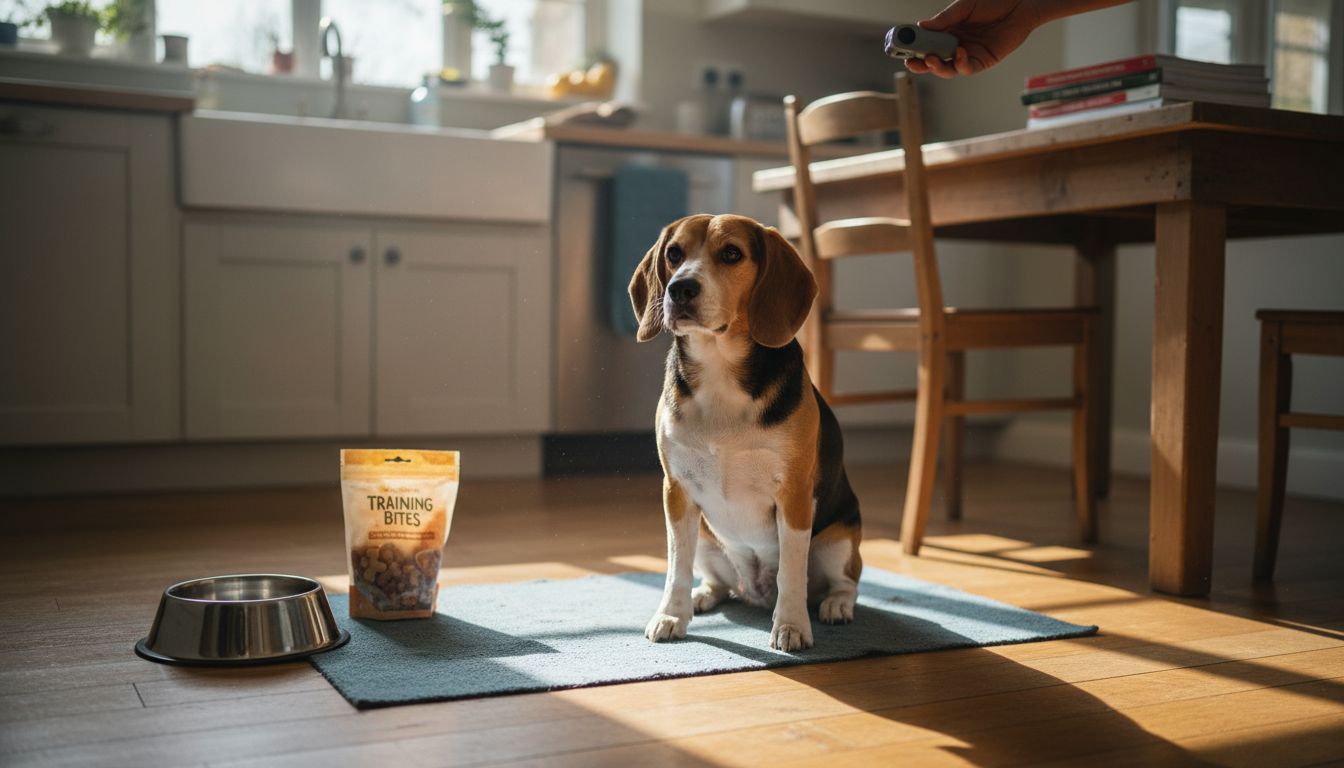
Begin by selecting a quiet area with minimal external stimuli. Clicker training techniques underscore the significance of a controlled environment where communication can be clear and precise. Choose a room or outdoor space with consistent flooring, good lighting, and enough room for movement. Remove potential hazards like loose electrical cords, fragile objects, or items that might startle your dog. Consider using baby gates or temporary barriers to define the training zone and prevent unexpected interruptions.
Prepare your training toolkit before each session. This should include high value treats, a clicker, a water bowl, and any specific training aids. Position yourself to maintain eye contact and provide immediate feedback. Keep training sessions short (10-15 minutes) to prevent mental fatigue and maintain your dog’s enthusiasm. Watch for signs of stress or overstimulation, and be prepared to end the session if your dog seems overwhelmed. A calm, positive atmosphere will make independent skill acquisition more effective and enjoyable for both of you.
Next, you will establish clear communication protocols that will guide your dog through the independence training process.
Step 3: Introduce Independence Tools Like Communication Devices
Successful dog independence training relies on strategic tool selection that enhances communication and promotes self sufficiency. Dog communication techniques highlight the critical role of specialized devices designed to bridge understanding between humans and canines. Your primary objective is introducing tools that empower your dog to communicate needs and respond independently.
Explore communication technologies that support independent interactions. Advanced communication devices demonstrate how technology can translate canine behaviors into meaningful signals. Consider introducing buttons with prerecorded messages, alert systems, or specialized training devices that allow your dog to signal specific requirements. For instance interactive buttons can help dogs communicate basic needs like wanting water, going outside, or indicating discomfort. Practice consistently with each device ensuring your dog understands the purpose and connection between pressing a button and receiving a response.
Warning: Introduce new communication tools gradually. Some dogs may feel overwhelmed by multiple devices simultaneously. Start with one tool, provide extensive positive reinforcement, and monitor your dog’s comfort level. Patience and consistent training are key to helping your dog integrate these independence tools effectively. Your goal is building confidence through clear communication pathways that respect your dog’s learning pace and individual personality.
Next, you will develop consistent training protocols that reinforce your dog’s emerging communication skills.
Step 4: Teach Foundational Independence Commands and Tasks
Developing independence in dogs requires a systematic approach to command training that builds confidence and communication skills. Basic command training provides the essential framework for teaching dogs to respond autonomously and make decisions with minimal direct supervision. Your goal is to create a solid foundation of skills that enable your dog to function more independently.
Clicker training methods offer an effective strategy for teaching foundational independence commands. Start with fundamental tasks like staying in place, returning when called, retrieving specific items, and navigating spaces without constant guidance. Break complex tasks into smaller manageable steps. For example when teaching item retrieval begin with simple object selection and gradually increase difficulty. Use consistent verbal and hand signals that your dog can recognize from a distance. Practice these commands in progressively more challenging environments to build your dog’s confidence and reliability.
Warning: Independence training requires patience and incremental progression. Some dogs learn faster than others and pushing too quickly can create anxiety or resistance. Always use positive reinforcement techniques praising and rewarding successful attempts. Watch for signs of stress or confusion and be prepared to simplify the training if your dog seems overwhelmed. The ultimate objective is creating a confident companion who can make appropriate decisions while maintaining a strong connection with you.
Next, you will develop advanced communication strategies that reinforce your dog’s emerging independent skills.
Step 5: Reinforce Skills and Monitor Your Dog’s Progress
Tracking your dog’s independence training requires a systematic and compassionate approach that celebrates incremental achievements while identifying areas for improvement. Smart dog training techniques emphasize the importance of continuous assessment and adaptive learning strategies that support your dog’s growth and confidence.
Establish a consistent tracking system to document your dog’s skill progression. Create a simple log that records training sessions including specific tasks practiced successful attempts challenges encountered and your dog’s emotional state. Focus on quantifiable metrics such as response time accuracy of command execution and level of independence demonstrated. Pay attention to subtle changes in body language confidence and willingness to engage with tasks. Regularly video record training sessions to provide an objective perspective on your dog’s performance and identify nuanced improvements that might not be immediately apparent during live interactions.
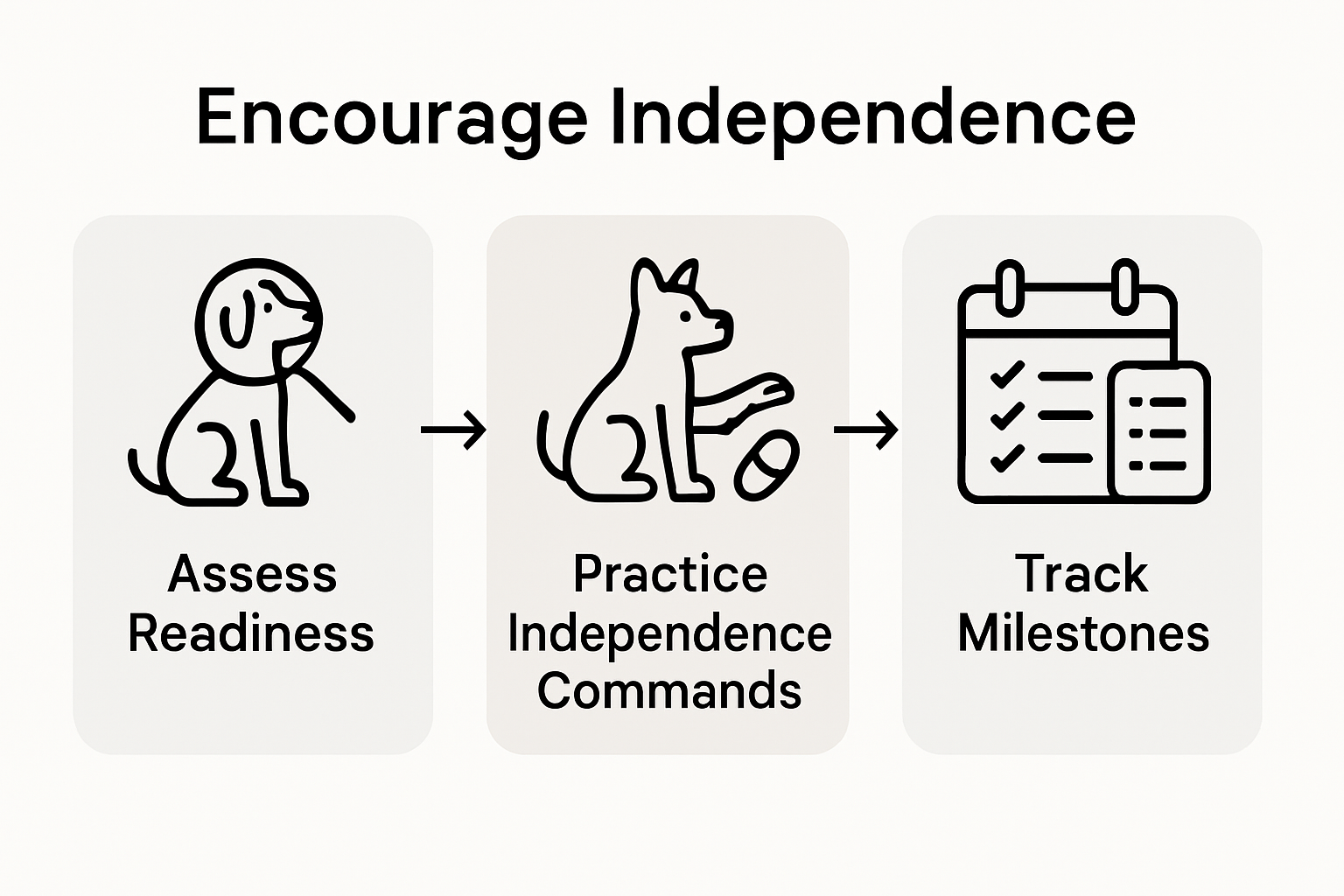
Warning: Avoid comparing your dog’s progress to other dogs or rigid predetermined milestones. Each dog learns differently and develops skills at their unique pace. Celebrate small victories maintain a positive training environment and remain patient. If you notice persistent struggles or regression in skills consider consulting a professional dog trainer who can provide personalized guidance. Your ultimate goal is building a confident independent companion who feels supported and motivated throughout the learning process.
Next, you will develop strategies for maintaining and advancing the independent skills your dog has acquired.
Empower Your Dog’s Independence with Innovative Communication Tools
Training your dog for independence requires patience and the right resources to overcome challenges like limited communication and distraction. The article highlights how essential foundational commands and communication devices are for building your dog’s confidence and self-sufficiency. If you want to help your dog express needs clearly and respond better during training, explore effective solutions designed for this very purpose.
Discover the iPupPee system that perfectly complements your training efforts by offering simple, reliable communication buttons your dog can learn to use independently. This device supports your dog’s ability to communicate needs like going outside or alerting you with ease. Start turning independence goals into reality today and build a trusting bond with your canine companion through enhanced communication. Visit ipuppee.com to learn more and take the next step in your dog’s independence journey.
Frequently Asked Questions
How do I assess my dog’s readiness for independent training?
To assess your dog’s readiness, evaluate their attention span and ability to respond to basic commands like sit, stay, and come. Check for indicators of temperament, like calmness or moderate energy, to determine if they can handle independent training without excessive distraction.
What should I include in my dog’s training environment?
Create a safe training environment by selecting a quiet area with minimal distractions and removing potential hazards. Ensure the space is open enough for movement and well-lit to facilitate clear communication.
How can I introduce communication devices to my dog?
Introduce communication devices gradually, starting with one tool that your dog can easily understand. Provide plenty of positive reinforcement to help them associate the device with specific needs, such as signaling for water or going outside.
What foundational commands should I teach my dog for independence training?
Begin with basic commands that support independence, such as stay, come, and retrieve. Use positive reinforcement to encourage your dog and practice these commands in various environments to build their confidence in responding independently.
How do I track my dog’s progress in independence training?
Establish a simple log to record training sessions, including tasks practiced and your dog’s emotional state. Focus on metrics like response time and successful command execution to objectively assess their skills over time.
What should I do if my dog struggles with independence training?
Be patient and avoid comparing your dog’s progress to others, as each dog learns at their own pace. If persistent struggles occur, consider simplifying tasks or consulting a professional dog trainer for personalized guidance.
Recommended
- Understanding Dog Independence Benefits for Owners – iPupPee
- How to Teach Your Dog Basic Commands in 2025 – iPupPee
- How to Teach Dogs Commands for Better Communication – iPupPee
- Training Service Dog Skills: How to Teach Essential Tasks – iPupPee
- Verstehen Sie Ihr Haustier: Tipps für erfolgreiches Tierverhalten und