

Over 80 percent of dog owners face setbacks when trying to teach new commands at home. Without the right approach, even the smartest dogs can become confused or distracted. Well-structured training not only boosts obedience but also strengthens your bond and makes life smoother for both you and your pet. Learn proven methods that transform confusing sessions into clear, rewarding routines for you and your dog.
Table of Contents
- Step 1: Prepare Your Dog And Training Space
- Step 2: Introduce Simple Verbal Cues Or Signals
- Step 3: Use Positive Reinforcement Methods
- Step 4: Practice Commands In Various Environments
- Step 5: Test And Confirm Consistent Obedience
Quick Summary
| Key Point | Explanation |
|---|---|
| 1. Prepare a Distraction-Free Zone | Ensure a quiet, comfortable space without distractions for effective training sessions. |
| 2. Use Simple and Consistent Cues | Employ distinct verbal commands paired with clear actions to enhance your dog’s understanding. |
| 3. Provide Immediate Positive Reinforcement | Reward your dog promptly after desired behaviors to strengthen learning and motivation. |
| 4. Practice Commands in Varied Environments | Reinforce learning by practicing commands in different locations to improve reliability. |
| 5. Test Commands with Patience and Precision | Evaluate your dog’s obedience through varied tests while maintaining a supportive attitude. |
Step 1: Prepare Your Dog and Training Space
Successfully teaching your dog commands starts with creating the perfect training environment. Careful preparation ensures focused learning and reduces potential distractions that could derail your training session.
According to Battersea Dogs & Cats Home, establishing a distraction-free zone is critical. This means removing favorite toys, turning off electronic devices like televisions and radios, and ensuring the space is well-ventilated. Select a quiet room or area in your home where your dog feels comfortable but isn’t overly stimulated. Ideally, choose a space with minimal foot traffic and background noise.
Before beginning any training, gather your essential tools: high-value treats, a training leash, and a calm demeanor. Position yourself at your dog’s eye level and minimize external interruptions. Wear comfortable clothing that allows you to move freely and demonstrates relaxed body language. Guide Dogs for the Blind emphasizes that clear communication involves both verbal and non-verbal cues, so your physical positioning matters as much as your voice.
A pro tip: Keep initial training sessions short and positive. Aim for 5-10 minute intervals to prevent your dog from becoming overwhelmed or losing interest. End each session with praise and a small reward to create a positive association with training time. Your next step will involve selecting the specific commands you want to teach and understanding the fundamental principles of dog communication.
Step 2: Introduce Simple Verbal Cues or Signals
Teaching your dog simple verbal cues is the foundation of clear communication between you and your furry companion. This step will help you establish a language your dog understands and responds to consistently.
According to Guide Dog Foundation, effective verbal communication starts with capturing your dog’s attention. Begin by saying your dog’s name clearly and confidently to ensure they are focused on you before giving any command. Use a single distinct word for each specific action like sit, stay, come, or down. Your tone should be calm yet assertive to help your dog understand the importance of the instruction.
The Whole Dog Journal recommends a strategic approach to introducing verbal cues. First, demonstrate the physical action you want your dog to perform using treats or gentle guidance. Once your dog consistently performs the action, introduce the verbal command just before or during the action. This method helps your dog associate the word with the specific behavior. For example, when teaching sit, gently guide your dog into a sitting position with a treat, then start adding the word sit as they complete the action.
A crucial tip is consistency. Use the same word every time and ask all family members to use identical commands to avoid confusing your dog.
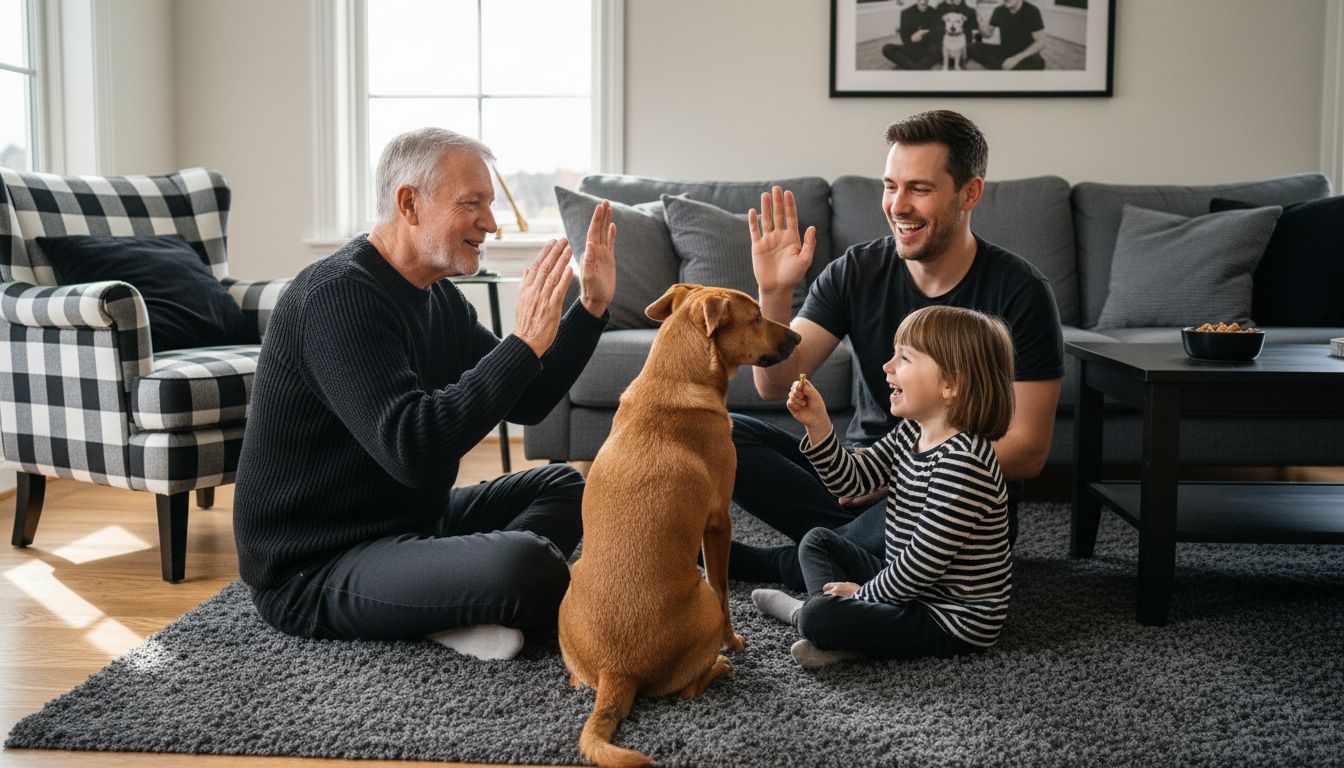 Keep training sessions short 5-10 minutes and always end on a positive note with plenty of praise and treats. Your next step will involve practicing these verbal cues in different environments to reinforce learning and reliability.
For more detailed guidance, check out our dog signal training guide to complement your verbal communication skills.
Step 3: Use Positive Reinforcement Methods
Positive reinforcement is the most effective and humane way to teach your dog new commands and build a strong communication foundation. By rewarding desired behaviors, you create a learning environment that motivates and encourages your dog to repeat those actions.
According to the Maui Humane Society, the key to successful positive reinforcement is immediate recognition and reward. Use a clicker or clear verbal marker like yes or good the instant your dog performs the desired behavior. Follow this immediately with a high value treat or enthusiastic praise. This quick connection helps your dog understand exactly which action earned the reward.
Guide Dogs for the Blind emphasizes that reinforcement goes beyond just treats. Vary your rewards to include verbal praise, gentle petting, and play. Different dogs respond to different motivators so pay attention to what excites your particular dog most. Some may go crazy for a specific treat while others might prefer a quick game of tug or extra belly rubs.
A critical tip is timing and consistency. Always reward within 2-3 seconds of the desired behavior to ensure your dog makes the correct association. Gradually reduce treat frequency as the command becomes more reliable but continue offering occasional rewards to maintain motivation. If you want to dive deeper into understanding canine learning methods, check out our guide on how dogs learn to enhance your training approach.
Step 4: Practice Commands in Various Environments
Teaching your dog to respond to commands consistently requires practicing in diverse settings and situations. This step helps your dog generalize learned behaviors and remain responsive regardless of distractions or environmental changes.
According to Dog Scouts of America, the key to reliable dog training is proofing commands in different locations. Start in a quiet indoor space where your dog is most comfortable, then gradually introduce complexity. Move to different rooms, then your backyard, then a local park with increasing levels of distraction. Each new environment challenges your dog to focus and demonstrate understanding of the command.
Animal Behavior College recommends combining verbal cues with consistent hand signals to enhance command reliability. Practice commands at varying distances to build your dog’s confidence and responsiveness. Begin close to your dog and slowly increase the distance as they become more proficient. Use high value treats and enthusiastic praise to reward successful responses in these new challenging environments.
A critical tip is patience. Some dogs learn faster than others, so maintain a positive attitude and keep training sessions short and engaging. If your dog struggles in a particular environment, return to an easier setting and build up gradually. For more insights into command training techniques, check out our dog voice commands guide to further support your training journey.
Step 5: Test and Confirm Consistent Obedience
Confirming your dog’s consistent obedience requires strategic testing and careful observation of their response to commands in various scenarios. This final step helps validate the effectiveness of your training and identifies areas that might need additional work.
According to the Guide Dog Foundation, precision is key when testing obedience. Give one verbal command at a time and allow your dog to fully complete the task before moving to the next. This approach ensures you can accurately assess their understanding and compliance with each specific instruction. Watch for subtle differences in response time, body language, and completeness of the action.
The Whole Dog Journal recommends varying the timing and context of your commands to truly test your dog’s comprehension. Experiment by changing the duration between giving a verbal cue and using a physical lure. This method helps confirm whether your dog is responding to the verbal command itself or simply following a predictable pattern. Try introducing slight delays, changing your position, or adding mild distractions to gauge the reliability of their learned behaviors.
A critical tip is patience and objectivity. Some days your dog might perform brilliantly while other days they might struggle. Consistent training is a journey, not a destination. For additional insights into maintaining excellent dog obedience, explore our dog training consistency guide to help you and your furry companion continue growing together.
Enhance Your Dog Training with Smarter Communication Tools
Teaching your dog commands for better communication is essential but it can be challenging to maintain consistency and clarity, especially when advancing to different environments or testing obedience. Many dog owners face frustration with ensuring their furry friend understands and responds reliably. This is where combining traditional training methods with innovative solutions can truly transform your experience. Effective verbal cues and positive reinforcement lay the groundwork, and the next step is empowering your dog with clear, purposeful communication technology.

Discover how the iPupPee device can complement your training journey by providing an easy and reliable way for your dog to signal needs or alerts with a simple button press. Whether you are reinforcing commands, enhancing safety for service dogs, or supporting new puppy training, this tool brings a new level of independence and connection. Take control of your dog’s communication today by exploring our full range of products and detailed training resources available at ipuppee.com. Start strengthening your bond and ensuring your dog’s voice is heard now.
Frequently Asked Questions
How can I prepare my dog for training commands?
To prepare your dog for training commands, create a quiet, distraction-free environment. Remove toys and electronic devices, and choose a comfortable space where your dog feels secure.
What verbal cues are effective for teaching dogs commands?
Effective verbal cues should be single, distinct words like “sit,” “stay,” or “come.” Always use the same word for each command and pair it with the corresponding action to help your dog make clear associations.
How do I use positive reinforcement when training my dog?
Utilize positive reinforcement by immediately rewarding your dog with treats or praise when they perform the desired behavior. Doing this consistently reinforces learning and encourages your dog to repeat those actions, so aim to reward within a few seconds of the behavior.
How can I practice commands in different environments?
Begin practicing commands in a quiet indoor area, then gradually move to outdoor spaces with varying distractions. This helps your dog generalize learned commands, so ensure you maintain a positive attitude and keep sessions short and engaging.
What steps should I take to test my dog’s obedience?
To test your dog’s obedience, give one command at a time and carefully observe their response. Change the timing and context of your commands, allowing you to evaluate their understanding and reliability to various instructions.
How long should each training session be for my dog?
Each training session should be kept short, ideally around 5-10 minutes, to maintain your dog’s interest and focus. Frequent, brief sessions help reinforce learning without overwhelming them.