

TL;DR:
- A multimodal plan combining routines, mental stimulation, enrichment, and veterinary support improves a dog’s mental health effectively. Implementing consistent schedules and short mental activities helps reduce anxiety and build confidence. Regular enrichment, positive training, and calm handling are essential for long-term behavioral well-being.
A multimodal plan — consistent routine, targeted mental stimulation, enrichment, positive-reinforcement training, and veterinary support when needed — is the fastest, most evidence-backed way to improve a dog’s mental health. You don’t need to overhaul your life to see results. Start with these four things today:
- Set a fixed feeding and walk schedule (same times, every day)
- Add one short mental stimulation session (puzzle feeder, scent game, or trick drill)
- Create a quiet retreat space your dog can access on their own
- Replace scolding with a simple cue your dog already knows
The ASPCA, Cornell Riney Canine Health Center, and VCA Animal Hospitals all converge on this multimodal approach. No single fix works alone.
Table of Contents
- Immediate steps to reduce your dog’s stress right now
- Daily routine and prevention: the backbone of canine mental health
- At-home mental stimulation that actually tires a dog’s brain
- Choosing enrichment tools and toys that support mental health
- Positive-reinforcement training, giving a job, and lasting behavior change
- What to do when your dog is in acute anxiety or panic
- When to consult a vet or behaviorist, and what medical options exist
- Service-dog handler guidance: balancing reliability with enrichment
- A practical 7-day plan to start your dog’s mental health routine
- Key Takeaways
- The part most guides skip
- Ipuppee’s communication devices as a handler’s adjunct tool
- Useful sources and further reading
Immediate steps to reduce your dog’s stress right now
You don’t need a full behavior plan to help your dog feel better in the next hour. These five actions work fast.
- Create a quiet retreat. A crate, a corner with a blanket, or a low-traffic room gives your dog somewhere to decompress without being followed.
- Offer a long-lasting chew. Sustained chewing releases pressure more reliably than intermittent treats during stress.
- Run a 2–5 minute training drill. Ask for three behaviors your dog knows cold. Success builds confidence fast.
- Give a sniff-permission walk. Let your dog lead by the nose for 10 minutes. No heel, no rush.
- Lower your own energy first. Dogs read your state before they read the room.
Pro Tip: If you use a communication or safety device with your dog, press the cue button before a known calm activity — a short walk or a chew session. Over time, the device signal itself becomes a predictable “good thing is coming” cue that reduces anticipatory anxiety.
Avoid over-comforting a panicking dog with excessive petting or baby talk. According to VCA Animal Hospitals, that response can inadvertently reinforce the anxious state. A quiet space and a simple, familiar command work better.
Daily routine and prevention: the backbone of canine mental health
Predictability beats comfort for most anxious dogs. Cornell Riney Canine Health Center notes that consistent schedules reduce the environmental uncertainty that fuels anxiety. A dog who knows what comes next is a calmer dog.
A sample daily structure that works for most adult dogs:
- 7:00 AM — Morning meal (same bowl, same spot)
- 7:20 AM — 20-minute walk or yard time
- 8:00 AM — 5-minute training drill (sit, down, stay, one new trick)
- 12:00 PM — Midday puzzle feeder or chew
- 5:30 PM — Evening meal
- 6:00 PM — Play session or scent game (10 minutes)
- 9:00 PM — Quiet wind-down; lights low, activity stops
Adapt the times to your schedule, but keep the sequence consistent. Dogs orient to order, not clocks. Learn more about why dogs thrive with routines and how structure affects behavior long-term.
Pro Tip: Three 5-minute mental sessions spread across the day often outperform one long training block. Short, frequent repetitions build memory and reduce frustration for both dog and owner.
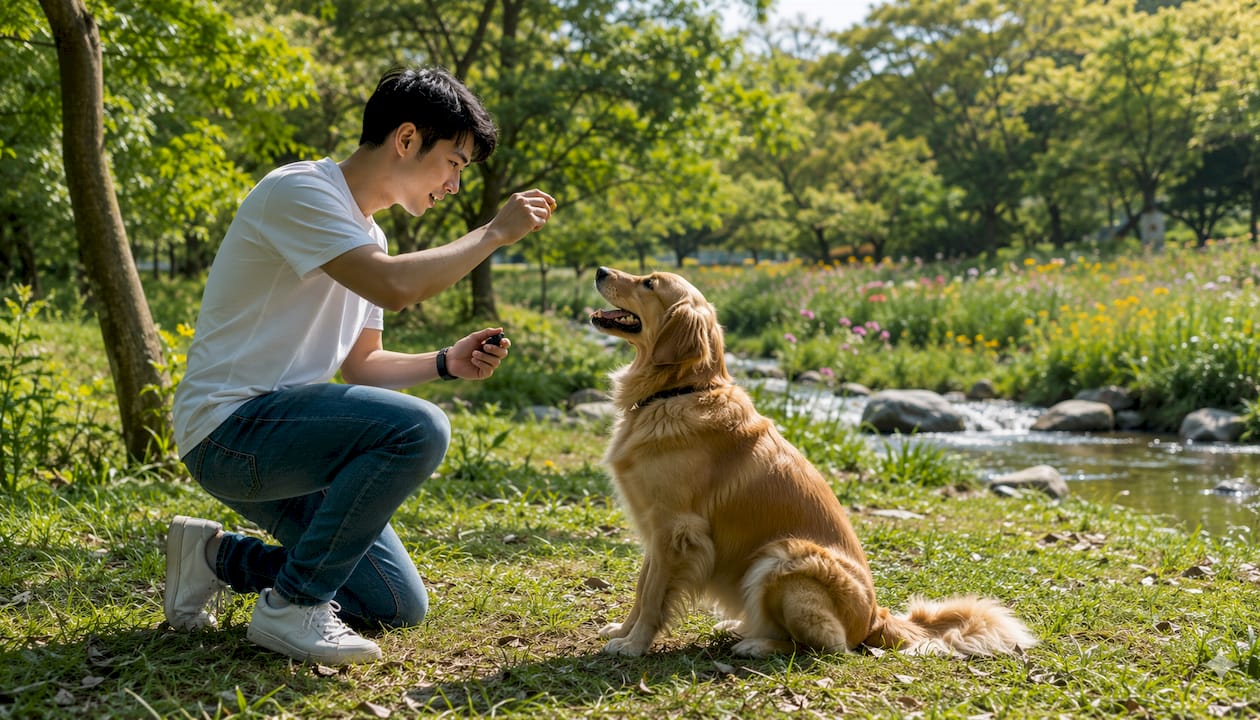
At-home mental stimulation that actually tires a dog’s brain
Physical exercise matters, but it’s not the whole picture. Short, intense mental work — roughly 5–8 minutes — can produce the same behavioral calm as a much longer walk, particularly for high-energy or mobility-limited dogs. Dr. Mathieu Glassman notes that mental stimulation provides neurological challenges that physical exercise simply doesn’t replicate.
High-impact activities to rotate:
- Snuffle mat foraging — scatter kibble in a snuffle mat; most dogs finish in 5 minutes and nap afterward
- Clicker/trick training — teach one new behavior per week using a marker and small treats
- Hide-and-seek with toys — hide a favorite toy in three spots; give a “find it” cue
- Scent trails — drag a treat along a path in the yard; let the dog track it nose-down
- Puzzle feeders — replace one meal per day with a food-dispensing toy
How to set up a 3-step scent trail:
- Let your dog watch you drag a high-value treat along a short path.
- Hold the dog back for 30 seconds, then release with “find it.”
- Gradually increase path length and add turns as the dog gets faster.
For handlers using communication devices, pair the “find it” release with your device’s alert cue. The dog learns the signal means “a job is starting” — which is itself calming. More dog mental stimulation ideas are available for different energy levels and environments.
Choosing enrichment tools and toys that support mental health
Rotate toy categories daily. AAHA identifies five enrichment types — cognitive, food/foraging, sensory, physical, and social — and novelty across all five keeps engagement high. Offering the same toy every day produces diminishing returns within a week.
Toy categories worth prioritizing:
- Treat-dispensing toys (replace one meal per day)
- Long-lasting chews (bully sticks, rubber chew toys sized to the dog)
- Snuffle mats (foraging + sensory in one)
- Interactive feeders (lick mats, slow-feed bowls)
Quick safety checklist before introducing any toy:
- Size: too large to swallow, too tough to splinter
- Durability: no loose parts that can be chewed off and ingested
- Ingredients (for edible chews): single-ingredient, no artificial preservatives
- Supervision: always monitor the first session with a new toy
Pro Tip: Pair a new enrichment toy with a familiar device cue or handheld signal. The known cue reduces novelty-stress and helps the dog engage faster, especially for rescue dogs or those with a history of anxiety.
Positive-reinforcement training, giving a job, and lasting behavior change
Positive-reinforcement training combined with a reliable daily “job” reduces anxiety by giving a dog agency and predictability. A dog that knows its behavior produces consistent outcomes is a dog that worries less.
A four-step framework for lasting change:
- Assess — identify the specific trigger or behavior (e.g., barking at the door, pacing before meals)
- Break it down — set one micro-goal per session (dog stays four feet from the door)
- Reinforce immediately — mark the correct behavior within two seconds
- Generalize — practice in two or three different environments before considering the behavior solid
Red flags that signal you need professional help: aggression toward people or other animals, self-injurious behavior, panic that doesn’t resolve within 20 minutes, or any behavior that puts safety at risk.
“Mental stimulation is essential and distinct from physical exercise — it provides neurological challenges that reduce boredom-driven behaviors.” — Dr. Mathieu Glassman
Your own emotional state shapes your dog’s behavior more than most owners realize. Cornell Riney Canine Health Center emphasizes that a calm, consistent owner is itself a therapeutic variable. Before a training session, take 60 seconds to slow your breathing. It changes the session. Explore how to improve dog behavior at home with a practical step-by-step framework.
What to do when your dog is in acute anxiety or panic
Remove the trigger first, then offer options. VCA Animal Hospitals recommends predictable, low-demand responses over excessive comfort during high-anxiety episodes.
Do:
- Guide the dog to their quiet retreat without drama
- Ask for one simple behavior they know well (sit or down)
- Keep your voice flat and calm, not soothing or high-pitched
- Allow the dog to disengage if they choose
Don’t:
- Pet repeatedly or hold the dog against their will during panic
- Punish escape attempts or vocalizations
- Flood the dog with commands or new stimuli
- Force interaction with the trigger
Pro Tip: For handlers with communication devices: press the alert cue once, then redirect to a known calm activity. The single, predictable signal gives the dog a reference point without adding stimulation. Avoid repeated presses during a panic episode.
If your dog attempts to escape through windows, doors, or fencing during anxiety episodes, treat it as a safety emergency and contact a veterinarian or certified behaviorist the same day.
When to consult a vet or behaviorist, and what medical options exist
Seek professional help when daily function is impaired, safety is at risk, or home strategies show no improvement after two to three weeks. ASPCA and PetMD both frame medication as an adjunct to behavioral work, not a standalone fix.
| Severity | Signs | Typical Interventions |
|---|---|---|
| Mild | Occasional pacing, yawning, lip-licking | Routine adjustment, enrichment, counterconditioning |
| Moderate | Daily avoidance, destructive behavior, appetite changes | Certified behaviorist, desensitization program, possible calming aids |
| Severe | Aggression, self-injury, escape attempts, non-functional | Veterinarian + behaviorist, prescription medication, structured behavior plan |
| Intervention Type | Best Used For | Time to Effect | Evidence Level |
|---|---|---|---|
| Behavioral therapy | All severity levels | Weeks to months | High |
| Environmental enrichment | Prevention and mild cases | Days to weeks | Moderate–High |
| Calming aids (e.g., alpha-casozepine) | Mild–moderate, as adjunct | Days to weeks | Moderate |
| Prescription medication | Moderate–severe, with behavior plan | Days to weeks | High (with therapy) |
Alpha-casozepine, a milk-protein derivative available in some vet-recommended supplements, has shown calming effects in dogs with mild-to-moderate anxiety. It’s not a replacement for training, but it can lower the baseline enough to make behavior work possible.
Service-dog handler guidance: balancing reliability with enrichment
Service-dog routines must balance task reliability with genuine enrichment and choice to prevent burnout. A working dog that never gets to just be a dog accumulates stress over time, and that stress shows up in task performance first.
Device-friendly practices for handlers:
- Schedule “device-off” windows daily — 20–30 minutes where the dog is off-duty and free to sniff, play, or rest
- Use short enrichment cues tied to the device signal to create positive associations with the alert system
- Run a weekly device-check: test responsiveness, check for wear, and confirm the dog’s reaction to the cue remains positive
Device-selection criteria worth applying: prioritize durability, low-noise cue delivery, and a signal the dog can distinguish from ambient sounds without startling.
Pro Tip: Use the device alert as the start cue for a favorite enrichment activity once a day. Over weeks, the alert itself becomes a predictor of something good — which keeps the dog’s response sharp and stress-free.
For handlers looking at interactive devices and dog cognition, pairing safety tools with enrichment routines produces better long-term outcomes than using devices in isolation.
A practical 7-day plan to start your dog’s mental health routine
Small, consistent daily changes compound. Commit to seven days of focused routine and enrichment before evaluating results.
- Day 1 — Baseline and routine: Write down current feeding, walk, and sleep times. Lock in a fixed schedule and stick to it.
- Day 2 — Quiet retreat: Set up a dedicated rest space. Introduce it with a chew or puzzle feeder placed inside.
- Day 3 — Mental stimulation: Add one 5-minute puzzle feeder session at midday. Note the dog’s energy level afterward.
- Day 4 — Scent work: Run a simple 3-step scent trail in the yard or hallway. Repeat twice.
- Day 5 — Training drill: Three 3-minute sessions of known behaviors plus one new trick attempt.
- Day 6 — Enrichment rotation: Introduce a new toy category (snuffle mat if you’ve been using a puzzle feeder, or vice versa).
- Day 7 — Review: Compare energy, sleep, and behavior against Day 1 notes. Adjust intensity up or down based on what you observed.
| Day | Primary Focus | Progress Marker |
|---|---|---|
| 1 | Routine | Schedule written and followed |
| 2 | Safe space | Dog uses retreat voluntarily |
| 3 | Mental stimulation | Dog calmer post-session |
| 4 | Scent work | Dog completes trail independently |
| 5 | Training | Dog responds to 3 cues reliably |
| 6 | Enrichment variety | Dog engages with new toy |
| 7 | Review and adjust | Behavior notes compared to Day 1 |
If progress stalls after Day 7, extend the plan by one week before adding complexity. If you see regression, consult your vet.
Key Takeaways
A multimodal approach — routine, mental stimulation, enrichment, positive training, and veterinary support when needed — is the most evidence-backed path to lasting canine mental health.
| Point | Details |
|---|---|
| Routine reduces anxiety | Fixed daily schedules lower environmental uncertainty and calm anxious dogs faster than comfort alone. |
| Mental work beats long walks | Short a short mental stimulation sessions can produce the same calm as much longer physical exercise. |
| Enrichment needs variety | Rotate across cognitive, foraging, sensory, physical, and social types to maintain novelty and engagement. |
| Know when to escalate | Seek a vet or certified behaviorist when daily function is impaired, safety is at risk, or two weeks of home strategies show no change. |
| Ipuppee for handlers | Ipuppee’s communication devices work best as adjuncts — paired with enrichment cues and scheduled off-duty windows, not as standalone solutions. |
The part most guides skip
The conventional wisdom on dog mental health focuses almost entirely on the dog. More walks, better toys, calmer environments. That’s all valid. But the variable most owners underestimate is themselves.
A dog living with a chronically stressed handler doesn’t just pick up on mood — they organize their entire threat-assessment around it. When you’re tense, the dog is on alert. When you’re calm and predictable, the dog can finally relax. The research from Cornell and ASPCA makes this explicit, but most listicles bury it in a footnote.
The other thing worth saying plainly: realistic timelines matter. A dog with established anxiety won’t reset in a week. Two to three weeks of consistent routine and enrichment is the minimum before you can fairly evaluate whether a strategy is working. Owners who quit at Day 5 because they “don’t see results” are the most common reason behavior plans fail, not the plans themselves.
Persistence, not perfection, is what actually moves the needle.
Ipuppee’s communication devices as a handler’s adjunct tool
If you’re a handler or an owner who uses safety and communication devices with your dog, Ipuppee offers something most training resources don’t account for: a way to make predictable cues and structured “jobs” easier to deliver consistently, even for owners with limited mobility or seniors living alone.
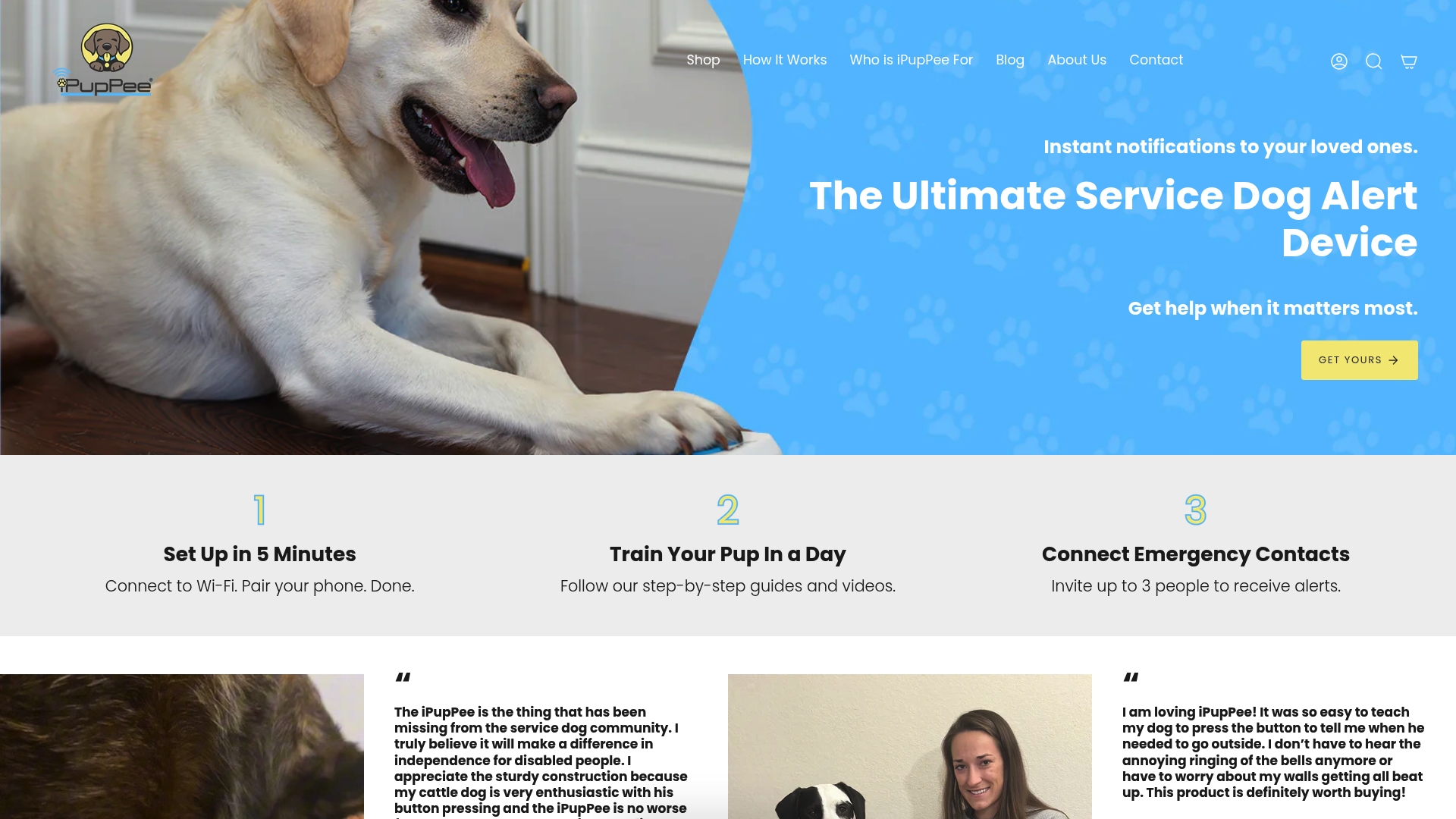
The iPupPee device works as an adjunct — a tool that supports the routine and enrichment plan you’ve built, not a replacement for training or veterinary care. Pair the alert cue with a calm activity, schedule device-off windows, and use it as one consistent signal in a broader mental health routine. That’s where it earns its place.
Devices support. They don’t replace qualified behavioral or medical treatment.
Ready to see how it fits your routine? Visit Ipuppee to explore the device, training guides, and enrichment resources built for handlers and everyday dog owners alike.
Useful sources and further reading
The following sources informed this article. Each is worth bookmarking for follow-up, especially if you’re working with a vet or behaviorist.
- ASPCA — Separation Anxiety: Stepwise treatment protocols for mild through severe separation anxiety, including counterconditioning and desensitization guidance. Useful for veterinarian referrals.
- Cornell Riney Canine Health Center — Anxious Behavior: Covers owner emotional-state effects and the role of predictable routines in reducing canine anxiety. Primary source for handler-focused guidance.
- VCA Animal Hospitals — Signs of Stress: Practical do/don’t guidance for acute anxiety episodes, including the over-comforting caution.
- PetMD — Dog Anxiety Treatment Options: Multimodal treatment overview, including alpha-casozepine supplements and prescription medication as adjuncts.
- AAHA — Enrichment for Pet Mental Wellbeing: Five-category enrichment framework; useful for structuring a rotation plan.
- Rover — Mental Stimulation for Dogs: Expert-sourced guidance on 5–8 minute mental work sessions and scent-based activities.
- Psychology Today — 3 Ways to Help Your Dog Stay Mentally Balanced: Covers chewing as a pressure-release behavior and the role of dog agency in reducing cortisol.
- ASPCA — Canine DIY Enrichment: Low-cost, at-home enrichment activities including scent games and food puzzles.
- Ohio State University — Enrichment for Dogs: Research-backed overview of environmental enrichment, puzzle toys, and training as mental health tools.
For severe anxiety, compulsive behaviors, or any sign of aggression, consult a veterinarian or a certified applied animal behaviorist (CAAB) before implementing a home plan. This article is general information, not professional veterinary or behavioral advice.