

The best age to start training a puppy is the day you bring them home, usually around 8 weeks old. There’s no waiting period, no minimum age requirement, and no reason to hold off until your puppy “settles in.” What changes with age isn’t whether you train, but what you teach and how intense that training becomes.
Here’s what to do in the first few days:
- Prioritize safe socialization. Expose your puppy to new sights, sounds, textures, and calm people before anything else. This matters more than formal commands right now.
- Start short basic lessons. Teach their name, introduce the crate, begin potty training, and practice one or two simple cues like “sit.”
- Plan for puppy class once it’s safe. Ask your vet when your puppy’s vaccination status allows group classes, typically after the first round of shots.
One safety note before you start: the American Veterinary Society of Animal Behavior recommends puppies begin socialization classes as early as 8 weeks, even before the vaccine series is complete, as long as the puppy is healthy and the environment is controlled. The risk of a poorly socialized adult dog often outweighs the risk of early class exposure, but your vet knows your local disease risk better than any article does.
Key Takeaways
Starting training the day your puppy comes home, prioritizing socialization through 16 weeks, and keeping sessions short produces the best long-term behavior outcomes.
| Point | Details |
|---|---|
| Start immediately | Begin name, crate, and potty training the day your puppy arrives, around 8 weeks. |
| Prioritize socialization | Focus on gentle exposure to people, sounds, and places during the 7 to 16 week window. |
| Keep sessions brief | Run 3 to 5 minute sessions several times a day instead of one long drill. |
| Train within 6 months | Starting by 6 months is linked to lower odds of adult behavior problems. |
| Use guided resources | Ipuppee’s training course and alert device support socialization and safe independence as your puppy grows. |
Table of Contents
- Why the Early Weeks Matter for Socialization
- Training Principles That Actually Work
- What to Teach and When: An Age-Banded Checklist
- A Sample Weekly Plan for the First 16 Weeks
- What Research and Vets Actually Say About Timing
- Mistakes New Owners Make (and Easy Fixes)
- How Experienced Trainers Actually Sequence It
- Let iPupPee Help You Through Every Stage
- Frequently Asked Questions
- Sources
Why the Early Weeks Matter for Socialization
Puppies have a critical socialization window that runs roughly from 7 to 16 weeks of age. During this stretch, their brains are unusually open to new experiences, and what they encounter (or don’t) tends to shape how they react to the world as adults. Miss this window and you’re not doomed, but you’re working uphill against instincts that have already hardened.
Socialization and obedience training are not the same project, even though owners often lump them together. Socialization is about exposure: new people, dogs, floor surfaces, car rides, vacuum cleaners, the mail carrier. Obedience is about specific behaviors on cue. In the first weeks home, socialization deserves more of your energy.
A few things to prioritize during this window:
- Calm, positive introductions to 3 to 5 new people or situations per week
- Gentle handling of paws, ears, and mouth to prepare for future vet visits and grooming
- Short car rides and brief exposure to household noises like the dishwasher or doorbell
Here’s the number that matters: the AKC identifies 8 to 16 weeks as the critical socialization period, and recommends prioritizing exposure over formal obedience drills during this stretch. Before enrolling in any group setting, confirm with your vet that your puppy’s vaccination status and local disease risk make it safe. The VCA Hospitals guidance notes that puppy classes are generally safe and valuable starting at 8 weeks for healthy, vaccinated puppies in well-run programs.
Training Principles That Actually Work
Positive reinforcement is the method backed by PetMD’s veterinary guidance, which notes puppies are highly impressionable and learn fastest when good behavior earns an immediate reward. Punishment based methods tend to create fear and confusion rather than reliable behavior, especially in a brain this young.
Structure matters as much as the method. Puppies fatigue quickly, so sessions should run 3 to 5 minutes, repeated several times throughout the day rather than one long block.
A few rules worth memorizing:
- The short-session rule: 3 to 5 minutes, several times daily, always ending on a success.
- The 3-3-3 rule: expect roughly 3 days to decompress, 3 weeks to learn your routine, and 3 months to feel truly settled.
- Mark the moment, not the memory: reward the instant the correct behavior happens, not two seconds later.
Pro Tip: Use a consistent marker word like “yes” or a clicker the moment your puppy does the right thing, then follow with the treat. The timing of the marker teaches faster than the treat itself.
What to Teach and When: An Age-Banded Checklist
Training goals should shift as your puppy grows, not because age itself unlocks new abilities, but because attention span, bladder control, and social confidence all mature on their own timelines.
- 8 to 10 weeks: Focus on name recognition, crate introduction, and potty training basics. Say your puppy’s name and reward eye contact. Let them explore the crate with treats inside, door open. Take them out every 1 to 2 hours. Expect potty reliability to take 3 to 6 months depending on breed and consistency.
- 10 to 12 weeks: Add “sit” and expand gentle socialization. Lure a sit with a treat over the nose, reward instantly. Introduce one new calm environment per week, like a friend’s porch or a quiet park bench.
- 12 to 16 weeks: Introduce leash walking and bite inhibition work. Let your puppy drag a light leash indoors first. When mouthing gets hard, yelp softly and pause the game.
- 4 to 6 months: Build impulse control with “wait” at doors and food bowls, and start proofing known cues in new locations.
- 6 to 12+ months: Reinforce reliability around distractions as adolescence sets in.
A toy breed puppy may hit potty reliability faster than a large-breed puppy who’s still growing rapidly at 6 months. Watch for readiness cues like sustained eye contact and calm settling, not just the calendar.
A Sample Weekly Plan for the First 16 Weeks
A realistic starter routine keeps each week focused on one primary skill rather than trying to teach everything at once.
- Weeks 8 to 10: Focus on name response and crate comfort. Run 4 to 6 sessions daily, each 3 to 5 minutes, using the 3-3-3 rule to set expectations: 3 days to decompress, 3 weeks to learn the household routine, 3 months to feel fully settled.
- Weeks 10 to 12: Shift focus to “sit” and expand socialization outings. Introduce one new mild stimulus every few days: a new sound, a new person, a new surface underfoot.
- Weeks 12 to 16: Add leash walking around the yard and light bite inhibition games. Keep sessions short and end before your puppy loses interest.
Daily structure matters more than duration. Five short sessions beat one 20 minute drill every time at this age, since puppies simply can’t hold focus that long.
What Research and Vets Actually Say About Timing
A retrospective study published in Animals found that puppies who began training at 6 months of age or younger showed reduced odds of developing adult aggression, compulsive behavior, excessive barking, and destructive behavior. Interestingly, the study found no meaningful difference in outcomes between starting at 1 to 3 months versus 4 to 6 months. Starting somewhere within that first half year is what mattered.
That lines up with what veterinary groups already recommend:
- The AKC and VCA both stress socialization before roughly 12 to 16 weeks as the highest-leverage window.
- Formal obedience can start immediately, but intensity should scale with your puppy’s attention span.
The practical takeaway: don’t stress over the exact week you start, but don’t wait past 6 months either. If you’re already past that window, talk to your vet or a certified trainer about a catch-up plan.
Mistakes New Owners Make (and Easy Fixes)
Waiting until 6 months to “start training” is the most common mistake. Fix it by beginning socialization and simple cues the day your puppy arrives.
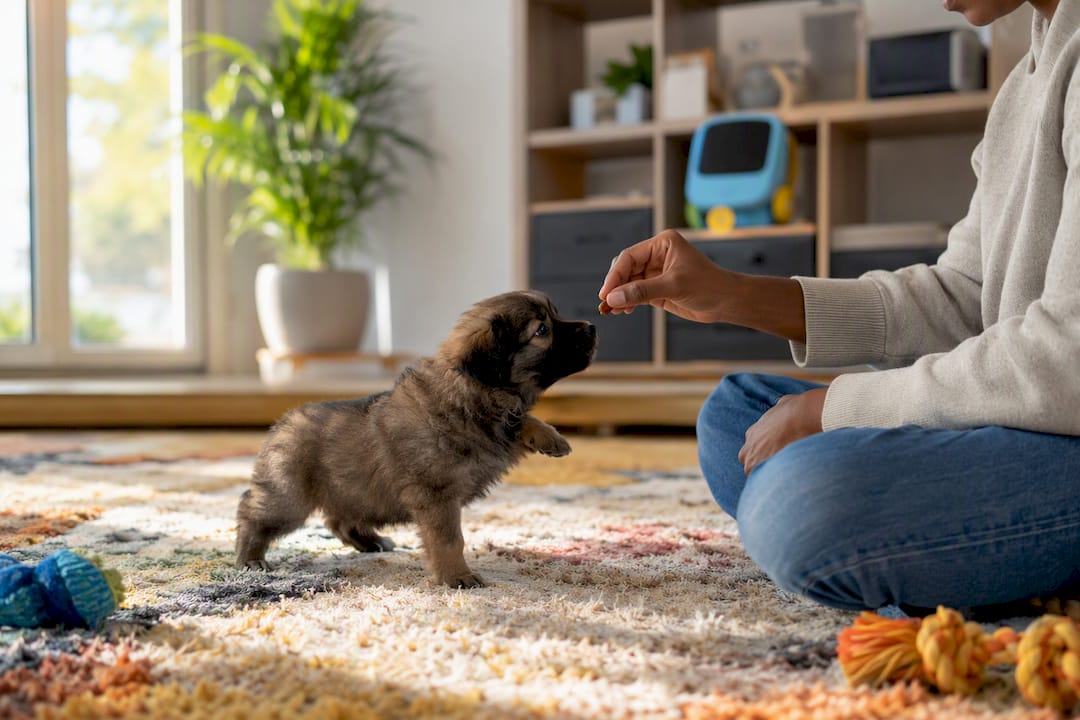
Long training sessions are another trap. Puppies check out fast, so shrink sessions to 3 to 5 minutes and run several a day instead.
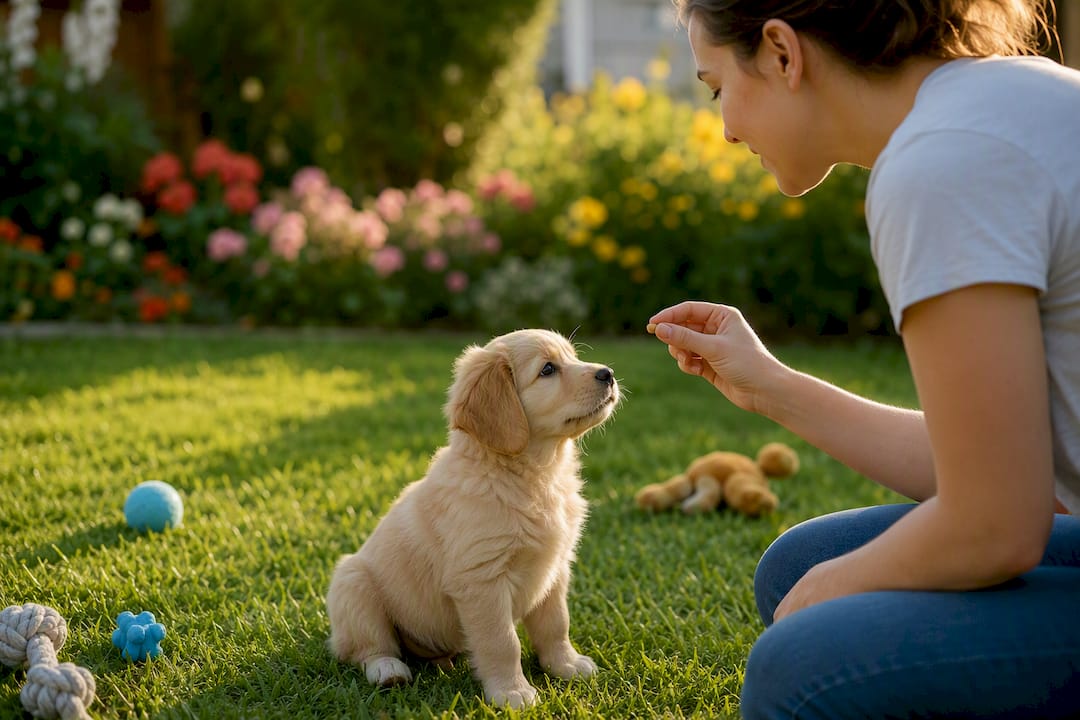
Some owners also push exercise too hard, too soon. Growth plates in most breeds don’t close until 8 to 18 months, so stick to low-impact play and short walks, and check with your vet before starting jogging or agility work.
How Experienced Trainers Actually Sequence It
Trainers rarely start with commands. They start with exposure: new floors, new faces, calm car rides, all before worrying about a solid “stay.” Formal proofing comes later, once the foundation holds.
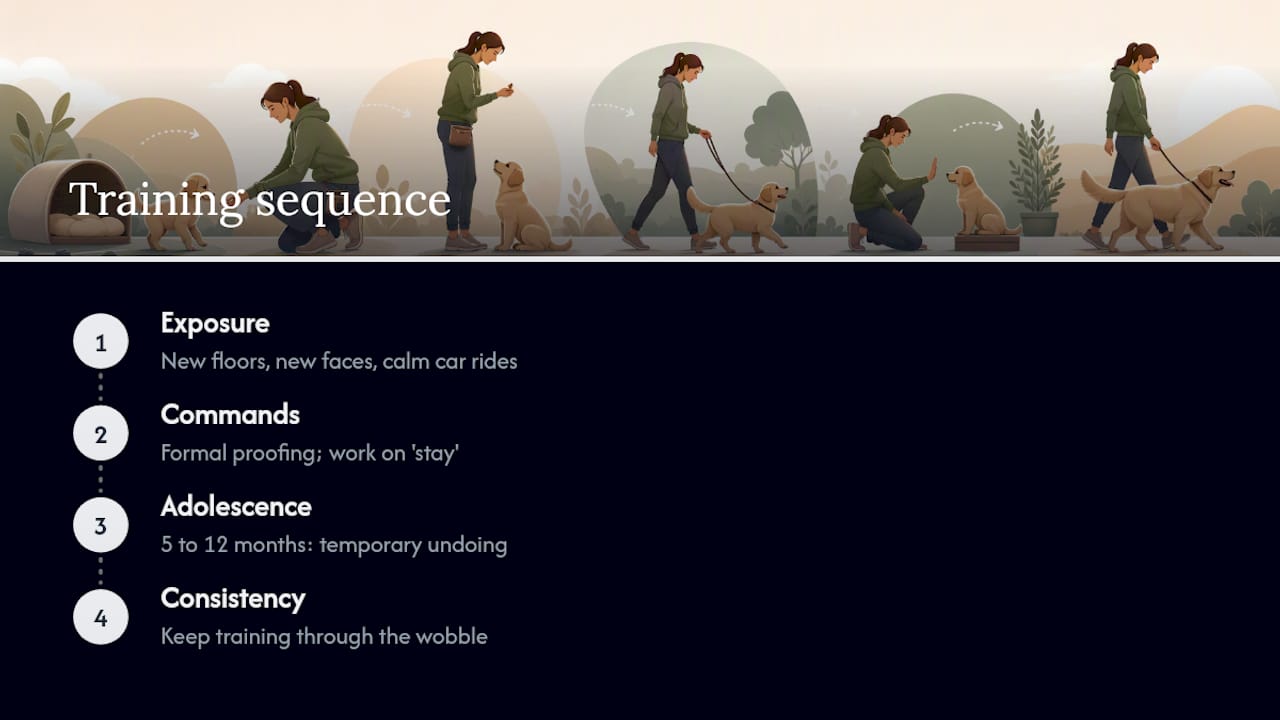
Expect adolescence, usually 5 to 12 months, to undo some of that polish temporarily. That’s normal, not failure. Consistency through the wobble is what brings it back.
Let iPupPee Help You Through Every Stage
Training a puppy well means staying connected to them, especially once they’re old enough to explore the yard alone or you’re not in the room. Ipuppee built its device and course library around exactly that gap: a Wi-Fi enabled alert button lets your dog signal you directly, with live video and two-way audio, so early independence training doesn’t mean losing track of what’s happening.

Alongside the device, Ipuppee’s on-demand dog psychology and training course walks you through the same age-banded fundamentals covered here, from crate work to impulse control, in more depth. If you want a structured path instead of piecing it together yourself, visit Ipuppee to see the device and course options and get started this week.
Frequently Asked Questions
What age can I start training my puppy? You can start the day your puppy comes home, typically around 8 weeks old. Early lessons should stay simple: name recognition, crate comfort, and potty routines.
How early can you start training puppies for socialization specifically? Socialization can begin immediately, even before full vaccination, as long as you control the environment and avoid high-risk areas like dog parks until your vet clears it.
How long does it take to train a puppy? Basic skills like sit or name response often click within days to weeks. Full potty reliability can take 3 to 6 months, and impulse control around distractions may extend into adolescence.
At what age can I enroll my puppy in a training class? Most vets clear puppies for group classes around 8 weeks with initial vaccinations, provided the class follows safe health protocols. Check with your vet for your local disease risk first.
What age should I expect training setbacks? The adolescent phase, roughly 5 to 12 months, often brings temporary regressions even in well-trained puppies. Stay consistent and the behaviors typically return.
Sources
- Age at which puppy training begins and subsequent behavioral outcomes (Animals, MDPI)
- Puppy Training Timeline: Teach Good Behavior Before It’s Too Late (AKC)
- When to start training a puppy (PetMD)
- Puppy behavior and training basics (VCA Hospitals)