

TL;DR:
- A family routine for service dogs assigns daily responsibilities, standardizes commands, and schedules care to ensure reliability. Consistent involvement from all household members fosters clear communication, reduces stress, and maintains the dog’s task accuracy over time. Ongoing training, routine adjustments, and shared responsibility are essential for long-term success.
A family guide for service dog routines is a structured plan that assigns daily responsibilities, standardizes commands, and schedules care tasks so every household member supports the dog’s working role. Families who follow a clear routine see stronger task reliability, less handler stress, and better communication between the dog and the person it assists. Owner-training a service dog typically takes 12–24 months, which means the family’s daily habits directly shape whether that investment pays off. The routines you build in the first weeks set the standard for years.
What does a family guide for service dog routines include?
A well-built daily routine covers feeding, grooming, task rehearsal, and rest, with each task assigned to a specific family member. Without clear ownership, routines collapse within weeks. The goal is a household where the dog knows exactly what to expect and who to look to for each cue.
Morning routine essentials
Start every morning the same way. The handler or a designated adult takes the dog out for a potty break and a short walk before feeding. This sets a calm, focused tone for the day.
- Potty break and walk: 10–15 minutes, same route when possible
- Grooming check: Run hands along the coat, check paws and ears for anything unusual
- Feeding: Measured portions at the same time each morning. Free feeding undermines structure and makes it harder to monitor health changes.
- Morning task rehearsal: Task training works best in 5–10 minute sessions, 3–5 times daily. One session right after breakfast locks in the habit.
Assigning family roles
Every family member needs a defined role. Assign feeding to one adult, grooming checks to another, and task rehearsal to the primary handler. Children can participate in age-appropriate ways, such as filling the water bowl or practicing a simple “sit” command under adult supervision.

Pro Tip: Create a printed family calendar or a shared digital chart using Google Calendar or a whiteboard. List each task, the responsible person, and the time. Review it weekly and adjust as schedules shift.
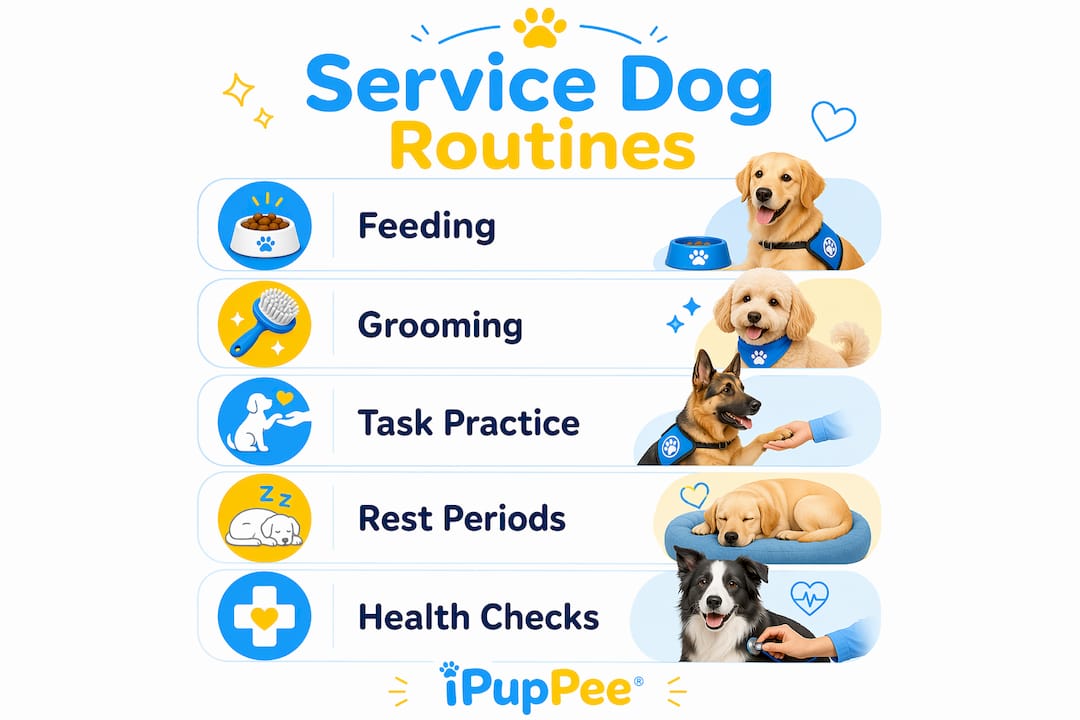
A chart removes the guesswork. When everyone sees their name next to a task, accountability follows naturally.
How do you train all family members to use consistent commands?
Consistent command language across the family is the single most important factor in a service dog’s reliability. If one person says “down” and another says “lie down,” the dog learns to ignore commands rather than obey them. Mixed signals are the fastest way to undo months of training.
Building a household command standard
Write out every command the dog knows and post it somewhere visible, like the refrigerator or a hallway bulletin board. Use one word or phrase per behavior, and never deviate. Tools like a clicker or a verbal marker such as “yes” help reinforce the moment the dog performs correctly.
- Core command list: Sit, down, stay, come, heel, leave it, settle, and any disability-specific task cues
- Clicker training: One click marks the exact moment of correct behavior. Every family member uses the same click-then-treat sequence.
- Children’s involvement: Kids can practice basic obedience commands with the dog during calm, supervised sessions. They should never give task commands or interrupt the dog during active work.
- Off-duty rules: The dog is not a pet during working hours. No roughhousing, no feeding from the table, and no calling the dog away from the handler.
Pro Tip: Schedule a 20-minute family training refresher every month. Rotate who leads the session. This keeps everyone sharp and surfaces any command drift before it becomes a problem.
Involving all family members in training builds shared responsibility. It also strengthens the dog’s response because it hears correct commands from multiple voices in multiple contexts.
How do you introduce a new service dog into family life?
Introducing a service dog gradually with prepared spaces and phased exposure reduces stress for both the dog and the family. Rushing this process creates anxiety in the dog and sets back task reliability by weeks.
Follow this sequence when bringing a service dog home for the first time:
- Prepare the home before arrival. Set up a designated rest space with a crate or bed in a low-traffic area. Remove hazards like loose cords and unsecured food. The dog needs a place to decompress.
- Introduce family members one at a time. Start with the primary handler, then introduce one person per session over the first two days. Keep greetings calm and brief. No crowding, no loud voices.
- Establish the daily routine immediately. Feed, walk, and practice tasks on the schedule you planned before the dog arrived. Consistency from day one builds trust faster than any other method.
- Balance socialization with work periods. The dog needs downtime. A working dog that never rests becomes stressed and unreliable. Build in at least two rest periods of 30–60 minutes each day.
- Begin controlled public exposure in phases. Start with quiet locations like a parking lot or a calm park path. Proofing skills across multiple environments prevents context dependence, where the dog only performs reliably at home.
Common early challenges include the dog testing boundaries, ignoring commands in new rooms, or showing mild anxiety around children. Address these with shorter sessions, more frequent rewards, and patience. Do not increase difficulty until the dog is consistent at the current level.
What does ongoing service dog maintenance look like?
Successful handlers treat service dog training as a lifelong process, not a fixed endpoint. Skills degrade without regular practice. A dog that performed flawlessly at 18 months can lose precision by month 24 if the family stops reinforcing behaviors.
Health and grooming schedule
Regular veterinary checkups catch physical issues before they affect the dog’s work. Schedule a full exam twice a year and a dental cleaning annually. Grooming frequency depends on the breed, but a weekly brush and monthly nail trim apply to most working dogs.
Refresher training and public proofing
Weekly outings, monthly task refreshment, and quarterly public access re-proofing prevent skill degradation and keep service dogs reliable over years. Proofing sessions should include at least three different environments per quarter, such as a grocery store, a transit station, and a busy park.
Adapting routines after family changes
Moves, new babies, school schedule shifts, and changes in the handler’s condition all require a routine review. Sit down as a family and reassess task assignments and schedules whenever a major change occurs. The dog needs time to adjust to new environments and new people, just like it did on day one.
Pro Tip: Keep a service dog journal. Log each training session, note any tasks the dog missed, and record health observations. Review it monthly. Patterns in the data tell you where to focus next.
| Maintenance Area | Recommended Frequency |
|---|---|
| Veterinary checkup | Every 6 months |
| Task refreshment sessions | Monthly |
| Public access proofing | Quarterly |
| Grooming and nail trim | Monthly |
| Family routine review | After any major life change |
Monitoring for fatigue and stress matters as much as training. Signs include yawning during tasks, slow response times, and avoidance behavior. When you see these, reduce workload and increase rest before resuming full task practice.
Key takeaways
A structured family routine is the foundation of a reliable, healthy service dog because consistency across all household members directly determines the dog’s long-term task performance.
| Point | Details |
|---|---|
| Assign clear family roles | Give each member a named task to prevent gaps in feeding, grooming, and training. |
| Standardize all commands | Post a household command list and hold monthly refreshers to prevent command drift. |
| Introduce the dog gradually | Use phased introductions and controlled public exposure to build trust without stress. |
| Maintain skills continuously | Weekly practice, monthly task refreshment, and quarterly proofing prevent skill loss. |
| Adapt routines after life changes | Review and reassign responsibilities whenever the family’s schedule or environment shifts. |
What i’ve learned from watching families train service dogs
The families that struggle most are not the ones with the least time. They are the ones who treat the service dog as the handler’s responsibility alone. I have watched households where one person carries the entire training load burn out within six months, and the dog’s reliability suffers right along with them.
The families that thrive share the work. They argue about the command list, they forget to log sessions, and they sometimes skip the monthly refresher. But they show up together. That shared investment changes how the dog reads the household. A dog that hears consistent cues from four different voices in four different rooms becomes genuinely reliable in public, not just at home.
The other thing I would push back on is the idea that children slow the process down. Done right, involving kids builds the dog’s tolerance for unpredictable movement and noise faster than any controlled drill. A seven-year-old practicing “sit” under supervision is also learning respect for the dog’s working role. That lesson sticks.
One more thing: rest is training. I have seen handlers push through fatigue signs because they felt behind on a timeline. Proofing sessions every 6–12 months are the floor, not the ceiling. A dog that gets adequate downtime retains skills longer than one that is drilled daily without recovery. Build the rest into the schedule before you build anything else.
— Andrew
How Ipuppee supports your service dog journey
Ipuppee publishes practical guides and training resources built specifically for families navigating daily service dog routines. Whether you are setting up your first morning schedule or troubleshooting a command consistency problem, the Ipuppee blog covers the real-world situations families face.
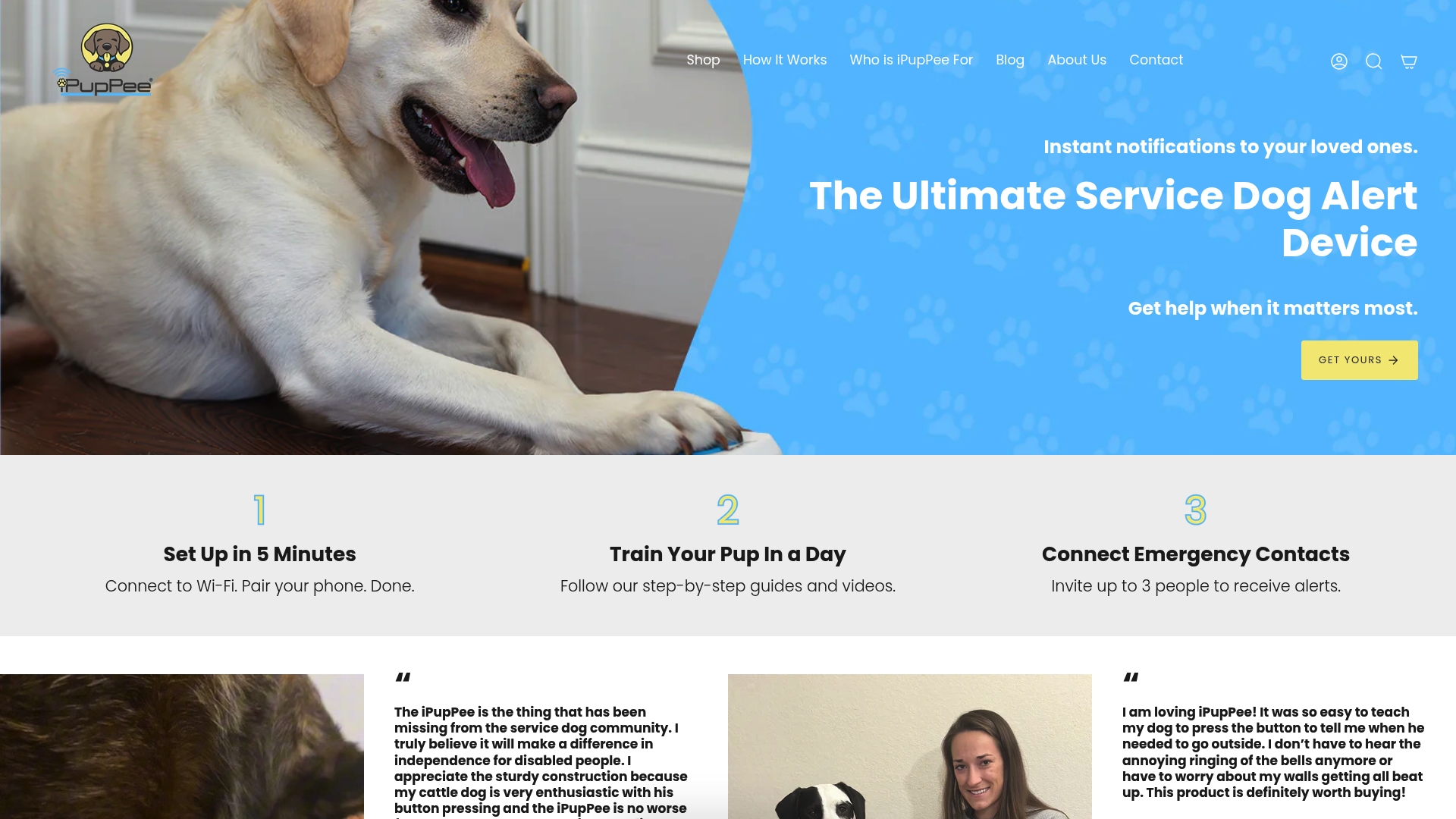
The Ipuppee platform also features the iPupPee alert device, which helps service dogs communicate needs directly to their handlers through a simple button press. For families supporting a disabled individual or senior living with greater independence, this tool adds a layer of safety that complements your daily routine. Explore the full range of training resources and tools at Ipuppee to keep your service dog performing at its best.
FAQ
How long does it take to establish a service dog routine?
Most families build a stable daily routine within 4–8 weeks of bringing a service dog home. The dog’s behavior becomes predictable once feeding, task rehearsal, and rest follow a consistent schedule every day.
How often should the family practice commands together?
A monthly family training session is the recommended minimum to prevent command drift. Weekly individual practice by the primary handler keeps task skills sharp between group sessions.
Can children be part of the service dog’s daily routine?
Children can participate in age-appropriate tasks like basic obedience practice and water bowl refills under adult supervision. They should not give task commands or interact with the dog during active working periods.
What are the signs a service dog needs a routine adjustment?
Slow task responses, yawning during work, and avoidance behavior signal fatigue or stress. Reduce the workload, increase rest periods, and review the schedule before resuming full training intensity.
How do you prevent a service dog’s skills from degrading over time?
Weekly outings, monthly task refreshment, and quarterly public proofing maintain professional working level. Skills degrade within weeks without maintenance, so consistent practice is non-negotiable.