

Public-access training is not optional for a working dog: it is what separates a dog that can safely accompany a handler into a grocery store or airport from one that merely tolerates a leash. The IAADP sets the working baseline at 120 hours of training over six months, with at least 30 of those hours in real public settings. Start now with a structured plan built around short, frequent outings, and only add iPupPee device practice once basic public behaviors hold steady.
TL;DR:
- A dog must complete at least 120 hours of public training over six months, with a minimum of 30 hours in real public settings before testing.
- Short, daily training sessions in low-stimulus environments build reliable behaviors better than infrequent long outings.
- Core skills include threshold work, loose-leash walking, long-duration down-stays, and handler focus, with staged training in gradually more challenging environments.
- The dog’s readiness for public access testing requires consistent success over three sessions in the same environment, with regressions if failures occur.
- Introducing a public alert device should only happen after the dog demonstrates calm, focused, and unremarkable behavior in public spaces.
Table of Contents
- How much training does public access actually require?
- What core skills does public access training test?
- How do you know when a dog is ready for the public access test?
- How do you train a dog to use an alert device in public?
- Why do public access behaviors break down, and how do you fix them?
- What does realistic public access training actually look like?
- Where iPupPee fits into your public access training plan
- Sources
How much training does public access actually require?
Before scheduling a single outing, know the numbers the industry actually uses. IAADP sets its minimum at 120 hours of training spread across at least six months, with 30 or more of those hours logged in genuine public environments. Training a dog before it turns six months old does not count toward that total, so young dogs need patience before the clock even starts.
Before the first public outing, run through a short readiness checklist:
- Current vaccinations and a clean bill of health from a veterinarian.
- Reliable house-training and predictable elimination habits (empty the dog before every outing).
- Grooming that meets basic hygiene standards for indoor public spaces.
- Public-appropriate gear: a well-fitted harness or vest, a leash sized for close control, and any ADI-style identification your local venues expect.
Pick low-stimulus environments first, an empty parking lot, a quiet hallway, an off-hours store, and log every session. Short, near-daily sessions of 15 to 20 minutes build more reliable behavior than one long outing a week, mostly because they let the dog recover and reset between exposures instead of grinding through fatigue. Our guide to dog training fundamentals covers the obedience groundwork that needs to be solid before any of this starts.
What core skills does public access training test?
Four behaviors carry most of the weight in real-world public work, and each one is trainable with a specific drill rather than vague “socialization.”
- Threshold work. Practice walking through doorways at home dozens of times, rewarding the dog for glancing back at you the instant it crosses. That rehearsal transfers quickly to store entrances and elevator doors once it is automatic at home.
- Loose-leash walking in tight spaces. Stage narrow aisles using furniture or boxes before trying a real store, and only reward a leash with slack in it, never a pull.
- Down-stay duration. Build a time ladder: 2 minutes, then 5, then 15, working toward 45 minutes or more under a restaurant table, adding distractions (dropped items, nearby foot traffic) only after duration is solid.
- Handler focus and food/people neutrality. Reward spontaneous glances toward you throughout the day, and use a specific vest cue to mark “working mode.” Have a helper drop food nearby while you reward the dog for ignoring it, gradually closing the distance.
Pro Tip: Train the “look at handler” response in a boring hallway before you ever test it near food or crowds. A behavior that only exists in exciting places isn’t reliable, it’s lucky.
The NSAR training framework backs this staged approach: foundation work first, then public exposure, then task work layered on top once the first two are stable. Our obedience training guide walks through leash mechanics in more depth if loose-leash work is your weak point.
How do you know when a dog is ready for the public access test?
The Public Access Test isn’t a legal requirement in most places, but it is the closest thing the service-dog world has to a shared readiness benchmark. It checks entry without pulling, calm movement through crowded aisles, down-stays under a table, ignoring dropped food or a passing dog, and, critically, how fast the dog recovers after something startling happens.
Build your own version of that test using an environment ladder:
- Week 1 to 2: quiet stores during off-hours, five minutes at a time.
- Week 3 to 4: busier retail spaces, working up to fifteen minutes.
- Week 5 onward: restaurants, transit, and crowded entryways.
The rule that matters most: don’t declare readiness after one good outing. Aim for three clean sessions in a row in the same environment before moving up the ladder. A red flag failure, a sudden bark, a lunge at food, a refusal to settle, means you regress two rungs on the ladder, not zero. If failures repeat despite regression, that’s the point to bring in a certified trainer or a veterinary behaviorist rather than pushing forward. Document dates, locations, and outcomes; that log becomes useful if you ever need to show progress for housing or air travel. Our step-by-step service dog guide covers documentation in more detail, and this rights and etiquette guide is worth reading before your first real public test.
How do you train a dog to use an alert device in public?
An alert device only earns its place on the vest once the dog’s public behavior is already boring in the best sense: calm, focused, unremarkable. Introduce iPupPee too early and you risk teaching the dog that pressing a button is a way to get attention, not a way to communicate something specific.
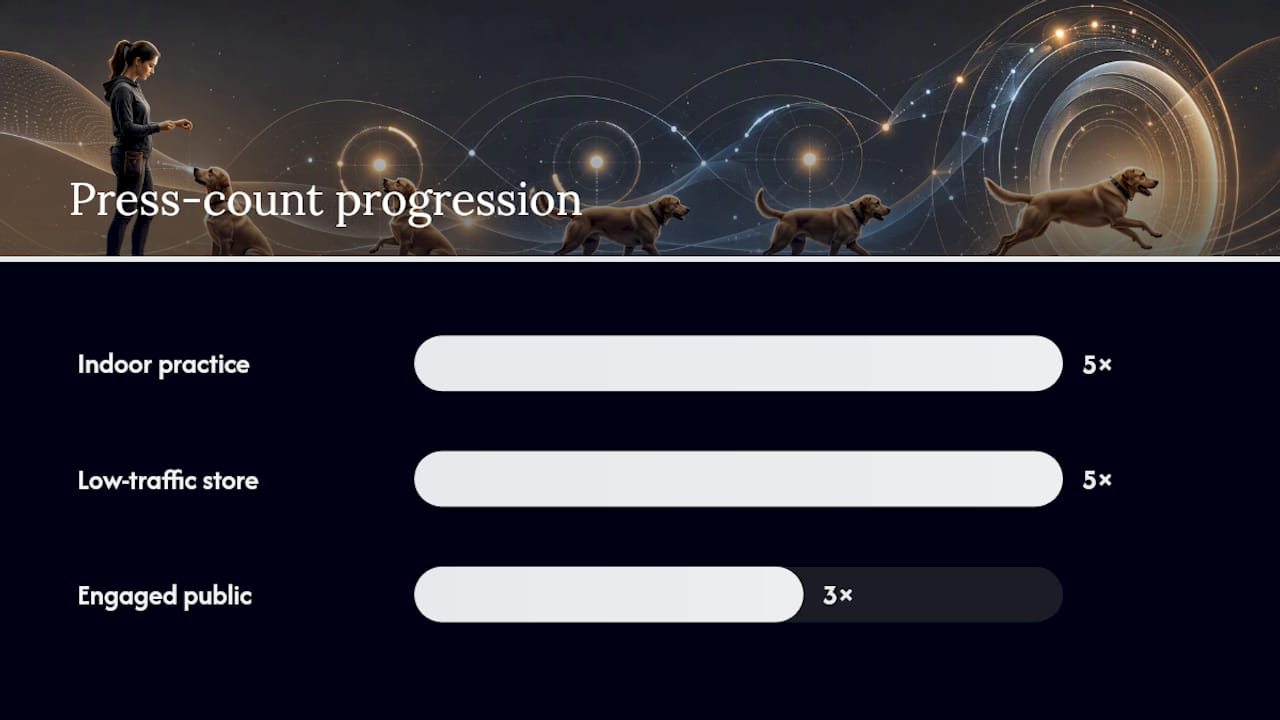
- Start shaping indoors, away from any public setting, pairing a press with a high-value reward until the behavior is fast and clean.
- Move from hands-on shaping to a verbal or contextual cue, so the dog presses on purpose rather than by accident.
- Practice in a quiet public place, five successful indoor presses, then five in a low-traffic store, before attempting anything busier.
- Layer in three short public presses while you stay actively engaged with the dog, not distracted by your phone or a conversation.
- Only then test the device in a busier environment, watching for any sign the dog is pressing to get attention rather than to communicate.
Staged introduction like this matters because a device that gets used for the wrong reason undermines the neutral, focused dog you spent months building.
Pro Tip: If the dog starts glancing at strangers right before pressing the device, that’s a solicitation habit forming, not communication. Go back to quiet-environment practice and reward calm, unremarkable presses.
For seniors and handlers with limited mobility or dexterity, device placement matters as much as the training itself. Mount it somewhere reachable without a full reach or twist, and always keep a backup plan (a second cue, a phone alert) in case the device malfunctions.
Why do public access behaviors break down, and how do you fix them?
Most breakdowns trace back to one of a few causes: insufficient proofing at the previous step, a medical issue nobody caught, or an environment that jumped too many rungs at once. A dog that startles at shopping carts wasn’t ready for a grocery store. A dog that scavenges food wasn’t proofed against dropped items at close range.
- Startle response: regress two steps in the environment ladder and reintroduce the trigger at a distance the dog can ignore.
- Leash pulling or scavenging: return to home-level drills and rebuild the specific cue, not the whole skill set.
- Task or device failure under stress: shorten sessions and increase reinforcement frequency before adding any distraction back in.
Most handler teams don’t pass a formal evaluation on the first attempt, and that’s diagnostic information, not failure. Watch for stress signals, low tail carriage, excessive panting, refusing treats, and end the session the moment you see them rather than pushing through. Persistent regressions warrant a call to a veterinarian or a qualified service-dog trainer; some public-access failures are medical, not behavioral. Our piece on common service dog training challenges walks through several of these patterns in more detail.
What does realistic public access training actually look like?
Public access isn’t a certificate you earn once and file away. It’s maintained through the same boring, repeated practice that built it, and the handlers who stay honest about where their dog is weak tend to have the most reliable dogs a year later, not the ones who rushed the ladder. Use the public-access checklist as a recurring self-check, not a one-time test.
Andrew’s training background and the practical notes behind this guide come from years spent watching what actually breaks down in public, not just what works on a quiet Tuesday morning in an empty parking lot.
— Andrew
Where iPupPee fits into your public access training plan
Once a dog’s public behavior is steady, iPupPee gives handlers a reliable way to close the communication gap: a Wi-Fi enabled alert button with live video and two-way audio, built to work quietly alongside the neutral, focused behavior you’ve already trained.
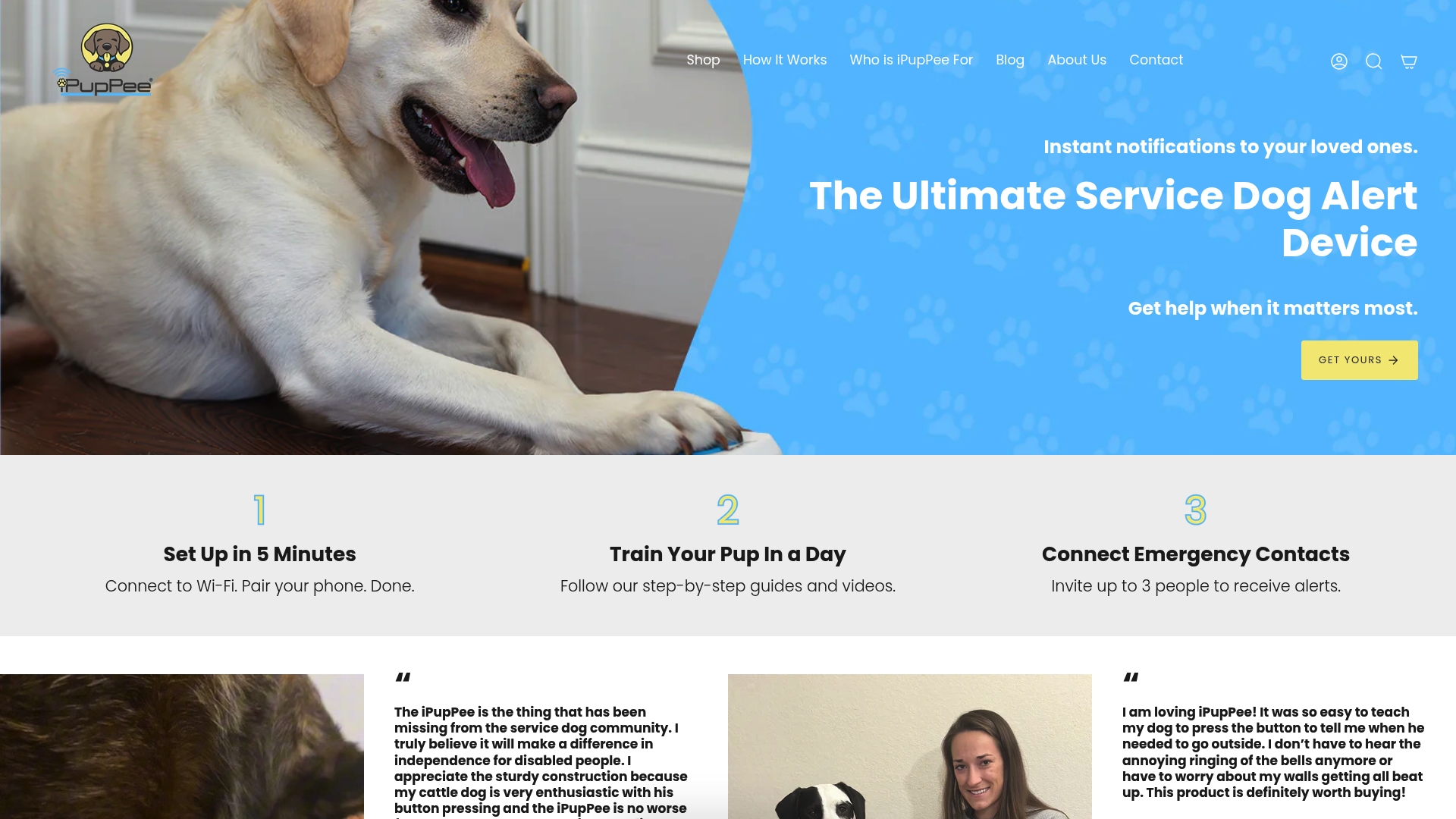
The device is designed for discreet placement on a vest or harness, so it doesn’t compete with the handler-focus drills covered earlier in this guide. ipuppee.com backs the hardware with video-based training courses and an on-demand dog psychology program that walks through the same staged shaping plan, indoor first, then quiet public spaces, then busier ones, in more depth than a single article can cover. If you’re ready to see how the device fits your dog’s routine, visit the iPupPee product page to check specs, training resources, and ordering details.
Sources
Start with the IAADP minimum training standards and the Public Access Test guidance for benchmarks. For structured curricula, see NSAR’s training methods and Ipuppee’s own service dog behavior guide.
- IAADP minimum training standards for public access
- Public access test and readiness guidance
- How to train your service dog — foundation, public-access, task work | NSAR