

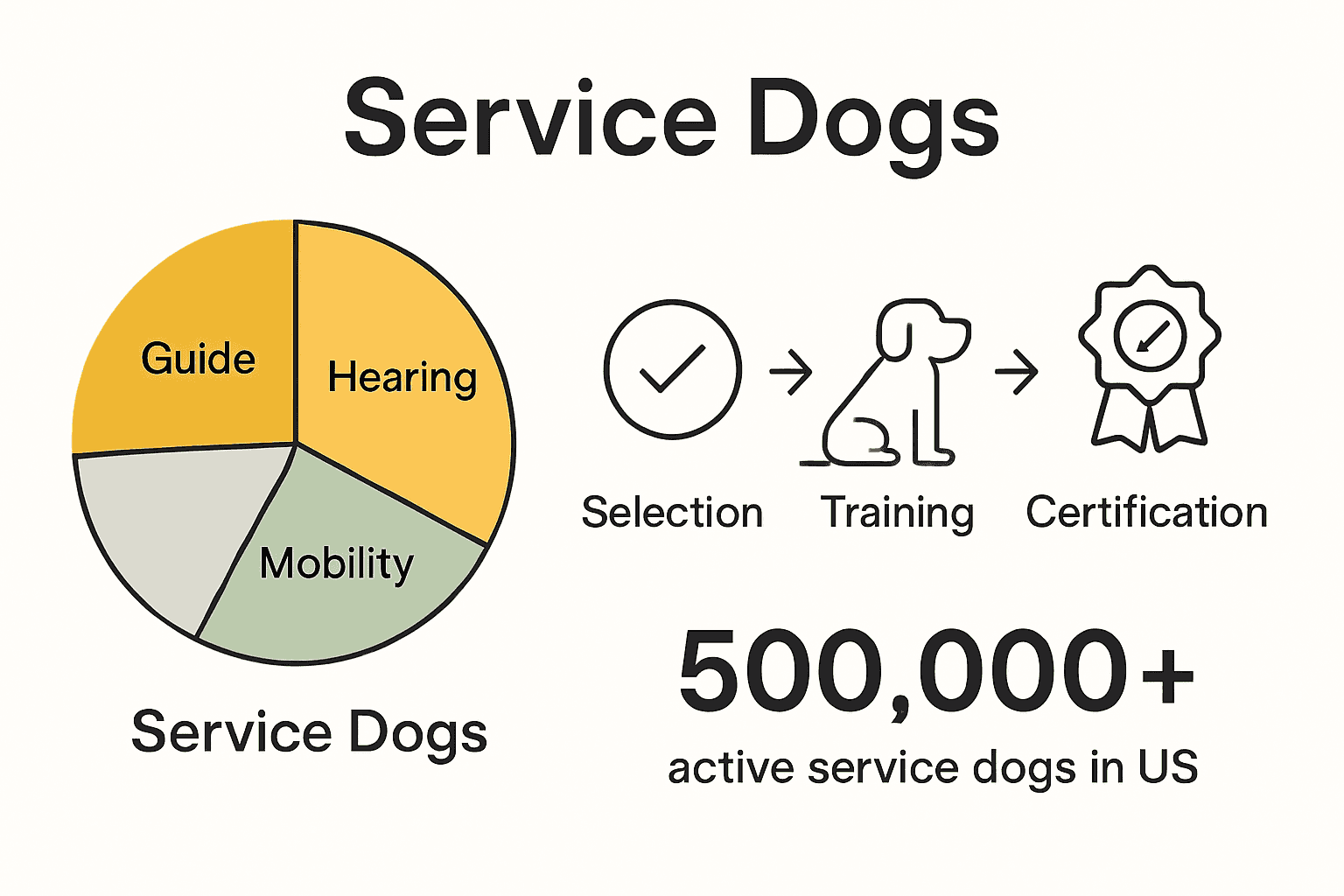
More than 500,000 service dogs in the United States help people manage daily life with disabilities. These dedicated animals do far more than offer companionship. They perform essential tasks like guiding, alerting, and providing support that makes real independence possible. Understanding the unique responsibilities and rigorous training of service dogs reveals why their roles are so important for millions seeking a better quality of life.
Table of Contents
- Defining Service Dog Responsibilities And Roles
- Types Of Service Dogs And Core Functions
- Legal Duties And Handler Requirements Worldwide
- Daily Care, Communication, And Training Essentials
- Risks, Misuse, And Compliance Challenges
Key Takeaways
| Point | Details |
|---|---|
| Service Dog Definition | Service dogs are professionally trained animals that assist individuals with disabilities, enhancing independence and quality of life. |
| Types of Service Dogs | There are various types of service dogs, each trained for specific needs such as mobility support, mental health assistance, and sensory impairments. |
| Handler Responsibilities | Service dog handlers must ensure their dogs are well-behaved and maintain control, complying with legal and ethical standards in public spaces. |
| Risks of Misuse | Misrepresenting pets as service dogs undermines public trust and poses safety risks, making it essential to uphold strict training and certification standards. |
Defining Service Dog Responsibilities and Roles
Service dogs are extraordinary working animals specifically trained to provide critical assistance to individuals with various disabilities. Service dogs are not typical pets but professional working companions with specialized skills designed to enhance independence and quality of life. According to the American Kennel Club, these remarkable animals perform essential tasks such as guiding visually impaired individuals, alerting hearing-impaired people to important sounds, retrieving items, and offering mobility support.
The American Animal Hospital Association provides a comprehensive definition emphasizing that service dogs are individually trained to assist people with various disabilities, including:
- Physical disabilities
- Sensory impairments
- Psychiatric conditions
- Intellectual challenges
- Mental health disorders
What distinguishes service dogs from other working animals is their rigorous training and specific task-oriented approach. These dogs undergo extensive preparation to perform precise actions that directly mitigate their handler’s disability. Unlike therapy or emotional support animals, service dogs have legal protections that allow them to accompany their handlers in public spaces, recognizing their critical role in supporting independence.
Their responsibilities extend far beyond companionship. A service dog might help someone with mobility challenges by:
- Retrieving dropped items
- Opening doors
- Providing physical balance support
- Pressing emergency buttons
- Carrying essential medical supplies
By understanding these complex responsibilities, we recognize service dogs as true professional partners who transform lives through their dedicated, specialized support.
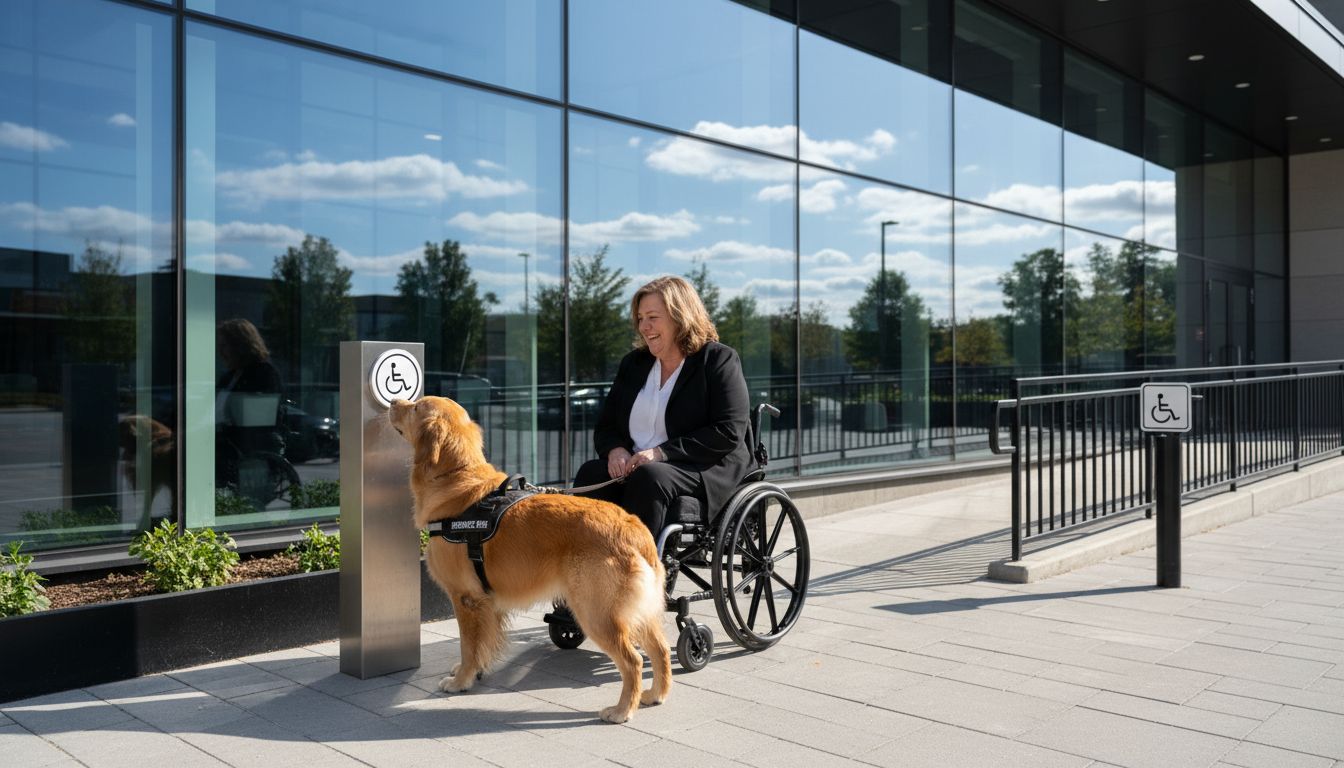 Learn more about their daily tasks in our Service Dog Daily Tasks guide.
Types of Service Dogs and Core Functions
Service dogs represent a remarkable spectrum of specialized assistance, each type uniquely trained to support individuals with specific needs. Paws & Think highlights several critical categories of service dogs, each designed to address different disability challenges and enhance human independence.
Primary Service Dog Categories
According to Deafinitely Dogs!, the main types of service dogs include:
- Guide Dogs: Assist visually impaired individuals with navigation
- Hearing Dogs: Alert handlers to critical environmental sounds
- Mobility Assistance Dogs: Support individuals with physical movement challenges
- Psychiatric Service Dogs: Help manage mental health conditions
Each service dog type undergoes extensive, specialized training to perform precise tasks.
Guide dogs, for instance, learn complex route navigation, traffic assessment, and obstacle avoidance. Hearing dogs develop skills to signal specific sounds like doorbells, alarms, or someone calling the handler’s name.
Mobility assistance dogs provide incredible support by:
- Retrieving dropped items
- Opening and closing doors
- Helping with balance and stability
- Providing physical support during walking
- Activating emergency buttons or switches
Psychiatric service dogs play a crucial role in mental health support, helping handlers manage conditions like PTSD, anxiety, and depression by performing tasks such as interrupting panic attacks, providing grounding during dissociative episodes, and creating physical space in crowded environments.
For those considering a service dog, understanding these specialized roles is key. If you want to dive deeper into selecting the right service dog for your needs, check out our guide on choosing a service dog.
Legal Duties and Handler Requirements Worldwide
Navigating the legal landscape for service dogs requires understanding a complex set of responsibilities that extend far beyond typical pet ownership. ADA National Network provides critical guidelines emphasizing that service dog handlers bear significant legal and ethical responsibilities for their working companions.
Core Handler Responsibilities
According to Salus University, service dog handlers must ensure their animals maintain specific standards of behavior and control in public spaces. The key legal duties include:
- Maintaining complete control of the service dog at all times
- Using a leash or harness in most public settings
- Ensuring the dog is housebroken and well-behaved
- Managing the animal’s hygiene and waste disposal
- Preventing disruptive or aggressive behaviors
Public Access Requirements are particularly stringent. Businesses and institutions can legally exclude service dogs that demonstrate uncontrolled behavior, pose a direct threat to health and safety, or fail to meet basic behavioral standards. This means handlers must invest significant time in training and maintaining their dog’s professional demeanor.
The legal obligations extend to comprehensive care management. Handlers are responsible for:
- Regular veterinary check-ups
- Proper nutrition and health maintenance
- Consistent behavioral training
- Managing the dog’s physical and mental well-being
- Ensuring the animal can perform its specific assistance tasks effectively
These responsibilities reflect the profound trust placed in service dogs as critical support partners. For handlers seeking to understand their legal rights and obligations more deeply, our guide on service dog legal rights offers comprehensive insights into navigating these complex requirements.
Daily Care, Communication, and Training Essentials
Service dogs require a remarkable level of dedicated care and continuous training that goes far beyond typical pet ownership. Move United emphasizes that handlers play a critical role in maintaining their service dog’s professional skills and behavioral standards through consistent supervision and ongoing training.
Core Daily Care Responsibilities
NEADS highlights that service dogs are trained to perform an impressive 50 to 60 specialized tasks, which demands rigorous daily maintenance of their physical and mental capabilities. The essential daily care routine includes:
- Providing balanced nutrition tailored to the dog’s energy requirements
- Conducting regular health and wellness checks
- Maintaining consistent exercise and mental stimulation
- Grooming and hygiene management
- Ongoing behavioral reinforcement and skill practice
Communication Skills are fundamental to a successful service dog partnership. Handlers must develop a nuanced, clear communication system that allows for precise task instruction, behavioral correction, and emotional connection. This involves:
- Using consistent verbal and non-verbal commands
- Practicing positive reinforcement techniques
- Developing mutual trust and understanding
- Reading and responding to the dog’s body language
- Maintaining calm, clear leadership
Training is an ongoing process that requires patience, consistency, and specialized techniques. Service dogs must regularly practice their specific assistance tasks to ensure they remain sharp, responsive, and reliable. Handlers invest significant time in maintaining their dog’s professional skills, often dedicating hours each week to targeted training sessions.
For handlers looking to enhance their service dog’s daily routine and communication skills, our guide on service dog daily routines provides comprehensive strategies for success.
Risks, Misuse, and Compliance Challenges
The service dog ecosystem faces significant challenges from misrepresentation and inappropriate use of service animal designations. American Animal Hospital Association highlights the critical importance of maintaining strict standards to protect the integrity and credibility of legitimate service dog partnerships.
Primary Compliance Risks
National Animal Health Foundation emphasizes the potential dangers of untrained dogs being misrepresented as service animals. The key risks include:
- Compromising public safety in shared spaces
- Undermining the reputation of genuine service dogs
- Creating potential liability issues for businesses and handlers
- Disrupting critical assistance for individuals with disabilities
- Increasing skepticism about service animal legitimacy
Misuse Consequences can be profound and far-reaching. Individuals who fraudulently claim pet status as a service animal not only break legal and ethical standards but also create significant challenges for those who genuinely depend on these highly trained working animals. The impacts extend beyond immediate inconvenience:
- Reduced public trust in service dog credentials
- Potential legal penalties for fraudulent representation
- Increased scrutiny for legitimate service dog handlers
- Potential restrictions on service animal access
- Emotional and practical challenges for disabled individuals
Proper certification and training are essential safeguards. Service dogs undergo extensive preparation to ensure they can perform critical tasks safely and professionally. Handlers must be prepared to demonstrate their dog’s training, behavior, and specific assistance capabilities when challenged.
For handlers seeking to navigate these complex compliance challenges, our guide on service dog legal rights provides comprehensive insights into protecting your service dog partnership.
Empower Your Service Dog Partnership with Smart Communication Tools
Understanding the complex responsibilities of service dog handlers highlights a common challenge: maintaining clear and reliable communication in daily life. Whether it is managing task performance, ensuring safety, or reinforcing training routines, handlers often seek practical solutions that support independence and confidence. The expert guide on service dog responsibilities emphasizes critical points like behavioral control, task precision, and consistent communication — areas where the right technology can truly make a difference.
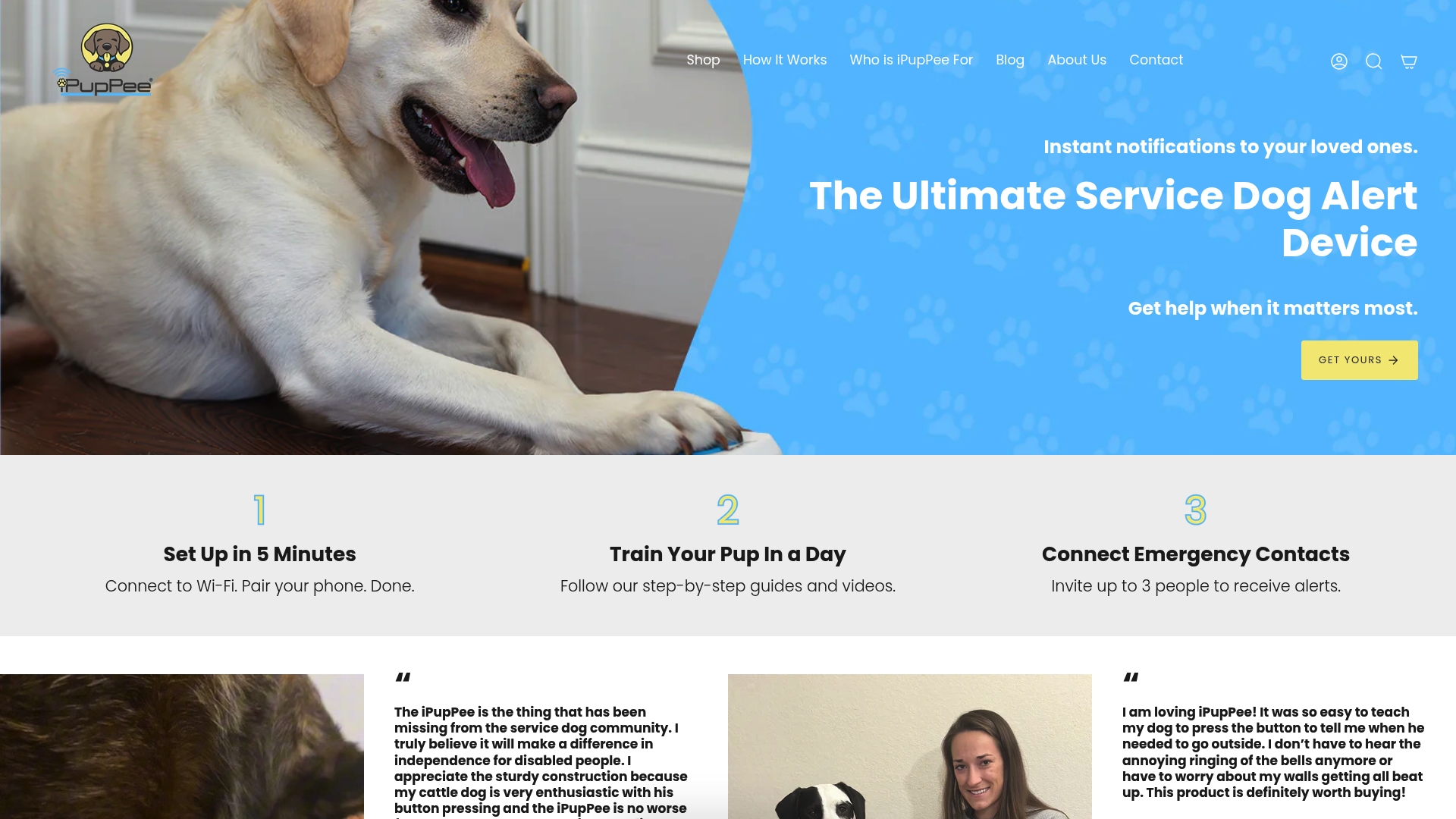
Discover how the innovative iPupPee device enhances your service dog’s role by simplifying communication through a simple button press. Designed to boost safety for disabled individuals and those living independently, it helps you reinforce training, provide timely alerts, and strengthen the unique bond between you and your dog. Don’t wait to elevate your service dog’s effectiveness. Visit iPupPee now to explore how you can master service dog daily routines and legal rights with technology that respects your dog’s specialized responsibilities.
Frequently Asked Questions
What are the primary responsibilities of service dogs?
Service dogs are trained to perform specific tasks that assist individuals with disabilities. Their responsibilities include retrieving items, providing physical support, and alerting handlers to important sounds, among others.
How do service dogs differ from therapy or emotional support animals?
Service dogs undergo rigorous training to perform specific tasks that directly mitigate their handler’s disability. Unlike therapy or emotional support animals, service dogs have legal protections allowing them access to public spaces.
What types of disabilities can service dogs help with?
Service dogs can assist individuals with various disabilities, including physical disabilities, sensory impairments, psychiatric conditions, mental health disorders, and intellectual challenges.
What legal obligations do service dog handlers have?
Handlers must maintain control of their service dog, ensure it is well-behaved, manage hygiene and waste, and provide for its health and training needs. Public access requirements dictate the behavior standards that service dogs must adhere to while in public places.