

Most American service dog owners do not realize nutrition can impact communication as much as performance. For dogs supporting people with disabilities, every bite plays a role in focus, stamina, and the subtle cues vital to daily tasks. Proper dietary balance ensures these hard-working companions stay healthy, alert, and responsive no matter where daily life takes you. Learn how a science-based nutrition plan can protect your service dog’s abilities and strengthen the unique bond you rely on.
Table of Contents
- Core Concepts Of Dog Nutrition Basics
- Essential Nutrients And Their Functions
- Feeding Strategies For Service Dogs
- Impacts Of Nutrition On Canine Health And Communication
- Common Feeding Mistakes And How To Avoid Them
Key Takeaways
| Point | Details |
|---|---|
| Balanced Nutrition is Essential | Dogs require a balanced diet of proteins, fats, carbohydrates, vitamins, minerals, and water to support their unique physiological needs. |
| Service Dogs Have Unique Requirements | Service dogs need specialized feeding plans that consider their high energy expenditure and job demands for optimal performance. |
| Impact of Nutrition on Behavior | Nutrition significantly influences a dog’s cognitive function and emotional regulation, affecting their ability to communicate effectively. |
| Avoid Common Feeding Mistakes | Frequent errors, such as overfeeding and inconsistent diets, can hinder a service dog’s performance and overall health. |
Core Concepts of Dog Nutrition Basics
Understanding dog nutrition requires recognizing that canine dietary needs are complex and multifaceted. Dogs require a balanced diet comprising essential nutrients that support their unique physiological processes and metabolic demands. Nutrient utilization varies dramatically based on factors like age, breed, size, and activity level.
The core nutritional categories for dogs include proteins, fats, carbohydrates, vitamins, minerals, and water. Proteins are particularly critical, serving as building blocks for muscle tissue, enzymes, and hormones. Fats provide concentrated energy and support cellular functions, while carbohydrates offer readily available glucose for immediate energy needs. Vitamins and minerals play crucial roles in metabolic regulation, immune function, and overall cellular health.
Service dogs have especially nuanced nutritional requirements due to their high-energy work and specialized roles. Their diets must not only meet basic nutritional standards but also support sustained physical performance and cognitive function. Balanced nutrition becomes even more important for these working animals, who expend significant energy during daily tasks and require optimal physical and mental conditioning.
Pro tip: Consult with a veterinary nutritionist to develop a customized nutrition plan that matches your service dog’s specific metabolic needs and work demands.
Essential Nutrients and Their Functions
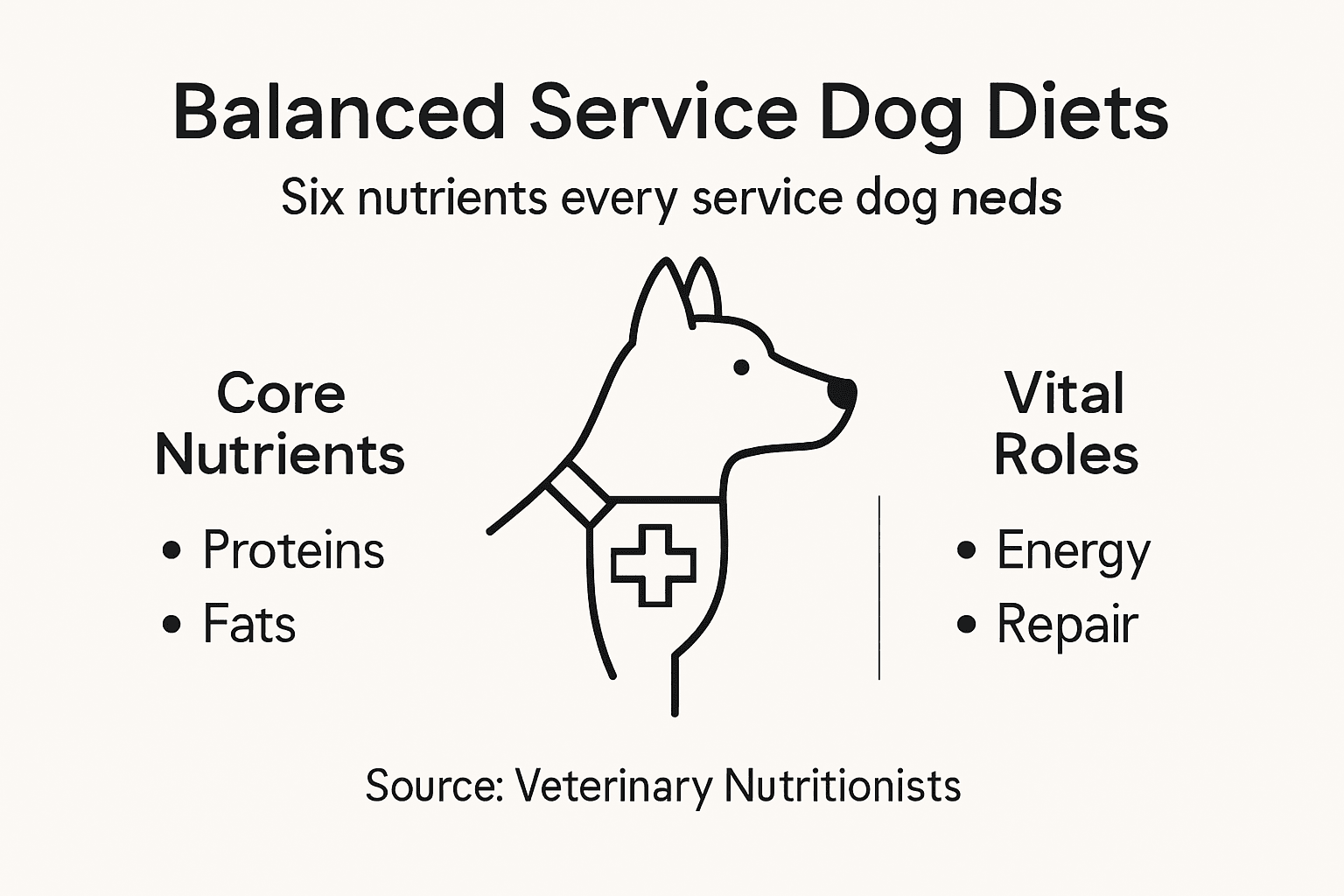
Dogs require six primary nutrient categories to maintain optimal health and performance. Essential nutrients support complex metabolic functions through a carefully balanced combination of proteins, fats, carbohydrates, vitamins, minerals, and water. Each category plays a unique and critical role in supporting a dog’s physiological processes, particularly for service dogs with high energy demands.
Proteins are the foundational building blocks for muscle development, tissue repair, and enzyme production. They consist of amino acids that dogs cannot always generate independently, making dietary protein intake crucial. Amino acids like leucine, isoleucine, and valine are particularly important for muscle maintenance and recovery, especially for service dogs engaged in physically demanding tasks.

Fats provide concentrated energy and support critical bodily functions. They enable absorption of fat-soluble vitamins, regulate body temperature, and contribute to hormone production. Carbohydrates serve as a quick energy source, while vitamins and minerals regulate metabolic processes, support immune function, and maintain cellular health. Water remains the most essential nutrient, facilitating nearly every physiological process and maintaining proper hydration for optimal performance.
Here is a summary of essential nutrient categories for dogs and their primary functions:
| Nutrient Category | Primary Function | Key Benefits |
|---|---|---|
| Protein | Builds muscle and repairs tissues | Enhances strength and recovery |
| Fat | Provides concentrated energy | Supports cell and hormone health |
| Carbohydrate | Supplies quick energy | Maintains steady blood sugar |
| Vitamins | Regulates metabolic processes | Boosts immune and organ function |
| Minerals | Supports bone and nerve health | Maintains cellular balance |
| Water | Enables all bodily functions | Aids hydration and cooling |
Pro tip: Rotate protein sources periodically to ensure your service dog receives a comprehensive amino acid profile and prevents potential nutritional monotony.
Feeding Strategies for Service Dogs
Service dogs require meticulously planned nutrition strategies that go beyond standard feeding approaches. Personalized feeding plans are crucial for maintaining optimal physical performance and supporting their specialized working roles. These strategies must account for the dog’s unique energy expenditure, metabolic demands, and specific job requirements.
Feeding frequency and portion control become critical components of a service dog’s nutritional management. Unlike typical companion dogs, service dogs often require multiple smaller meals throughout the day to maintain steady energy levels and prevent digestive strain. This approach helps sustain consistent blood sugar levels and supports the intense physical and mental demands of their work. Meal timing should align with the dog’s work schedule, ensuring they have sufficient energy during peak performance periods while avoiding heavy meals that might cause lethargy or discomfort.
Nutritional density and quality are paramount for service dogs. Their diet should emphasize high-quality protein sources, complex carbohydrates, and essential fatty acids that support muscle maintenance, cognitive function, and overall health. Veterinary nutritionists often recommend specialized diets that provide concentrated nutrition in smaller volumes, allowing service dogs to consume adequate calories without feeling overly full. Hydration strategies are equally important, with careful monitoring of water intake before, during, and after work activities to prevent performance impairment.
Below is a comparison of feeding approaches for companion dogs versus service dogs:
| Feeding Factor | Companion Dog Approach | Service Dog Approach |
|---|---|---|
| Meal Frequency | 1-2 meals per day | 3+ smaller meals daily |
| Portion Control | General guidelines | Precise by work load |
| Diet Quality | Standard dog food | High-quality, specialized nutrition |
| Hydration Focus | Monitored casually | Closely tracked pre/post work |
Pro tip: Consult with a veterinary nutritionist to develop a customized feeding plan that precisely matches your service dog’s unique metabolic needs and work intensity.
Impacts of Nutrition on Canine Health and Communication
Canine nutrition extends far beyond physical sustenance, directly influencing behavioral patterns and communication capabilities. Nutrition impacts canine brain function through complex biochemical interactions that affect neurotransmitter production and cognitive processing. Specific nutrients play critical roles in modulating a dog’s stress response, emotional regulation, and overall communication effectiveness.
Neurotransmitter precursors like tryptophan and tyrosine are particularly significant in shaping canine behavior and communication. These amino acids influence serotonin and dopamine production, which directly impact a dog’s mood, stress resilience, and ability to engage effectively with handlers. Service dogs require carefully balanced nutrition that supports their heightened cognitive demands, enabling them to maintain focus, process complex commands, and communicate subtle emotional and physical signals with precision.
Fatty acids, especially omega-3 derivatives like docosahexaenoic acid (DHA), are fundamental in brain development and cognitive function. These nutrients support neural connectivity, enhance learning capabilities, and contribute to more nuanced communication skills. For service dogs, optimal nutrition becomes a critical component of their ability to interpret handler signals, respond to environmental cues, and maintain the high-level performance required in specialized working roles.
Pro tip: Work with a veterinary nutritionist to develop a targeted nutrition plan that specifically supports your service dog’s cognitive and communication capabilities.
Common Feeding Mistakes and How to Avoid Them
Service dog handlers often unknowingly compromise their dogs’ nutritional health through common feeding errors. Nutrition mistakes can significantly impact performance and overall well-being, making it crucial to understand and prevent these pitfalls. Overfeeding, inappropriate treat selection, and inconsistent feeding routines represent some of the most prevalent nutritional challenges facing service dog owners.
One critical mistake is failing to adjust food intake based on the dog’s changing life stages and activity levels. Service dogs require dynamic nutritional strategies that evolve with their work demands, age, and physical condition. Owners frequently maintain the same portion sizes and diet composition despite significant changes in the dog’s metabolic needs. This oversight can lead to weight management issues, reduced performance capacity, and potential health complications that compromise the dog’s ability to perform essential working tasks.
Nutritional inconsistency extends beyond portion control to include treat management and supplementation. Many handlers inadvertently disrupt their service dogs’ carefully balanced diets by offering inappropriate treats or human food. These dietary interruptions can cause nutritional imbalances, digestive issues, and potential allergic reactions. Professional nutritionists recommend establishing a structured feeding protocol that includes precise portion control, scheduled meal times, and carefully selected nutritional supplements that complement the dog’s primary diet.
Pro tip: Maintain a detailed food and performance journal to track your service dog’s nutritional intake and correlate dietary changes with work performance and overall health.
Enhance Your Service Dog’s Performance with Tailored Communication Tools
Balanced nutrition is just one essential part of ensuring your service dog can perform at their best every day. Alongside a carefully designed feeding plan, effective communication is critical to managing your dog’s work schedule, hydration, and energy levels. The article highlights the importance of precise feeding strategies and metabolic support—our innovative solutions at iPupPee perfectly complement these needs by enabling seamless communication between you and your service dog.

Discover how the iPupPee device can help you monitor your service dog’s needs in real time, allowing you to respond promptly to their cues related to feeding or hydration timing. Leveraging this technology enhances your ability to avoid common nutritional mistakes and maintain consistent routines critical for optimal health and performance. Take action now to support your dog’s nutrition and communication by visiting iPupPee and explore training resources designed specifically for service dog handlers.
Frequently Asked Questions
What are the essential nutrients that service dogs need?
Dogs require six primary nutrient categories: proteins, fats, carbohydrates, vitamins, minerals, and water. Each category supports essential physiological processes, making balanced nutrition vital for service dogs.
How does nutrition impact a service dog’s performance and behavior?
Proper nutrition directly affects a service dog’s brain function, emotional regulation, and communication skills. Nutrients like fatty acids and amino acids support cognitive functions, enabling service dogs to effectively engage with their handlers and perform tasks.
Why is consultation with a veterinary nutritionist important for service dogs?
A veterinary nutritionist can help create a personalized nutrition plan that caters to a service dog’s specific metabolic needs and work demands, ensuring optimal energy levels and health.
What common feeding mistakes should service dog owners avoid?
Service dog owners should avoid overfeeding, providing inappropriate treats, and inconsistent feeding routines. These mistakes can lead to nutritional imbalances and negatively affect the dog’s performance and overall health.
Recommended
- Service Dog Care Essentials: Must-Know Tips for 2025 – iPupPee
- How to Choose Service Dog: A 2025 Guide for Owners & Handlers – iPupPee
- Training Service Dogs 101: Essential Steps for Success in 2025 – iPupPee
- Service Dog Obedience in 2025: Essential Training for Success – iPupPee
- Éducation Canine : Guide complet pour l’éducation de votre chien et – My Animal Lovers