

More than 500,000 Americans depend on service dogs to navigate everyday life with greater safety and independence. These remarkable animals are far more than faithful companions. They play a critical role in supporting people with challenges ranging from mobility limitations to psychiatric conditions. Understanding how service dogs are trained and the lasting impact they have on their handlers reveals just how life-changing this partnership can be.
Table of Contents
- Defining Service Dogs And Their Importance
- Key Roles And Types Of Service Dogs
- How Service Dogs Enhance Daily Life
- Legal Rights And Handler Responsibilities
- Training, Costs, And Common Challenges
Key Takeaways
| Point | Details |
|---|---|
| Role of Service Dogs | Service dogs are specially trained to assist individuals with disabilities, enhancing their independence and daily functioning. |
| Types of Service Dogs | Various types exist, including guide dogs, hearing dogs, mobility assistance dogs, and psychiatric support dogs, each addressing specific needs. |
| Legal Rights and Responsibilities | Handlers have legal rights to access public spaces with their service dogs but must also ensure their dogs are well-behaved and under control. |
| Training and Costs | Training a service dog requires considerable time and financial investment, typically ranging from $15,000 to $30,000 over 1-2 years. |
Defining Service Dogs And Their Importance
Service dogs are highly trained canine companions specifically designed to provide critical assistance to individuals with disabilities. According to the U.S. Department of Education, these remarkable animals are “individually trained to perform tasks for individuals with disabilities,” representing far more than traditional pet relationships.
These specialized dogs support people across a wide spectrum of physical and mental challenges. Service dogs can help individuals with various conditions, including:
- Visual impairments
- Hearing disabilities
- Mobility limitations
- Neurological disorders
- Psychiatric conditions
- Seizure disorders
The primary purpose of a service dog goes beyond companionship. As outlined by the American Chemical Society, these dogs are meticulously trained to perform specific tasks that directly enhance an individual’s independence and daily functioning. This might involve guiding a visually impaired person, alerting a hearing-impaired individual to important sounds, retrieving items, providing stability during movement, or even detecting and responding to medical emergencies like impending seizures.
Understanding service dogs requires recognizing their unique role: they are not merely pets, but highly skilled working animals that transform lives. Their specialized training allows people with disabilities to navigate the world with increased confidence, safety, and autonomy.
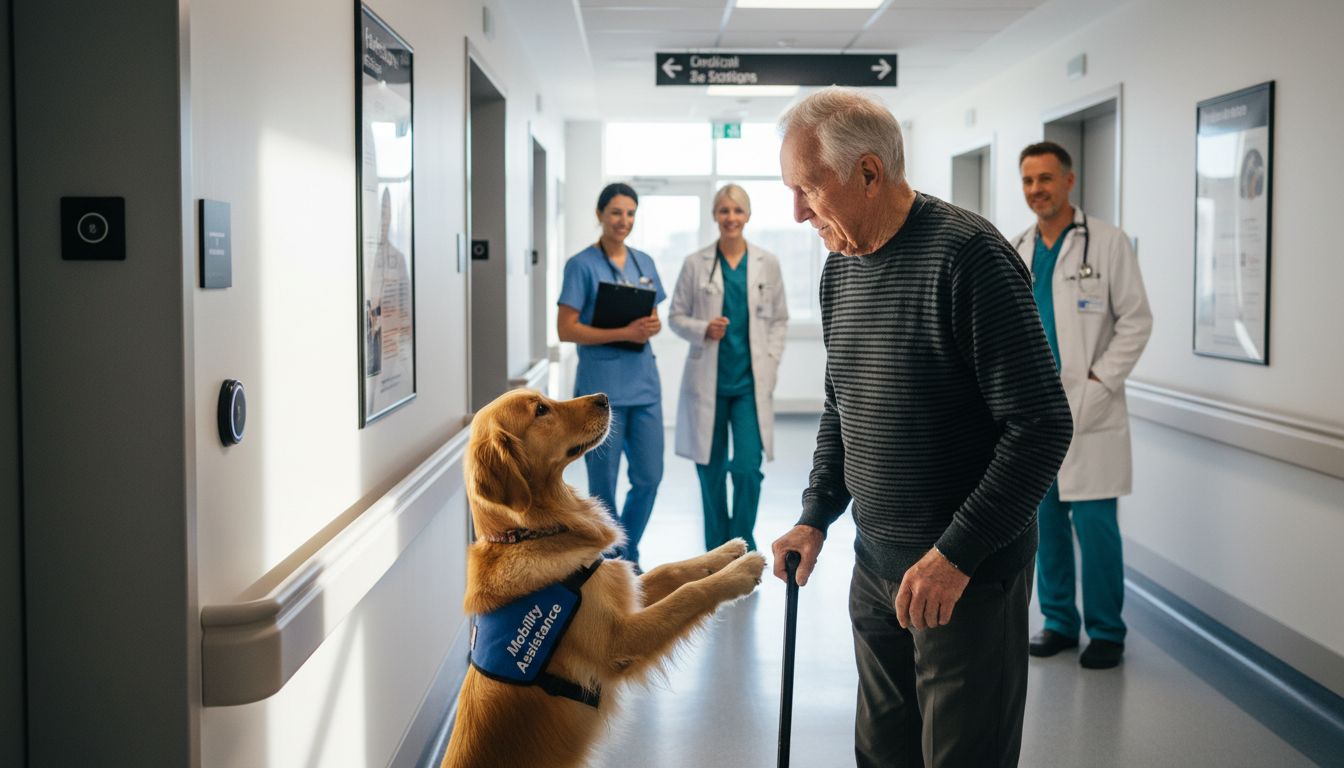 For many handlers, a service dog represents freedom, independence, and a profound partnership that enables them to overcome significant daily challenges.
For more details about the incredible work of service dogs, check out our comprehensive guide on how service dogs help.
Key Roles And Types Of Service Dogs
Service dogs represent a remarkable spectrum of specialized assistance, each trained to support individuals with unique needs. According to Salus University, these incredible canine partners can be categorized into several distinct types, each designed to address specific disabilities and challenges.
Types of Service Dogs include:
- Guide Dogs: Assist visually impaired individuals with navigation and obstacle detection
- Hearing Dogs: Alert deaf or hearing-impaired people to important sounds
- Mobility Assistance Dogs: Help individuals with physical disabilities move safely
- Psychiatric Service Dogs: Support people with mental health conditions
- Seizure Alert Dogs: Detect and respond to potential medical emergencies
- Autism Support Dogs: Provide comfort and assistance for individuals on the autism spectrum
As detailed by West Virginia University’s Hearts of Gold program, each type of service dog undergoes rigorous, specialized training to perform precise tasks tailored to their handler’s specific needs. For example, a mobility assistance dog might help someone with limited physical movement by retrieving items, opening doors, or providing stability while walking.
Here’s a comparison of the main types of service dogs and the disabilities they support:
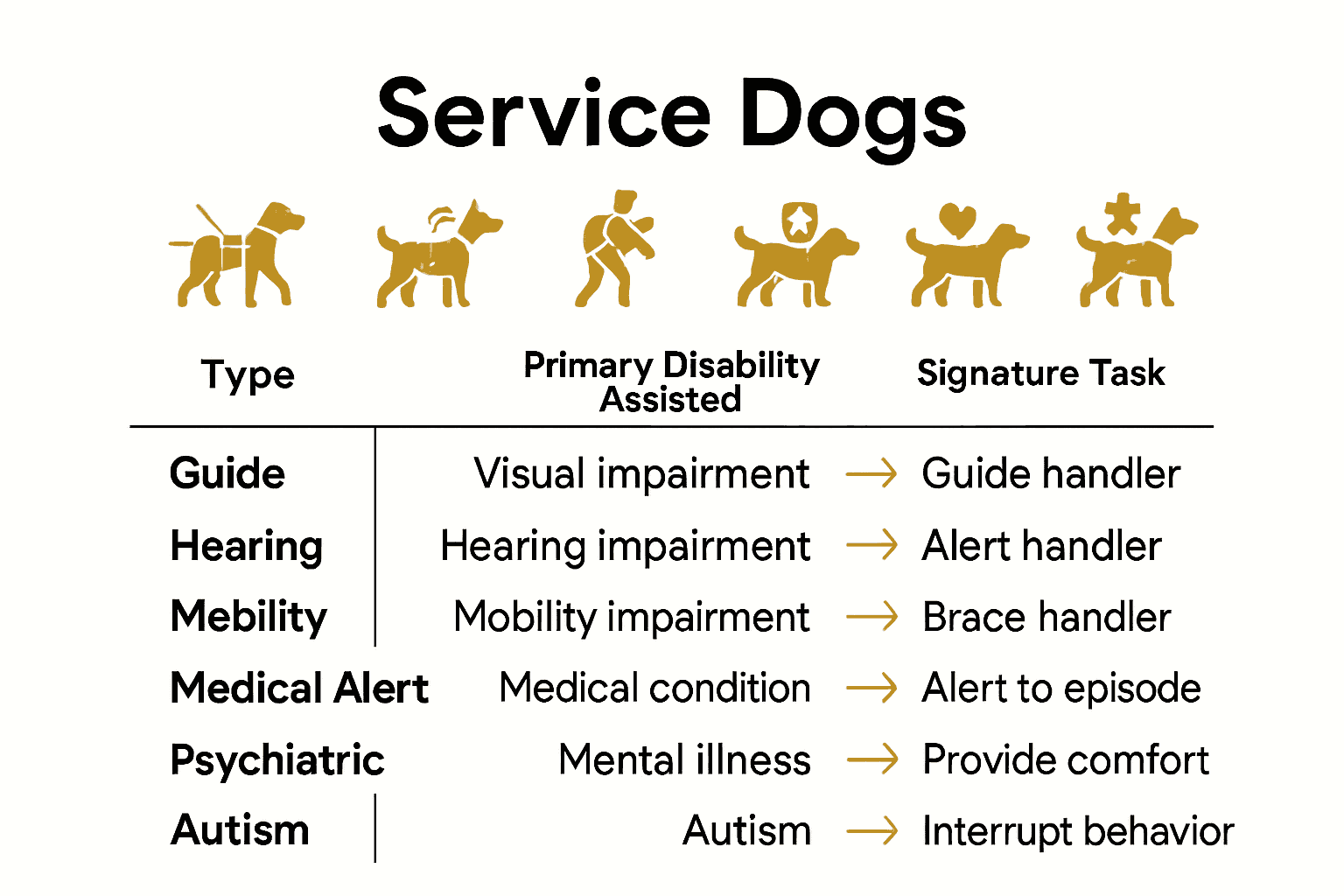
| Type of Service Dog | Primary Disabilities Assisted | Example Tasks |
|---|---|---|
| Guide Dog | Visual impairments | Navigation Obstacle detection |
| Hearing Dog | Hearing disabilities | Alert to sounds Doorbells Fire alarms |
| Mobility Assistance Dog | Mobility limitations | Retrieve items Open doors Provide stability |
| Psychiatric Service Dog | Psychiatric conditions | Interrupt anxiety Medication reminders |
| Seizure Alert Dog | Seizure disorders | Sensing seizures Alerting or getting help |
| Autism Support Dog | Autism spectrum disorders | Emotional comfort Reduce wandering Improve focus |
The complexity of service dog training cannot be overstated. These animals are not simply pets, but highly skilled professionals who undergo extensive preparation to ensure they can reliably support their handlers in challenging environments. Their training goes far beyond basic obedience, focusing on task-specific skills, emotional regulation, and the ability to remain calm and focused in diverse and potentially stressful situations.
For more insights into selecting the right service dog for specific needs, explore our guide to choosing a service dog.
How Service Dogs Enhance Daily Life
Service dogs are transformative companions that dramatically improve their handlers’ quality of life across multiple dimensions. According to PubMed research, individuals with service dogs experience significantly better psychosocial health, including enhanced social, emotional, and work/school functioning compared to those without these specialized animal partners.
Daily Life Enhancements provided by service dogs include:
- Increased personal independence
- Improved emotional regulation
- Enhanced social interaction
- Reduced anxiety and stress
- Greater mobility and physical support
- Increased confidence in navigating challenging environments
As highlighted by Texas A&M University’s Veterinary Medicine & Biomedical Sciences department, these remarkable animals assist with an extraordinary range of tasks. From guiding visually impaired individuals and offering mobility support to alerting handlers about potential medical conditions, service dogs are far more than companions—they’re lifeline partners who fundamentally reshape their handler’s daily experience.
Beyond practical assistance, service dogs provide profound psychological benefits. They offer unconditional support, create opportunities for social connection, and help individuals navigate challenges that might otherwise feel insurmountable. The bond between a service dog and their handler represents a unique partnership of trust, companionship, and mutual understanding.
Want to explore more about the incredible benefits of service dogs? Check out our comprehensive guide on service dog benefits.
Legal Rights And Handler Responsibilities
Service dog handlers occupy a unique position with specific legal protections and critical responsibilities. According to Los Rios Community College District, service dog handlers are legally entitled to be accompanied by their dogs in public spaces, but this right comes with significant obligations to maintain professional and controlled behavior.
Key Legal Rights for Service Dog Handlers include:
- Access to public spaces and facilities
- Workplace accommodations
- Protection from discrimination
- Housing access regardless of pet policies
- Transportation accommodations
- Equal participation in educational settings
The IAABC Foundation Journal emphasizes that handlers bear substantial responsibility for their service dogs’ conduct. This means ensuring the dog is:
- Well-trained and under constant control
- Properly groomed and clean
- Responsive to commands
- Non-disruptive in public environments
- Focused on assisting the handler
Handlers must understand that their legal rights are directly tied to their ability to manage their service dog professionally. A service dog that becomes aggressive, uncontrolled, or creates unnecessary disruptions can potentially forfeit its access privileges. This requires ongoing training, consistent behavioral management, and a commitment to maintaining the highest standards of public conduct.
To dive deeper into navigating the complex world of service dog rights and responsibilities, explore our guide to understanding service dog legal rights.
Training, Costs, And Common Challenges
Training a service dog is an intricate and expensive journey that requires significant investment of time, resources, and specialized expertise. According to Virginia Tech’s Centaur Program, these remarkable animals undergo extensive training to ensure they can effectively support individuals with diverse needs.
Key Training and Cost Considerations include:
- Professional training can cost between $15,000 to $30,000
- Training typically requires 1-2 years of dedicated preparation
- Ongoing education and skill maintenance are essential
- Specialized health screenings and veterinary care are crucial
- Individual task training varies based on specific handler needs
- Continuous behavioral assessment is mandatory
The training process involves multiple complex stages. Potential service dogs must demonstrate exceptional temperament, intelligence, and ability to remain calm in diverse environments. They undergo rigorous screening for health, psychological stability, and task-specific capabilities. Handlers and dogs must develop an intricate communication system and deep mutual understanding.
Common challenges in service dog training include maintaining consistent performance, managing potential health issues, and ensuring the dog’s continued psychological well-being. Handlers must be prepared for significant emotional and financial investments, recognizing that not every dog will successfully complete the training program. Patience, dedication, and a genuine commitment to the dog’s welfare are fundamental to creating a successful service dog partnership.
Interested in learning more about the nuanced world of service dog training? Check out our guide to service dog training challenges.
Empower Your Service Dog Partnership with Innovative Communication Solutions
Understanding the vital role service dogs play daily reveals how critical clear communication and reliable safety tools are for both handlers and their canine partners. Whether managing mobility assistance, seizure alert, or psychiatric support dogs, effective interaction is key to unlocking greater independence and confidence. The challenge lies in bridging the communication gap while ensuring your dog remains focused and responsive in any environment.

Discover the power of the iPupPee alert device at ipuppee.com, designed specifically to enhance communication between service dogs and their handlers. This simple yet groundbreaking tool helps your dog signal needs or emergencies with the push of a button, supporting better safety and autonomy. Take the next step today to strengthen this incredible partnership and experience the true benefits of your service dog’s support. Start exploring more at our landing page and begin transforming your daily routine now.
Frequently Asked Questions
What is a service dog?
Service dogs are highly trained animals that assist individuals with disabilities by performing specific tasks that enhance their independence and daily functioning.
What types of disabilities can service dogs help with?
Service dogs can assist individuals with a wide range of disabilities, including visual impairments, hearing disabilities, mobility limitations, neurological disorders, psychiatric conditions, and seizure disorders.
How do service dogs improve the quality of life for their handlers?
Service dogs enhance their handlers’ quality of life by increasing personal independence, improving emotional regulation, enhancing social interaction, reducing anxiety and stress, and providing greater mobility and physical support.
What are the legal rights of service dog handlers?
Service dog handlers have the legal right to be accompanied by their service dogs in public spaces, receive workplace accommodations, access housing despite pet policies, and participate equally in educational settings, among other protections.
Recommended
- Training Service Dogs 101: Essential Steps for Success in 2025 – iPupPee
- Service Dog Care Essentials: Must-Know Tips for 2025 – iPupPee
- How Service Dogs Help: Real Benefits Explained for 2025 – iPupPee
- Service Dog Daily Tasks: What Owners Need to Know 2025 – iPupPee
- Understanding Types of Dogs and Breeds for Everyone – FunLifeNow
- ACTIONS TO TAKE IF YOU WITNESS A DOG BITE INCIDENT