

Finding clear answers about what truly defines a service dog can be confusing for many American pet owners living with disabilities. Misconceptions about certification, legal rights, and the real purpose of these highly trained companions can make daily life more difficult. Understanding these distinctions helps you improve communication with your service dog and advocate for your independence using innovative safety devices and accurate information.
Table of Contents
- Defining Service Dogs And Breaking Myths
- Types Of Service Dogs And Their Roles
- How Service Dogs Are Trained And Qualified
- Legal Protections And Handler Rights In The U.S.
- Differences Between Service, Therapy, And Emotional Support Dogs
Key Takeaways
| Point | Details |
|---|---|
| Definition of Service Dogs | Service dogs are highly trained to perform specific tasks for individuals with disabilities, unlike therapy or emotional support animals. |
| Legal Protections | The Americans with Disabilities Act grants service dog handlers robust rights, including full access to public spaces without the need for certification. |
| Training Process | Service dog training is comprehensive, focusing on individual needs and specialized task performance to enhance the handler’s independence. |
| Distinction from Other Support Animals | Service dogs differ from therapy and emotional support animals in training, function, and legal rights, with more stringent training requirements and access rights. |
Defining Service Dogs and Breaking Myths
Service dogs represent a critical form of assistance for individuals with disabilities, representing far more than just companion animals. These highly trained canines perform specialized tasks that directly support people with physical, psychiatric, or neurological conditions. Specific task performance defines their unique legal status, distinguishing them from emotional support or therapy animals.
Contrary to popular misconceptions, service dogs are not simply pets with special privileges. They undergo extensive, targeted training to help their handlers navigate daily challenges. Key characteristics that define a true service dog include:
- Specialized training in disability-related tasks
- Ability to perform specific functions for their handler
- Legal protections under the Americans with Disabilities Act (ADA)
- No breed or size restrictions
- Direct task orientation rather than emotional support
The ADA provides clear guidelines about service dog qualifications. Service animals are legally defined as dogs trained to perform work directly related to an individual’s disability. This means the animal must complete specific actions that mitigate the handler’s condition, such as guiding visually impaired individuals, alerting diabetics to blood sugar changes, or providing mobility assistance.
A service dog is not just a pet, but a highly trained professional assistant working to support an individual’s independence and quality of life.
Many people mistakenly believe service dogs require official certification or special vests. However, legal guidelines are more nuanced, emphasizing task performance over external documentation. No formal registration is legally required, and businesses cannot demand proof of the dog’s service status.
Pro tip: Always treat service dogs as working professionals, respecting their focus and critical role in their handler’s daily functioning.
Types of Service Dogs and Their Roles
Service dogs represent a diverse and critically important support system for individuals with various disabilities, offering specialized assistance across multiple domains. These remarkable animals are meticulously trained to perform specific tasks that dramatically improve their handlers’ quality of life and independence.
The primary types of service dogs include:
- Guide Dogs: Assist visually impaired individuals with navigation and obstacle detection
- Hearing Dogs: Alert deaf or hearing-impaired people to important sounds
- Mobility Assistance Dogs: Help individuals with physical disabilities move safely
- Medical Alert Dogs: Detect and warn about potential medical emergencies like seizures or blood sugar changes
- Psychiatric Service Dogs: Support individuals with mental health conditions such as PTSD, anxiety, and depression
Mobility assistance dogs play a particularly crucial role, helping handlers with physical challenges by providing stability, retrieving items, opening doors, and supporting balance during movement. Service dog breeds like Labradors and Golden Retrievers excel in these specialized roles due to their intelligence, temperament, and trainability.
Service dogs are not just animals, but highly trained professionals who transform lives through dedicated, personalized assistance.
Each service dog undergoes extensive training to master tasks specific to their handler’s unique needs. For psychiatric service dogs, this might mean interrupting anxiety attacks, providing grounding during dissociative episodes, or creating physical barriers in crowded spaces to reduce sensory overstimulation.
Pro tip: When encountering a service dog, always remember they are working professionals - avoid petting or distracting them from their critical responsibilities.
How Service Dogs Are Trained and Qualified
Service dog training is an intricate and comprehensive process that transforms ordinary canines into extraordinary support professionals. Assistance dogs undergo rigorous socialization and desensitization training designed to prepare them for complex public environments and unique handler needs.
The core training process involves several critical components:
- Basic obedience and command mastery
- Public behavior and environmental adaptation
- Specialized task training specific to handler’s disability
- Emotional regulation and stress management
- Continuous performance assessment and skill refinement
Specialized task training represents the most crucial aspect of service dog preparation. Each dog must learn precise, individualized skills that directly mitigate their handler’s specific disability challenges. These skills range from physical support like retrieving items and opening doors to more nuanced psychiatric support such as interrupting anxiety attacks or providing grounding during dissociative episodes.
A service dog’s training is about creating a symbiotic partnership that enhances human independence and quality of life.
Training programs for service dogs emphasize careful handler-dog matching to ensure optimal compatibility. This process involves comprehensive assessments of both the dog’s capabilities and the handler’s unique requirements, creating a tailored support system that goes beyond traditional animal-human relationships.
Pro tip: Always work with certified professional trainers who specialize in service dog preparation to ensure your dog receives the highest quality, most comprehensive training possible.
Legal Protections and Handler Rights in the U.S.
Service dog legal protections in the United States represent a critical framework ensuring individuals with disabilities can navigate public spaces with their essential support companions. The Americans with Disabilities Act (ADA) establishes comprehensive rights that protect both service dog handlers and their animals.
Key legal protections for service dog handlers include:
- Unrestricted access to public spaces
- No requirement for certification or special documentation
- Protection against discrimination in housing and employment
- Right to reasonable accommodations in workplaces and public facilities
- Freedom from additional fees or special charges related to service animal presence
Public access rights are particularly robust under current legislation. Businesses and government entities must allow service dogs in areas where the general public is permitted, regardless of local pet restrictions. This means restaurants, stores, hospitals, and government buildings cannot deny entry to a legitimate service dog, even if they typically prohibit animals.
The following table summarizes key legal protections for service dog handlers in the United States:
| Protection Area | Description | Impact for Handler |
|---|---|---|
| Public Space Access | Entry to restaurants, stores, hospitals, government | Enables daily independence |
| Certification Requirement | No official registration or vest needed | Reduces bureaucratic barriers |
| Housing & Employment | Protection from discrimination | Supports equal opportunities |
| Accommodation | Reasonable modifications must be provided | Ensures accessibility |
Service dogs are not pets, but working professionals with legally protected access rights.
Emerging legal guidelines in 2026 continue to strengthen handler protections while simultaneously introducing measures to prevent service dog fraud. These evolving regulations aim to maintain the integrity of service dog programs while ensuring genuine handlers retain comprehensive rights.
Pro tip: Carry a clear, concise summary of your service dog’s training and essential tasks to confidently address any potential access challenges.
Differences Between Service, Therapy, and Emotional Support Dogs
Understanding the nuanced distinctions between animal support types is crucial for recognizing their unique roles and legal protections. While these animals all provide valuable support, they operate under distinctly different frameworks with specific capabilities and limitations.
Key differences among these support animals include:
- Service Dogs: Individually trained to perform specific disability-related tasks
- Therapy Dogs: Provide comfort in group settings like hospitals or schools
- Emotional Support Dogs: Offer companionship for mental health conditions
- Legal Access: Varies significantly between these categories
- Training Requirements: Most stringent for service dogs, least for emotional support animals
Legal protections represent the most critical distinction. Service dogs have comprehensive public access rights under the Americans with Disabilities Act, allowing them to accompany their handlers everywhere. Emotional support and therapy dogs have dramatically different legal standings, with far more restricted access to public spaces.
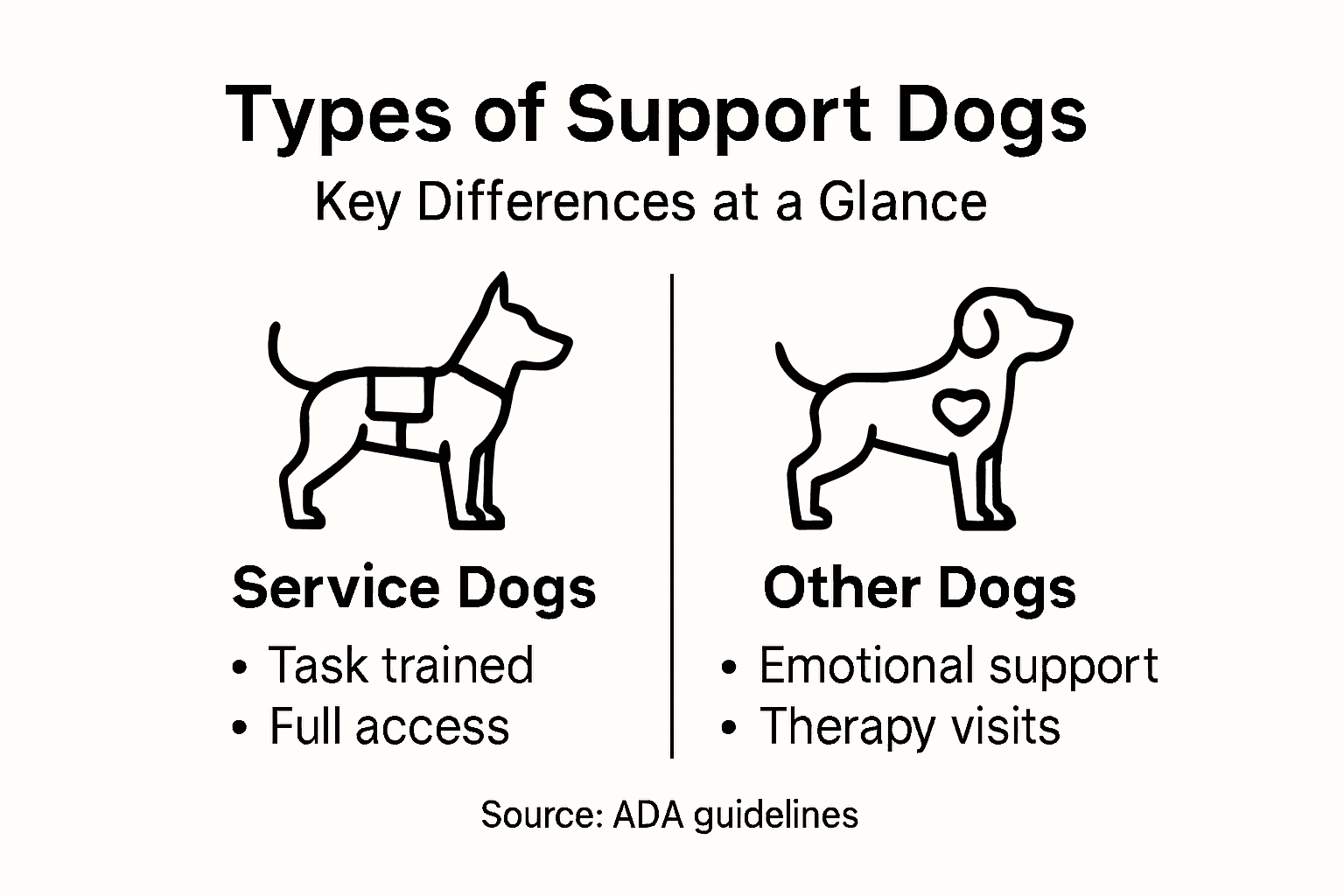
Here’s a breakdown of how service, therapy, and emotional support dogs differ in function and legal status:
| Support Animal Type | Primary Role | Training Level | Legal Access Rights |
|---|---|---|---|
| Service Dog | Performs disability-related tasks | Rigorous, task-specific training | Full access under ADA |
| Therapy Dog | Provides comfort to groups | Moderate, socialization focused | Limited access in select venues |
| Emotional Support Animal | Offers companionship | Minimal, basic obedience required | Restricted, mainly in housing |
Not all support animals are created equal - each serves a unique and important purpose in human care.
Service dogs undergo extensive specialized training to perform precise tasks directly mitigating their handler’s specific disability. In contrast, therapy dogs work in structured environments like hospitals or schools, providing general emotional comfort to multiple individuals. Emotional support animals offer companionship but lack the task-specific training that defines service dogs.
Pro tip: Always verify the specific capabilities and legal rights of different support animal types before assuming universal access or abilities.
Enhance Communication and Safety for Your Service Dog Today
Caring for a service dog means understanding their unique role in enhancing independence and quality of life. The challenges faced by handlers—from ensuring clear communication to maintaining safety in everyday situations—are at the heart of why innovative tools are essential. The iPupPee device offers a simple yet powerful solution designed specifically for service dogs and their handlers. This easy-to-use alert button empowers your dog to communicate important needs quickly and effectively, supporting critical tasks and ensuring peace of mind for individuals managing disabilities or living independently.
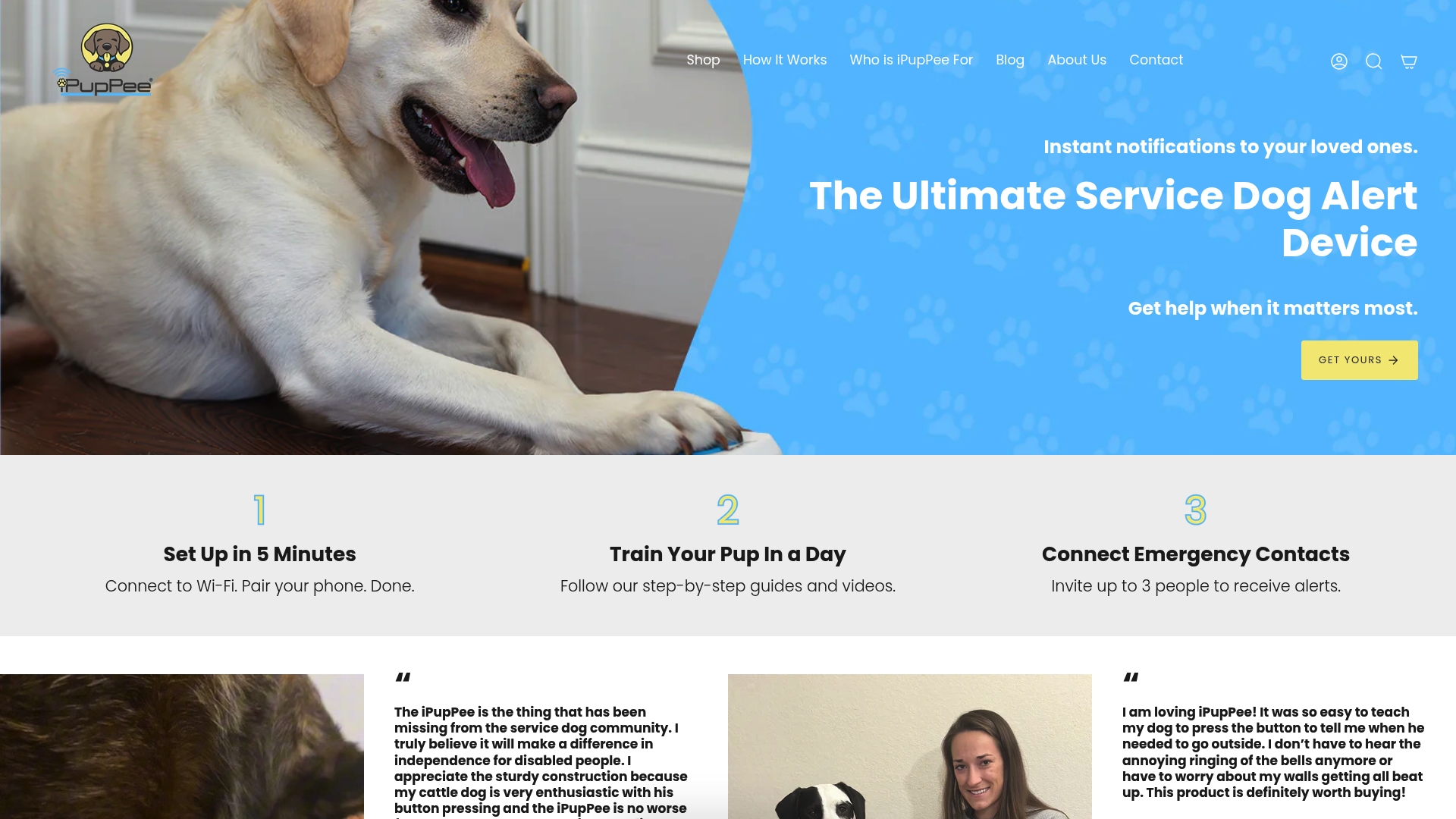
Discover how the iPupPee device can transform your experience with your service dog by providing reliable communication and safety features tailored to your lifestyle. Visit iPupPee now to explore product details, training instructions, and inspiring testimonials. Take the next step to strengthen the partnership with your service dog and enjoy greater freedom and confidence every day.
Frequently Asked Questions
What defines a service dog?
Service dogs are individually trained to perform specific tasks that assist individuals with disabilities. They are not pets but trained professionals who help improve the handler’s quality of life.
What types of disabilities can service dogs assist with?
Service dogs can assist with various disabilities, including visual impairment, hearing loss, mobility challenges, medical emergencies such as seizures, and psychiatric conditions like PTSD and anxiety.
Are there legal requirements for service dogs?
Under the Americans with Disabilities Act (ADA), service dogs must be trained to perform specific tasks directly related to a person’s disability. No certification or special vests are legally required.
How can I ensure my service dog is properly trained?
To ensure your service dog receives quality training, work with certified professional trainers who specialize in service dog preparation. Training should include basic obedience, task performance, and appropriate public behavior.